
Funny coincidence—you’ll wake before the city, and so do the tuna. Arrive pre‑sunrise for Toyosu’s auction (book a free slot or snag a same‑day ticket), dress in closed‑toe, non‑slip, splash‑resistant layers, and keep to lanes around forklifts. After, hit exhibits and the cold‑chain displays, then Tsukiji Outer Market 8–11 a.m. for cash‑friendly bites; bring small bills, queue politely, taste modestly, obey photo signs. Want the fastest route, best stalls, and what not to photograph?
Early Start and Best Times to Go
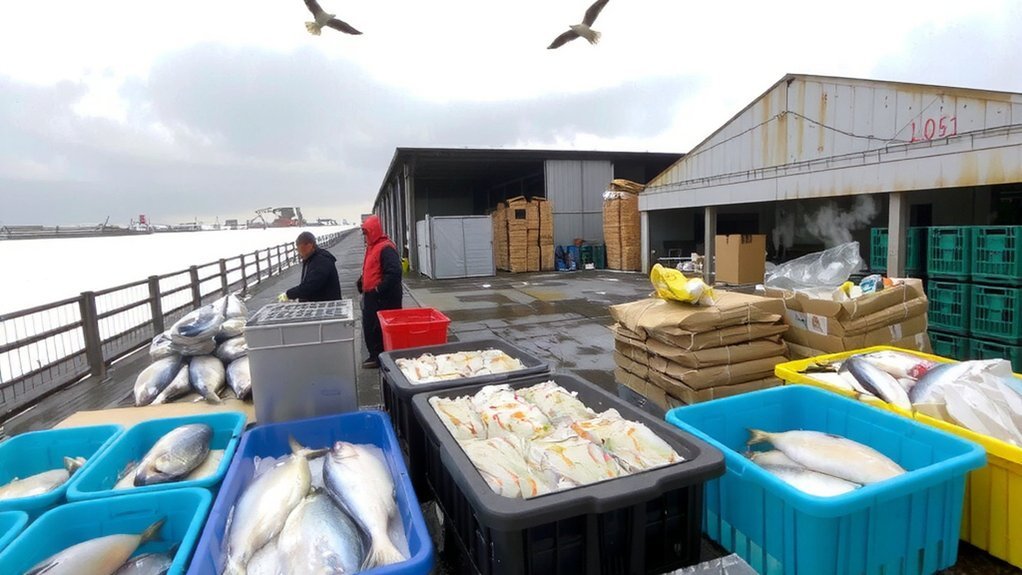
When should you go? Before sunrise, ideally between 5:30 and 7:00 a.m., when stalls are stocked, crews are upbeat, and aisles are walkable. Aim for a weekday, Tuesday through Thursday, to dodge tour bus waves and commuter traffic pinch points. If you’re jet-lagged, good—lean into it. Use simple jetlag strategies: hydrate, set a dawn alarm, step into morning light, and skip the hotel buffet. Arrive by train; the first runs are quiet, the later ones pack tight. Wear closed shoes, bring a light jacket, carry cash, and keep your bag slim. Rain forecast? Even better, crowds thin. Too early? Grab coffee at a convenience store, reset, then stroll in with intention, curious, unhurried. You’re here to move freely—and taste bravely. Trust your early edge.
Toyosu Market Highlights and Tuna Auction Access
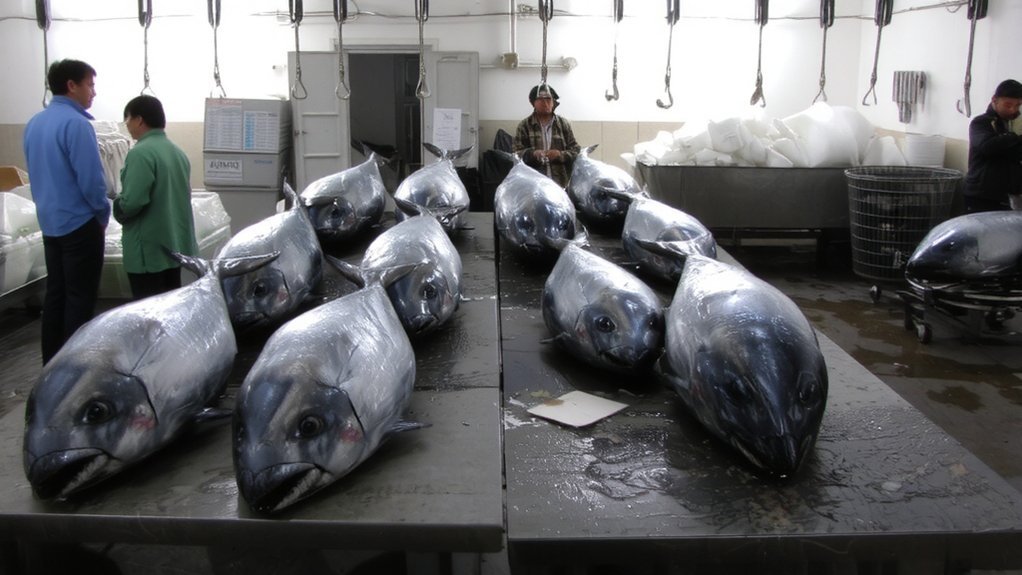
How do you tackle Toyosu? You start upstairs, map the market architecture from the observation corridors, then drop into the tuna auction viewing area. Book a free slot online, or snag a same-day ticket at the information desk, and be ready by 5:30 a.m. Quiet shoes, warm layer, no flash—security’s strict, and for good reason. Watch graders flick tail cuts, hear bells, feel that hush.
After the auction, wander the educational displays, note the strict hygiene zones, and check the sustainability initiatives, from cold-chain efficiency to recycling stations. Want a quick plan? Use this.
| Move | Why it frees you |
|---|---|
| Arrive by 5:00 | Buffer for tickets, lockers, coffee. |
| Upper deck first | Best sightlines, context before action. |
| Auction, then exhibits | Flow saves time, keeps energy high. |
Tsukiji Outer Market: Tastings, Shops, and Street Eats
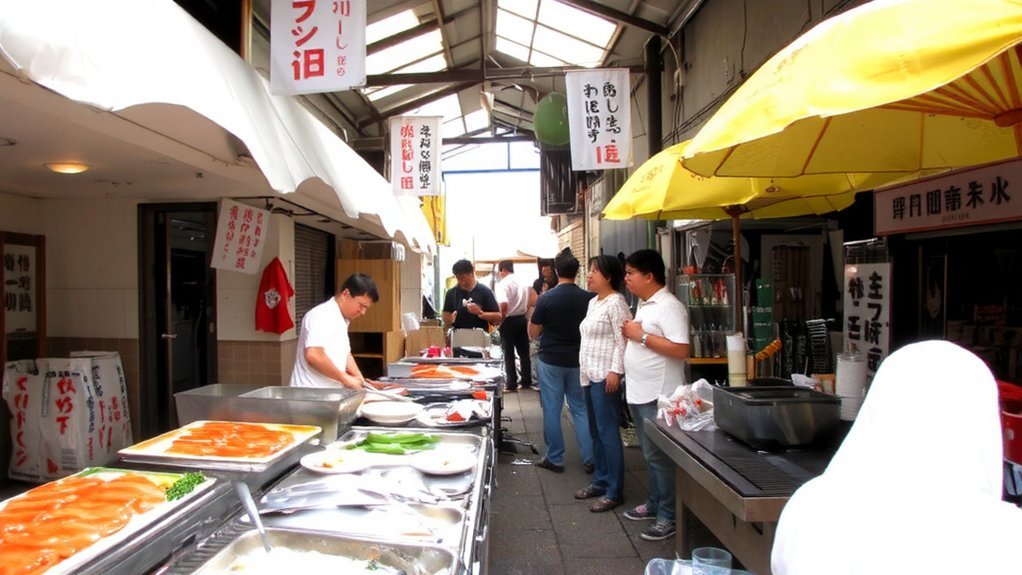
Usually, you hit Tsukiji Outer Market early, 8–11 a.m., and you move with purpose: cash in small bills, light bag, eyes up for forklifts and handcarts. You weave alleys, taste small bites, hands free. Queue where locals do, don’t block doors, and always return trays. Scan tool shops; admire knife craftsmanship, ask for balance and steel type, then request sharpening tips. Dip into ceramic shopping next door—bowls, soy pots, travel-safe wrapping. Try sweet omelet on a stick, crispy skewers, warm tea. Snap photos fast, step aside, let flow breathe. You’re here to roam, and roam again.
- Map a loop, clockwise, then cut through lanes.
- Budget ¥2,000–¥4,000 for bites and souvenirs.
- Learn basics: sumimasen, arigatou, cash only.
- Pack wipes, tote, coins, and a small umbrella.
What You’ll Taste: Seasonal Seafood and Sushi
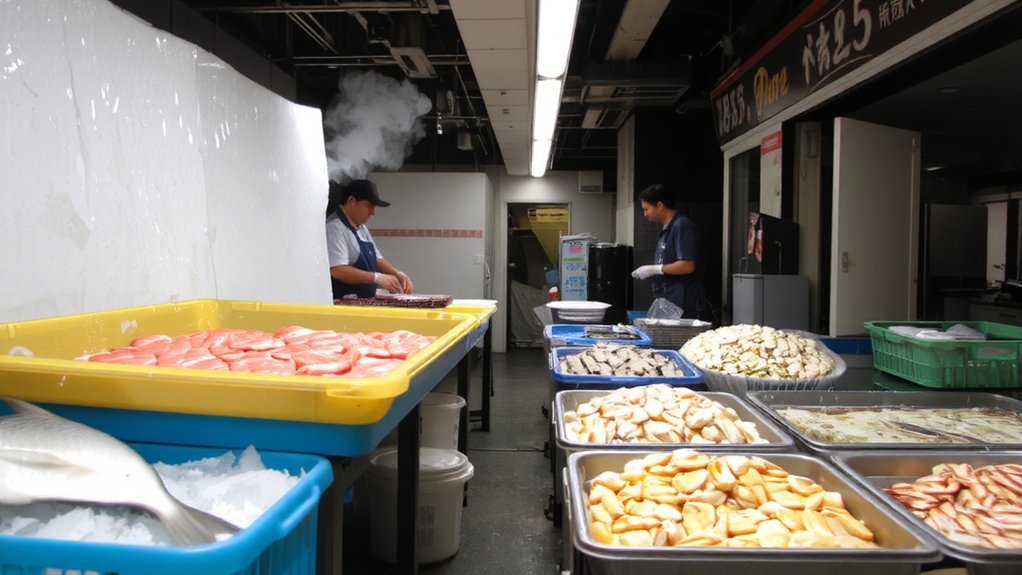
You start with peak-season sashimi bites—think winter fatty tuna, spring katsuo, summer squid, autumn sanma—sliced moments after auction, cool and clean on the tongue. Then you move to market-fresh nigiri varieties, pressed by a brisk itamae, warm shari, fish brushed with nikiri, maybe toro, uni, a snap of kohada; two bites, gone. Follow the stall signs, order the catch-of-the-day set, ask for what’s “saikou no shun”—and yes, trust the chef, but say no to anything you can’t finish.
Peak-Season Sashimi Bites
Silver slivers of hirame and ruby cuts of katsuo hit your tray, cold and gleaming, and suddenly “peak season” makes sense. You taste clean ocean, tight muscle, perfect snap. Vendors slice with quiet confidence, showing knife techniques that chase texture, not hype. They watch serving temperatures like hawks, so fat blooms and sweetness rises. You’ll stand, lean, and chase the best table: a crate, a rail, a sunny gap. Try, compare, decide fast—freedom tastes like salt and citrus.
- Ask for two cuts side by side: belly vs. back.
- Note temperature; warm fish? Pass. Cold, but not numb.
- Dip lightly; skip wasabi if flesh already sings.
- End with a briny fin or crunchy skin chip.
That’s the tour’s honest thrill. You earned this wild bite.
Market-Fresh Nigiri Varieties
From those clean sashimi snaps, the stall counter shifts to nigiri—rice, fish, and timing. You stand close, breathe the vinegar steam, and order by sight: akami for lean punch, chu‑toro for silk, hotate for sweetness. The chef palms warm shari, dots wasabi, lays fish, then brushes nikiri. One bite, no dunking—let flavor balance land. Want brine and snap? Try kohada or aji. Crave custard? Uni. Prefer comfort? Tamago, then buttery anago. Watch textural contrasts: crisp nori on gunkan, soft rice, cool fish. Say “omakase,” set a budget, and ride the season—sakura bream in spring, fatty iwashi in summer. Ask for a second hit if it sings. Pace yourself, sip tea, smile. Freedom tastes like fresh morning tides. Trust your gut, thank the chef, always.
Etiquette, Rules, and Photography Guidelines
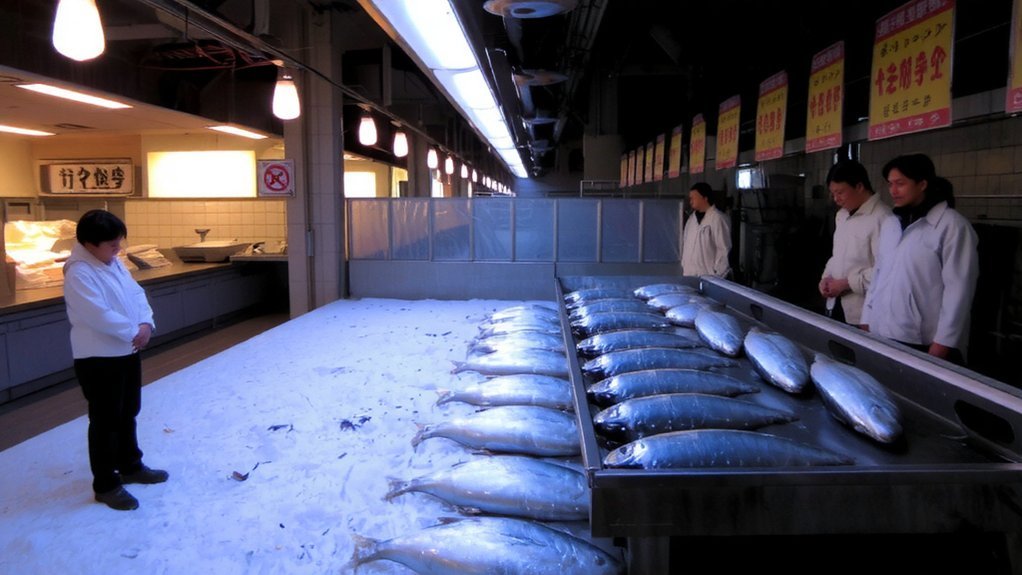
While the tuna bells ring and carts zip by, respect the rules first—then wander. You’re a guest in a working market, so move with purpose, keep to the edges, and yield to forklifts without debate. Ask before filming vendors, and Respect privacy when a deal’s on. Follow posted lanes, no loitering at auction pits, no touching fish unless invited. Keep your voice low; let the clatter speak. Photos? Yes, but no flashes in auction zones, ever. Gear restrictions apply; slim setups win. Stay nimble, patient, and curious.
- Arrive early, check signs, and follow staff cues.
- Stand behind lines; pause, shoot, step aside. Simple.
- Ask names, say thank you, and skip bargaining games.
- Capture atmosphere—hands, ice, steam—not faces, unless you’re welcomed.
What to Wear and Bring for the Visit
Wear non-slip, closed-toe shoes; floors are wet, carts move fast, and toes are precious. Go layered and odor-friendly—breathable fabrics, a light jacket, nothing you’ll cry over if it picks up a seafood scent. Bring cash for stalls and a small crossbody or tote you can tuck in front, hands free for tastings, photos, and fast sidesteps.
Non-Slip Closed Shoes
One rule jumps to the top: non-slip, closed-toe shoes, no exceptions. The market floors get wet, slick, and busy, so you want grip, not drama. Choose waterproof uppers, sturdy midsoles, and outsoles built with sole technology that bites into damp concrete. Check labels, but trust your feet: try quick turns, feel the hold. If a shoe slides in a store, it’ll skate in Tsukiji or Toyosu. Freedom starts with stable footing.
- Look for rubber lugs, siped patterns, and oil-resistant compounds.
- Do a hallway traction testing spin—safe, small, controlled.
- Secure laces or straps; loose footwear invites mishaps.
- Bring dry socks and a small towel for quick resets.
Break them in a week before. And keep toes covered—steel or reinforced caps help when carts roll by.
Layered, Odor-Friendly Clothing
Because the market hits you with chill air, steam, and a bold fish aroma all at once, dress in smart layers that breathe and blunt smells. Start with a quick‑dry base of merino or bamboo, both antimicrobial textiles, then add a light fleece. Top it with a windproof, splash‑resistant shell you can unzip fast. Quick‑dry pants, cuffed or tapered, keep hems out of puddles. A neck gaiter helps with drafts and scents—up, down, done. Thin gloves, pocketable beanie, happy ears.
Skip perfume. Instead, tuck odor absorbing sachets—charcoal or coffee—into a jacket pocket, and you’ll feel fresher after tuna o’clock. If you run hot, swap fleece for a breathable vest. Cold-natured? Double the base. Either way, you’re ready to roam. Clean, swift, comfortable, and confident.
Cash and Small Bag
After you’ve dialed in those layers, your setup needs a small, hands‑free bag and real yen. Go light: a slim crossbody or waist pack keeps you swift in tight aisles and splatter-safe zones. Bring enough notes for breakfast sushi, coffee, and souvenirs; some stalls still don’t take cards, so keep a cash backup.
- Zip wallet with coin storage, small bills, and a backup credit card
- Waterproof pouch for phone, plus a portable battery
- Reusable chopsticks, tissues, and a compact hand towel
- Mini sanitizer and a flat, roll-up tote for sudden finds
Keep zippers facing forward, and wear the bag high. Stash a Suica/PASMO for trains. Skip jangly keychains. Need a receipt? Ask clearly, then step aside. You’ll move freely, buy fast, and smile often.
Booking, Costs, and Tour Options
How soon should you book? For Tsukiji outer market walks or Toyosu auction access, reserve 2–4 weeks ahead, longer in cherry blossom season. Compare operators, read recent reviews, then check prices side by side. Expect ¥6,000–¥12,000 for small-group morning tours; private experiences run ¥25,000–¥60,000 per group. Ask about group discounts, hotel pickup, and whether breakfast tastings are included.
Pick your vibe. Small groups for chatter and pace, private tours for control, premium auction slots if you’re an early bird. Verify start times, guide language, and max group size. Scan cancellation policies—48 hours free is standard—plus weather and minimum-participant rules. Pay with a card, keep screenshots of vouchers, and set an early alarm. You’ll show up ready, curious, and hungry. Leave room for spontaneous bites.
Conclusion
Cold dawn, hot griddles. You’ll slip in before sunrise, book a free auction slot or snag a same‑day ticket, then move with purpose—closed‑toe, non‑slip, layered—around forklifts and marked lanes. Watch Toyosu’s tuna theater and cold‑chain displays, snap photos only where posted. Then warmth: Tsukiji, 8–11 a.m., cash out, small bills, queue politely, taste modestly. Order tamagoyaki, fatty tuna, uni. Peek into knife and pottery shops. Bring curiosity, a tote, and backup yen. You’ve got this.