
Tokyo is dog friendly, especially if you have a small, well-trained dog and you’re comfortable following strict rules. The city has top-notch pet shops, great vets, spotless streets, and a growing “dogs are family” culture.
At the same time, Tokyo isn’t a place where dogs casually wander into every shop or sprawl under your café table. In central Tokyo, space is tight, trains are crowded, and many buildings have pet limits. If you plan around those realities, Tokyo can feel surprisingly easy with a dog.
 Photo by Domenico Solimeno
So, is Tokyo dog friendly? The honest answer for visitors and residents
Tokyo is dog friendly in a very Tokyo way. Think of it like a clean, well-run library that also happens to love dogs. You’re welcome, but you’re expected to be quiet, tidy, and prepared.
Here’s what Tokyo does really well:
- Pet services are excellent: grooming salons, pet taxis, boutique pet goods, and many clinics.
- Walking can be pleasant: sidewalks are common in many neighborhoods, and people generally keep things orderly.
- Dog run and big parks exist: they can be a lifesaver in a small apartment life.
Here’s where people get frustrated:
- Public transport almost always requires a carrier, and rules vary by company.
- Indoor dining with dogs is limited, unless it’s a dog café or a specific pet-friendly spot.
- Apartments often have strict pet rules, and many won’t allow dogs at all.
Why size matters: Tokyo is built for compact living. A calm 4 to 8 kg small breeds dog that settles in a carrier fits the city’s rhythm better than a large breeds dog that needs long off-leash sprints.
If you want a deeper feel for everyday pet norms, this guide on Japanese pet etiquette and cultural tips helps set expectations (what’s polite, what draws stares, and what gets complaints).
Who will love Tokyo with a dog, and who might struggle
Tokyo tends to reward owners who plan ahead. It can be a dream trip or an exhausting tug-of-war, depending on your dog and your travel style.
A good match usually looks like this:
Quick self-checkIf you can say “yes”…Tokyo will feel…Carrier comfortMy dog can relax in a closed carrierMuch easierCrowd mannersMy dog stays calm near people and bikesLess stressfulNoise controlMy dog rarely barks at hallway soundsMore housing optionsExercise expectationsMy dog can do quality walks and dog runsMore realistic
You might struggle if your dog is large, reactive, or panics in a bag. Long commutes plus strict “no paws out” carrier rules can turn simple errands into a daily grind.
A simple prompt before you book flights: can your dog handle 30 to 60 minutes of being contained without fuss, in a station full of noise? If not, Tokyo can still work, but you’ll need taxis, lots of walking, and a neighborhood-first plan.
Tokyo dog culture basics to know before you go
Tokyo’s dog culture is polite and rule-forward. It’s not harsh, it’s just consistent. Dog culture is highly visible in neighborhoods like Shibuya Ward and Setagaya Ward.
- Leashes are standard almost everywhere outside.
- Quiet behavior matters more than you might expect, especially in apartment buildings.
- In shared spaces, many people carry small dogs (or keep them fully inside a carrier) to avoid bothering others.
- Dogs are often dressed in outfits, but nobody expects that. What people do expect is good manners.
If you’re relocating and want a practical overview of daily pet life (clinics, care, and common restrictions), this article on pet ownership in Tokyo is a helpful companion read.
Getting around Tokyo with a dog: trains, buses, and walking without stress
You can move around Tokyo with a dog, but you’ll do it on Tokyo’s terms. For most owners, that means two core strategies: walk more than you think, and treat a carrier like essential gear, not an optional accessory.
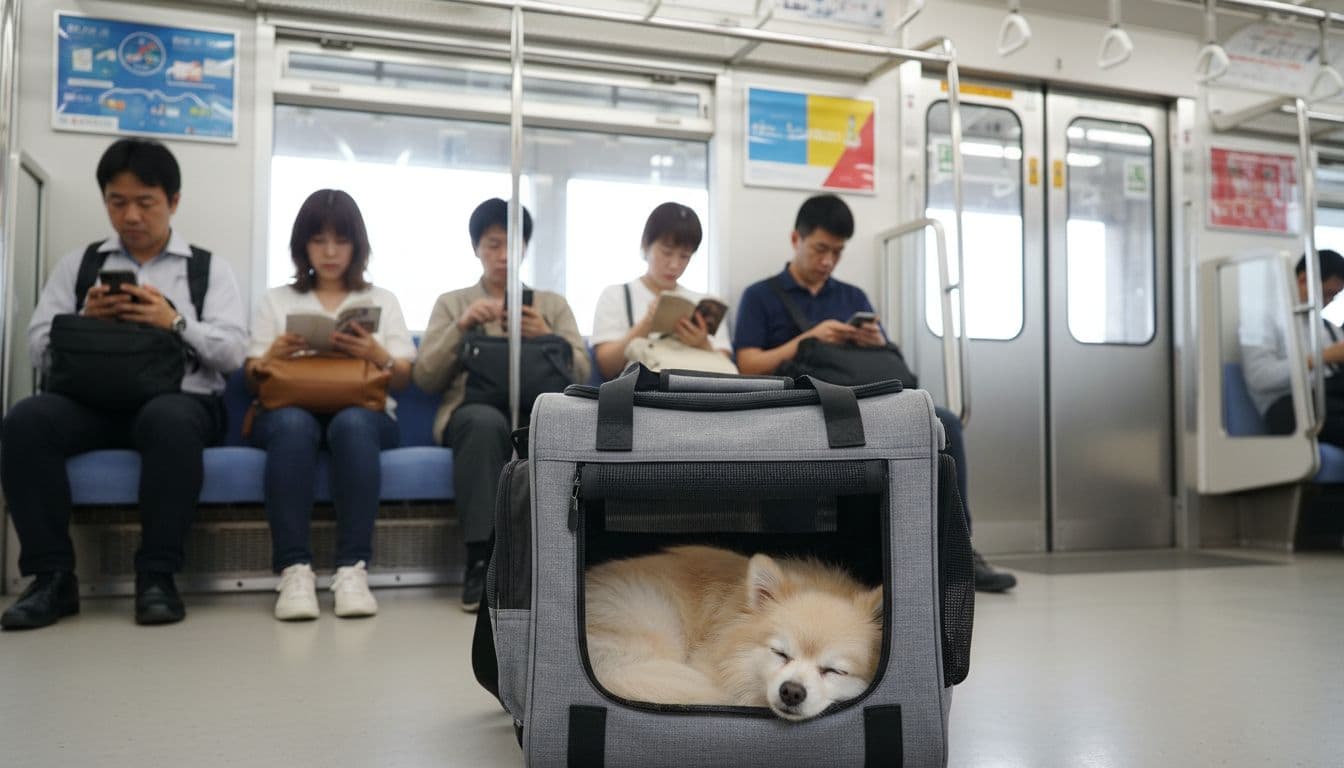
A few habits that reduce friction fast:
- Ride off-peak when you can (mid-morning, early afternoon).
- Keep the carrier fully closed the whole ride.
- Bring a small towel to cover the carrier if your dog gets overstimulated.
- Carry wipes and a spare pee pad, even if your dog is solid at holding it.
Trains and subways: carrier rules, size limits, and what staff expect
In Tokyo’s public transport, dogs generally can’t ride trains or subways unless they’re small and fully enclosed in a secure carrier. Many lines also have weight limits (often around 10 kg including the carrier), and staff expect you to follow the rule without negotiation.
What “acceptable” looks like in practice:
Do:
- Use a sturdy carrier that zips or locks closed.
- Place it on the floor and keep it stable.
- Stay calm if a station attendant checks your setup.
Don’t:
- Let paws or a snout stick out.
- Put your dog on a seat, even “just for a second.”
- Open the carrier to soothe your dog mid-ride.
One more reality check: Tokyo isn’t an “it’s fine, my dog is friendly” city on public transport. Even friendly dogs can make others anxious in tight spaces, so the carrier rule is both courtesy and crowd control.
Walking in Tokyo: leash rules, waste etiquette, and where dogs are often blocked
Walking is where Tokyo can shine. Streets are clean, and many areas have a steady, safe flow. Popular walking paths along the Meguro River in Nakameguro are especially scenic during cherry blossoms season. But walking comes with expectations.
Most locals follow these basics:
- Carry poop bags and pick up every time.
- Bring a small bottle of water to rinse urine spots on pavement.
- Keep your dog close on a short leash in busy areas.
Also, don’t assume every green space is dog-friendly. Some small parks, playground zones, and garden areas restrict dogs even on leash. The simple move is to look for signs at entrances, and if you’re unsure, don’t push it. Tokyo is very sign-driven.
Where you can go with your dog in Tokyo: parks, dog runs, cafés, and hotels
This is the “yes” part of Tokyo. If you build your days around parks, dog runs, and outdoor dining, you can have a great time without feeling shut out.
Outdoor options are often better than indoor ones, and that’s not a bad thing. Tokyo’s neighborhoods are made for wandering, and a solid morning walk can feel like a mini travel day on its own.
Dog runs and big parks that make Tokyo feel easy with a dog
Tokyo’s dog runs can be a pressure valve for city life. Popular choices include dog run areas in major metropolitan parks such as Yoyogi Park, Komazawa Olympic Park, Mizumoto Park, Showa Memorial Park, and Inokashira Park (availability and entry rules can change, so check the park’s latest info before you go).
How dog runs usually work:
- Off-leash play only happens in fenced dog run zones.
- Some facilities have separate areas by size.
- Basic manners are expected, like no bullying play and no bringing food inside.
Bring a small “dog run kit” so you’re never caught unprepared:
- Water and a collapsible bowl
- Towel (mud happens, even in Tokyo)
- Poop bags
- Any proof of vaccinations if a facility asks (some do)
If it’s your first time, go during quieter hours. Watch the vibe for a minute before entering. If play gets rough, leaving early is the smartest move, not a defeat.
For neighborhood ideas that tend to suit pet owners (more green space, better walking routes, and pet-okay buildings), this 2025 guide on places for pet owners to live in Tokyo is a strong starting point.
Eating and staying with your dog: what “pet-friendly” usually means in Tokyo
In Tokyo, “pet-friendly” often means one of these at dog-friendly restaurants:
- Dogs are welcome on the patio or terrace.
- Dogs can enter, but only if they’re in a carrier.
- Dogs are allowed inside, but with strict seating rules and a calm-dog expectation.
Dog-friendly cafes are also a unique Tokyo option, sometimes featuring a dog lounge where you can relax with your pup. Some cater to owners visiting with their own dogs, others are more like animal cafés where you interact with resident dogs. Either way, rules are usually posted and enforced. Many dog-friendly restaurants follow similar guidelines for outdoor seating.
For hotels and ryokans, pet-friendly stays are real, but they’re rarely “anything goes.” Expect limits and fees, most often aimed at small dogs.
A quick booking checklist that saves headaches for pet-friendly hotels:
- Size and weight limit (including carrier rules)
- Where the dog can be (room only, lobby allowed, no restaurant)
- Crate or diaper policy
- Cleaning fee or extra nightly fee
- Barking and “left alone in room” policy
For a current roundup of options, this list of pet-friendly hotels in Tokyo can help you compare neighborhoods and typical house rules before you book.
Rules that matter: registration, rabies shots, housing limits, and everyday do’s and don’ts
Tokyo is friendly to dogs, but it’s strict about basic compliance. The rules are also different depending on whether you’re visiting or living in Tokyo.
If you’re visiting for a short trip, your biggest focus is usually transport rules, leash etiquette, and choosing stays that clearly allow dogs.
If you’re moving to Tokyo, the admin side matters a lot more, especially registration and vaccines.
If you’re bringing a dog into Japan from abroad, plan early. Japan is rabies-free and takes that seriously. This guide on bringing your dog to Japan outlines common import steps like microchipping and rabies documentation.
If you live in Tokyo: registration, rabies vaccination, and the tags dogs must wear
For residents, Tokyo requires the registration process and rabies vaccination compliance.
The practical basics (kept simple on purpose):
- Register your dog at your local ward office or municipal office within 30 days of getting the dog or moving to Tokyo.
- Rabies vaccination is required every year for dogs.
- Your dog must wear both a license tag and a rabies vaccination tag on its collar or harness.
Tokyo also has real penalties for skipping the rabies vaccination, with fines that can reach up to ¥200,000. Your vet typically issues the rabies tag after the shot, and the ward issues the registration tag. Local pet-sitting services can be a helpful resource for residents managing these requirements during transitions.
What to bring when you register can vary by ward, but it commonly includes your ID, address info, and your dog’s details (microchip info may be relevant, especially for newer pets in Japan).
Pet-friendly apartments in Tokyo: common size limits and how to avoid lease trouble
Housing is the part that makes many dog owners pause. Tokyo has pet lovers, but many buildings still say “no pets,” and others say “pets, but only under strict terms.” Pet-friendly apartments exist, but they often come with specific conditions.
Common rules you’ll see in pet-friendly apartments:
- Small dogs are easiest, often under 10 kg.
- Dogs must be carried in common areas (hallways, elevators).
- Noise complaints matter, and repeated barking can become a lease problem.
- Damage fees can be high, especially with floors and tatami.
Two smart ways to avoid trouble:
- Use the ペット可 (pet OK) filter when searching listings, and ask for the exact rules in writing.
- If you need more space or have a bigger dog, consider nearby areas in Chiba, Kanagawa, or Saitama, where you may find larger units and easier walking routes.
If you want a feel for what other owners experience day to day, this personal guide to dog-friendly Tokyo and moving with a dog is a useful reality check, especially around routines and expectations.
Conclusion: Tokyo is dog-friendly if you plan like a local
Tokyo is dog-friendly when you respect the rules and plan around space, transport, and housing, proving Tokyo dog friendly with the right approach. Small wins add up fast here, a solid carrier, off-peak rides, mapped parks, and a calm walking routine.
Your next steps can be simple: buy a carrier your dog truly likes, save a shortlist of dog run spots, book pet-friendly stays early, and copy local walking etiquette from day one. Save this guide and share it with the person you travel with, because Tokyo with a dog works best when everyone’s on the same plan.