
Like packing for a long hike, you start your Tokyo trip months out: book flights and a well‑located hotel early, aim for Haneda if you can, and snag hard‑to‑get meals before they vanish. Load an eSIM, add Suica to your phone, grab offline maps, and sketch 3–4 sights a day to dodge rush hour. Wear real walking shoes and budget ¥8k–¥15k. Now, the simple airport move that saves you an hour—
Key Takeaways
- Start planning 6 months out; book flights 6–12 months, hotels 3–6 months, dining 6–12 months; choose refundable rates and set fare alerts.
- Choose Haneda for fastest city access; Narita cheaper but farther; prebook late-night transfers; trains 06:00–24:00.
- Stay connected with eSIM or pocket Wi‑Fi; download offline Google Maps and Translate Japanese pack; save hotel and key stations.
- Get Suica/PASMO for tap‑and‑go transit; use Google Maps/NAVITIME; consider 24/48/72‑hour Metro passes; avoid peak hours and last-train gaps.
- Draft a 3–4 day route, budget ¥8,000–¥15,000 daily for food/transport, prioritize set lunches, pack comfy shoes and layers, carry small cash.
Plan 6+ Months Ahead: Flights, Hotels, and Must-Do Reservations
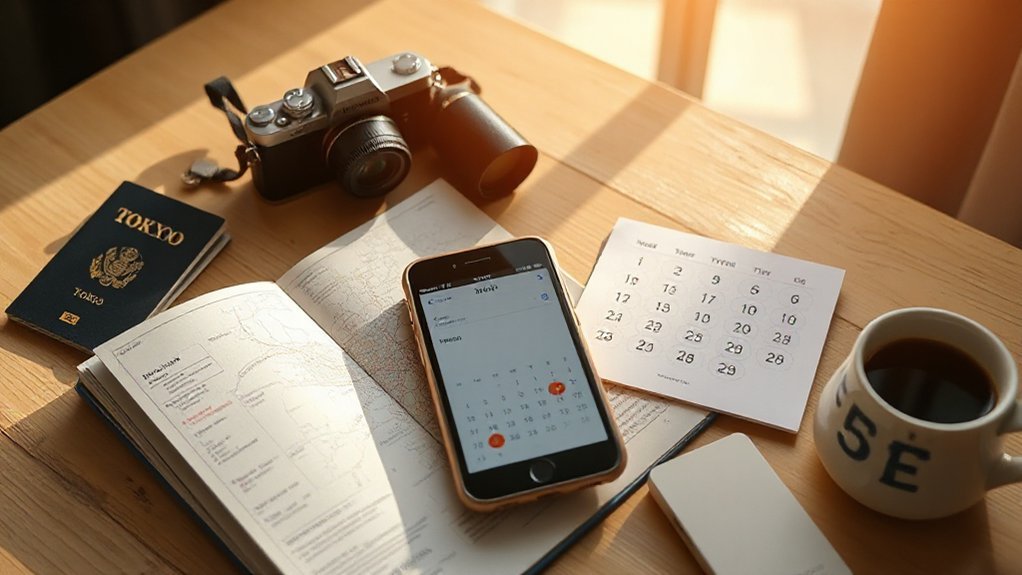
Even if it feels early, start your Tokyo plan a good six months out, because the best stuff goes quiet fast and you’ll want first pick, not leftovers. Lock flights 6–12 months ahead using Google Flights fare alerts, since low‑cost and lie‑flat seats tend to vanish two or three months out. Book hotels 3–6 months in advance on Booking.com, earlier for cherry blossom or foliage weeks, and snag fully refundable rates so you can nudge plans without pain. Set Visa Reminders, check passport dates, and line up Loyalty Programs to stack points on flights and rooms. For meals, grab fine‑dining, Michelin, or high‑Tabelog tables 6–12 months out through Pocket Concierge, TableCheck, or a steady hotel concierge, and mind prepayment and strict cancel rules. Prebook key pieces too: airport transfers, pocket Wi‑Fi or an eSIM, and a JR Pass if it truly saves you. Plan now, breathe later, friend.
Choosing Your Airport and Getting Into the City (Haneda Vs Narita)
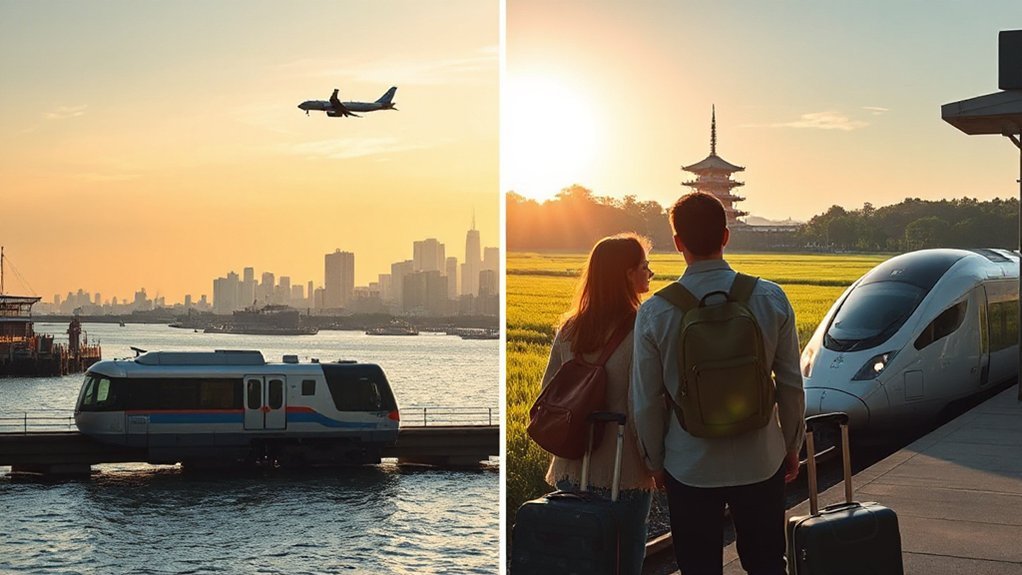
You’ll pick between Haneda inside Tokyo and Narita out in Chiba, and the plain truth is Haneda usually wins for ease since you can be in Shibuya or Shinagawa in about 30 minutes on the Monorail plus JR or the Keikyu line. From Narita you’re looking at roughly 40 minutes on the Keisei Skyliner to Ueno or about 60–90 minutes on the Narita Express to Tokyo or Shinjuku, which is fine if you’ve got a podcast and patience. Factor in what the fare and your bags will do to you and your mood—Narita flights can be cheaper but the extra train or a limousine bus adds time and yen, late arrivals may push you to a bus or car since trains run about 6:00 to midnight, and groups often come out ahead with a prebooked van.
Haneda Vs Narita Basics
How do you pick between Haneda and Narita when all you want is to drop your bags and get into Tokyo fast? Start simple: Haneda sits in the city, rooted in Tokyo’s airport history, and its terminal architecture is modern, clean, and easy to follow. You roll off the plane and hop the Tokyo Monorail to Hamamatsucho or the Keikyu Line to Shinagawa, then connect to the JR Yamanote.
Narita lives out in Chiba, farther out, with express trains like Narita Express and Keisei Skyliner, plus limousine buses to hotels. Landing late or early? Book a private transfer; Tokyo taxis from Narita sting. Got a group or heavy bags? Transfers win. Solo on a budget? Haneda wins, unless your Narita flight is a steal.
Transfer Times and Costs
Honestly, what’s the damage in time and cash once you hit the tarmac? From Haneda, you’re downtown in about 30 minutes on the Tokyo Monorail to Hamamatsucho or Keikyu to Shinagawa, with trains roughly 06:00 to midnight. Narita sits in Chiba, so plan 40 to 90 minutes; Narita Express or the Keisei Skyliner reach hubs in about 40, and some Tokyo Pass bundles include Skyliner. Cheap isn’t always slower: the Keisei Main Line is about US$19.60, while some Limousine Bus runs show about US$8 to Tokyo Station, but it’s roughly 95 minutes. Private cars run about US$146, and Narita taxis near US$174 sting. Weigh Off peak savings against Luggage fees, group size, and patience.
- Haneda: fastest.
- Narita: cheaper, budget time.
- Heavy bags: consider car.
Stay Connected: Esim, Pocket Wi‑Fi, and Offline Maps
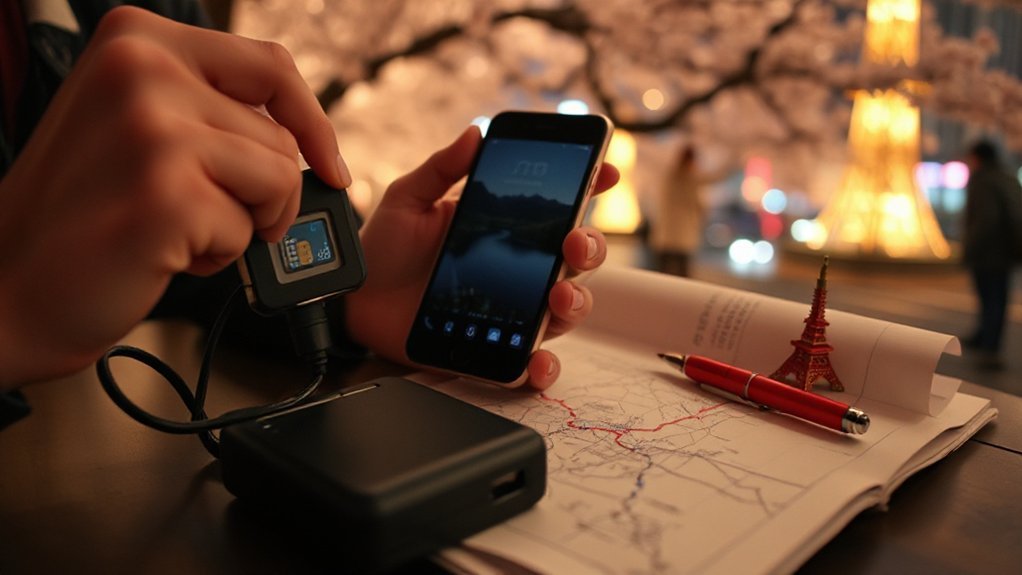
First, pick how you’ll get online: grab an eSIM before you land for quick setup and fast data while keeping your home number, or rent a pocket Wi‑Fi if your phone doesn’t do eSIM or you’ve got a crew, it shares to 8–10 devices but needs a daily charge and a return at the airport. Before your flight, download the Tokyo map in Google Maps and the Japanese pack in Google Translate, then save your hotel, key stations, and a few ramen spots so you’re good even if signal hiccups. Don’t count on free Wi‑Fi—keep a steady connection for trains, bookings, and last‑minute changes, it’s the small thing that saves the day more than once.
Esim Vs Pocket Wi‑Fi
Ever wonder which keeps you saner in Tokyo: an eSIM humming quietly in your phone or a pocket Wi‑Fi bouncing in your bag? An eSIM lets you buy and activate local data in minutes, keep your main number live. Battery considerations tip in its favor, since there’s no extra brick to charge or forget at a cafe. For groups, a pocket Wi‑Fi shares unlimited data with up to 8–10 devices, though you’ll babysit its battery and return it. Cost comparison: solo travelers usually save with eSIMs; families often win with one shared router.
- App delivery vs airport pickup/return with opening hours.
- Choose eSIM for minimal gear; pick Wi‑Fi for older phones and laptops.
- Unlimited options on both; check fair use limits and day rates.
Offline Maps Setup
A simple preflight ritual saves you headaches in Tokyo: download the city’s offline map in Google Maps, then sort your data plan so you’re never stranded on a platform guessing which exit you need. Open Google Maps, tap your profile, Offline maps, and grab a chunk that covers Narita or Haneda to Shinjuku, Asakusa, and Odaiba. It works without roaming, saves battery on long walks, and still shows transit lines and walking paths. Do quick storage management, delete downloads you don’t need, and star custom POIs like hotels, ramen joints, and station exits. For data, pick an eSIM with unlimited plans if your phone supports it; otherwise a prepaid SIM or a pocket Wi‑Fi for groups, just remember daily charging and return at airports.
Getting Around Tokyo: IC Cards, Passes, Apps, and Etiquette
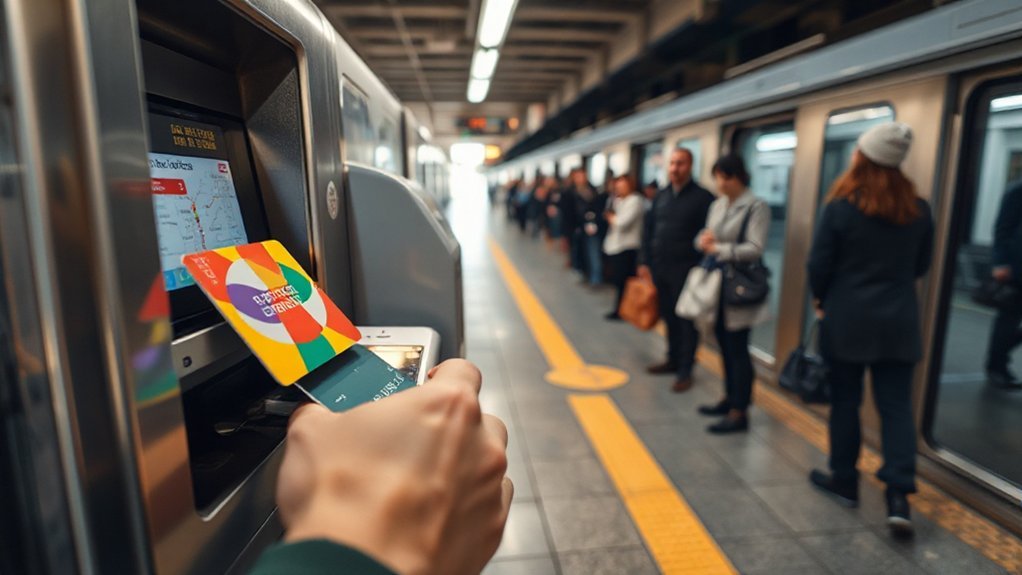
Start by grabbing a Suica or Pasmo and you’ll move through Tokyo like you’ve done this before—tap in, tap out, no fumbling for coins, and you can pay at konbini and vending machines too, then reload at station machines with cash or card after the small deposit. Watch the fare gates swallow your tap, follow the platform signage, and you’re set.
Grab a Suica or Pasmo, tap through Tokyo, pay everywhere, reload easily—then just follow the signs.
- For lots of rides in short bursts, a Tokyo Metro 24/48/72‑hour pass pays; on busy sightseeing days the 72‑hour one is usually cheaper than per‑ride.
- Use Google Maps for routes, fares, and platforms; switch to NaviTime for best car to board, exit directions, and faster transfers.
- Mind the clock and manners: most locals trains pause after midnight; avoid 08:00–10:00 and 18:00–20:00; keep voices low, skip calls, backpack front or on the floor, plan your exit and car so you don’t block others.
You’ll feel at home fast.
The Essential 5-Day First-Timer Itinerary
Five days in Tokyo gives you just enough runway to hit the big sights without sprinting, if you group neighborhoods smart and time a few moments on the dot.
Day 1, slip into Meiji Jingu by 8:00am, then crepes on Takeshita, Omotesando walk, and sunset up Roppongi Hills. Day 2, ride the Shibuya high, meet Hachiko, and wander to Ebisu and Daikanyama for coffee and shops. Day 3, Akihabara to Ueno to Asakusa at dusk. Day 4, Shinjuku’s free deck, garden, and alleys. Day 5, Tsukiji, Ginza, Hidden temples, palace greens.
| Day | Anchor | Why it works |
|---|---|---|
| 1 | Meiji Jingu to Harajuku to Omotesando to Roppongi Hills | Quiet start, crepes, design street, rooftop viewpoints sunset |
| 2 | Shibuya to Ebisu to Daikanyama | Big crossing, mellow cafes, boutiques close by |
| 3 | Akihabara to Ueno to Asakusa | Gadgets, museums, Senso-ji at golden hour |
| 4 | Shinjuku core | Free deck, garden, yakitori lanes at night |
Budget, Safety, Packing Tips, and Money-Saving Passes
You’ve got your five-day game plan; now let’s make it run smooth without bleeding yen. Plan daily costs around ¥8,000–¥15,000 for food and trains, and skip taxis unless it’s late. Do simple meal budgeting: konbini breakfast, set lunch, treat dinner. Preload Suica or PASMO and tap through gates, no coin fumbling. Late-night travel jumps in price, so plan returns before the last train. Rush gets crowded.
Keep it smooth and cheap: budget daily, konbini breakfast, preload Suica, skip taxis, beat last-train surges and rush-hour crush.
Grab passes when they fit. A 24/48/72‑hour Tokyo Metro pass, or the Tokyo Pass add‑on, pays off if you stack short hops; skip the JR Pass unless taking shinkansen day trips.
Pack broken‑in walking shoes and light layers, stations run warm while streets turn breezy. Buy an eSIM or pocket Wi‑Fi so maps don’t bail. Tokyo’s safe; carry small cash, use Seven‑Eleven ATMs, and mind zippers in rush hour.
- Trains + IC cards
- Time your passes
- Emergency contacts, copies
Frequently Asked Questions
Are English Menus and Signage Common Outside Major Tourist Areas?
They’re less common outside major tourist areas. You’ll find uneven Signage distribution and fewer English menus in local neighborhoods. Rely on Translation apps and gestures; learn key phrases. Train stations and chains provide English support.
How Do I Communicate Food Allergies or Special Diets in Japanese Restaurants?
Use Allergy Cards in Japanese and you’ll memorize Key Phrases. Tell staff, “Arerugī ga arimasu,” then list items. Ask, “Kore ni xx haitteimasu ka?” Show translations, point to menu, confirm, avoid dashi/soy, and request preparations.
What Should I Do if an Earthquake Happens While I’M in Tokyo?
Like a ship in a sudden squall, you steady yourself—don’t run: Drop Cover, hold on, protect your head, stay safely inside, avoid windows. After shaking, check alerts, follow Evacuation Routes, expect aftershocks, communicate location calmly.
Where Can I Store Luggage or Strollers for a Few Hours?
Use Station lockers for short stints; many fit suitcases and some accommodate strollers. Ask your Hotel concierge to hold them. If lockers are full, you’ll find EcboCloak or Sagawa, or store at airports and malls.
How Can I Find English-Speaking Doctors or Pharmacies in Tokyo?
You’ll use the Tokyo Metropolitan Health hotline, Google Maps filters, and JNTO’s Medical Support site to find English-speaking doctors and 24-hour pharmacies. Check expat clinics, embassy lists, hotel concierges. Consider telemedicine apps and translation apps.