
Pick your base, set your pace, build your loops. You can run Tokyo yourself: crash in Shinjuku or Shibuya, save Google Maps offline, tap in with Mobile Suica, and skip rush hour unless you like armpits. Link Meiji–Harajuku–Shibuya one day, swing Asakusa–Ueno–Akihabara the next, then steal a day for Kamakura or Hakone. You’ll see the order, the timed tickets to grab, and the traps that burn yen and time—starting with where you sleep.
Key Takeaways
- Pick spring or autumn, choose a 3-, 5-, or 7-day pace, and avoid Golden Week, Obon, typhoons, and rush-hour windows.
- Stay in Shinjuku or Shibuya for connectivity, or Asakusa for tradition; balance nightlife vs calm and proximity to Yamanote and subway lines.
- Download offline Google Maps and Translate; use NAVITIME; set up Mobile Suica/PASMO for tap-and-go trains, vending machines, and quick top-ups.
- Plan airport transfers: Haneda via Keikyu or Monorail; Narita via Skyliner or N’EX; use limousine buses for luggage and taxis for off-hours.
- Prebook teamLab and Ghibli slots and popular sushi counters; structure days with loops like Meiji–Harajuku–Shibuya and Asakusa–Ueno–Akihabara.
When to Visit and How Many Days to Allocate
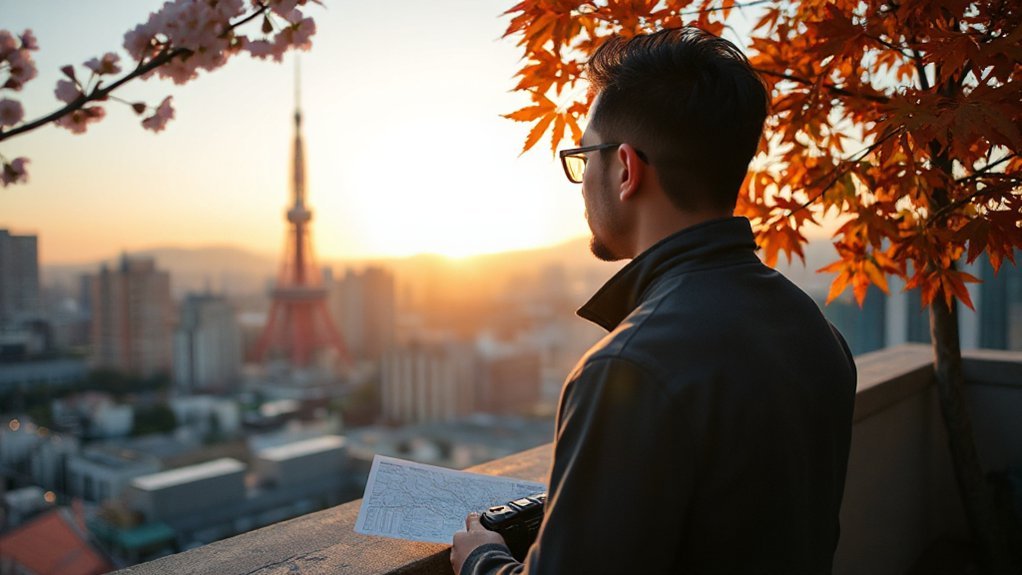
When’s the sweet spot to hit Tokyo? Spring and autumn treat you best, with mild 10–20°C days, cherry blossoms in late March to early April, and crisp reds from mid‑October to mid‑November. Summer gets hot and sticky, and August to September brings typhoons, so you’ll juggle umbrellas and sweat. Watch the crowd spikes during Golden Week, Obon, and New Year; they eat time and patience, and lines snake longer than a ramen queue. That’s the Seasonal tradeoffs in plain view.
Plan 3–4 full days if you want the hits—Shibuya and Harajuku, Asakusa and Ueno, Shinjuku and Ginza—plus a couple museums and markets. Give yourself 5–7 days for a calmer beat with one or two day trips like Hakone, Nikko, Kamakura, or Disney. Stretch to 10+ for deeper wandering beyond Tokyo. Practice Itinerary pacing: favor weekdays for teamLab and museums, and buy fixed‑time tickets ahead to dodge weekend queues.
Choose Your Base: Best Areas to Stay in Tokyo
Pick your base like you’re picking boots for the day: Shinjuku if you want the nightlife hub, with neon alleys, late trains, and bars stacked over ramen joints where you can roll in near midnight and still find a seat. Choose Shibuya for central convenience, steps from the scramble, quick hops on the Yamanote Line, and easy walks to Harajuku and Meiji Jingu when you need a breather. Go Asakusa for a traditional vibe, with Senso-ji at dawn, tatami rooms in small inns, and street snacks on Nakamise that feel old-school in the best way, even if your suitcase has wheels.
Shinjuku Nightlife Hub
Though Shinjuku can feel like a neon beehive, it makes a smart base because you’re parked on top of JR Shinjuku Station—the world’s busiest—where the Yamanote, Chuo, and a fistful of subway lines put both late nights and day trips in easy reach. East means Kabukicho, Golden Gai, Omoide Yokocho, and Karaoke Culture; it’s loud, bright, and fun. West stays calmer, with Hotel Sunroute Plaza, business towers, and the Tokyo Metropolitan Government decks for free skyline checks. Split the difference near the South Exit or Shinjuku‑Sanchome, so you can walk 5–15 minutes to the buzz but sleep easy. If you want quiet with a hop, try Ikebukuro or Shibuya, one stop away.
| Area | Vibe | Perk |
|---|---|---|
| East | Electric | Nightlife |
| West | Quiet | Views |
| South/Sanchome | Balanced | Proximity |
Shibuya Central Convenience
Hachiko’s bronze nose is your north star here, because staying by Shibuya Station drops you next to the statue and the Scramble Crossing in two to five minutes, with trains fanning out like spokes so you’re in Harajuku in about two minutes and Shinjuku in roughly seven on the Yamanote. You’ve also got the JR Saikyo and Shonan‑Shinjuku lines, plus Ginza, Fukutoshin, and Tokyu lines, so day trips feel simple, even on a sleepy morning. Suica or PASMO taps work everywhere, and Multilingual signage and plentiful Luggage lockers keep you moving when rooms aren’t ready. Pick a base like JR‑East Hotel Mets or Shibuya Granbell, then aim up to Shibuya Sky for a quick 360 and dinner. Nightlife, noodles, last trains—everything’s close and forgiving.
Asakusa Traditional Vibe
If you want Tokyo to slow down and bow a little, Asakusa is the base that does it without fuss. You wake by Senso-ji, slip into Temple rituals at dawn, then wander Nakamise as lanterns blink on at night, and it feels right. Stay in a ryokan or a cheap business hotel five to ten minutes from Asakusa Station on the Ginza, Toei Asakusa, and Tobu Skytree lines. Ueno sits 10–15 minutes away on the Ginza Line, Shibuya about 20–25 with a quick transfer, and river cruises leave nearby. For a quieter, design-led pocket, walk to Kuramae for boutique guesthouses, Traditional artisans, and Kappabashi’s kitchenware street. Hug the Sumida River for skyline views and a two-minute hop to Tokyo Skytree. Breakfast often included too.
Essential Apps, Offline Maps and Connectivity (eSIM or Pocket Wi‑Fi)
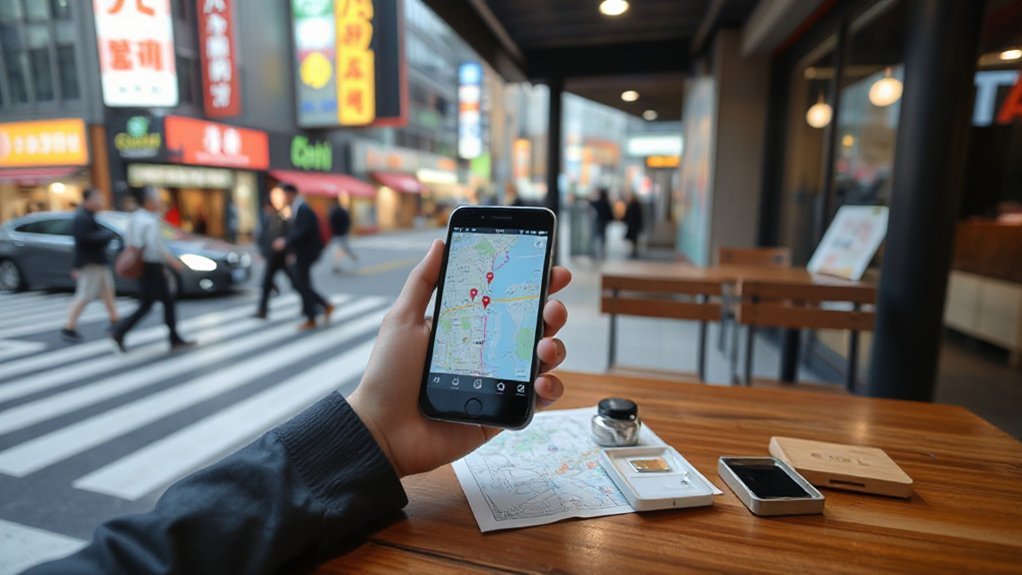
Before wheels touch down, load your toolkit: save Tokyo’s offline map tiles in Google Maps for trains, walking routes, and station exits, install Google Translate with the Japanese offline pack and camera OCR, add NAVITIME for carriage‑by‑carriage transit help, and keep MySOS/COCOA handy if they’re required. For staying online, eSIM is the clean, set‑and‑forget pick for iPhone—you keep your number, get unlimited data, and can set it up through Klook at arrival—while Android folks who like a physical option can grab a prepaid SIM at the airport, though mobile Suica/PASMO usually plays nicer on iPhone. Traveling as a pack, rent a pocket Wi‑Fi that shares to about ten devices with unlimited data, just remember it needs a daily charge and a return at the end—ask me how fun that sprint to the kiosk is when your gate’s already boarding.
Must-Have Travel Apps
How do you make Tokyo feel smaller the minute you land? Start with must-have apps that do real work. Download Google Maps offline for the city, then you still get walking and train routes without data. Grab Google Translate’s Japanese pack, text and camera, so menus don’t beat you. Use NAVITIME for platform numbers and exit doors, and let Mobile Suica live in Apple Wallet to tap through gates like you belong. Add simple expense trackers and event calendars to keep yen and time in line.
- Save Tokyo in Google Maps offline, export the area before you fly.
- Install Translate offline, practice by scanning a takeout menu at home.
- Set up Mobile Suica, load a thousand yen, and test a gate.
Esim Vs Pocket Wi‑Fi
Why make Tokyo harder than it needs to be? Go eSIM if you’re solo and want quick setup—buy on Klook, scan the QR, and you’re online before the luggage carousel stops. You keep your home number, get unlimited data on newer iPhones and Androids, and skip airport lines. If you’re a group, grab a pocket Wi‑Fi; it feeds 8–10 devices, costs less per person, but needs daily charging and a return run, which eats time.
Do a Cost Comparison: eSIM for ease, pocket Wi‑Fi for shared data value. Download Tokyo in Google Maps and the Japanese pack in Google Translate before you fly, so outages don’t rattle you. Save the provider app for Activation Troubleshooting. Keep MySOS and COCOA handy—simple, quiet helpers in Tokyo.
Getting In: Transfers From Haneda and Narita
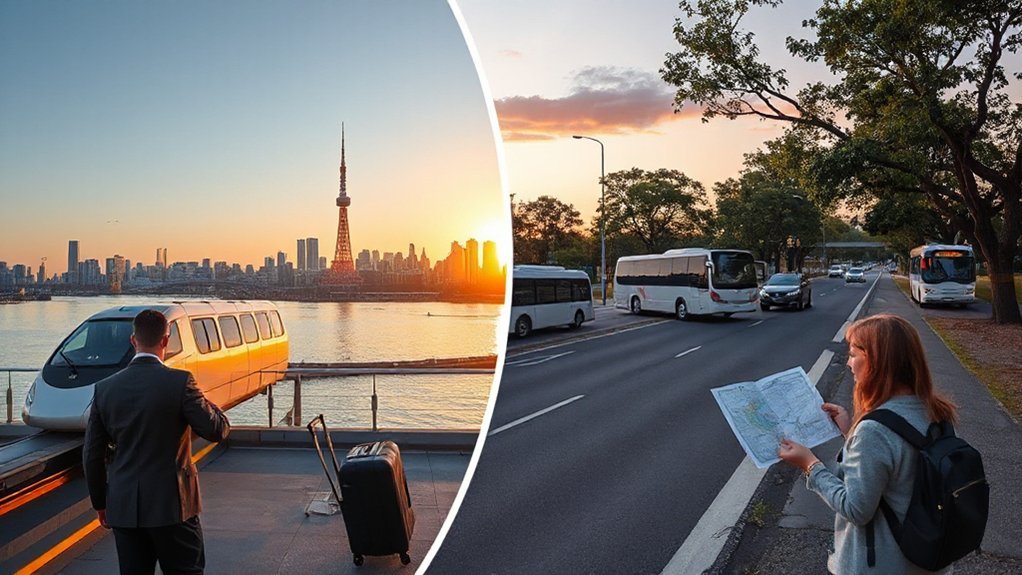
Where should you land and what’s the fastest way into town? Haneda puts you close, about 30 minutes to Shibuya or Shinagawa. Hop the Keikyu Line to Shinagawa or the Tokyo Monorail to Hamamatsucho, then make a quick JR connection. Narita sits farther out in Chiba; ride the Keisei Skyliner to Ueno in 40 minutes, or take the Narita Express to Tokyo or Shinjuku in 60–90 minutes. If you’re rolling deep with suitcases, airport limousine buses drop you at hotels, no stair lugging, sit and coast.
Late arrival or crack‑of‑dawn flight? Trains run 06:00–00:00, so book a private transfer or taxi outside those hours. Mind Peak hour pricing and Taxi etiquette—line up, don’t slam doors, and cash or card works.
- Reserve N’EX or Skyliner seats online to skip ticket stress.
- Prebook a meet‑and‑greet van for families or groups.
- Check last‑train times before customs, not after.
Mastering Transit: Suica/PASMO, Day Passes and Route Planning
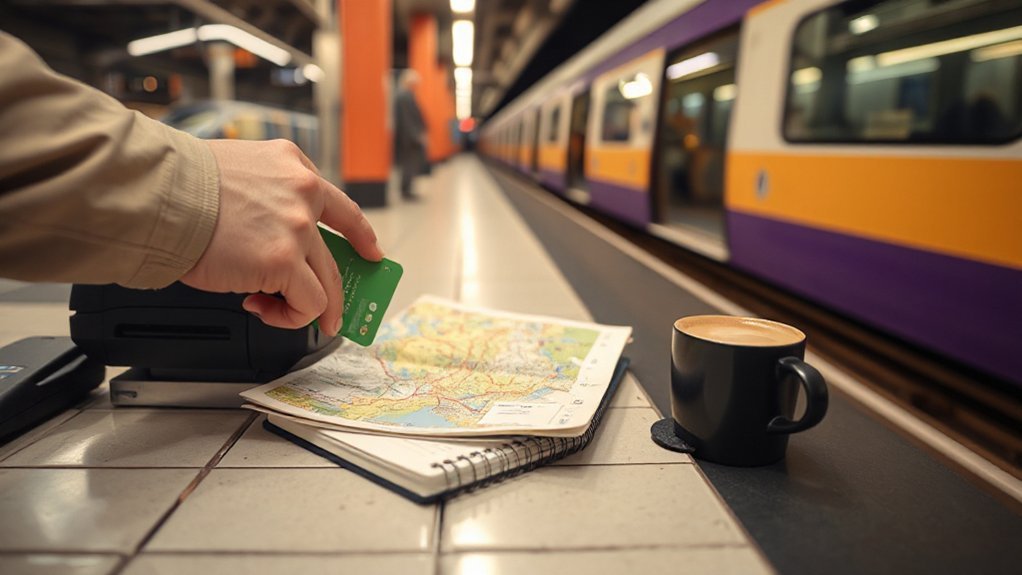
Even if you’ve never touched a subway turnstile, you’ll get around Tokyo fast once you grab a Suica or PASMO and treat it like a magic key—tap in at Shibuya, tap out at Asakusa, buy a bottle of tea at a convenience store on the way, and reload at the next station with cash or card like it’s no big deal.
Mobile Suica on iPhone tops up fast and skips the ¥500 deposit; Androids can’t run PASMO Mobile, so get a physical card. Top up strategies: add a little often. For Route sequencing, use Google Maps, check Navitime for platforms. Trains stop around midnight; avoid 08:00–10:00 and 18:00–20:00, ride end or middle cars.
| Pass | Best use | Tip |
|---|---|---|
| Metro 24h | 6+ short hops/day | Start early, ride off-peak today |
| Metro+Toei 72h | Weekend museum runs | Plan clusters, skip backtracking |
| IC card (Suica/PASMO) | Mixed trains, buses, stores | Auto fares, tap and go |
Smart Booking: Timed Tickets and Reservations You Should Make Early
You’ll want Ghibli Museum tickets the moment the monthly batch opens on Lawson, because they vanish fast, blink and you’ll be back at square one. For teamLab Borderless, grab a timed slot on the official site or Klook a couple weeks ahead, pick the first or late evening entry, and show up 15–30 minutes early so security and crowds don’t eat your time. Sushi counters are tiny and strict, so book 2–4 weeks out through your hotel, Omakase, or TableCheck, expect a card hold or prepay, and be on time like your seat depends on it—because it does.
Ghibli Museum Tickets
Most Ghibli Museum plans fall apart at the ticket step, so lock yours in early and don’t blink. Tickets are advance-only, sold through Lawson or authorized resellers, and fresh stock usually drops on the 10th at 10:00 JST, which is when you click fast and avoid ticket scalping. Pick a timed slot—10:00, 12:00, 14:00, or 16:00—and treat it like a train you can’t miss. Names get checked, passports too, and the photo policy is strict inside, so pockets not cameras. If you strike out, watch for cancellations, but don’t count on them.
- Double-check date and time; tickets are non-refundable and non-transferable.
- Arrive right at your window; late entries may be turned away.
- Weekends and holidays vanish in minutes; consider a weekday for better odds.
Teamlab Borderless Slots
After wrangling Ghibli tickets, turn to teamLab Borderless before it quietly slips out of reach. Book a timed-entry slot right away, because weekends and evenings sell out weeks ahead, and you don’t want to play chicken with the calendar. Buy through the official site or trusted resellers like Klook or GetYourGuide, then double-check the exact entry time and the cancellation or reschedule rules. Pick the first morning slot for thinner crowds and room to wander, or choose late afternoon into evening if you crave glowing rooms and don’t mind company. Pad your travel, 30–60 minutes from central Tokyo, since transfers dawdle. If you’re stacking other timed stops, leave 2–3 hours between. Before you go, scan Photography Policies and Accessibility Options, and plan accordingly now.
Sushi Counter Bookings
Before the craving hits, lock in that sushi counter like it’s a train you can’t miss, because those tiny Edomae spots in Ginza, Tsukiji/Toyosu, and Shinjuku run on a few precious seats and strict clocks. Book 3–8 weeks ahead, or 2–3 months for Michelin. Lunch seatings (think 12:00–14:00) often cost half, yet still need reservations. If the place is phone-only, use a hotel, Pocket Concierge, or TableAll, expect a card hold. Show up 5–10 minutes early; late arrivals lose courses. Omakase runs from short lunches to pricey dinners. Ask about Chef interaction and Sustainability sourcing, and confirm allergies and drinks.
- Verify cancellation windows (48–72 hours) and no‑show fees.
- Confirm menu length and price before you sit.
- Note timed seatings; don’t linger past last nigiri.
Neighborhood Building Blocks: Shibuya, Harajuku & Meiji Jingu
Good shoes will carry you on an easy loop that threads calm, color, and city buzz in one go: start at Meiji Jingu, slip through the giant torii into a quiet 70‑hectare forest where the shrine opens daily around 06:00–17:00 and costs nothing, then walk out by Harajuku Station to Takeshita Street, a tight pedestrian lane packed with crepes, youth fashion, and quirky shops that really crowds up on weekends. Mind basic Shrine Etiquette, then sample crepes and bold Youth Fashion; JR Yamanote sits right here if you’d rather ride.
Angle down Omotesando, then peel onto Cat Street toward Shibuya Station. Cross the Shibuya Scramble Crossing, then head up to Shibuya Sky for a crisp overhead view (open daily, around ¥2,500). Meet at Hachikō, wander Center Gai and Dogenzaka for ramen and izakaya, and call it a tidy half‑day loop on foot or train, with bright neon bites.
Classic Culture Loop: Asakusa, Ueno Park and Akihabara
Morning ritual: start at Asakusa’s Senso-ji, Tokyo’s oldest temple (founded in 645), where you duck under the big red lantern at Kaminarimon and follow Nakamise-dori past rice crackers, paper fans, and lucky charms to the main hall, incense curling up like a quiet welcome.
Pause for Kaminarimon Photography, then duck into side streets for taiyaki and a quick omikuji. Train to Ueno now, or stroll the river if the air’s soft. In Ueno Park, pick one museum and don’t rush; Tokyo National Museum rewards slow eyes. Loop by Shinobazu Pond; in late March the sakura turn paths to confetti. Drop to Ameyoko for skewers and bargains, then ride to Akihabara. Work mega-stores, peek into Mandarake, and hunt Akihabara Retrogames like you mean it.
- Aim for one museum, not three.
- Eat on the go at Ameyoko; move, chew, repeat.
- Set a budget before Akihabara; temptation stacks floor by floor.
Modern Tokyo Track: Odaiba, Roppongi, Ginza and Skytree Views
You’ve had your fill of temple smoke and retro game stacks, so now point your shoes at the city’s shiny side and keep the pace. Start in Ginza by daylight, walking Chuo‑dori past flagships like Mitsukoshi and Ginza Six, then duck for sushi or kaiseki that won’t waste your time or hunger. Aim next for Tokyo Skytree, 634 meters, with the Tembo Deck at 350 m and the Tembo Galleria at 450 m; tickets run about ¥2,100–¥3,100, and late afternoon turns the city gold.
When the lights snap on, Odaiba’s your stage for Night photography: Rainbow Bridge, the pocket Statue of Liberty, DiverCity and Aqua City glowing. Plant your tripod at Odaiba Seaside Park or along the Palette Town promenade for skyline reflections.
Finish in Roppongi at Tokyo City View in Mori Tower; it’s about ¥1,800, links to the Mori Art Museum, and nails Architectural illumination in 360°.
Sample 3–7 Day Itineraries and Day Trip Ideas
A few smart plans go a long way in Tokyo, so pick the pace that fits and stick to it: a 3‑day fast‑track that skims the big hits, a 5‑day balanced loop with one easy escape, or a 7‑day deep‑dive that folds in classic day trips without turning your feet to ash.
Choose your pace: 3-day sprint, 5-day loop, or 7-day deep-dive without burnout.
3 days: Meiji Jingu, Harajuku, Shibuya; Senso‑ji plus Sumida cruise or Ueno and Akihabara; then Tsukiji at dawn, TeamLab Odaiba or Ginza. Use Suica.
5 days: linger in Shinjuku, a culture day in Asakusa and Ueno, day‑trip to Kamakura for Hachimangu and the Great Buddha, then wrap with Ginza, izakaya.
7 days: add Hakone, Kawaguchiko, and Nikko; JR Pass if stacking long rides. Seasonal festivals and Photography itineraries slot anywhere.
- Start 07:00–09:00; buy returns or JR/Tobu passes.
- Expect 1–2 hours each way; wear comfy shoes, water.
- Views: Chureito Pagoda, Lake Ashi, Kegon Falls.
Frequently Asked Questions
Do I Need Cash, or Are Credit Cards Widely Accepted?
Cards are widely accepted, but you’ll want to carry cash for shops, temples, spots. Use IC cards for transit and convenience stores. Withdraw yen at ATMs or use Currency exchange counters when rates seem fair.
How Do I Handle Trash and Recycling Without Public Bins?
Like a turtle with its shell, you’ll carry your trash; follow the carry out policy. Pack a zip bag, return waste to your hotel, use convenience-store bins, and practice separate sorting: burnable, cans, PET bottles.
Where Can I Store Luggage or Use Coin Lockers?
Station lockers at major JR and subway hubs mean you’ll stash bags; sizes vary and accept IC cards. If full, use baggage counters, hotel storage, or Luggage delivery like Yamato TA-Q-BIN between airports and hotels.
What Etiquette Should I Know for Shrines, Trains, and Restaurants?
Like a ripple, you respect norms: perform Shrine purification, bow twice, clap twice, bow once. On trains, queue, keep phones silent. In restaurants, follow Chopstick etiquette, don’t stick upright, skip passing, remove shoes on tatami.
Can I Visit Onsens if I Have Tattoos?
Yes, you can, but many onsens still restrict tattoos. You’ll need to check each facility’s policy, use tattoo coverups, or choose private rentals like family baths or ryokan rooms. Sento accept ink. Be discreet please.