
Neon chaos meets sweet calm: you weave Shibuya’s Scramble, then snag crepes on Harajuku’s Takeshita like it’s a sport. You tap gashapon rows in Akihabara, win a retro game (or don’t, no judgement), and slurp a DIY ramen cup with your name on it. TeamLab’s floors move, Disney’s lines don’t if you plan, and Tsukiji feeds you breakfast on your feet. Here’s how to stitch it all into a teen‑proof day.
Key Takeaways
- Shibuya Scramble and Harajuku morning tour: Tsutaya lounge views, Takeshita Street sweets, purikura prints, and cosplay browsing before crowds.
- Akihabara Electric Town crawl: Radio Kaikan figure hunt, multi-floor arcades, and gashapon alleys; set a coin limit.
- DisneySea/Disneyland day: pre-buy tickets, use the app for waits and bookings, arrive early, ride headliners first.
- Tsukiji Outer Market food safari and Yokohama Chinatown snack walk: arrive at sunrise, graze small bites, share dishes, and keep cash handy.
- TeamLab Borderless evening immersion plus Cup Noodles Museum workshop: timed tickets, interactive art, design-your-own noodle cup experience.
Shibuya Scramble Crossing and Share Lounge View Experience
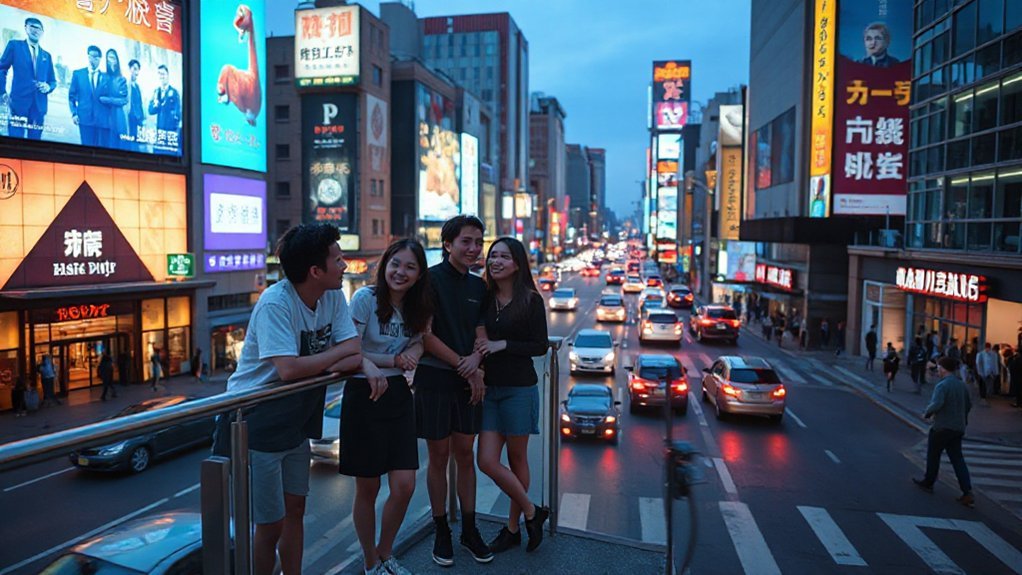
Start by letting the city sweep you along to Shibuya Scramble Crossing, that wild five-way intersection right outside Shibuya Station where, every signal change, thousands of people pour into the street like a fast tide. Stand at the curb, feel the hush before the green, then watch the crowd choreography click into motion, phones up, bags swinging, neon reflections sliding across slick pavement. For a front-row perch, ride up to the Shibuya Tsutaya Share Lounge on the fourth floor of the Tsutaya/Starbucks building. Grab a window seat, pay about eleven bucks, and settle in with unlimited snacks and drinks while the billboards glow like a movie set. It’s teen-friendly and easy, especially at dusk or on rush-hour runs when the energy spikes. Snap the live-feed camera link for later, or go higher: Shibuya Scramble Square’s observatory and nearby cafés give you wide, sunset-ready views without the elbowing. Today.
Harajuku Takeshita Street Kawaii Walk and Themed Cafes
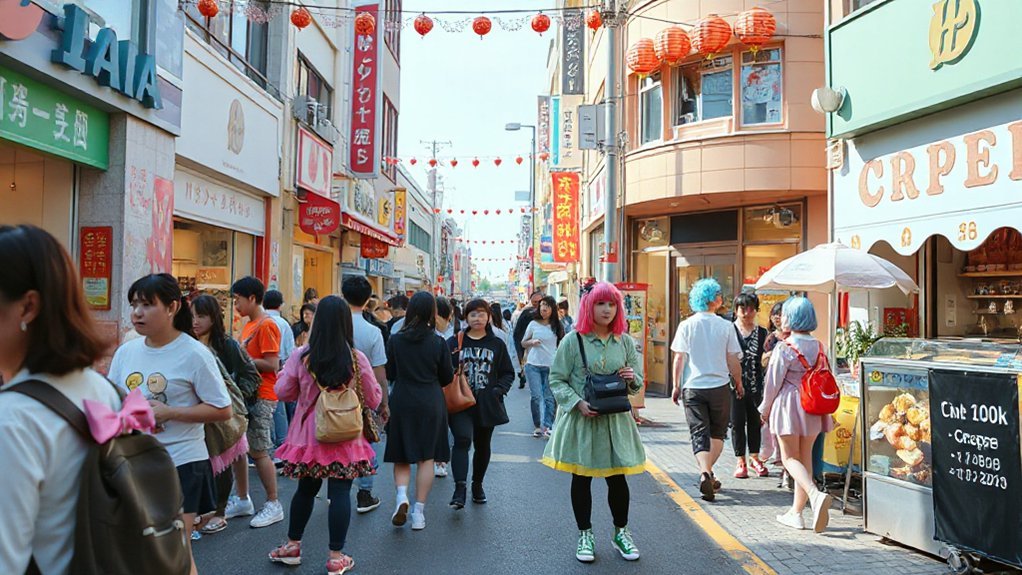
Before noon, slip into Harajuku’s Takeshita Street while it’s still waking up, because this is a short, two-block lane that fills fast after about 11:30 and you’ll want room to wander slow, poke into shops, and snack without getting shoulder-checked. Start with giant fairy-floss at Totti Candy Factory, then split a crepe from a stand just off the strip, many are not vegan so ask first, no fuss. Duck downstairs to NOA Print Club in Jingumae, B1, and crank out purikura sticker prints for about 300–400 yen, quick keepsakes. If dress-up is your thing, look for Costume Rentals near the alleyways and make it a one-hour detour. For lunch, the Kawaii Monster Cafe and Pompompurin Cafe are colorful and popular, so expect a number system or a line. Restrooms are scarce, think Alta 3F after 10:30, and at McDonald’s or Zettena. Bring small cash; cotton-candy may be cash-only.
Akihabara Anime and Retro Game Tour
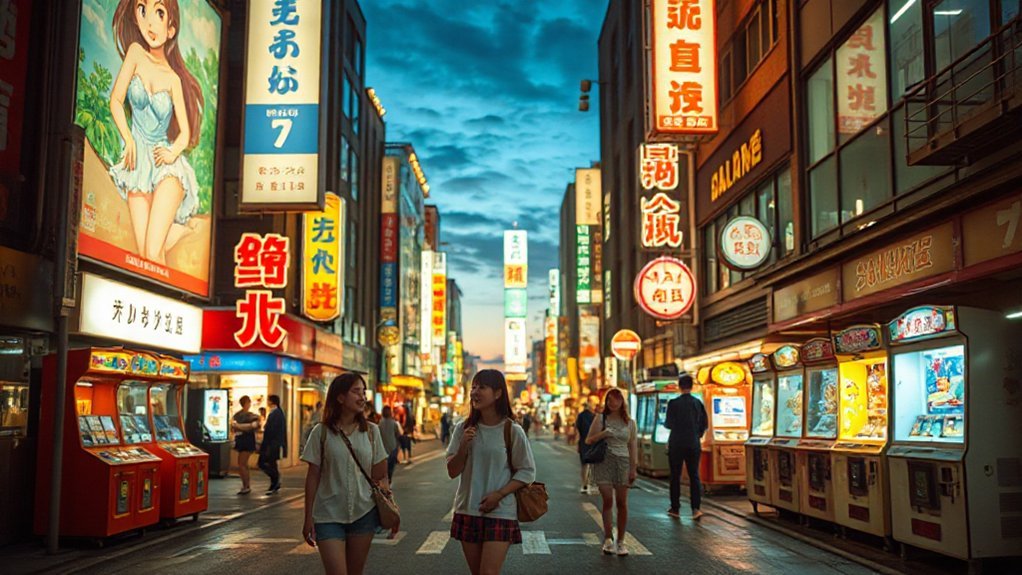
Though the neon doesn’t pop till night, you’ll feel Akihabara spark the minute you step out at JR Akihabara’s Electric Town exit and roll toward Chuo-dori, where the arcades stack high and the themed cafés and specialty shops crowd in like comic panels. That’s your cue to slow down and pick a lane, because Figure Hunting starts fast here. Radio Kaikan stacks rare kits and figures in glass, so you scan. At Volks Hobby Paradise, compare model sprues, trade tips, and nab parts without fuss. Hit multi‑storey arcades for Arcade Challenges, from claws to foot-thumping rhythm games. Duck into gashapon alleys, budget 100–500 yen a pull, and enjoy the suspense. Finish at a character café, then grab a purikura strip.
| Stop | Why it rocks | Quick tip |
|---|---|---|
| Radio Kaikan | Rare figures and hobby stalls | Check corners and shelves |
| Multi-level Arcades | Retro cabinets and rhythm games | Set a coin limit |
Cup Noodles Museum Hands-On Ramen Workshop
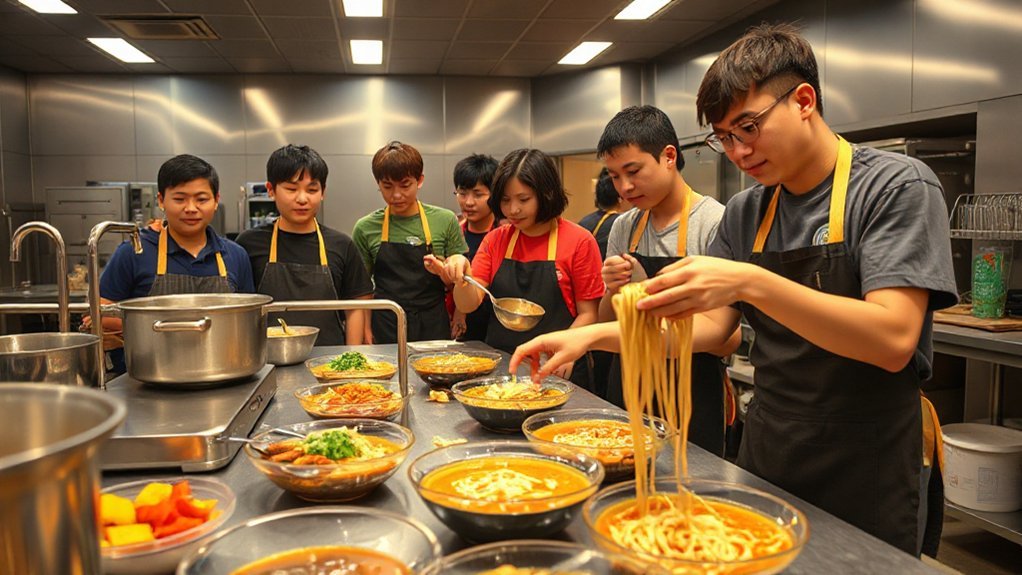
Designing your own instant ramen at Yokohama’s Cup Noodles Museum feels like stepping behind the snack aisle and getting to push the buttons yourself, because you sketch a cup, pick a broth, pile on toppings, and then watch your noodles ride the little package line till they’re sealed up and ready to take home. You’re not just doodling; you’re dabbling in Flavor Science, learning how chili hits harder than curry, how seafood broth plays nice with corn and egg, and why less sometimes tastes like more. Then comes Packaging Design, simple and satisfying, as your cup clicks through the mini factory and gets bundled in a neat bubble bag you sling like a trophy. Book ahead if you’re eyeing weekends or school breaks, because spots go fast and walk-ups sulk. Teens love that it’s hands-on and quirky, and you walk out with something you made, not another keychain.
Tokyo Disneyland or Disneysea Guided Day With App Tips

After slinging that bubble-bag ramen, you’re ready for a bigger playground: Tokyo Disneyland or DisneySea, where the app is your secret map and stopwatch. Your Morning Strategy starts before the gates, so pre-buy tickets, load them in the app, and get there about 15 minutes early, earlier for DisneySea, and you’ll jog past the long lines and hit a headliner with short waits. Open the app and grab FastPass or standby spots for must-dos—Disneyland’s Haunted Mansion, Pirates, or Buzz Lightyear; DisneySea’s Tower of Terror, Indiana Jones, Raging Spirits, or 20,000 Leagues—then watch live wait times and shift on the fly.
Keep the app handy to pull show times and mobile-order lunch; it skips language bumps and saves your legs. Plazma Ray’s Diner and Casbah both surprise with solid vegan bites. Mark quick Photo Spots—castle hub, Mediterranean Harbor, Mysterious Island—and move on. Ride, refuel, repeat, with zero dawdling today.
Sunshine City Indoor Fun: Aquarium, Observatory, and Sanrio Stops
On sticky days or in a downpour, Sunshine City in Ikebukuro is your indoor base camp, the kind of all-under-one-roof stop where you can stack easy wins without frying in the sun or soaking your socks. Start at Sunshine Aquarium up top, where rooftop tanks glow and the close-up Penguin Encounters and seal swims feel so near you’ll spot whiskers, and you’re still in the city. Then ride the elevator to SKY CIRCUS Sunshine 60 Observatory for 360° views and hands-on bits that keep teens busy while the weather does its worst. Swing by the small Sanrio Café for cute character desserts; seating is tiny, and they often hand out numbers, so grab a slot, wander, and circle back. Finish with Themed Merch in the shops, satisfying stuff.
Indoor base camp: rooftop aquarium, teen-proof observatory, Sanrio sweets—dry socks, easy wins in Ikebukuro.
- Glass tunnels, fish overhead.
- Skyline selfies, no windburn.
- Numbered tickets, friend-shaped cakes.
- Dry socks, happy crew.
Gashapon Arcade Hunt Across Ikebukuro and Shinjuku Stations
You step out of Sunshine City with dry socks and a sugar buzz, and the real scavenger hunt starts in the station corridors where gashapon machines run in long, bright rows like a candy wall. Hit the east-side exits of Ikebukuro and duck into the multi‑level arcades; you’ll spot themed racks for anime, idol lines, and Sanrio that teens swarm for after school. Most spins run 200–500 yen, so load up on coins first, or grab change at a kiosk or conbini. Do quick Label Photography: snap the machine’s title and maker, plus the chart showing capsule sizes and rarities, then keep a list on your phone. Over in Shinjuku’s underground passages and shopping hubs, clusters sit by game centers and Don Quijote, with limited sets that rotate by season. Use Trade Strategies with friends, swapping duplicates there, and save your yen for the next rack.
Tsukiji Outer Market Morning Food Safari
Show up at Tsukiji Outer Market right after sunrise at Tsukiji station, and you’ll catch the good stuff first—fresh nigiri for breakfast, hot steam in the cool air, and stalls rattling open before 9:00 AM. You wander the lanes and taste as you go—sweet tamagoyaki, grilled seafood skewers, a scallop kissed by a torch, and a quick stand at a sushi bar where the chef makes it to order, fast and proud. Bring small yen bills since many counters don’t take cards, queue with patience or choose standing‑bar service to move quicker, step to the side to eat so you’re not blocking the way, and follow the flow like it’s a narrow river with knives and kitchen shops waiting between bites.
Dawn Seafood Tastings
Ever wonder why Tokyo wakes up hungry before sunrise? You’ll find out at Tsukiji Outer Market, hopping off at Tsukiji Station, where the Seasonal Catch hits the ice by 6:00–7:30 AM and the lines stay kind. Guides and stall owners share quick Sustainability Notes and names for fish you’ll actually remember later.
- Nibble uni, fatty toro, and warm tamago, sharing bites so no one taps out too soon.
- Slip through narrow lanes, spot grills throwing skewers and clams, and follow the steam, not the crowd.
- Carry ¥2,000–¥5,000 in small bills; many counters are cash-only, no drama, no card.
- Try a guided loop or DIY route to hit top stalls fast and practice simple ordering phrases.
Finish with a quick sushi stand, then stroll satisfied.
Street Food Highlights
From those first bites of uni and tamago, the morning keeps rolling into a street-food safari through Tsukiji Outer Market, the lively remnant of the old fish world even after the wholesale moved to Toyosu. You wander past sizzling grills and neat trays of pickles, then duck into Hidden Stalls where a lone auntie torches scallops and hands you a paper boat like it’s no big deal. Skip a sit-down and graze: a standing sushi bar for two perfect cuts, a tamago shop for a warm slice, a skewer of fatty tuna that melts and disappears. Bring cash so you can say yes fast. Arrive early, beat the lines, and turn it into a game—hunt the weirdest bite, while friends chase Vegetarian Options too.
Etiquette and Navigation
Before the grills really heat up, step off the Metro at Tsukiji Station early and slide into the Outer Market while the lanes are still waking, then walk single file and keep to the left so you don’t jam the flow. Carry cash and small change so you can pay fast and keep lines moving, and tuck a zip-lock for trash since bins hide around here. Mind queue etiquette: wait single file, don’t crowd stalls, don’t touch displays. Use sumimasen to slip by and arigato gozaimasu when served, and point at prices if words fail. Do your map reading at a side wall, not mid-lane, and finish bites at a counter, not walking.
- Steam lifts off grills, tiny stools tucked tight.
- Vendors nod, knives flash, prices smudge.
- Scooter carts buzz; you pause, let them glide.
- You point, pay, step aside, smile.
Teamlab Borderless Digital Art Immersion at Azabudai Hills
You’ll step into light and crystal rooms that ripple when you move, with digital water sliding past your feet and sound trailing you, so bring a fully charged phone because every corner begs a photo. Book a timed entry ahead on the official site or Klook since slots sell out fast and some cards hiccup, and pick a weekday morning if you can to skip the shoulder-to-shoulder shuffle. Get there 10–15 minutes early, plan 1.5–3 hours since it’s all indoors and perfect for heat or rain, and slow your pace because the art reacts to you—your best shot often shows up a beat after you do.
Interactive Light Installations
While the city hums outside, you step into TeamLab Borderless at Azabudai Hills and the rooms seem to wake up to you, with light that stretches, shivers, and follows your hands like it’s curious. It’s an indoor world of Sensor Technology where projections track your steps in real time, and Color Psychology quietly steers your mood, calm blues shifting to hot pinks when you speed up. You steer the scene.
- A crystalline light forest that parts as you walk, like reeds in a clear stream.
- Flowing digital water that curls around your shoes, then races ahead when you hop.
- Morphing walls of color that “listen” to touch and ripple like warm paint.
- Projection-mapped chambers where patterns drift between rooms, so your story keeps going.
Timed-Entry Tips
Even if the art feels endless inside, the clock matters at Borderless, so lock in a timed-entry ticket online early because evenings and weekends vanish fast, like, blink-and-it’s gone. Build a small Entry Buffer: arrive 10–15 minutes before your window, let staff scan you in, and skip the long snake of latecomers. Treat the time like a session, not a buzzer, roam for about an hour, then clear the path for the next wave. If your credit card hiccups on the official site, hop to Klook for Backup Tickets; it’s a steady workaround folks use for Planets and it works fine here too. Book two teens on one order, keep QR codes ready, and you’ll flow door to door. No fuss, just smooth sailing.
Yokohama Chinatown Street Eats and Culture Walk
How do you eat your way through Japan’s largest Chinatown without getting stuck in one line? Start at Motomachi-Chukagai Station, look up at Ornate Gates, and let the colors and drums set your pace, not the crowds. Walk light, trust your eyes and nose, and keep an ear out for temple bells tucked between shops, because that’s where the Community History hums. You’re here for bites, not a banquet, so share everything, sip something cold, and keep moving—simple as that.
- Grab xiaolongbao first; poke a vent, slurp the broth, then finish the dumpling as steam fades.
- Split a grilled pork bun and a crispy sesame pancake; salty, sweet, and gone before the next corner.
- Hit a boba or fruit-tea stand; carry a cup while you browse lanterns and charms.
- Duck into a dim sum spot; order small plates, swap tastes, and watch shrine doors.
Frequently Asked Questions
What’s the Recommended Age Range for These Teen-Focused Tours?
You’ll find most tours recommend ages 12–18, with flexible age brackets depending on maturity. You should check each itinerary’s activity fit, since some skew younger, while others suit older teens seeking independence, nights, or challenge.
How Much Walking and Standing Time Should We Expect Daily?
You’ll typically walk 6–10 km daily with 2–3 hours of standing, plus transit stairs. Expect average distances of 7–8 km. Plan recommended breaks every 60–90 minutes, hydrate, rotate seats when available, and wear supportive shoes.
What Happens in Case of Rain, Heatwaves, or Typhoons?
Tours proceed unless conditions are unsafe. In rain, you shift to indoor alternatives or adapt routes. During heatwaves, guides adjust pace and breaks. For typhoons, operators postpone or cancel; you’ll follow cancellation policies, receive refunds.
Are Guides English-Speaking and Trained for Teen Safety and Supervision?
Yes—who wouldn’t want English-speaking guides trained for teen safety? You get vetted staff with background checks, teen-focused supervision, clear emergency protocols, and constant headcounts. They communicate, coordinate contingencies, and prioritize engagement and rapid response, proactive.
Can Dietary Restrictions and Allergies Be Accommodated Across Activities?
Yes, we accommodate dietary restrictions and allergies. You’ll submit details in advance; coordinators confirm menus, cross-contamination controls, and Ingredient Transparency. Guides practice Allergy Communication on-site, verify labels, arrange alternatives, and brief vendors. You’ll receive confirmations.