
You can see Fuji in a day from Tokyo, but you’ll need an early alarm and a bit of sky luck. Grab a reserved highway bus (about 1.5–2 hours) or the Fuji Excursion train to Kawaguchiko, ride the Retro Bus, climb Chureito’s stairs, and pop up the Tenjō‑yama ropeway—mornings in fall and winter hit best. Pad time for traffic and crowds, and know when to bail or stay over. Here’s how to stack the odds.
Key Takeaways
- Yes—doable in a day: 1.5–2 hours each way to Kawaguchiko, with 6–8 hours on the ground.
- Best visibility at dawn in winter; check forecasts and live cams, and keep a backup plan since Fuji hides often.
- Kawaguchiko is the easiest base, with frequent Retro Buses to Chureito Pagoda, Oishi Park, and Tenjō‑yama Ropeway.
- Reserve transport: Fuji Excursion train (~2 hours, reserved seats) or highway bus (~¥1,750, luggage-friendly); pad time for weekend traffic.
- DIY plan: prioritize Chureito (1–1.5 h) and Oishi Park (20–30 m); skip extras if cloudy; depart by 3–4 pm to avoid jams.
Best Time to Go and Visibility Tips
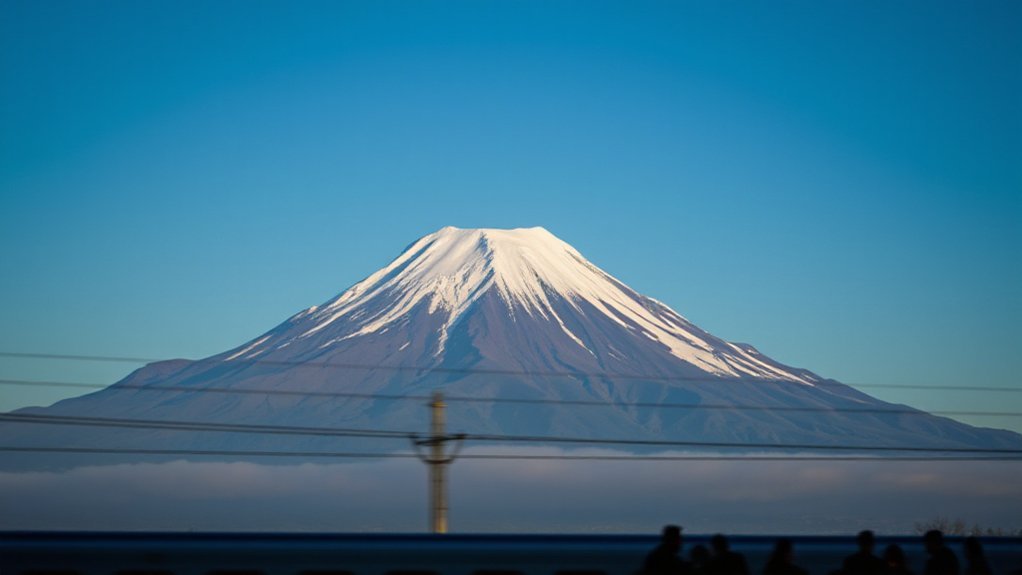
On clear winter mornings, you’ve got your best shot at seeing Fuji clean and sharp, with October through January giving you that cold, dry air and a neat snow cap that pops in photos. You’re playing the odds, though, because Fuji shows up clearly only about 70 to 80 days a year, so plan with hope and a backup. Aim for morning, even dawn, when air quality is crisp and winds shift the clouds, and watch your sunrise timing so you’re in place as the light hits the cone. Late afternoon can work, but midday haze often eats the view. Skip late May through August, when the rainy season and humidity smother the peak. Check real-time visibility tools like the See Mt. Fuji site, and read forecasts, then be ready to pivot. If you can swing it, stay overnight so you can try again early the next day.
Why Kawaguchiko Is the Easiest Base
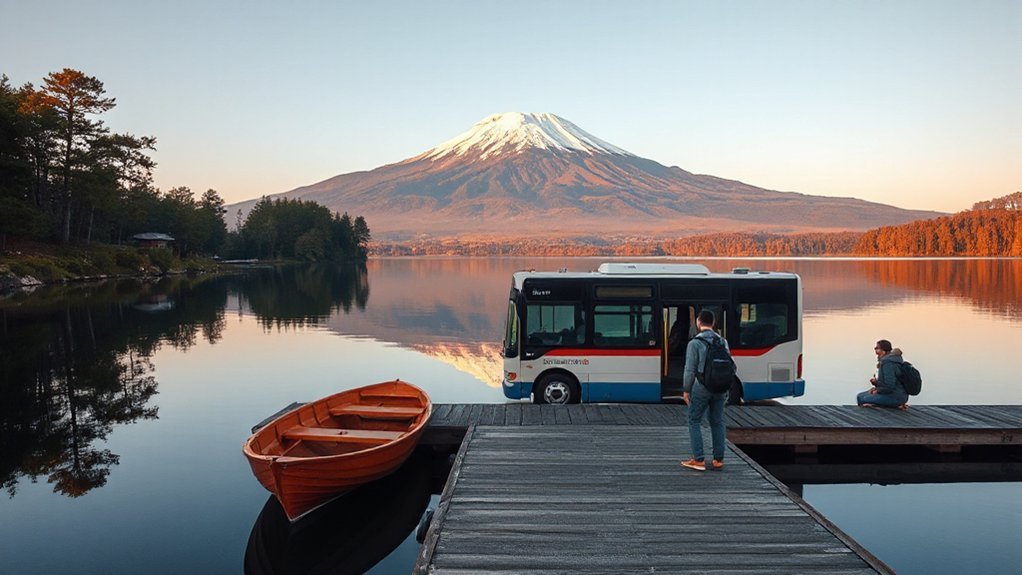
After watching those forecasts and aiming for crisp morning light, you want a base that keeps things simple—head for Kawaguchiko. It’s the hub where everything clicks into place, with on‑arrival logistics that don’t chew up your day. The Sightseeing/Retro Bus loops run often, and that easy 1‑day pass around ¥1,500 links Lake Kawaguchi, the Tenjo‑yama Ropeway (about ¥900 round‑trip), and little stops where you actually want to hop off, not just wave at from a window.
You can roll from the station to Oishi Park or the north‑shore reflection spots in a short bus ride or a quick taxi, then spend your energy on timing, wind, and clouds. The town carries onsen convenience and an accommodation variety that ranges from simple inns to view‑soaked hotels, so you can crash, soak, or splurge as you like. Plus the higher elevation brings cleaner, crisper Fuji views, especially October through January.
Getting There From Tokyo: Train, Bus, or Tour
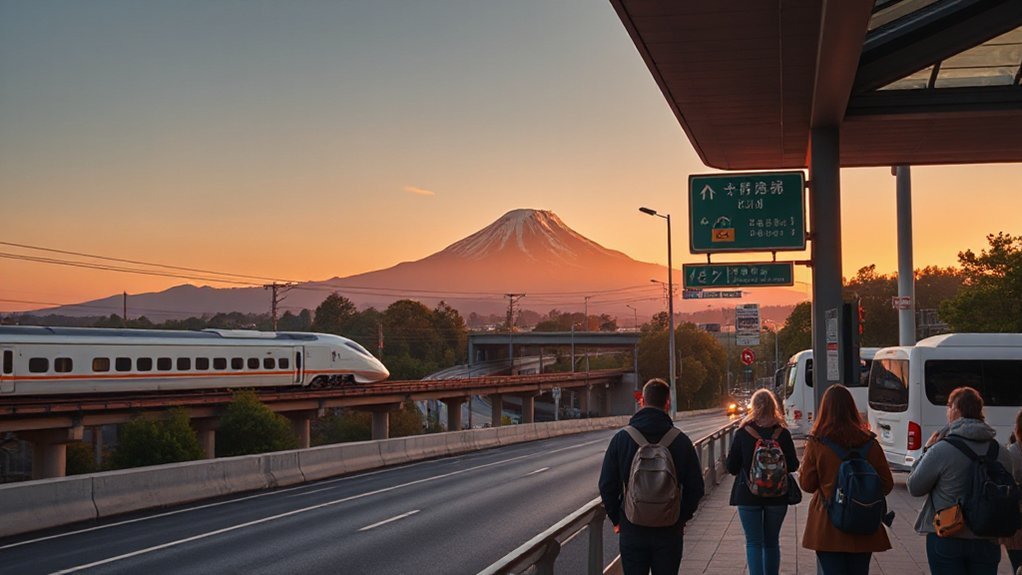
You can ride the Fuji Excursion express from Shinjuku straight to Kawaguchiko in about 1 hour 57 minutes for roughly ¥3,100 one‑way, it’s comfy and scenic, but seats go quick so you book ahead or you’ll be standing around. Buses from Shinjuku or Shibuya roll direct in about 1 hour 45 to 2 hours for around ¥1,750, they’re luggage‑friendly and easy to reserve online up to three months out, which is handy when you’ve got a suitcase and a plan. Or you skip the juggling and join a full‑day tour from Shinjuku (about ¥9,000–12,000) that bundles Oishi Park and Chureito Pagoda and more, just know it’s fast‑paced and at the mercy of traffic, and your JR Pass won’t do you favors on most of these legs.
Express Trains to Kawaguchiko
Early in the day, the fastest no-fuss ride to Kawaguchiko is the Fuji Excursion Limited Express from Shinjuku, a direct train that zips down via Ōtsuki in about 1 hour 57 minutes with reserved seats and room for your daypack. Onboard amenities include comfy seats, overhead racks, and clean restrooms, so you can sip a bottle of tea and watch the hills roll in. Fares run about ¥4,000 one-way, and seats are limited, so start the reservation process early through JR East, Eki-net, or Klook. After booking you’ll get a QR code, which you’ll swap for physical reserved tickets at machine or window. JR Pass holders pay a ¥1,140 supplement, since the Fujikyu section isn’t fully covered. Trains fill fast on weekends and holidays.
Direct Highway Buses
Highway-bus rides from Shinjuku or Shibuya keep things simple, taking you straight to Kawaguchiko without a single transfer, which is why so many guided tours meet right by Shinjuku and pile on. Figure 1 hour 45 minutes to 2 hours and about ¥1,750 one way, with an under-bay for bags so you’re not juggling racks. Book online up to three months ahead; for weekends and holidays, grab seats the day before. Buses aren’t covered by the Japan Rail Pass, so plan to pay separately. Traffic is the wild card—on Golden Week or busy Saturdays, that two-hour ride can double, so pad your schedule. Per person, buses lower environmental impact versus renting a car. Accessibility features differ by operator, confirm. Need firmer timing? Take Fuji Excursion.
Guided Day Tour Logistics
After those easy buses from Shinjuku, the bigger question is how you want to get yourself to Kawaguchiko in a way that fits your day and your nerves: train, bus, or a guided tour that bundles it all. If you want cheap and simple, the highway express runs from Shinjuku or Shibuya direct in about 1h45–2h for roughly ¥1,750, but holiday traffic can double that, so pick an early slot. If timing matters, the Fuji Excursion Limited Express clocks about 1h57, ¥3,000–4,500 one-way; seats sell out, so book online and grab the QR pickup at JR East machines. Tours run ¥9,000–12,000 with coach stops like Chureito and Lake Kawaguchi; check Guide qualifications and the Cancellation policy, and note JR Pass won’t cover most buses.
What to Expect on a Guided Day Tour
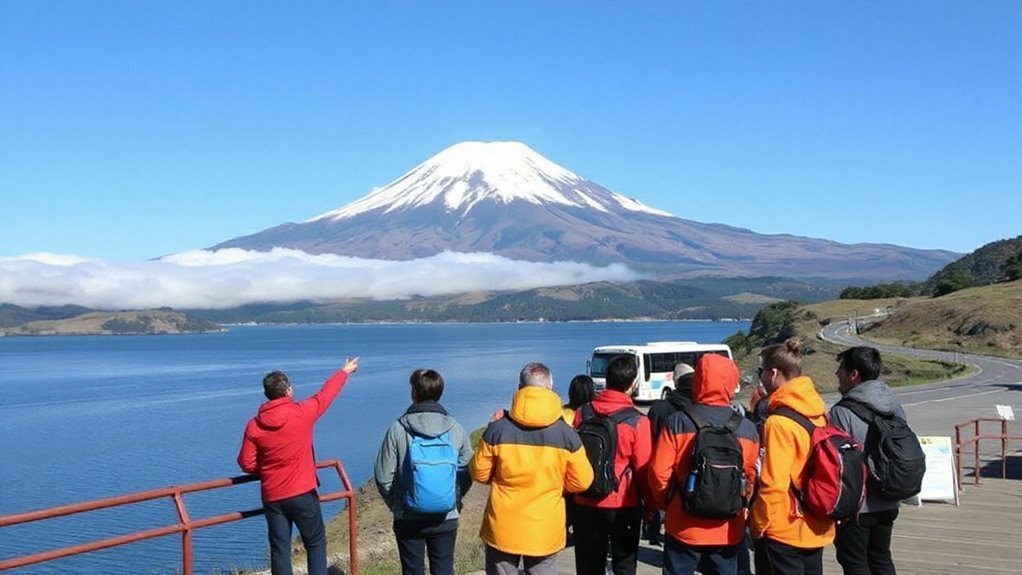
Though the day looks simple on paper, a guided Mt. Fuji tour moves fast and early, with pickup around Shinjuku and a late return after 10 to 12 hours on the road. You’ll ride a coach, skip the map work, and hop between three to five stops like Chureito Pagoda, Lake Kawaguchi’s Oishi Park, and maybe Oshino Hakkai or a cheesecake shop, with 20 to 60 minutes at each one.
The guide keeps things clear in English, lunch is usually optional with meat-free choices, and clocks rule the bus, so practice Group Etiquette and be back on time, because it won’t wait. Expect crowds at the viewpoints and Photography Restrictions at temples or inside shops. Bring cash for snacks and souvenirs at Kawaguchiko Natural Living Center. Traffic can snarl, especially on weekends or Golden Week, trimming stops. Clear Fuji views are likeliest in the morning, October to January.
A DIY One-Day Itinerary
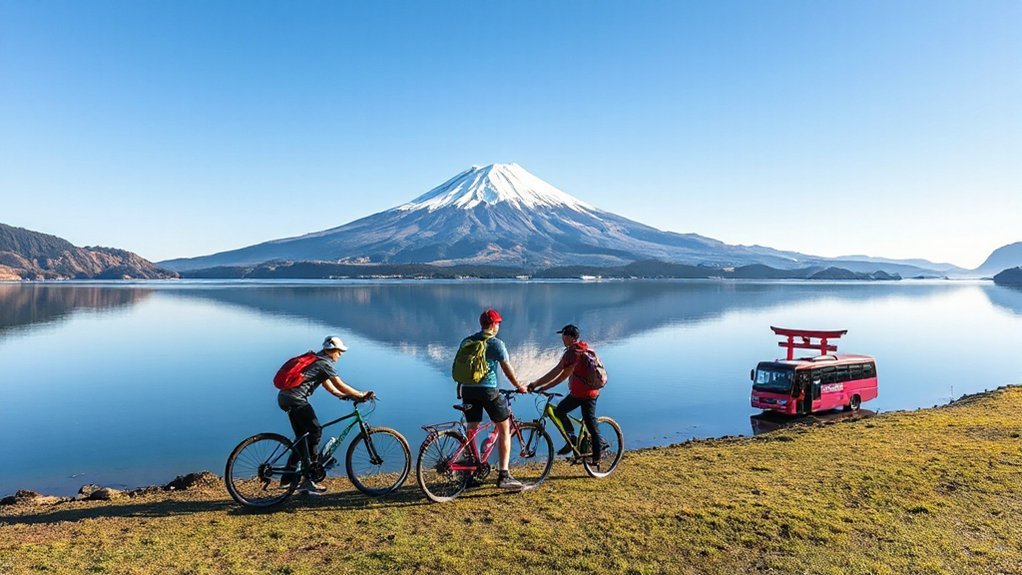
You’ll want a crack‑of‑dawn start, hopping the 6:30–7:30 AM Highway Express Bus from Shinjuku to Kawaguchiko (about 1h45–2h, around ¥1,750 one way) so you land early with clear air and time to spare. Hit the big views first at Chureito Pagoda around 8:30–9:30 AM (about 400 steps, give it 1–1.5 hours), then coast to Oishi Park for 20–40 minutes and a simple lunch nearby (¥1,200–2,000), and use the ¥1,500 sightseeing bus pass to reach the Tenjo‑yama Ropeway (¥900 round trip) or Oshino Hakkai for a quick 30–45 minute wander. Book your return on the Fuji Excursion train or an early evening bus, keep a buffer because traffic and weekends can double the ride and clouds like to roll in after lunch, and if Fuji ducks behind the gray, you switch gears to lakeside strolls and tea without fuss—no heroics needed.
Early Start and Transit
Before the city yawns awake, head for Shinjuku and catch the 6:30–7:00 highway express bus so you roll into Kawaguchiko around 8:15–9:00, right when Mt. Fuji usually shows and the lake sits still. Do a quick pre trip checklist the night before, and practice sleep optimization—lights out early, bag packed, snacks ready—so you don’t fumble at dawn. The highway bus is direct, luggage-friendly, about 1h45, and roughly ¥1,750 one way. Prefer rails? The Fuji Excursion Limited Express runs Shinjuku to Kawaguchiko in about 1h57 for around ¥3,000–4,500 depending on seats. Book both options ahead; pick up JR tickets at station machines the day before. On arrival, grab a Retro Bus pass for easy hops, then aim to leave by 3–4 PM to dodge traffic.
Must See Stops
How do you make the most of one day without running yourself ragged? Start at Chureito Pagoda, climb those 397 steps, and frame red tiers with Fuji like you meant it. Roll down to Oishi Park for calm water, flowers, and reflections. Ride the Mt. Fuji Panoramic Ropeway for a clean, high view. Snack and shop at the Kawaguchiko Natural Living Center or Cheese Cake Garden. If you’ve got gas left, swing by Oshino Hakkai, a living postcard. Historic landmarks? Check. Cultural museums can wait.
| Stop | Time | Why |
|---|---|---|
| Chureito Pagoda | 1–1.5 h | Iconic pagoda view. |
| Oishi Park | 20–30 m | Blooms, mirror lake. |
| Ropeway | 30–60 m | Quick high vista. |
| Snacks & Souvenirs | 30–45 m | Cake, jams, gifts. |
| Oshino Hakkai (optional) | 30–45 m | Clear ponds, snacks. |
Weather Plans and Timing
Since cold, dry mornings give Fuji its best manners, aim for first light and plan like you mean it: think a 6:30 AM highway bus from Shinjuku, 1.5–2 hours out to Kawaguchiko, and straight to your first view before the haze wakes up. Winter months, October through January, give you the cleanest skies, so dress in clothing layers and pack a hat. Check a live visibility index the night before and again at dawn; if it’s bad, pivot to museums, cheese shops, or Fujikyu so you don’t burn daylight. Build padding for traffic and weekend crowds. Hold 1–1.5 hours for Chureito and 20–30 minutes for Oishi Park. Set simple camera settings early, shoot and move. If clouds linger, prioritize one stop or stay overnight.
Top Mt. Fuji Viewpoints in Kawaguchiko
A red pagoda and a calm lake frame Fuji best in Kawaguchiko, and you can hit both without fuss if you plan your steps. For photography techniques and viewpoint accessibility, start at Chureito Pagoda above Arakura Sengen Shrine. It’s about 397 steps, steep and straight, so pace yourself, and go early when the air is crisp and crowds haven’t spilled in. Frame the pagoda on the left third, shoot a wide view, then try a short telephoto to pull Fuji closer, and if there’s haze, a polarizer helps.
Next slide to Oishi Park on the north shore, where flat paths suit strollers and tripods, and seasonal flowers edge the water. On windless mornings you’ll catch clean mirror shots; winter gives the clearest outlines. If time’s tight, ride the Tenjō‑yama Ropeway (about ¥900 round‑trip) for a fast panorama over the lake. The Natural Living Center offers steady, open sightlines.
Lunch Spots and Souvenirs Around the Lake
Swing by the lakeshore at midday and fuel up where the views don’t quit. Start at Kawaguchiko Craft Park’s restaurant, where plates are as photogenic as the mountain—a vegan spinach curry topped with Mt. Fuji–shaped rice, or beef you grill at the table. Lunch runs about ¥1,200–2,000, which feels fair when the water’s right there. If you’d rather roam, Oishi Park has Picnic spots and lakeside cafés for light lunches and seasonal snacks; snag a seat during flower season if you can, then chase it with the lavender/coffee swirl soft-serve locals swear by.
For take-home treats, swing into the Kawaguchiko Natural Living Center. It’s part craft market, part pantry, packed with jams, snacks, and Artisan souvenirs that don’t feel touristy. A little up the road, Kawaguchiko Cheese Cake Garden sells feather-light cheesecakes—plain, blueberry, matcha, and seasonal—plus frozen, boxed versions made to ride buses or wait in hotel fridges.
Practical Timing, Trade‑offs, and What to Skip
Bellies full by the lake, now comes the clock math that keeps this day trip fun instead of frantic. Figure 1.5–2 hours each way by bus from Shinjuku (about ¥1,750) or around 2 hours on the Fuji Excursion (¥3,000–4,500), which leaves you 6–8 hours on the ground. Aim your first shots after arrival, especially Oct–Jan mornings, since Fuji shows up a dozen days a year. Prioritize Chureito Pagoda—plan 1–1.5 hours for the steps and photos—and Oishi Park for 20–40 minutes by the water. Skip Lawson parking‑lot snaps, and if time or weather stinks, skip Oshino Hakkai.
Guided tours (¥9,000–12,000) spare you transfers but run fast and can crawl in Golden Week traffic; DIY is freer but you steer. Pad 1–2 hours each way on weekends and holidays, track Restroom Locations, and mind Cash Availability for buses and cafés. Leave early, return late, or sleep by the lake.
Frequently Asked Questions
Can I Store Luggage at Kawaguchiko Station or Nearby Coin Lockers?
Yes—you can store luggage at Kawaguchiko Station coin lockers; scarcity meets convenience. Expect varied locker sizes (small to large). Arrive early, or use station counter and luggage delivery services, plus hotels and shops as backups.
Are Kawaguchiko Paths and Viewpoints Wheelchair and Stroller Accessible?
Yes, Kawaguchiko lakeside paths and viewpoints are accessible, but access varies. You’ll find ramp availability at Oishi Park and museums. Check surface conditions: lakeside promenades are paved, some viewpoints uneven or gravel; ropeway summit challenging.
Is Drone Flying Permitted Around Mt. Fuji, Chureito Pagoda, or the Lakes?
You can’t fly without approvals: Chureito Pagoda bans drones, and Mt. Fuji/Fuji Five Lakes impose park and municipal restrictions. Confirm landowner consent, complete JCAB DIPS permit process, and consult a no flyzones map before launch.
Will My Suica/Pasmo Work for Local Buses, Cafes, and Lockers?
Yes, your Suica/PASMO generally works for local buses, cafes, and coin lockers, subject to Contactless acceptance signage. You’ll encounter occasional cash-only spots. Top up options include station machines, convenience stores, and mobile apps. Carry cash.
Is Mobile Data and Wi‑Fi Coverage Reliable Around the Lake?
Yes, coverage is reliable near lake towns, but it gets patchy on trails and shores. You’ll get café and hotel Wi‑Fi. To avoid roaming costs, grab an eSIM or pocket Wi‑Fi and download offline maps.