
Tokyo draws 14+ million visitors a year, and thousands try street go‑kart tours—only some show up with the right paperwork. You’ll need your home driver’s license, an IDP, and passport, plus waivers, or police checks can end your ride fast. Tours run in guide-led formations through Shibuya, Shinjuku, or Odaiba, with helmets, current costume rules, and insurance fine print to mind. Want booking tips, seasonal hacks, and the gotchas that cost extra?
Licensing Requirements and International Driving Permits
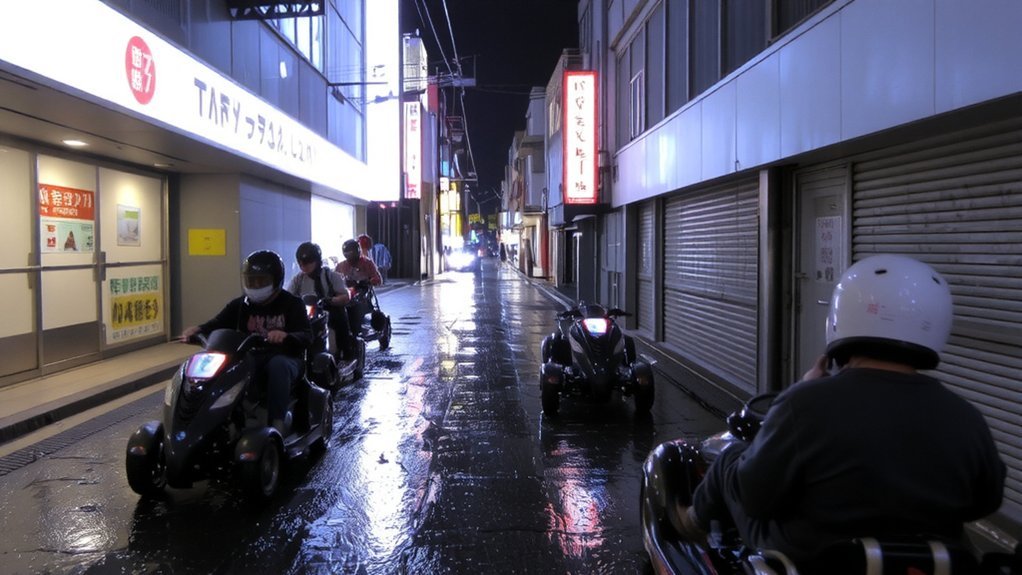
So, what do you actually need in hand to legally drive a go-kart on Tokyo’s streets? You need your valid home driver’s license, plus the right permission to use it in Japan. For most travelers, that means a 1949 International Driving Permit, issued before you fly. Check your country’s Reciprocity Agreements; if it doesn’t issue the 1949 format, you can’t use an IDP here. From Germany, France, Switzerland, Belgium, Monaco, or Taiwan? Skip the IDP and carry an official JAF License Translation with your license instead. Age 18+, no learner permits. Bring your passport, too. Steps: confirm eligibility, get the permit or translation, pack originals, verify tour insurance. Pro tip: book a quick JAF translation appointment if you’re already in Tokyo. Freedom, unleashed today.
Current Costume and Cosplay Rules
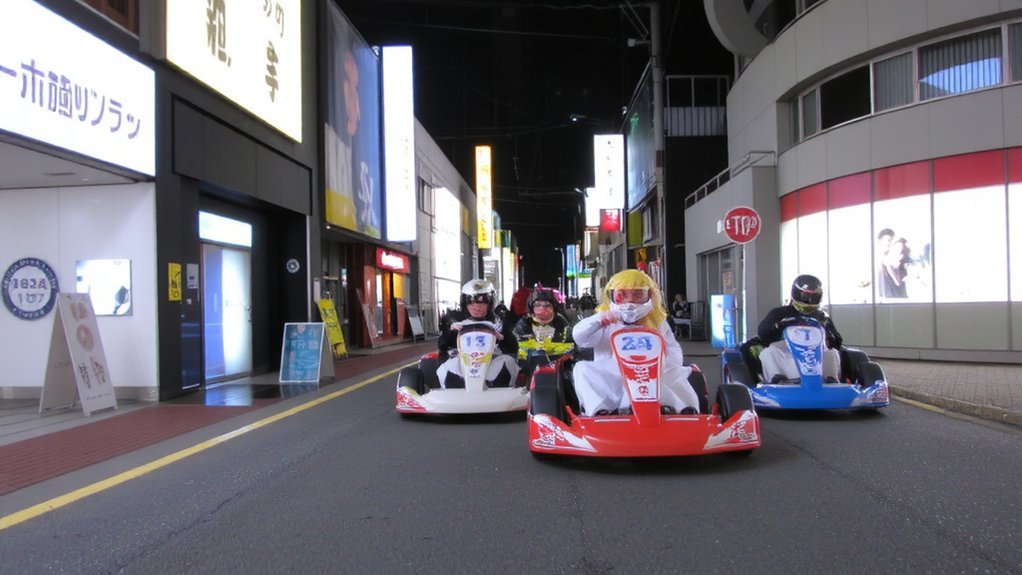
Paperwork in your pocket? Good. Now, about costumes—you can still dress up, but operators play by stricter rules. Expect licensed outfits or generic look‑alikes, not exact Mario suits. Why? Copyright concerns, plain and simple, and a few high‑profile lawsuits. You’ll choose from a menu: hero capes, animal onesies, racer jackets, bright gloves. Bring layers, Tokyo wind bites.
Pick fun, skip offense. Lean into cultural sensitivity: avoid sacred symbols, uniforms tied to tragedy, or caricatures of any group. Keep masks open-faced so staff can ID you, and keep props soft—foam swords yes, metal no. Don’t block mirrors, don’t trail fabric near wheels. Want your own gear? Ask ahead for approvals, or rent onsite. Snap photos, ham it up, respect the vibe, and roll with style.
Safety, Insurance, and Liability
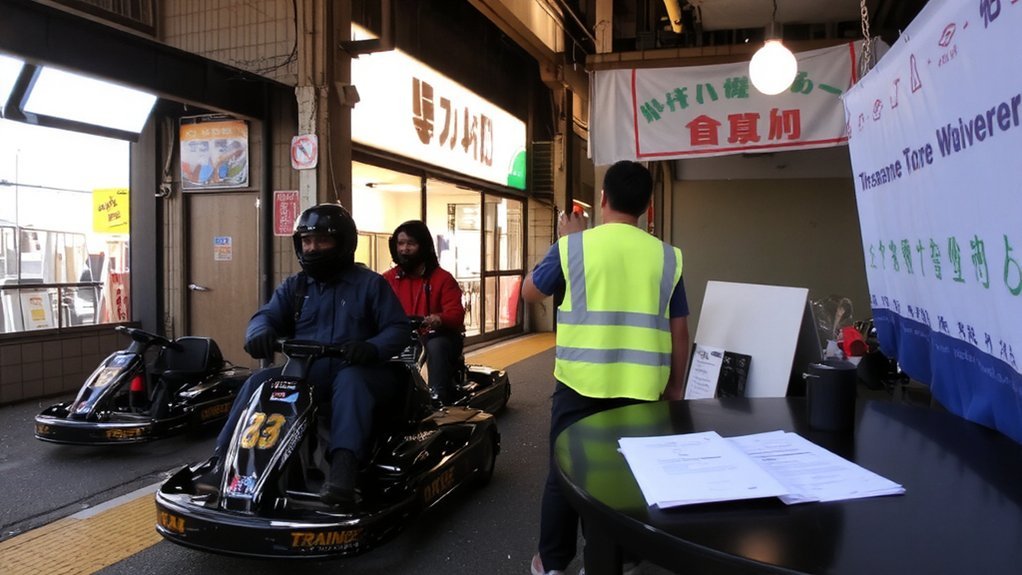
Before the engine growls, treat safety, insurance, and liability as part of the ride—not an afterthought. Wear the helmet, snug the straps, confirm brakes and lights. Ask about equipment standards, recent maintenance, and operator vetting; you’re trusting your hide, not just their brand. Bring your valid license, closed shoes, and a cool head.
Call your insurer ahead, ask if your policy covers recreational go-karts on public streets. If not, buy the shop’s plan, and photograph the policy page. Take pictures of the kart before and after, just like a rental car. Minor scuffs? Note them.
| Risk | Your Move | Coverage Check |
|---|---|---|
| Crash | Slow in, look out | Medical, liability |
| Weather | Postpone | Force majeure |
| Damage | Document | Deductible, exclusions |
Own your pace, claim space, ride free, not reckless.
How Guided Tours Operate
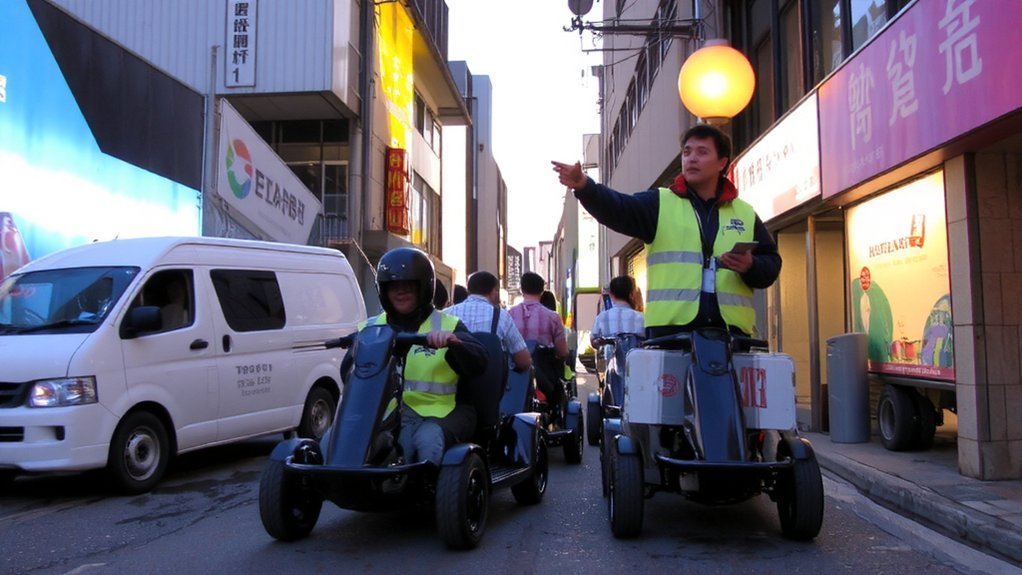
You’ll start with a brisk safety briefing: helmets on, controls and hand signals reviewed, local road rules, quick license check, a short test roll, and yes, how to stop smoothly when someone snaps a photo mid-turn. Your guides plan the route in advance, picking scenic streets that avoid highways, timing departures to miss rush-hour waves, setting a lead-and-sweep formation, and using radios to manage lights, lane changes, and surprises. Expect clear cues, staggered starts, tight regroup points, scheduled photo stops, and smart buffers so you stay on time without feeling rushed—fun first, chaos never.
Safety Briefing Process
Once you’re checked in, the safety briefing kicks off with clear, no-nonsense steps so you know exactly how the tour runs on real Tokyo streets. You’ll meet your lead guide, get fitted for a helmet, and learn signals you’ll use in traffic. Quick ID check, quick waiver, then gloves on. The team explains local road rules, speed limits, and lane behavior, with language options so nothing gets lost. Next, hands on demos: ignition, throttle feathering, smooth braking, mirrors, hazard lights. You practice tight turns, safe gaps, and emergency stops in a staging area. Questions? Ask them all. They’ll review group spacing, guide commands, and what to do if you stall or feel unsure. Ten focused minutes, and you’re ready to roll—calm, sharp, free. Today.
Route Planning and Timing
How do we thread Tokyo without feeling rushed? You follow a route that balances thrill with flow. We map loops around Shibuya, Rainbow Bridge, and Tokyo Tower, then we tweak live. Guides run traffic forecasting tools, check events, and scan webcams. You get clear checkpoints, generous buffers, and an exit plan if roads clog. Freedom, yes—within a smart frame.
- Meet-up sync: arrive 20 minutes early, pick a kart, mount your comms, test brakes.
- Pace estimation: we group by speed comfort, set lead gaps, and assign a tail guide.
- Flex routes: rain plan, construction detour, and a golden-hour photo stop.
We launch on the half-hour, not the hour—less crowd. Green lights? We glide. Red waves? We pivot, laugh, and roll a calmer lane when needed.
Top Routes: Shibuya, Shinjuku, and Odaiba
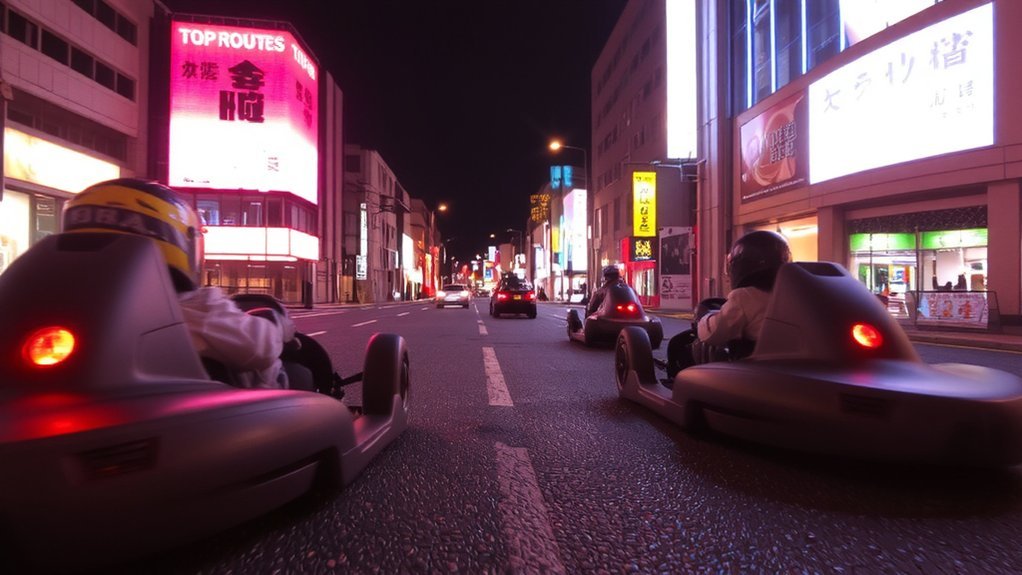
Start with the Shibuya–Shinjuku nightscapes: roll out after sunset, follow your guide past Shibuya Crossing, then sweep up Meiji-dori toward neon canyons and quick photo stops. Then switch gears for the Odaiba waterfront ride, hugging Rainbow Bridge views, sea breeze, and wide boulevards where you can keep a steady pace and practice clean cornering. Pick your slot, check the weather and wind, and bring a snug jacket—city glow for the first route, ocean sparkle for the second; you’ll get contrast, pacing variety, and brag-worthy shots, no filter needed.
Shibuya–Shinjuku Nightscapes
Gear up and roll into Tokyo’s neon hour—Shibuya, Shinjuku, and Odaiba serve up three crisp night routes that hit hard and photograph even better. You’re chasing Shibuya–Shinjuku Nightscapes, so keep the throttle steady, eyes wide. Shibuya floods you with crossing glow, perfect for Neon Photography; Shinjuku towers answer with chrome canyons and restless Urban Soundscapes. You slip past ramen steam, arcade doors, taxi rivers. Cameras up, visor clean.
- Time it: hit Shibuya Crossing on the green, then loop Dogenzaka, climb to Yasukuni-dori for skyline blasts.
- Settings cheat: 1/125 shutter, ISO 1600–3200, lens at 24–35mm; kill flash, embrace ambient.
- Road sense: stay right, signal early, mirror-check scooters; watch tour pace, don’t block taxis.
Breathe, roll, frame, repeat. Freedom, but disciplined. Claim the lane, claim midnight now.
Odaiba Waterfront Ride
Leaving Shinjuku’s chrome canyons, you aim for open water—Odaiba, all bay breeze and big sky. You’ll roll east along wide bayside roads, cruise past glass towers and ferris-wheel arcs, and feel the salt in the air. Keep right, mind buses and delivery trucks, and hold your lane; crosswinds can nudge a light kart.
Time it for golden hour. Rainbow Bridge glows, the Gundam at DiverCity locks eyes, and the Statue of Liberty hams it up—public art everywhere. Your guide threads past piers layered with harbor history. Quick tips: visor clear, scarf tight, signal early, don’t race taxis. Use parking bays for photos. Want space? Loop seaside parks, idle by Daiba Beach, listen to gulls. If rain hits, go smooth, avoid paint, skip puddle heroics.
Pricing, Inclusions, and Hidden Costs
Before you rev into Shibuya traffic, know what the tour actually costs—and what sneaky extras can pop up. Base prices usually run per person, tiered by route length and peak hours. Sunset or neon runs cost more. Your fee typically includes the kart, fuel, liability cover, and a guide who wrangles traffic. But watch the fine print.
- License check fees, international permit validation, or translation services.
- Costume rental or camera mounts; sometimes free, sometimes an equipment surcharge.
- Late-change penalties, no-show charges, and stiff cancellation fees inside 24–48 hours.
Also budget for tolls on certain bridges, parking pauses, and optional photo packages. Some tours add rain ponchos. Tip your guide if the ride sings. Want freedom? Read the policy, screenshot totals, ask about taxes, too.
How to Book and What to Bring
You’ve priced the ride; now secure your spot and pack smart. Book through the operator’s site, pick your route and time, then lock it in. Use flexible payment options—credit card, Apple Pay, or PayPal—and screenshot the confirmation. Before checkout, confirm license rules: valid driver’s license plus an International Driving Permit, and bring your passport. No docs, no drive.
Arrive 20 minutes early, sign the waiver, choose a costume if offered, and fit your helmet. Keep your gear light; you’ll want freedom, not baggage. Here’s a tight packing checklist, tuned for street-level fun and focus:
| Essentials | Why it matters |
|---|---|
| License + IDP + passport | Required verification |
| Phone, strap, small pouch | Navigation, filming, hands-free |
Questions? Message the shop directly, confirm age limits, and double-check meetup details before arrival.
Best Time to Ride and Seasonal Tips
Usually, the sweet spot is weekday mornings or golden hour late afternoon, when traffic thins and the city glows. You’ll roll smoother, stop less, and soak up more sights. Aim for routes that pass Ueno, Asakusa, or the Rainbow Bridge, then loop back through quieter streets for that breezy, take-the-lane feeling.
- Spring: line up your ride with peak cherry blossom weeks; book early, slots vanish fast; plan photo stops near Sumida Park and Chidorigafuchi.
- Summer: go earlier to skip queues; hydrate, pack light; choose longer circuits while energy’s high.
- Autumn: chase autumn foliage around Meiji Jingu, Rikugien, and the Imperial Palace; expect weekend crowds, so lock weekday times.
Winter’s calm and less busy, so you’ll cover more districts without rush. Choose freedom-friendly slots, always.
Weather, Night Rides, and Visibility
Often, the weather decides how your Tokyo go-kart ride feels—and how visible you are—especially after dark. Night air can be crisp and clear in winter, or hazy in summer when seasonal humidity hangs low. Check the forecast, then layer up or go breathable. Rain? Expect slick paint lines and extra spray from taxis.
City glow helps you see; light pollution also flattens shadows, so depth can feel weird. Use reflective gear, bright gloves, and a visor that resists fog. If it’s chilly, choose a balaclava; if it’s steamy, swap to an anti-fog insert.
Time your launch. Blue hour gives drama without glare, midnight brings calmer avenues. Wind picks up in tunnels, gusts between towers. Keep your head on a swivel, and enjoy the neon.
Etiquette, Road Rules, and Police Checks
Before you roll out, treat Tokyo’s streets like a shared workspace: signal early, keep to your lane, stop at reds, yield to pedestrians, no weaving or Mario Kart antics. Stick to the posted speed (often 30–50 km/h), stay in single file behind your guide, and use hand signals and mirrors, because buses and taxis won’t see you until they do. Police may stop your group for routine checks, so carry your valid driver’s license plus an authorized International Driving Permit (no digital copies), passport for ID, and your rental paperwork—smile, answer briefly, and you’ll be back on the throttle in a minute.
Etiquette and Road Rules
While the karts feel playful, the streets are not a theme park—you’re driving in real Tokyo traffic, with real rules. You ride left, keep pace, and leave space—two car lengths, not one. Follow your guide’s signals, mirror-check often, and indicate early before turns. Practice Lane Courtesy: hold the left, let taxis and bikes slip by, and don’t block buses. Brakes before curves, throttle after. Photo Courtesy, too—stop only where the guide allows, never mid-lane for selfies.
- Keep it smooth: no weaving, no sudden stops, no curb-hugging that clips ankles on crowded crossings.
- Read the city: zebra crossings get full stops; school zones mean calm wrists and quieter engines.
- Night runs? Lights on, visor clear, rain mode engaged—gentle inputs, bigger gaps, please.
Police Checks and IDs
How smooth are police checks when you’re karting through Tokyo? Pretty smooth, if you’re ready. Carry your passport, international driving permit, and license from home; keep them reachable, not buried under costume props. Police may wave you over at lights or rest stops, ask basic questions, and confirm IDs. Smile, engine off, hands visible. You’re asserting Privacy Rights, not picking a fight. Decline unnecessary searches, politely, and ask for an English-speaking officer if needed. Many officers accept Digital IDs for quick lookups, but show physical documents when asked—Japan loves paper trails. No helmet off? Fine. But remove masks or sunglasses. Don’t film officers without consent. Stay in the lane, signal early, obey speed limits. Quick check, quick exit. Back to joy. Ride on, responsibly.
Conclusion
You’ve got the roadmap now: license plus IDP, passport in your pocket, costume within rules, insurance checked, and eyes on the guide. Think of it like a parade with seatbelts; one rider once forgot their IDP and watched the floats pass. Don’t be that story. Book early, pick Shibuya or Odaiba, layer up, add a visor for night. Follow signals, keep formation, wave smartly. Do this, and Tokyo’s neon becomes your racetrack—legal, safe, unforgettable, tonight.