
You want a quick escape from Tokyo? Hop an easy train—IC card in your pocket—and pick your flavor. Walk Kawagoe’s Edo warehouses, breathe cedar at Nikko’s Toshogu, or chase sea air past Kamakura’s cliffs and temples. Yokohama gives you Minato Mirai lights and a hot bun in Chinatown. Need trees? Mt Takao before lunch, Fuji views at Kawaguchiko by dusk. I’ll show you routes, costs, and smart swaps—so you don’t waste a step.
Key Takeaways
- Yokohama: 30–60 minutes from Tokyo, about ¥480 one-way; explore Minato Mirai, Red Brick Warehouse, Osanbashi Pier, Cup Noodles Museum, and Chinatown.
- Kamakura: about 1 hour on JR Yokosuka Line, ¥940 each way; see the Great Buddha, Hase-dera temple, and coastal paths.
- Nikko: 2–3 hours, about two hours via Tobu from Asakusa; visit Toshogu Shrine, Kegon Falls, and Lake Chūzenji; arrive early for infrequent buses.
- Kawagoe: 30–60 minutes via Tobu Tojo or JR; stroll Kurazukuri Street, Toki no Kane bell tower, Candy Alley, and try roasted sweet-potato snacks.
- Kawaguchiko (Mt. Fuji): 2–2.5 hours by highway bus, ¥1,250–¥2,000; enjoy lakeside views, Chureito Pagoda vistas, and buses to the 5th Station.
How to Get Around Japan
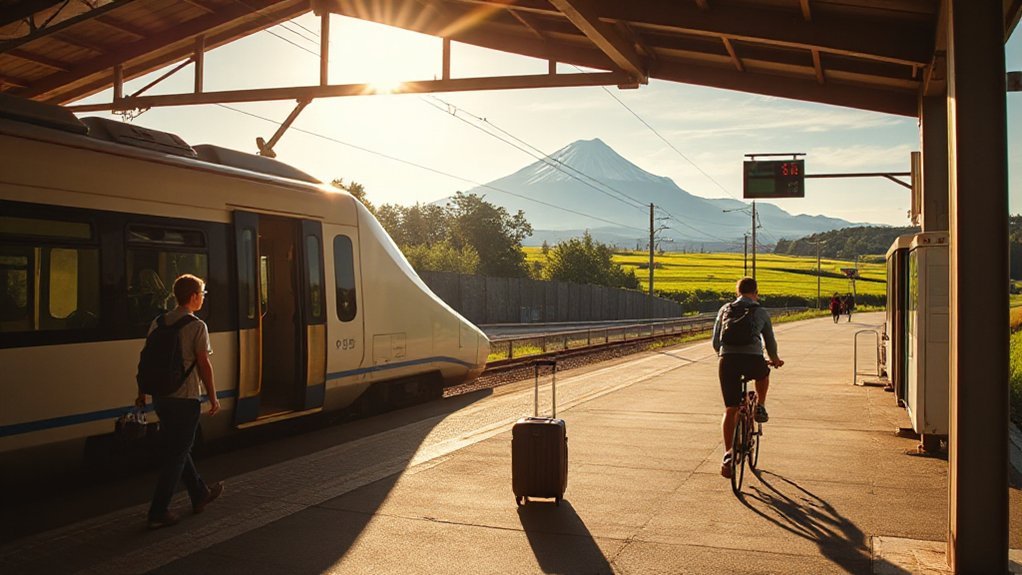
Getting around Japan is simple once you lean on the rails, because trains and buses are clean, on time, and built for day trips from Tokyo, so you won’t miss a car one bit. You’ll ride fast, sit tidy, and pay roughly $20–$40 round trip, which keeps your plans light and your wallet steady. On local buses, you usually hop in at the rear, grab a little numbered ticket, then pay up front when you get off, and if you’re unsure, the driver or the station desk will point you right. For short hops in town, mind Taxi Etiquette: queue in line, let the rear door open itself, and say your destination clearly, simple. If the weather’s kind, look for Bicycle Rentals near stations and cruise the last mile. Skip renting a car unless you must; you’ll need an International Driving Permit and $80–$100 a day, plus tolls.
Using Transit Cards and Apps
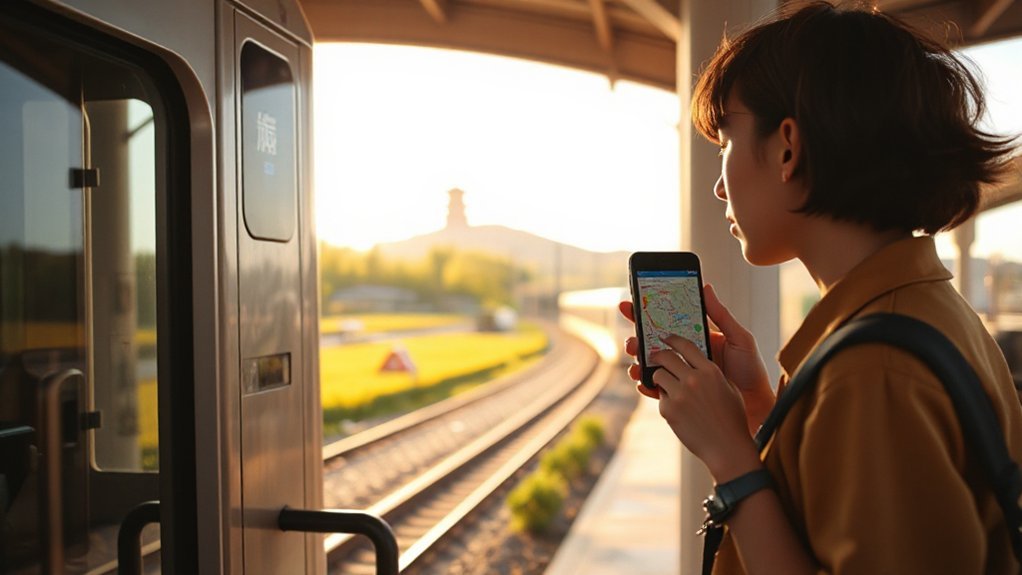
How do you keep day trips smooth without fiddling with tickets every hour? Load a Suica into your phone’s wallet, then just tap through JR gates and many buses, no paper, no coins, no fuss. You can top it up right in the app, and when your signal drops in a tunnel the gate still reads it, handy for Offline payments. Pair that with Google Maps, which nails station names, platforms, times, and fares, so you can compare routes and make tight transfers without guessing.
If you like a safety net, carry a physical Suica too, or at least know you can add cash at convenience stores and the green ticket machines when your battery’s gasping. In some towns, snag day passes in apps or at stations—Kawagoe’s all-day bus ticket is 500 yen, a steal. Keep Data privacy simple: limit app permissions and use passcodes on your wallet.
Is a JR Pass Worth It?
When does a JR Pass actually save you money? First, do a quick break even analysis before you buy. The 7‑day runs about ¥50,000 (14‑day ¥80,000, 21‑day ¥100,000), so stack those totals against your rides. If you’re doing Tokyo–Kyoto round trip, adding a shinkansen hop and an airport transfer, the pass starts pulling its weight. But for short, local day trips around Tokyo, single tickets or IC cards usually beat it.
Remember what’s covered and what’s not. The pass gives you unlimited JR rides, including all Shinkansen and many local JR lines, but some regional lines, private railways, and sightseeing buses aren’t included, so you’ll pay extra there. Check reservation policies, since you can reserve Shinkansen seats at JR counters with the pass, handy when trains fill up. Use an online JR Pass cost calculator, or add fares by hand, and buy only if the math says yes.
Kawagoe: Little Edo Charm

You walk Kurazukuri Street, and those thick clay-walled warehouses with soot-dark wood and heavy tiled eaves crowd the lane, with little shops putting out sweet potato snacks and handmade brushes right by the door. Keep an ear out for Toki no Kane, the old bell tower that still marks the day, its low ring slipping between rooftops and giving you a time check you didn’t ask for but kind of needed. Go early, the air is cool and the shutters are just coming up and the street feels like it remembers you, and you’ll get clean views for photos without elbows in the frame.
Kurazukuri Street Highlights
Weathered storehouses line Kurazukuri Street in Kawagoe, a Little Edo strip that still looks like the 1600s to the 1800s never quite ended, and that’s the charm right there. You’ll spot the Architectural Details—the thick plaster, black beams, heavy tile, and shutters that seal like armor—and then you’ll duck into Craft Workshops where carpenters, dyers, and candy makers keep old hands busy and friendly.
From central Tokyo, you’ll ride 30 to 60 minutes on the Tobu Tojo Line from Ikebukuro or JR lines from Shinjuku, and getting there early beats the tour clump. Browse specialty shops and small museums, sip a plain good coffee, then try roasted sweet‑potato snacks. For more old-time bite, stroll to Kashiya Yokocho, Candy Alley, and fill a paper bag.
Toki No Kane
A wooden bell tower rises over Kawagoe’s dark tile roofs, and that’s Toki no Kane—the town’s plainspoken symbol and the spot everyone points their camera at. You’ll find it in the Kurazukuri warehouse district, where the plaster walls and storehouses lean into the old Edo mood, and the bell still marks the hours, steady and unfussy, from morning into evening. Look close at the architectural details—the stout posts, the latticed windows, the tiled cap—and you’ll feel how its restoration history keeps the place honest. From central Tokyo, you can ride a local train and step off in about 30–60 minutes, easy.
- Hear the bell drift over storefronts.
- Catch the light on weathered wood.
- Frame your shot between tiled eaves.
- Breathe, then keep on strolling.
Yokohama: Waterfront and Chinatown
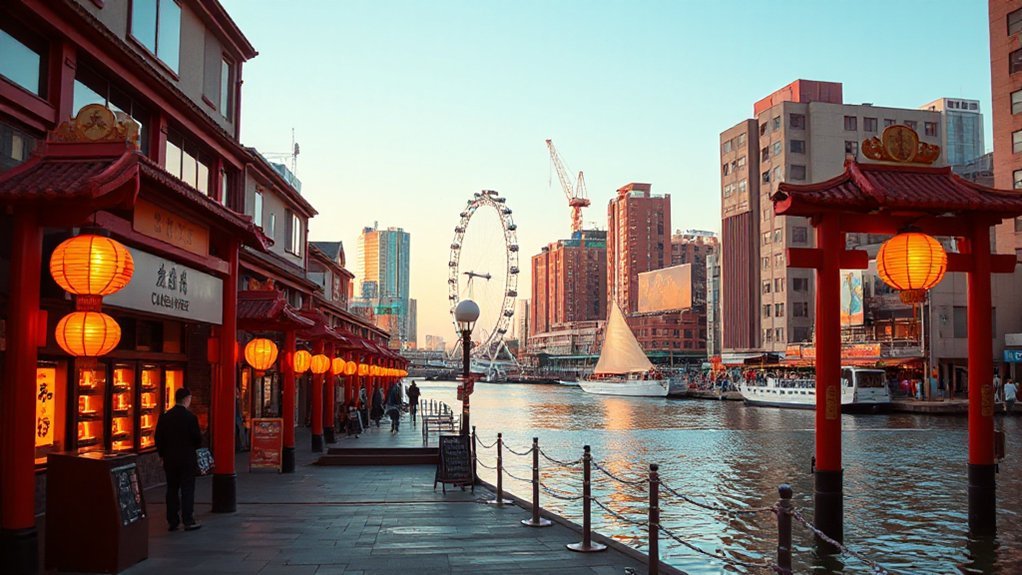
Though it’s a big port city, Yokohama sits only 30–60 minutes by train from central Tokyo (about ¥480 one way on the JR Tokaido or Keihin-Tohoku lines), so it makes an easy day run with plenty to show for it. Start at Minato Mirai, where Waterfront Promenades line the bay and the Cosmo Clock 21 Ferris wheel spins over the skyline. Walk the Red Brick Warehouse for shops and events, then time sunset, when the lights flick on and the water mirrors the city. For hunger, drift toward Chinatown Cuisine, where steam clouds mean you’re close.
Cut over to Osanbashi Pier for a clean sweep of the harbor, then hop a short bay cruise if the weather’s kind. Families do well at the Cup Noodles Museum and the Ramen Museum nearby, hands busy, smiles easy. Circle back to Chinatown for xiaolongbao and steamed buns, simple and perfect today.
Mt Takao and Mt Fuji Escapes
When Tokyo starts to feel tight, you can slip west for fresh air fast: Mt. Takao is an easy win, about one hour on the Keio Line to Takaosanguchi, where trails fan out like fingers and a steep cable car crawls up the hill. Hike a ridge, swing by Yakuo‑in near the top, then ride the chairlift down when your calves start talking. In autumn foliage season, it’s packed but glowing, and the cedars do forest therapy without fuss.
For a bigger horizon, head for Mt. Fuji’s Kawaguchiko, about 2–2.5 hours by highway bus from Shinjuku or Shibuya, ¥1,250–¥2,000 one way. Walk the lakeshore, climb the 398 steps to Chureito Pagoda, and let the view settle you. Not climbing? The Fujikyuko bus to the 5th Station runs with facilities and air.
1) Breathe slower.
2) Earn your view.
3) Ride down grinning.
4) Sleep well on the train.
Nikko and Kamakura Heritage Highlights
You can leave Tokyo early and be in Nikko in 2–3 hours, stepping into UNESCO‑listed Tōshōgū where the Yomeimon gate bursts with carvings and the cedar‑lined approach feels old and steady, and if Lake Chūzenji or Kegon Falls are on your list, get there before 9 a.m. because the buses don’t run often. Or you hop the JR Yokosuka Line for about an hour to Kamakura, where the Great Buddha sits outdoors and Hase‑dera climbs a hydrangea hillside with sea views, and you can even grab a free student‑led tour right from the station. Think of it as two flavors of heritage in one playbook—Nikko for UNESCO treasures and mountain quiet, Kamakura for temples and that big calm Buddha—both easy day trips with simple passes and short walks, which is a tidy win for your time and wallet.
Nikko UNESCO Treasures
A day chasing UNESCO heavyweights around Tokyo’s edges puts Nikko and Kamakura on the same plate, and it tastes like old Japan with good scenery on the side. At Nikko, you step through the cedar hush to Toshogu, where Yomeimon motifs crowd the beams and Lantern symbolism lights up the pathways, and the carvings salute Tokugawa Ieyasu with proud, careful hands. Ride the Tobu Railway from Asakusa, about two hours, and you’re on foot quick.
- You crane your neck at Yomeimon, dazzled yet grounded, because wood still breathes.
- You trace stone lanterns, feeling time settle, steady as a drum.
- You climb to Kegon Falls, 97 meters of thunder.
- You breathe Lake Chuzenji air, seasons swapping jackets in front of you.
Kamakura Temples and Buddha
From Tokyo, Kamakura sits an hour down the JR Yokosuka Line, easy as a seaside stroll and about ¥940 each way, so you can roll in before coffee gets cold and start walking. See the Great Buddha at Kōtoku‑in, a 13th‑century hollow bronze about 11.3 meters tall, calm as an old pine. Climb to Hase‑dera for gardens, sea views, and that big Kannon statue; in June the slopes glow with hydrangeas. Then stroll to Tsurugaoka Hachimangu, Kamakura’s steady heart, with processions and a small museum. If you’re mixing days, Nikko’s Toshogu shines, its Yomeimon carved.
| Stop | Why it sticks |
|---|---|
| Great Buddha | Open-air icon, simple, enormous, easy awe |
| Hase dera Hydrangeas | Hill paths, blue waves, sea breeze photos |
| Tsurugaoka Hachimangu | Ritual drums, long approach, feudal echoes |
Frequently Asked Questions
What’s the Best Season to Visit Each Day Trip Destination?
Visit coastal escapes in summer, mountain onsen in winter, historic towns during Cherry blossom, and temples amid Autumn foliage. You’ll time hiking for spring, beaches for July–August, views for January, and gardens for April, November.
How Can I Avoid Crowds on Weekends and Holidays?
Arrive at sunrise; you’ll beat buses. Book timed entries, use early departures, and pick alternative routes. Travel opposite peak flows, eat off-hours, reserve seats. Avoid hotspots during festivals; explore side streets, stations, and lesser-known viewpoints.
Are These Day Trips Stroller and Wheelchair Accessible?
Yes—like rivers smoothing stones, most routes welcome strollers and wheelchairs, but accessibility varies—you’ll check ramped entrances, restroom accessibility, elevator availability, platform gaps, and terrain. Confirm accessible transport, rentals, and closures before you set out.
Do Stations Have Coin Lockers for Bags During Day Trips?
Yes, most stations offer coin lockers. You’ll find various locker sizes, with large units at major hubs. Expect mixed payment options: IC cards, coins, sometimes QR or credit. Arrive early; peak weekends fill quickly; plan.
Are Tattoos Accepted at Onsens on Popular Day Trips?
They’re sometimes accepted, but many onsens restrict visible tattoos. You should check Tattoo etiquette on facility websites, use cover stickers, choose tattoo-friendly spots, or book Private baths, ryokan rooms, or sento alternatives, for day trips.