
Your Tokyo trip with kids isn’t exactly a leisurely stroll, but it’s a good one if you plan smart. Go in spring or fall, book Ghibli and Disney early, sleep near Shinjuku or Tokyo Station, and tap trains with Suica/Pasmo. Pack a compact stroller, allergy cards, and a conbini snack plan. Leave nap-friendly afternoons for parks and wiggles. Now, the easy way to dodge crowds and meltdowns starts with the calendar—and one simple habit.
Key Takeaways
- Go in spring or autumn; avoid cherry-blossom peak, Golden Week, Obon, and New Year’s; book Disney/Fantasy Springs, Ghibli Museum, and teamLab tickets months ahead.
- Plan four to five full days in Tokyo; anchor one morning activity, keep transit short, and pad afternoons for naps, playgrounds, and snacks.
- Choose Haneda for quick 20–30 minute transfers with kids; Narita offers more routes but 60–90 minute rides by Skyliner, Narita Express, or bus.
- Stay near Shinjuku or Tokyo Station for convenience; book family rooms early and confirm cribs, laundry, kitchenettes, and kid amenities.
- Get Suica/Pasmo (child cards in person with passport), reserve Shinkansen seats, fold strollers at rush hour, and use Disney Premier Access to skip lines.
When to Go and How to Avoid Crowds
Even if Tokyo’s always buzzing, you can time it so the city feels generous instead of jammed. Aim for spring in late March to April or autumn in late October to November, but dodge the cherry‑blossom peak week and Golden Week, when prices and lines jump. For clean Peak avoidance, circle the Shoulder seasons: the week or two after Golden Week in May, or late November, when the air is crisp and hotels aren’t sulking about rates.
Skip New Year’s, Obon in mid‑August, and local school breaks; things close, rooms vanish, and trains feel like sardine cans. For Disney and Fantasy Springs, grab tickets months ahead and go midweek, especially Wednesday or Thursday, and you’ll hear your kids laugh. Use crowd calendars, and lock lodging 4–6 months out for months. If you can, steer clear of Chinese New Year dates and fly open‑jaw to dodge congested airport transfers.
How Long to Stay and Sample Kid-Friendly Pacing
While Tokyo can swallow a day in a blink, you’ll do best with at least four to five full days in the city when you’ve got kids, so you can tackle one big thing each day and still have room for snacks, playgrounds, and the inevitable shoe‑untie pause. Think of a Daily Rhythm, not a checklist. Day 1: arrive, fight jet lag gently, stroll your block, hit a local park, sleep early. Day 2: Shibuya and Harajuku. Day 3: teamLab or the Ghibli Museum, reserved in advance, with a loose afternoon. Day 4: Disneyland or DisneySea. Day 5: Mt. Fuji peek or a hands‑on museum.
If you’ll add Kyoto or Osaka, stretch the trip to nine or ten days and move slow. Build Buffer Days, and pad afternoon for naps, playgrounds, and snack stops. Anchor mornings with one plan, keep transit short, and welcome kid‑led detours.
Flights and Airports: Haneda vs. Narita
How do you choose between Tokyo’s two airports, Haneda and Narita, when you’ve got kids and a stroller that doubles as a luggage cart? Start with door‑to‑door time. Haneda puts you downtown in about 20–30 minutes on the monorail or Keikyu, or a quick taxi when naps are wobbling. Narita sits far out, usually 60–90 minutes by Narita Express, Skyliner, or a highway bus, so pad your schedule and snacks. Weigh that against flight price and timing; Narita often has more routes or cheaper fares, while Haneda wins on hassle.
| Airport | Quick take |
|---|---|
| Haneda (HND) | Short transfer; monorail/Keikyu; great with sleepy kids |
| Narita (NRT) | Longer ride; N’EX/Skyliner/bus; better deals sometimes |
| Either | Check airline lounges, stroller rules, and baggage services |
Check visa regulations for your passports, especially on tight connections or mixed tickets. Match your arrival airport to JR Pass plans and domestic hops to save time and confusion.
Where to Stay: Family-Friendly Areas and Rooms

Bags off the carousel and naps back on track, the next win is picking a base that keeps your days short and simple. With kids and luggage, you’ll love hubs like Shinjuku or Tokyo Station/Marunouchi, where days stay easy. If you want buzz and shopping, Shibuya and Harajuku put youth spots on your doorstep; for space and calmer nights, Asakusa or Odaiba offer bigger rooms near parks and kid fun.
Search with your practical hat on: check Neighborhood Amenities, laundry, convenience stores, and a bakery for breakfast. For Room Configurations, filter for “family room,” connecting rooms, or suites with kitchenettes, so you can fix noodles and fruit. Confirm if kids six and under can share a bed or if you’ll need an extra, and ask about cribs, toddler PJs, diaper pails, and kid-sized amenities. Doing Disney? Compare on-site ease with central bases 30–40 minutes away, and book early.
Getting Around: Suica/Pasmo, Trains, and Taxis With Kids
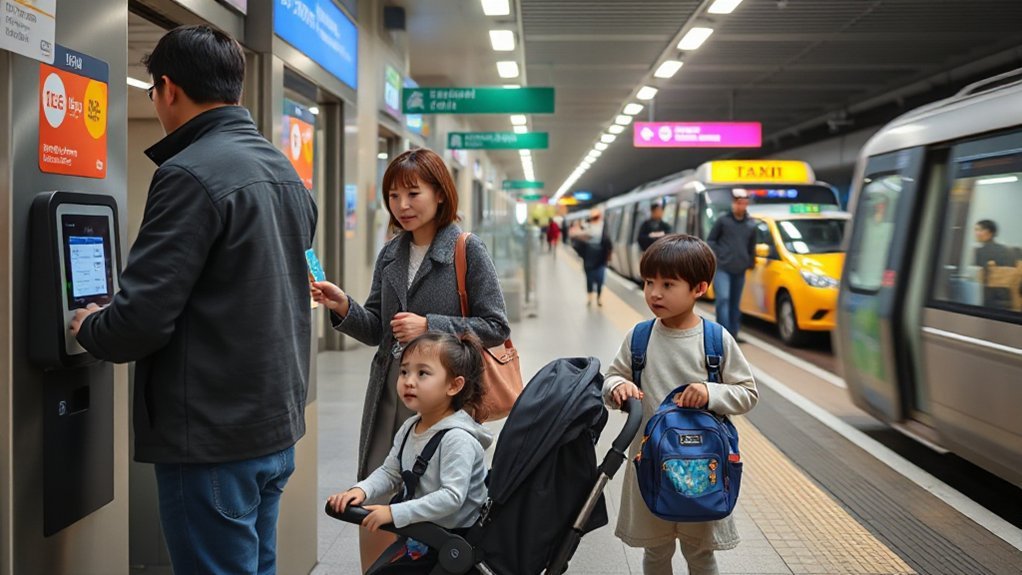
Start by getting a Suica or Pasmo for each of you, add the adults’ cards to your phone for easy taps, and if you want the child half-fare you’ll need to stop at a JR or Pasmo office with your kid’s passport for a physical card, otherwise top up at the kiosks without fuss. On trains, roll through the wide gates, use elevators, skip rush hour if you can, and book Shinkansen seats ahead of busy weeks so kids six and up have their own spot while littles on laps stay happy for short hops. When you’re beat, grab a taxi for door-to-door with bags, but bring a folding car seat and a small stroller that fits the trunk, or arrange a service that can provide a booster—your back will thank you later.
Suica/Pasmo Basics
Why does every local parent swear by Suica or Pasmo? Because these rechargeable IC cards keep your day smooth. Pay a ¥500 refundable deposit, load money, then tap in and out on all trains, subways, and most buses, and grab onigiri from convenience stores or a drink from vending machines. Do a Virtual Setup in Apple or Google Wallet for contactless taps and phone Security Features like Face ID, or buy a physical card at airport kiosks, station machines, or convenience stores and top up with cash or card.
For kids 6–11, ask for a child-designated card in person with the child’s passport to get half fares. Most taxis take IC too—look for the IC sticker. Shinkansen and some reserved seats need separate tickets. Check your balance before leaving big stations; machines show it and recharge fast in ¥1,000, ¥2,000, ¥3,000, ¥5,000, or ¥10,000 steps. When you fly home, visit JR East or Pasmo counters for a refund of the leftover balance plus the deposit.
Navigating Trains With Strollers
With your Suica or Pasmo loaded and your phone ready to tap, you’re set for the part that really matters: getting a stroller through Tokyo’s trains without breaking a sweat. Tap in, then steer for elevators; big hubs have them, small stops sometimes don’t, add buffer time. Use wide end doors for good carriage positioning, and mind Folding etiquette: fold on crowded platforms or rush-hour locals. Need to regroup? Multipurpose bathrooms make a tidy pit stop. Kids 6–11 get half fares, but only with a child IC card issued in person.
| Tip | Why it helps |
|---|---|
| Compact stroller | Lifts, tight aisles |
| Ask station staff | Fast, kind assistance |
| Reserve shinkansen seats | Space predictability |
| Top up IC at kiosks | Quick transfers |
| Board last, exit last | Avoid jams |
Taxis and Car Seats
How do you keep kids safe and your sanity intact when you grab a cab in Tokyo? Taxis shine when it’s late, you’ve got sleepy kids and bags, and you just want the door to open and go. But most cabs don’t have child seats, and short-trip enforcement is loose, so bring a portable folding seat or booster that meets your Safety Standards. Don’t count on Seat Rentals from drivers; they’re rare.
Ask the driver before you hop in if your gear fits, and buckle everyone, no excuses. Pay is easy: more cars take contactless, and some even accept Suica or Pasmo, but it’s hit-or-miss, so keep cash or a card ready. For babies, book a larger taxi, and avoid rush changeovers when possible.
Must-Reserve Experiences and Booking Windows
When you’re chasing the big-ticket Tokyo stuff, the trick is knowing what opens when and pouncing, not hoping. Watch Release Dates like a hawk, and don’t trust Waiting Lists to save you. For the Ghibli Museum, tickets drop on the 10th of the month before at 10:00 JST, so set an alarm, have your info ready, and click fast. teamLab Borderless or Planets and digital shows use timed entry, so pick a slot early, because walk-up spots are rare and vanish by lunch.
Tokyo Disney won’t sell tickets at the gates, so buy admission ahead, look at Premier Access or special event tickets, which usually open about a month out. Pokémon Café bookings go quick in Tokyo; jump the moment the window opens, or try the Osaka café, which is kinder. For rooms, official Disney hotels and small ryokan often open 3–6 months ahead—book early if proximity matters.
Theme Park Strategy: Tokyo Disneyland vs. DisneySea
Why pick Disneyland over DisneySea, or the other way around? Start with the theming differences: Disneyland is the classic fairy‑tale park, gentle and bright, while DisneySea leans nautical and grand, with bigger thrills that suit older kids and adults. If your crew skews small or short, you’ll be happier at Disneyland, since many Sea rides ask for 117 cm and up, and that tape measure doesn’t budge.
Decide before you buy, because tickets are online only and tied to a date, and weekdays breathe easier than weekends. Lately, DisneySea draws heavier crowds thanks to Fantasy Springs, the new land with Tangled, Frozen, and Peter Pan, so plan your morning like it matters.
Use Disney Premier Access on the worst bottlenecks; think about US$10–12 per ride, and set alarms—purchase windows shift. Watch for ride exclusives on both sides, then build your day around them, not the other way around.
Top Activities for Kids in Tokyo
Once you’ve sorted your Disney day and those pre-purchased tickets in hand—park gates won’t bail you out—spread the rest of the week with kid-pleasers that don’t wobble. Start with teamLab; give it about two hours. Borderless dazzles with moving light, while Planets is barefoot with water zones, so toss a spare shirt and shorts in your daypack. For story lovers, the Ghibli Museum is magic, but tickets are timed and vanish fast, so be online on the 10th at 10:00 JST. Have a Pokémon fan? Hit Pokémon Center Mega Tokyo in Ikebukuro, then swing by Shibuya to make a DIY shirt they’ll actually wear. On a rainy morning, ASOBono’s indoor playground saves the day, and Ueno Zoo handles an easy half-day with familiar faces. Mix in Ninja Shows for a grin and action, and drop by Robotics Museums to spark questions buzzing on the train back.
Eating Well With Kids: Reservations, Allergies, and Easy Options
Even though Tokyo overflows with good food, feeding kids goes smoother if you lock in a few things early and don’t wing it at peak hours. Book the big draws ahead—Pokémon Café and other character cafés sell out fast, and Osaka’s is easier. When booking, many sites lack English, so use a concierge, TableAll or Klook, or call with a script.
For allergies, carry translated allergy cards, and double‑check spots on HappyCow or Find Me Gluten Free. At kaiten sushi, kids order by tablet, tap “no wasabi,” and smile when plates zoom by.
Everyday eats are easy: 7‑Eleven and Lawson have hot meals, milk choices, baby items. Lots of places and hotels have high chairs, children’s cutlery, and kiddie portions—confirm when you reserve. And plan one adult dinner out; hotel babysitting can cover bedtime.
| Need | Quick tip |
|---|---|
| Reservations | Avoid weekends; go early. |
| Allergies | Show cards; verify by pointing. |
What to Pack and On-the-Ground Essentials for Families
For a smooth week in Tokyo with kids, pack light but smart, and think about the stuff that saves your day when everyone’s tired and the train doors are chiming. Start with transit: load a Pasmo or Suica so you can tap and go, and if your child is 6–11, bring their passport to issue the discounted card. Bring a compact stroller—even for big walkers—because space is tight in restaurants and renting or buying one costs time and yen. Toss in Power adapters, a high‑capacity portable charger, and extra cables, since phones do maps, tickets, and translations all day. Download offline Google Translate and your transport apps, and add portable Wi‑Fi or a local SIM so routes and alerts load. Pack spare clothes and a towel per kid, plus a slim First aid pouch and a diaper kit; shops sell supplies, but sizes and brands can be hit‑or‑miss.
Frequently Asked Questions
Are Nursing Rooms and Family Restrooms Common in Malls and Stations?
Yes, they’re common in malls and major stations. You’ll find Room Locations on maps, usually near restrooms. Follow Usage Etiquette: queue politely, keep visits brief, clean surfaces, dispose diapers properly, and yield priority to caregivers.
Can We Ship Luggage Door-To-Door Between Airports, Hotels, and Disney?
Yes, you can ship luggage door-to-door between airports, hotels, and Disney via Yamato or ABC. Service Coverage is nationwide, including Tokyo Disney. Delivery Costs run ¥2,000–¥3,500 per bag. You’ll get next-day delivery; confirm cutoff times.
Are Coin Laundries or Hotel Washers Easy to Find Near Attractions?
Yes—like beads on a string, you’ll spot coin laundries and hotel washers near major sights. Machine availability is strong, payment’s common, detergent’s sold onsite, and parking proximity varies; you’ll usually walk a few minutes nearby.
How Do We Report and Recover Lost Items During the Trip?
Don’t panic; report losses immediately: visit koban for Police Assistance, file report, and note details. Contact station or venue Lost Property desks, submit descriptions, track claims, present ID. Keep receipts and locations to speed recovery.
Do Convenience Stores Sell Diapers, Baby Formula, and Kid-Friendly Snacks?
Yes—you’ll find diapers, you’ll find baby formula, you’ll find kid-friendly snacks at most convenience stores. Expect limited product availability and smaller packs, plus pricing differences versus supermarkets—you’ll pay more for convenience but enjoy quick access.