
Say you booked a 10:30 slot and your QR code pinged—great, you’ve got a 30‑minute arrival window and about an hour inside. Some days have guided tours, sometimes with off‑limits corners opened up, from the timber bones to the torch and podium. Show up 10–15 minutes early, wear good shoes, bring water, keep your phone charged, and mind photo rules. Want the quick way to book, the costs, and a few do’s and don’ts?
Key Takeaways
- Yes—visit via guided tours on select weekdays and occasional weekends; reserve online in advance (sales may remain open until ~30 minutes before slots).
- Entry is in 30‑minute staggered slots; each booking gives up to one hour inside, with some slots accessing normally off‑limits areas.
- Tickets: ¥2,500 adults; ¥1,500 high‑schoolers and younger; mixed‑family orders allowed; resale restricted—review refund policy before purchase.
- Highlights: Kengo Kuma’s timber architecture, passive cooling features, track access, photo on the Tokyo 2020 podium, and the official relay torch display.
- Closest station is Kokuritsu‑Kyogijo Exit A2 (1 minute); arrive 10–15 minutes early; confirm photo policy and request accessibility accommodations if needed.
Tour Options and Booking
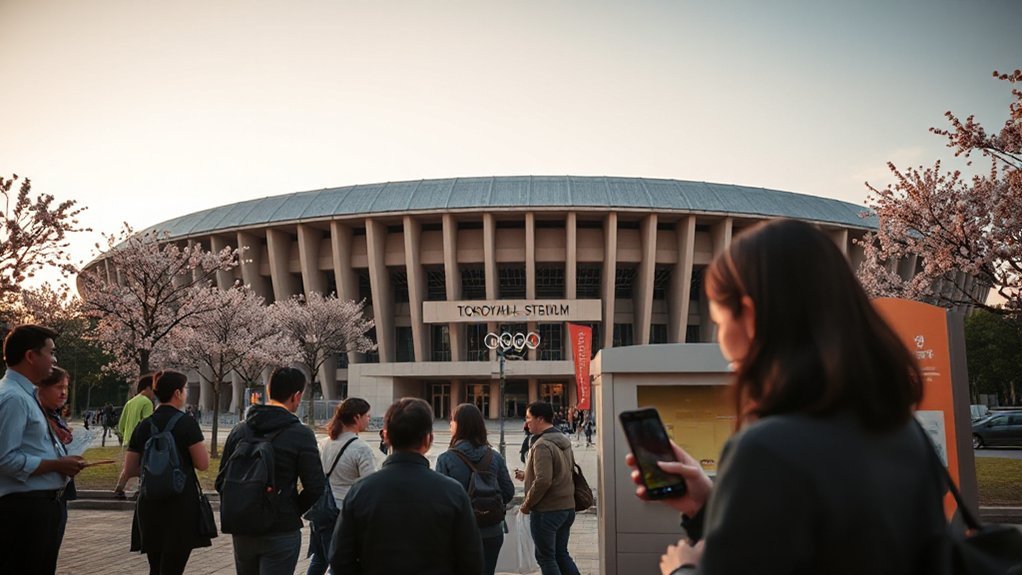
How do you actually get in? You book a guided tour on select weekdays, with a few weekend dates sprinkled in. Pick a time; entries are staggered every 30 minutes, and you can buy online up to 30 minutes before your slot if there’s space. Each booking gives you up to an hour inside, enough to move steady without rushing, and some slots include access to spots that are usually off-limits.
General admission is 2,500 yen, with 1,500 yen for high schoolers and younger.
Do yourself a favor and check the official booking page before you head out. Dates are specific, routes can change, and temporary shutdowns for renovations or events pop up with little warning. In winter holidays and other seasonal closures, listings thin out, so plan ahead. If the site lists audio guides on your date, grab one; it’s simple help that keeps you on track.
What You’ll See on the Stadium Tour
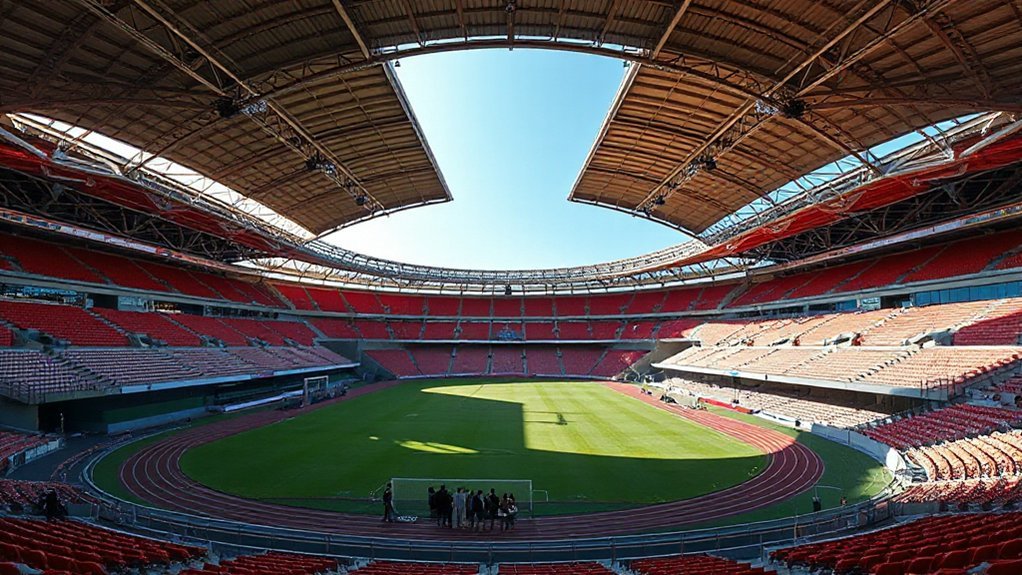
You’ll walk right up under Kengo Kuma’s layered eaves, where the wooden lattice throws clean stripes of light on the walkways and the beams feel close enough that you’ll want to run your fingers along the grain. Then you step onto the Tokyo 2020 medal podium for a quick photo and turn to the torch on display, a bright petal-shaped piece you can study up close, simple and proud, no tricks. It’s a straight-ahead moment: you spot scuff marks on the podium paint, you catch the cedar smell under the roof, and you realize this big place was built to feel human, which is a nice surprise.
Medal Podium and Torch
A blue-and-white medal podium waits inside the National Stadium, scuffed where champions planted their feet. You can step up, feel the beveled edge under your shoes, and the room goes quiet. The guide points out the clean lines and design symbolism, folds in quick maker stories, then lets you take photos on it. It’s simple, solid, and close enough to touch, which feels like the best kind of museum.
Right beside it, the official Tokyo 2020 relay torch really gleams, a burn mark or two telling its road miles. Both sit indoors, so rain never spoils the stop. Access now comes with the guided tour; book ahead, slots fill fast. You’ll get about an hour, so pace the photos and keep your eyes open.
Kengo Kuma Woodwork
Step off the podium and look up, and the place starts talking in wood. You’ll spot Kengo Kuma’s lattice running around the roof and facade, slipping into VIP boxes and even the changing rooms. It’s warm, not fancy, built from 70,000 cubic feet of Ryukyu pine and cedar pulled from all 47 prefectures. The Pagoda influence shows in layered eaves that shade and vent, while steel bones keep it steady. On tour you stand under sloped beams, trace Exposed joinery, and feel how the sightlines flow to the field.
| Where | What to notice | Why it matters |
|---|---|---|
| Roof eaves | Layered timber over steel | Shade, airflow, passive cooling |
| Facade lanes | Open lattice, local cedar | Breezes through concourses |
| VIP/Backstage | Tight joints, scuff marks | Craft you can touch |
Tickets, Prices, and Time Slots
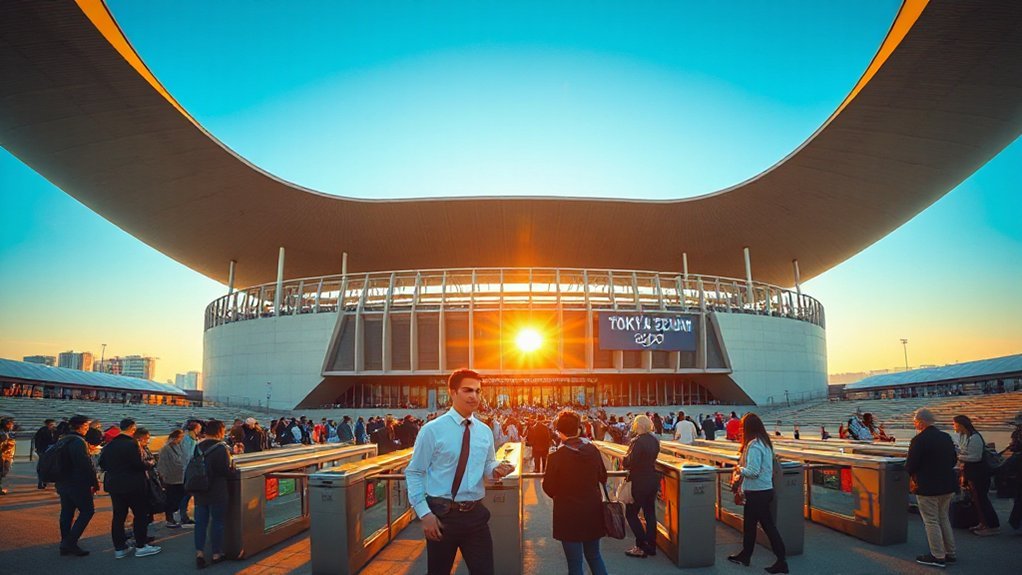
You book your spot online with advance registration, tickets sell until 30 minutes before each tour, tours run on select weekdays with the odd weekend date like Jan 3 or Jan 30, and slots or sections can vanish when there’s work or events, so check the official page before you get your hopes up. Entry times roll every 30 minutes, you scan in at your chosen slot and you can roam for up to an hour inside, which is just enough to see the track and grab a photo without sprinting. Budget’s simple too, general admission is ¥2,500 and high‑school students and younger pay ¥1,500, which keeps planning easy and lets you pick the time that fits your day.
Ticket Types and Booking
Wondering how to pin down a spot without fuss? Book the stadium tour online with a few taps, pick your slot, and get a QR code you can show at the gate; it’s straight‑ahead and quick. Tickets require advance registration, sales stay open right up to about half an hour before each slot, and you should read the refund policy and note the resale restrictions, since names on bookings matter. Tours run on select weekdays, with the odd weekend date sprinkled in, so don’t wait if a day suits you.
- Choose ticket type: general admission or youth for high‑schoolers and under; families often mix both in one order.
- Check latest availability on the official booking page.
- Expect staggered entry with an hour inside total.
Entry Fees and Times
How much and when—that’s the gist: general admission runs ¥2,500, and high schoolers and younger pay ¥1,500, with tours offered on select weekdays and the odd weekend when the calendar cooperates. You’ll pick a 30‑minute entry slot, and once you’re in, you get up to an hour to wander, snap a few photos, and soak in the track lines. Advance registration is required, and you can still buy online up to 30 minutes before your slot if space remains. Don’t count on a grace period; arrivals roll like clockwork. Dates shift with renovations and events, so always check the official booking page—think 3 Jan, 30 Jan, or 23 Dec showing one month and not the next. These are posted rates, not dynamic pricing drama.
Getting There and Nearby Attractions
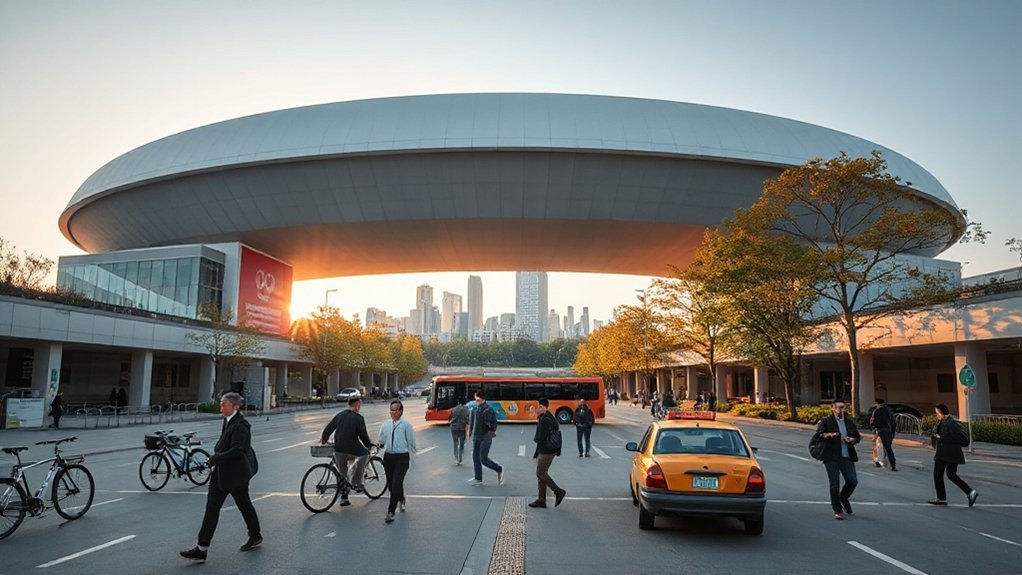
From the moment you step off the train at Kokuritsu‑Kyogijo Station on the Toei Oedo Line, it’s a one‑minute walk to the stadium—blink and you’ll be looking at the gates—while Sendagaya Station on the JR Chuo‑Sobu Line is five minutes away and Gaienmae on the Ginza Line is an easy 15‑minute stroll if you don’t mind stretching your legs. Those transport connections make it easy to slip into Meiji Jingu Gaien for a calm tree‑lined lap, then pass Tokyo Metropolitan Gymnasium a few minutes away. You can spot the Shinjuku towers, and the park paths keep you moving. For local eateries, head toward Harajuku or Omotesando, or swing to Shinjuku; THE KNOT TOKYO Shinjuku is about 2.7 km, and Oakwood Premier Tokyo about 4.9 km.
Step off at Kokuritsu-Kyogijo; stroll to the stadium, gardens, and Harajuku coffee.
- Use Exit A2 at Kokuritsu‑Kyogijo; follow stadium signs.
- Shady routes ring the grounds; bring comfy shoes.
- Pair stadium, gardens, and a Harajuku coffee.
Architecture and Sustainability Highlights
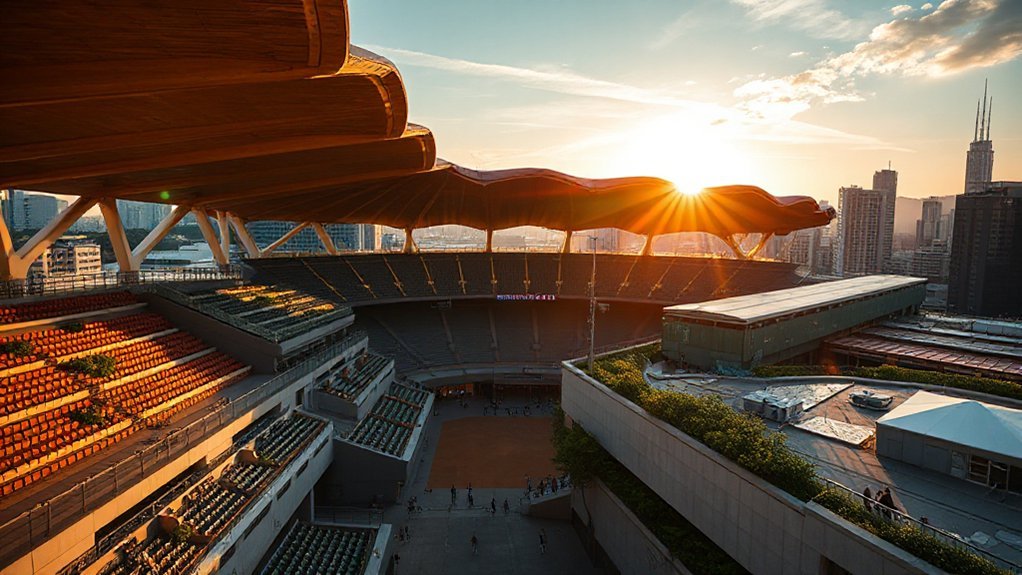
While you circle the bowl of Tokyo’s Olympic Stadium, you can feel how Kengo Kuma built it to breathe, not just impress. The layered eaves step out like a pagoda, catching wind and sliding it through the open facade, so the bowl stays airy, with Passive Cooling doing the heavy lift instead of loud machines. You’ll spot tiered concourses planted with shrubs and small trees, which pull the eye to the park and push fresh air through the walkways, like streets after a rain.
That lattice of Ryukyu pine and cedar—about 70,000 cubic feet—came from all 47 prefectures. It frames three steep seating tiers and shows up in the roof, boxes, and changing rooms, tying old craft to engineering. The form, the airflow, and the landscape work as one system, trimming heat and humidity, easing energy use, and pairing Passive Cooling with Rainwater Harvesting in a durable way.
Tips, Accessibility, and Visitor Notes
If you like things simple, getting there is easy: hop off at Kokuritsu‑Kyogijo on the Oedo Line and you’re at the gates in about a minute, or walk five from JR Sendagaya; Gaienmae is a longer, steady 15‑minute stroll if that suits you. Book the public tour online; slots run every 30 minutes, and you’ll have about an hour inside. Tickets sell until 30 minutes before, but busy days fill, so don’t cut it close. It’s ¥2,500 for adults and ¥1,500 for students. Rain days are fine, indoor areas open. You may see locker rooms, the track, and the northern fourth‑floor seats, plus the torch and medal podium you can stand on. Confirm the photo policy at check‑in.
- Accessibility: elevators, ramps, wide paths; ask for sensory accommodations.
- Timing: arrive 10–15 minutes early for security and bathrooms.
- Practical: comfy shoes, light bag, charged phone, water, snacks.
Frequently Asked Questions
Can I Take Photos or Videos Throughout the Tour, Including Locker Rooms?
Better safe than sorry: you can film and snap in public areas, but locker rooms aren’t permitted due to privacy concerns. Stick to personal use; commercial restrictions apply. Always follow posted signage and staff instructions.
Is There a Gift Shop With Stadium-Exclusive Merchandise After the Tour?
Yes. You’ll exit through a gift shop offering stadium-exclusive merchandise. You can browse exclusive apparel, limited collectibles, and souvenirs. Check hours and stock; items rotate, seasonal drops sell quickly, and some pieces are tour-only location-limited.
Are There Coin Lockers or Baggage Storage Available On-Site?
Worried about your backpack while you explore? Yes, on-site coin lockers are available; check posted locker locations near gates. Sizes vary, capacity’s limited, and luggage fees apply. Oversized items? Use baggage services or station counters.
Is Wi‑Fi Available Inside the Stadium During Tours?
Yes, limited Wi‑Fi is available during tours, but you shouldn’t rely on it; connectivity reliability varies across sections. Confirm at check‑in, consider cellular backup, and respect network security by avoiding sensitive logins and using VPN.
Are Tripods, Drones, or Selfie Sticks Allowed Inside?
No, despite the theory that everyone brings them anyway, selfie sticks and drones aren’t allowed; tripods require approval under safety regulations and permit requirements. You can request limited-use exceptions in advance, but expect restrictions on-site.