
On a rainy Tuesday, you hop a red double‑decker and watch Tokyo stitch together like a moving quilt—Asakusa to Odaiba, Shibuya to Marunouchi, square by square. You’ll choose between open‑top loops, premium coaches, or nimble micro‑buses; grab 24–48 hour passes, check validity zones, and book via app kiosks. Want ramps, stroller space, or multilingual audio? Easy. Time sunset slots, pack layers, a snack, and a charged phone. Now, the smart route locals favor—
Top Bus Tour Operators and What They Offer
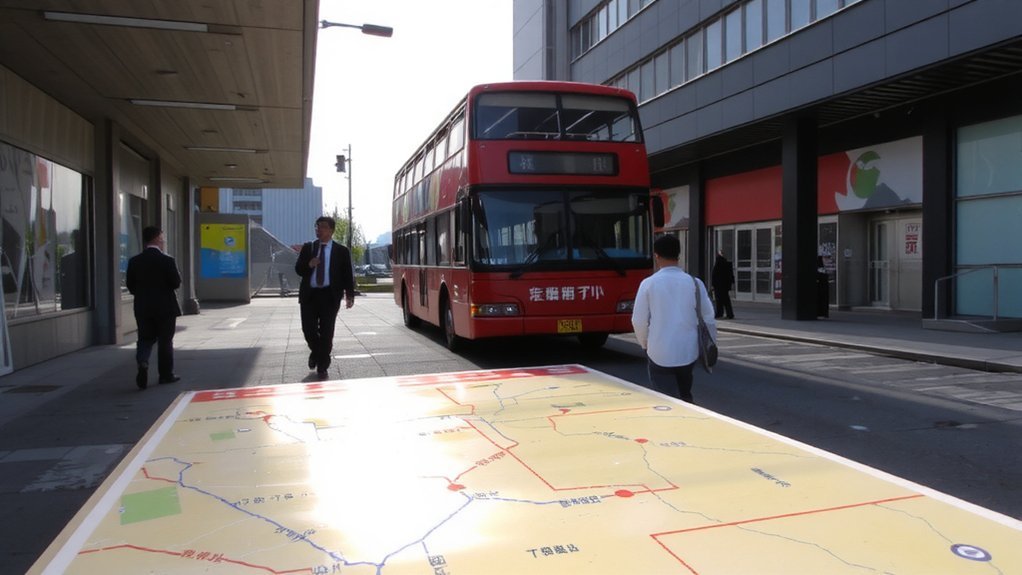
Let’s kick things off with the big three you’ll actually see on the streets. You’ve got the classic hop-on hop-off fleets, the sleek premium coaches, and nimble micro-buses for small groups. Choose the pass that fits your pace: day tickets, 24–48 hour bundles, or private charters. Expect multilingual audio, live guides, free Wi‑Fi, USB ports, wheelchair ramps, and rainproof open tops. Operators tout sustainability initiatives—hybrid or electric coaches, idle-cut systems, carbon-offset options. Many build corporate partnerships that open up bundle savings, priority entry windows, and seasonal perks. Booking’s easy: tap an app, pick time slots, get QR codes, cancel flexibly. Want extra? Night views, photography seats, kid packs, and tea onboard. You steer the schedule, they handle the logistics. Clean, efficient, no fuss. All yours.
Routes and Neighborhood Highlights
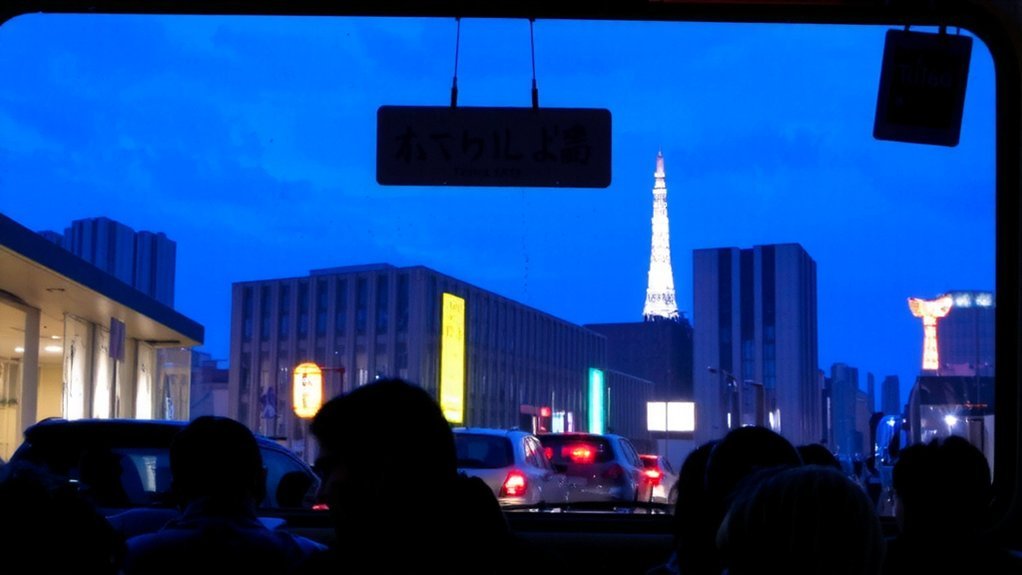
How do you pick a route in Tokyo’s maze of neon, shrines, and skyline shots? Start by mapping your vibe: tradition, tech, or night views. For temples, lanterns, and old-town alleys, follow the Asakusa Highlights loop—Senso-ji, Nakamise snacks, Sumida views. Want future-forward play? Swing toward the Odaiba Waterfront: Rainbow Bridge crossings, teamLab, bayside decks, and sea breeze hair. Crave street fashion and pop culture? Detour through Shibuya and Harajuku, then glide down Omotesando’s zelkova corridor. Architecture buffs, chase Marunouchi to Tokyo Station’s brick grandeur, then cut to the Imperial Palace moat. Time your run: morning calm, golden-hour glow, or neon after dark. Mix stops, stay nimble, and own your schedule. Quick rule: one themed cluster per outing. You’ll see more, stress less. Trust yourself.
Ticket Types, Prices, and Passes
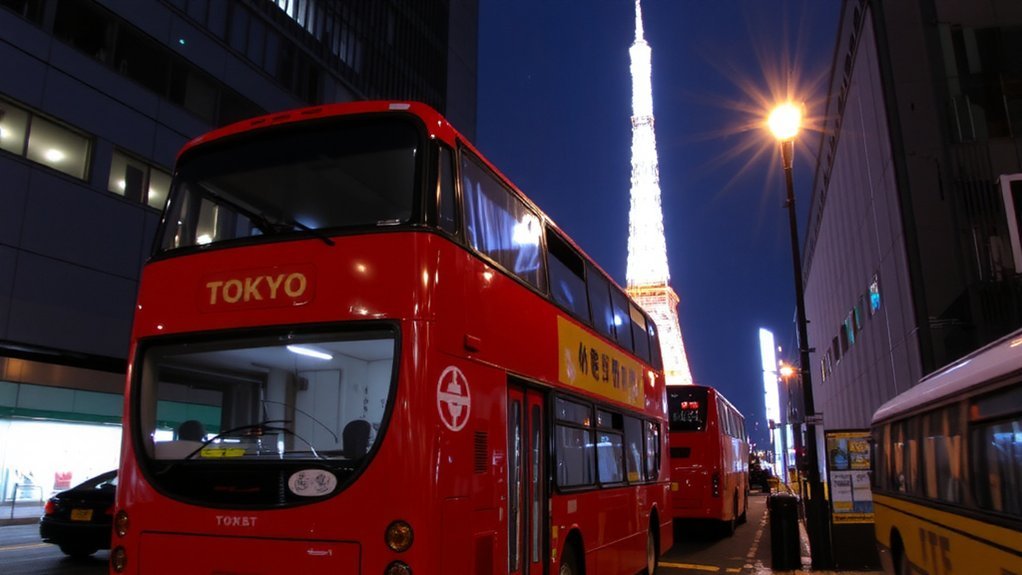
Why pay more or fumble with coins when the right pass does the heavy lifting? In Tokyo, you’ve got options. Single-ride fares work for a quick hop, but day passes open up unlimited rides across fixed routes, often from morning to dusk. Do a few price comparisons: if you’ll take three or more segments, a pass usually wins. Planning museums and towers too? Grab combo tickets that bundle bus access with big sights, shaving both yen and time.
Buy online before you land, or at station kiosks, hotel desks, and tour counters. Load it to Suica or PASMO for tap-and-go freedom. Watch the fine print—zones, validity hours, child discounts. Traveling in a group? Look for family or pair deals, and seasonal promos. When in doubt.
Onboard Experience: Guides, Audio, and Comfort Options
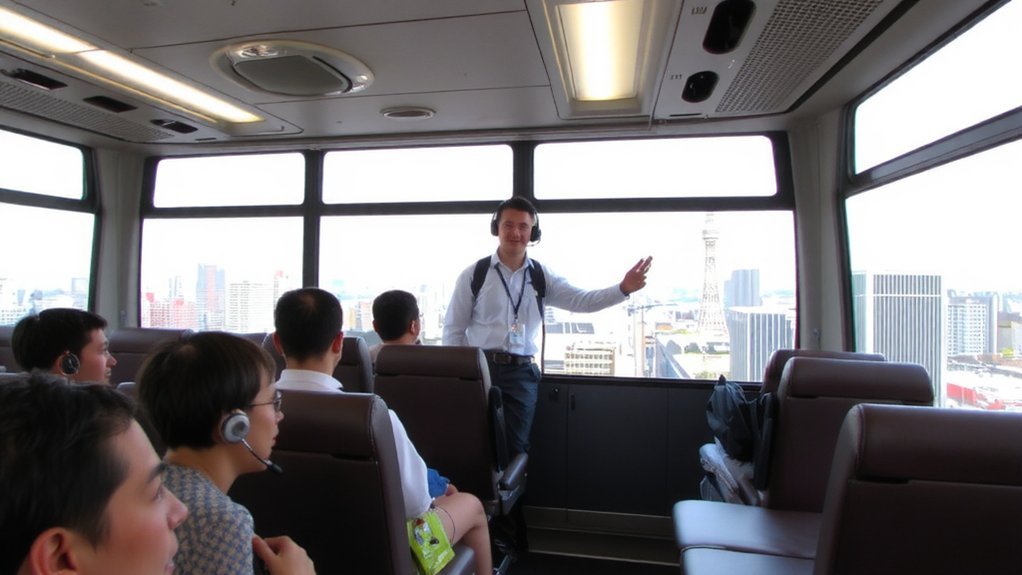
Curious where the stories come alive? You step aboard, and a sharp, friendly guide sets the tone—local lore, quick humor, clear directions. Prefer quiet control? Plug in: multilingual narration covers English, Japanese, Korean, and more, with volume knobs and clean headsets. You choose the vibe—banter up front, or audio cocoon in back. Seats matter, so check seat ergonomics: decent lumbar, adjustable recline, legroom that respects knees, even on double-deckers. Climate control helps too, with breezy open-tops or cozy cabins when wind bites.
- Pick your language track, then test sound before rolling.
- Nab a seat near stairs for faster photo runs.
- Ask guides for offbeat facts; they love it.
- Pack layers, sanitize headsets, and hydrate.
Freedom loves comfort. On every ride.
Timing Your Trip: Durations, Schedules, and Peak Seasons
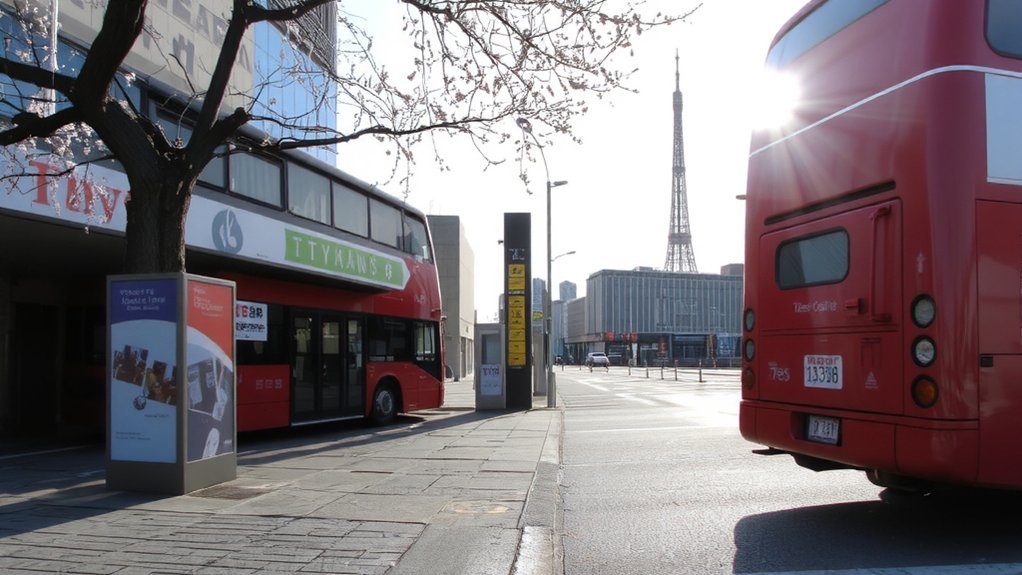
When should you ride to see Tokyo glide instead of crawl? Chase Sunrise departures; streets breathe, drivers smile, and you cover ground fast. Aim for weekday quietude, Tuesday through Thursday, avoiding commuter spikes at 7–9 a.m. and 5–7 p.m. Short on time? Pick a 60–90 minute loop for headline sights. Want depth? Choose a 3–4 hour route with two stops. All-in explorer? Go 7–8 hours, with a long lunch window and bay views.
Mind the calendar. Cherry blossom late March to early April, Golden Week in late April to early May, and Obon in August swell crowds. Autumn weekends in November do, too. To stay nimble, ride early, or go after lunch when tour buses thin, and keep an eye on rain—showers speed traffic.
Practical Tips for Accessibility, Families, Seasonal Lights, and Booking
You’ve got your timing set; now make the ride work for your crew—mobility needs, kids, night lights, and tickets—without the guesswork. Scan tour specs for low-floor buses, access ramps, elevators, and priority seating; confirm by chat or phone. Pack light, and pick stops with family restrooms nearby at stations too.
Make the ride work for your crew—access, strollers, restrooms—confirm and pack light.
- Book smart: reserve early online, choose refundable fares, and screenshot tickets. Tokyo loves QR codes; your battery doesn’t.
- Sit strategic: front lower deck for ramps and strollers, top deck for views. Bring a light jacket; wind bites after dusk.
- Chase lights: winter illuminations shine in Marunouchi, Shibuya, and Odaiba. Aim for the last two evening loops.
- Comfort kit: snacks, water, small blanket, earphones. Motion-sensitive? Grab mid-bus seats, and ask the guide for smoother sections.
Conclusion
You’ve got this. Pick a loop, Asakusa to Odaiba, then hop like a pro. Reserve prime slots, check pass zones, and screenshot your QR. Dress in layers, stash snacks, charge that phone like it’s life support. Choose open‑top for thrill, premium coach for comfort, low‑floor ramps if needed, live guide or multilingual audio. Use the app or kiosk, no drama. Do this, and you won’t just tour Tokyo—you’ll tame it, lap it, practically adopt it.