
You can ride Tokyo’s free hop-on buses and see Odaiba’s bay views, Marunouchi’s towers, Nihonbashi’s old shops, and Asakusa’s temple gates without paying a yen. You just wave, hop on, stash your big bag, and thank the very polite driver—ramen coupons not required. Timetables shift on weekends, so watch the posted headways to switch loops smoothly. Stops are clear, floors are low, and the city glides by; the trick is where to start, and when.
Key Takeaways
- Tokyo’s free sightseeing buses are multiple no‑fare hop‑on, hop‑off loops, not one line, linking key areas for visitors.
- Services include Marunouchi Shuttle, Metrolink Nihonbashi, Tokyo Bay Shuttle in Odaiba, and the Asakusa Panda Bus (weekends/holidays).
- Typical hours and frequencies: Marunouchi 8:00–19:00, Metrolink 11:00–19:00 every 10 minutes, Odaiba 11:30–19:30 every ~20 minutes.
- Board at marked stops and wave; transfer easily at Tokyo Station/Marunouchi, Nihonbashi, Odaiba, and Asakusa hubs.
- Expect landmark access—Imperial Palace views, COREDO/Mitsukoshi, Fuji TV and DECKS, Senso‑ji and TOKYO SKYTREE—and check timetables for weather or holiday reductions.
What Is the Tokyo Free Sightseeing Bus?
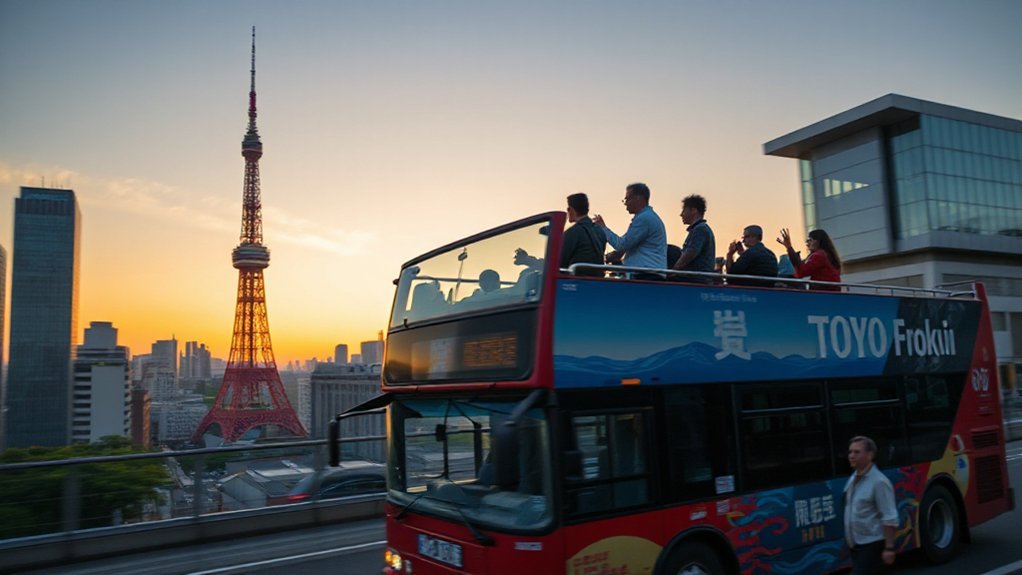
So what is the Tokyo Free Sightseeing Bus, really? You can think of it as a friendly bundle of no‑charge loops and shuttles that knit together a few of Tokyo’s hottest pockets, so you hop on, hop off, and keep your wallet shut. It’s not one line, it’s a family: the Tokyo Bay Shuttle around Odaiba sights, the Marunouchi Shuttle circling Tokyo Station, Metrolink Nihonbashi along Chuo‑Dori, and the panda‑painted bus in Asakusa linking Kaminarimon, Senso‑ji, and Tokyo Skytree. The program origins sit in simple city sense—local groups wanted easier access and steadier foot traffic, and they made it happen. Check the operator profiles and you’ll see a mix: ward offices, redevelopment firms, shopping associations, and transit contractors working together. You get clean, clearly marked buses, big windows, polite drivers, and route maps by the door. It’s practical, it’s free, and it just quietly works for visitors daily.
Routes and Operating Hours
When do these free buses actually roll, and how often can you count on one showing up? In Odaiba, the Tokyo Bay Shuttle circles from 11:30 a.m. to 7:30 p.m., every 20 minutes. Around Tokyo Station, the Marunouchi Shuttle completes a lap in 40 minutes, weekdays from roughly 8:00 a.m. to 7:00 p.m., weekends and holidays about 11:00 a.m. to 6:00 p.m., with 15–25 minute gaps, plus an Otemachi branch 8:00–10:00 a.m. Metrolink Nihonbashi runs every 10 minutes, 11:00 a.m. to 7:00 p.m.; its E‑Line spins 11:00 a.m. to 6:00 p.m. every 25–28 minutes. Asakusa’s Panda Bus runs weekends and holidays, hopping the river to Tokyo Skytree too.
- Check Frequency Maps before setting out, save time.
- Watch Seasonal Schedules; holidays shift start and finish.
- Plan loops around lunch, crowds thin midafternoon nicely.
- Note Otemachi branch runs on weekday mornings only.
- Aim for ten-minute Nihonbashi rides between stops today.
Where to Board and How to Transfer
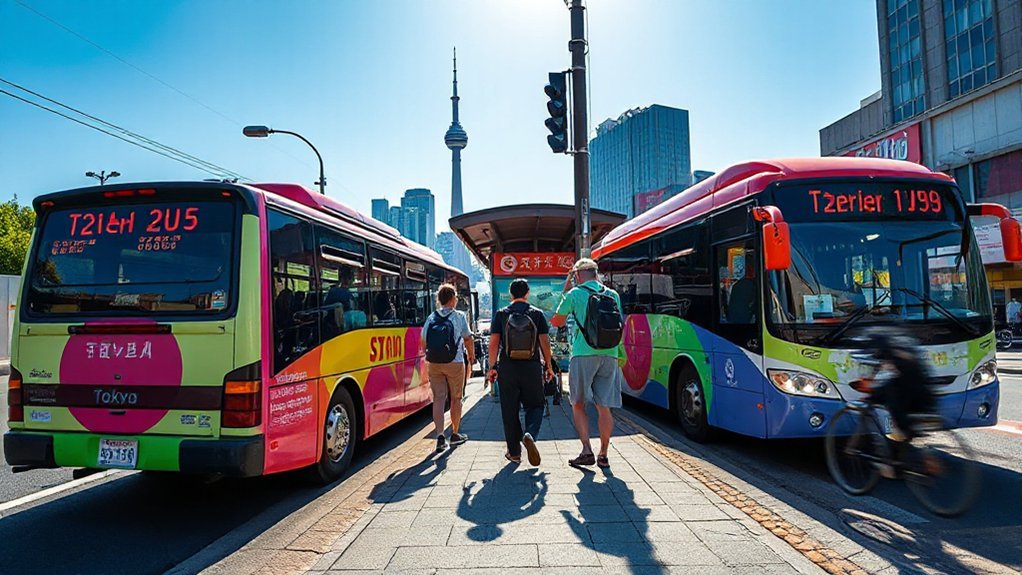
Now that you know how often these free loops swing by, here’s where to stick out your hand and how to switch lines without fuss. Stand at the marked stop, watch for the colored icon, and give a wave so the driver knows you’re boarding. Tokyo Station/Marunouchi is the easiest handoff: the Marunouchi Shuttle runs every 15–25 minutes (note 8:00–10:00 a.m. Otemachi variant that skips Yurakucho), and Metrolink Nihonbashi pops by every 10 minutes along Chuo‑Dori to Shin‑Nihonbashi. In Odaiba, the Tokyo Bay Shuttle circles daily about 11:30 a.m.–7:30 p.m. at roughly 20‑minute gaps. For weekends and holidays, the Asakusa Panda Bus crosses the river to TOKYO SKYTREE®, a tidy transfer between the two.
Head for hubs—Tokyo Station/Marunouchi, Nihonbashi, Odaiba, Asakusa—so waits stay short. Expect clear stop maps, Nearby Amenities, and Language Assistance at major info desks, but check notice boards for Jan 1 closures and trimmed timetables.
Top Landmarks Along the Free Loops
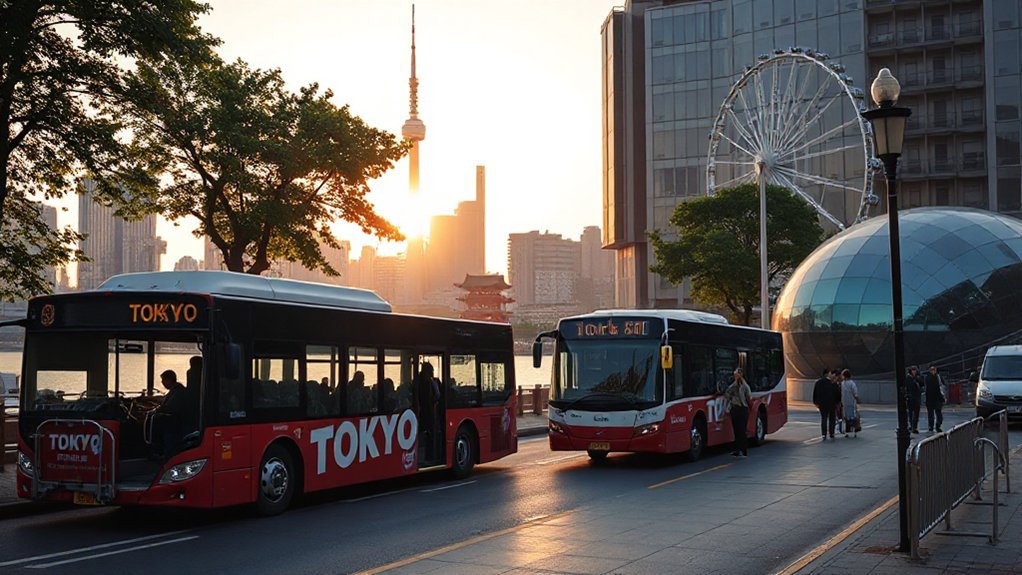
Four handy free loops put Tokyo’s biggest sights on a simple platter, and you can ride them like stepping stones. Swing out to Odaiba on the Tokyo Bay Shuttle, rolling every ~20 minutes from late morning to evening, and hop between Venus Fort, DECKS Tokyo Beach, and the Fuji TV building’s Hachitama sphere, all stitched to bright Waterfront promenades. Circle Tokyo Station on the Marunouchi Shuttle for clean views of the Imperial Palace moat and quick dips into the Marunouchi Mitsubishi Building. In Nihonbashi, Metrolink slides along Chuo-Dori to COREDO Muromachi and Mitsukoshi. Weekends, the Panda Bus ties Asakusa’s Historic temples and Nakamise to Tokyo Skytree. You can also swing through Ginza/Tsukiji, Ueno’s museums and Ameyoko, and back to Odaiba and Rainbow Bridge, no fares, no fuss.
- Odaiba: Venus Fort, DECKS.
- Imperial Palace views, Marunouchi area.
- Nihonbashi: COREDO Muromachi, Mitsukoshi.
- Asakusa: Kaminarimon, Senso-ji Temple.
- Ginza, Tsukiji, Ueno museums.
Rider Tips and Onboard Etiquette
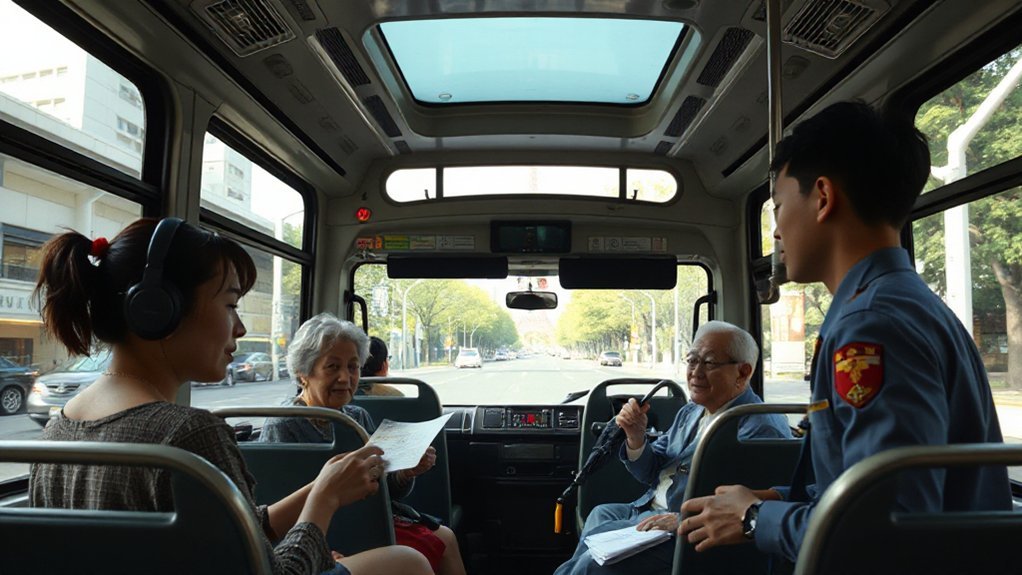
When you board, stash big bags and strollers in the trunk, pick a seat you’ll keep, buckle the seat belt even up top, and plug in your own wired earbuds for the multilingual guide or grab the free pair at the door. Keep it tidy and safe: no eating or booze on board, sealed bottles or lidded flasks are fine, and don’t switch seats mid-ride or hang your hands out the side like it’s a parade. If clouds roll in, they’ll hand you a poncho, but heavy rain or thunder can pause service, so dress for the season and check the forecast before you head out, saves you a soggy wait and a shrug from the driver.
Boarding and Seating
While the free loop shuttles feel easygoing, boarding goes smoother if you treat them like a regular city bus with a few sightseeing quirks: head to the marked stops, hop on when it swings by every 10–25 minutes, and plan your ride inside the operating windows (think Tokyo Bay Shuttle roughly 11:30–19:30, Marunouchi Shuttle on weekdays 8:00–19:00 and weekends 11:00–18:00), so you’re not chasing a bus that’s done for the day. Board light and sit smart.
- Line up at the pole; buses pause, move on.
- Fold strollers; put luggage in the trunk before boarding.
- Choose seats by seat configuration: window for views, aisle for quick exits.
- Listen for audio announcements; press the stop button early.
- Keep small bags on your lap to free aisles.
Safety and Conduct
Even though the ride’s free and friendly, the safety rules do the heavy lifting so your loop stays easy: buckle your seat belt, stay put till the bus fully stops, and keep your hands and souvenirs inside the window, charming breeze or not. Slide big bags and strollers into the trunk before you roll, because hopping seats mid-route turns simple corners into chaos. Skip food and all booze on board; a sealed bottle or lidded flask is fine, sip it tidy. Plug in wired headphones for the commentary, yours or the free pair, and let fellow riders hear their cities. Watch for crew communication; they call the plays. If weather protocols kick in—thunder or sheets of rain—they’ll pause service, then resume when it’s safe.
Sample Half‑Day and Full‑Day Itineraries
You can keep it simple with a half‑day on the Odaiba shuttle, rolling in around 11:30, catching those every‑20‑minute loops to hit VenusFort, DECKS Tokyo Beach, and the Fuji TV Hachitama view without sweating long waits. If you’ve got a full day, start on the Marunouchi Shuttle for Tokyo Station and the Imperial Palace edges, hop to Metrolink Nihonbashi for Mitsukoshi and COREDO snacks, then finish on the Tokyo Bay Shuttle to Odaiba or the weekend Panda Bus to Asakusa and Skytree. Watch the headways posted at each stop and you’ll move steady and easy, like you’ve walked this route before—because after one run, you kind of have.
Half-Day Odaiba Shuttle
Because the free Odaiba Tokyo Bay Shuttle loops the island every day from 11:30 a.m. to 7:30 p.m., rolling up about every 20 minutes, it’s the simple way to hop between far‑flung spots like the Fuji TV building and Venus Fort without burning your steps. For a tidy half day, board at Tokyo Teleport, snap the Fuji TV Hachitama Sphere, then ride to Palette Town/Venus Fort for lunch and mellow family activities, and finally stroll to Odaiba Kaihin Park for Rainbow Bridge views. Spend 30–60 minutes at big stops, book timed entries early, and relax—the next shuttle swings by soon anyway.
- Start: Tokyo Teleport.
- Check shuttle/mall pet policies.
- Fuji TV Sphere: 30 minutes.
- Venus Fort: lunch, quick shops.
- Walk to Kaihin Park, Rainbow Bridge.
Full-Day Free Bus Combo
Stitching three free loops into one easy day gives you a clean sweep of central Tokyo to the bay without burning your legs or your budget. Start at Tokyo Station and ride the Marunouchi Shuttle for a 40‑minute spin past the Imperial Palace frontage and shop‑lined streets, then hop off where lunch smells right. Walk five minutes to Chuo‑Dori and grab Metrolink Nihonbashi; it comes about every 10 minutes, so you won’t wait long to hit COREDO Muromachi and Mitsukoshi. By mid‑afternoon, swing to the Tokyo Bay Shuttle and roll Odaiba between Venus Fort, Fuji TV, and Aqua City/DECKS every 20 minutes till 19:30. Weather contingency: do more mall time if it rains. Accessibility considerations: low‑floor buses, elevators, and wide sidewalks keep this friendly.
Frequently Asked Questions
Is the Bus Wheelchair-Accessible and Do Stops Have Ramps or Lifts?
With one in six people having disabilities, yes: buses are wheelchair-accessible, and stops often provide ramps or lifts. You’ll see platform signage, and driver training guarantees assistance; confirm stop features and call for lift availability.
Are Strollers and Large Luggage Allowed Onboard, and Is There Storage Space?
Yes, you can bring strollers and luggage, but you must follow Stroller policies and Luggage limits. Fold strollers, secure them, keep aisles clear. Large suitcases may be refused; storage’s limited, so consider lockers or delivery.
Is There Onboard Wi‑Fi, Charging Ports, or Audio Guides in English?
Yes—expect onboard Wi‑Fi with moderate wifi speeds, USB charging ports, and English audio guides. You’ll connect via a portal, accept terms, plug in. Bring wired earbuds; audio quality is clear, though engine noise occasionally interferes.
How Can I Track Live Bus Locations or Service Alerts on My Phone?
You’ll use real-time maps in Google Maps, Transit apps, or Citymapper to track buses live. Enable Push notifications for service alerts. Follow operator’s X/LINE accounts, scan stop QR codes, and bookmark status page for disruptions.
What Should I Do if I Lose an Item or Encounter an Emergency?
Don’t panic—you’ve got this. If you lose an item, follow reporting procedures, contact service, and file details promptly. In emergencies, call emergency numbers, follow staff safety protocols, move to safe areas, and assist if safe.