
Tokyo’s busiest week isn’t New Year, it’s late April into early May, when Golden Week packs trains and hotels. If you want cherry blossoms, you aim for late March to early April and bring a picnic mat, if you like mild sun and green parks, May’s your friend, and if rain and crowds bug you, skip June and that holiday rush. Want fireworks, crisp skies, or quiet nights? Timing is everything.
Key Takeaways
- Spring late Mar–early Apr for cherry blossoms; mild 10–20°C; expect peak crowds and higher hotel rates.
- May offers 18–23°C, dry weather, fresh greenery; avoid Golden Week (Apr 29–May 5) due to jammed trains and price spikes.
- Summer July–August is hot, humid >30°C with festivals and fireworks; plan early arrivals, hydrate, and consider reserved viewing.
- Autumn Oct–Nov brings clear, comfortable 14–20°C days and vivid foliage with thinner crowds; prime sightseeing weather.
- Winter Dec–Feb is cool and dry (3–12°C) with evening illuminations; book general trips ~3 months ahead, 9–12 months for blossoms/festivals.
Highlights of Tokyo’s Seasons
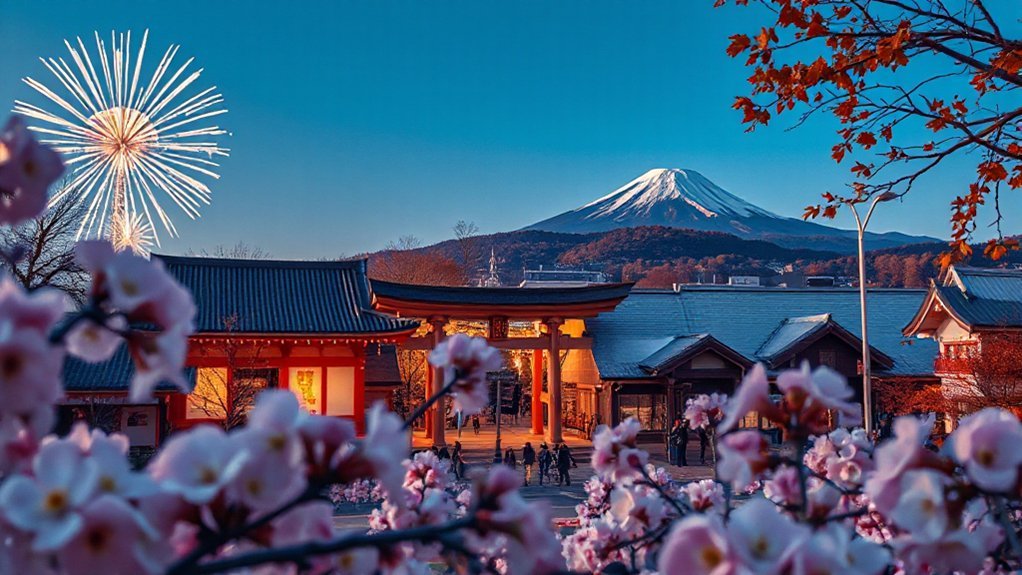
Seasons set the pace in Tokyo, and each one leaves its fingerprints on your day. You chase spring’s cherry blossoms along Ueno Park paths and the Meguro River, shoulder to shoulder with half the city, and hotels hike rates because everyone wants that pink moment. Early summer slides into the rainy season, so you pack a light umbrella and move easy between cafes and galleries, damp air and all. July and August turn hot and busy, but fireworks boom over the Sumida and neighborhood matsuri fill streets with drums, shaved ice, and grins. Autumn feels calm and clear, parks glowing gold, crowds thinner, your steps longer. Winter runs cool and dry, and night walks shine with big illuminations in Roppongi and Shibuya.
You’ll taste Seasonal cuisine in every stretch—sakura sweets, festival yakitori, autumn soba, winter oden—and you’ll find Seasonal nightlife that shifts from riverside picnics to cozy bars.
Weather in Tokyo by Month
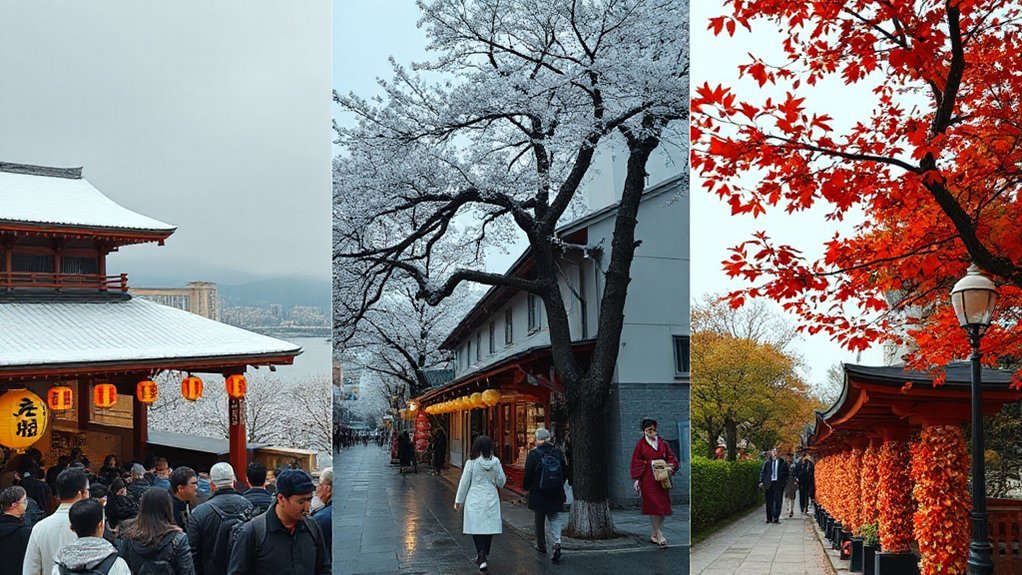
From January on, Tokyo’s weather walks you month by month like a steady metronome, and you plan around it without much fuss. January and February run cool and dry, highs near 9 to 10°C, nights around 1 to 3°C, and a flurry that melts by lunch. March nudges up toward 12°C, then April settles into mild, and you leave the heavy coat at home. May turns warm, about 21 to 23°C, with soft evenings; pleasant, though crowds spike around Golden Week. Early to mid‑June brings tsuyu, steady rain and sticky air, and by July and August the heat hits hard, often over 30°C with big humidity, a high UV index, and late‑summer typhoon chances. September eases off, then October and November land clear and pretty comfy, highs 14 to 20°C, good walks. December snaps back to dry chill, around 10 to 12°C, and the air quality feels crisp.
Spring in Tokyo: Hanami and Mild Days
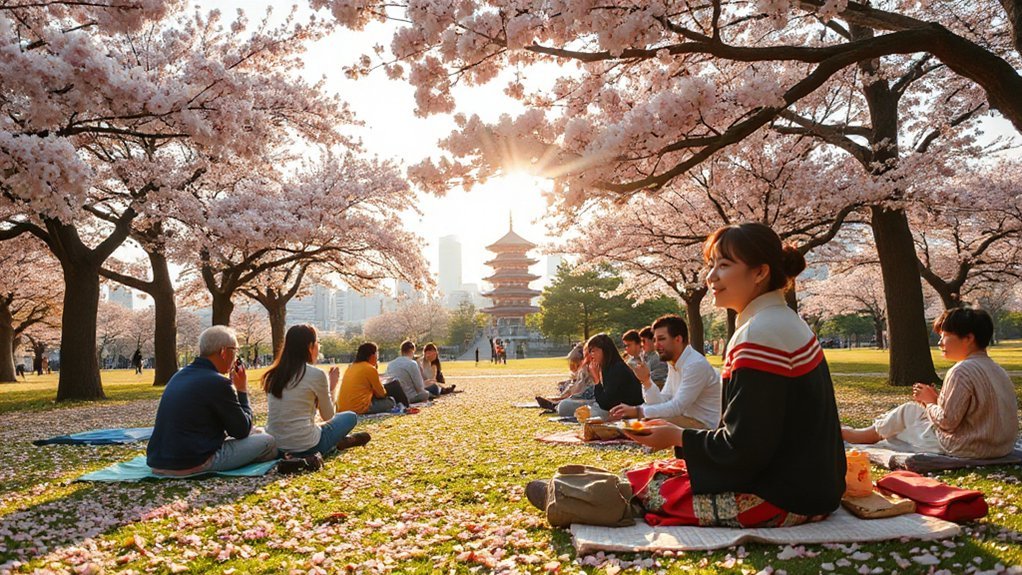
You’ll hit the sweet spot when sakura usually crest in late March to early April, but the bloom can swing by a week or more, so watch the forecast and keep plans loose while temps sit around 10–20°C. You can spread a picnic at Ueno Park, Shinjuku Gyoen, or along the Meguro River, but expect shoulder-to-shoulder crowds and scarce benches when petals peak—get there early and pack a tarp, the blue ones are everywhere. If you’d rather keep your elbows to yourself, come mid to late May after Golden Week when the air’s mild, prices ease a bit, and the city’s green without the crush.
Sakura Bloom Timeline
By late March, Tokyo’s cherry buds start to crack open, and within a week or so the whole city blushes pink, with full bloom usually landing in the last week of March or the first week of April. Historic Records back this rhythm, and the Cultural Symbolism runs deep, brief beauty that bows out fast.
You get a tight 7–10 day sweet spot after first full bloom, and wind or rain can drop petals early. Daytimes run 10–20°C, good for walks and evening lights without freezing fingers. Watch forecasts from February and March; a warm spell can move dates days. Breathing room if you skip peak day and weekend after, and visit on a weekday morning or evening to catch bloom with fewer bumps.
Best Hanami Parks
Where should you plant your picnic blanket when Tokyo turns pink? Start at Ueno Park, where roughly 1,000 trees frame wide promenades and museum plazas; it’s famous, busy, and bright with old park histories and street snacks, so arrive early and stake a spot. For room to breathe, Shinjuku Gyoen spreads out lawns and mixed sakura that bloom in waves, so you wander, sit, and snap in peace. Follow the Meguro River for four kilometers of lantern-lit arches, one of the city’s easy photography hotspots, best for long strolls and twilight clear-outs. At Chidorigafuchi, rent a rowboat and glide under low branches, then stay for illuminations. Yoyogi Park keeps it casual, big lawns, loose crowds, and the friendliest picnic energy, near Shibuya and Harajuku.
May Visit Advantages
Come May, Tokyo exhales: days sit around 18–23°C, mostly dry, and evenings stay comfy with just a light jacket. You’ll catch parks turned fresh and green, wisteria hanging like curtains, and room to breathe after the cherry-blossom rush, so stroll and linger without elbow wars. Long daylight keeps you out longer, and Terrace dining feels right, not brave. Do dodge Golden Week at the start, or book early and brace for prices. By mid to late May, festivals hum, led by Sanja Matsuri in Asakusa, lively but manageable if you plan your route.
- Best times: late mornings for quiet paths; blue-hour walks after dinner.
- Easy hanami: bring onigiri, a mat, and patience for crows.
- Packing: light layers, cap, umbrella, comfy shoes.
Summer in Tokyo: Festivals, Fireworks, and Rainy Season
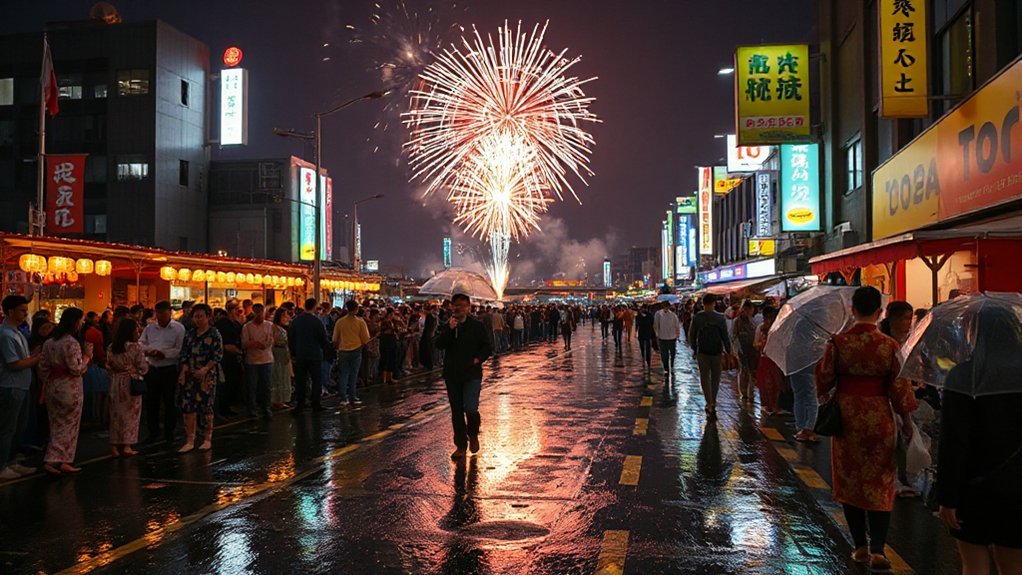
Summer runs on a simple rhythm here: tsuyu rains through mid‑July, then the heat hits, and the calendar lights up with Mitama Matsuri’s lanterns in mid‑July, the Sumida River Fireworks on the last Saturday of July, and the Asakusa Samba Carnival strutting in late August. For hanabi, get to the Sumida banks by mid‑afternoon, spread a picnic sheet, wear airy clothes, bring water, a small towel and a fan, and use a less‑busy station for the walk in because trains pack tight. August edges into typhoon season, so check advisories, expect last‑minute changes, and keep a light rain jacket and a backup indoor plan in your pocket, just like a local who’s been rained on before.
Matsuri Highlights and Dates
When the tsuyu rains start to fade from mid July, Tokyo flips into festival gear, and you can feel it in the streets and along the rivers. You’ll hear drums, smell smoky Food stalls, and mind your Matsuri etiquette—step aside for mikoshi, don’t block shrine paths, pay a coin, bow once, please, keep it friendly and smiling.
- Mitama Matsuri (July 13–16): 30,000 lanterns glow at Yasukuni Shrine, with nightly kagura and songs in the heat, arrive near dusk and wander slow.
- Sumida River Fireworks (last Saturday of July): the city’s biggest hanabi, drawing close to a million, every bridge hums.
- Edogawa Fireworks (first Saturday of August) and Koenji Awa Odori (last weekend of August): big crowds, fast dance, less typhoon fuss.
Hanabi Viewing Tips
After the drums and lanterns of matsuri, the nights start to crackle with hanabi, and you’re chasing a good view more than a parade. Arrive early—two hours for Sumida or Edogawa—or book reserved seats, a rooftop bar, or a cruise to avoid elbow wrestling in 30°C heat. Wear a yukata or light clothes, pack a fan, sunscreen, and a poncho; skip umbrellas. Check forecasts and event pages, since shows after tsuyu can slide for rain or typhoons. Plan your exit; stations jam—carry water, travel light, and wait for a later train or walk to a quieter line. Safety tips: stick with your group, set a meet spot, mind riverbanks. For photo techniques, shoot wide, brace your phone, use a 2–3-second exposure, and lock focus.
Autumn in Tokyo: Foliage and Clear Skies

Though Tokyo runs fast all year, autumn eases the city into a calmer gear and paints it right in front of you. Cool, clear air settles in, and you get Rooftop Viewing at sunset and Sunrise Hikes, with sharp city lines and, on crisp mornings, a peek at Mt. Fuji. Leaves start turning in late October, with reds and golds peaking mid‑November into early December. Daytime sits around 10–20°C, so you can wander without sweating through your plans.
Autumn slows Tokyo: crisp air, golden leaves, Fuji peeks, and easy wandering.
- Trace classic gardens: Rikugien’s glowing maples and Koishikawa Korakuen’s ponds frame reflections that look hand‑painted; hit them midweek for quieter paths.
- Walk the avenues: Meiji Jingu Gaien’s ginkgo row goes gold in late November, while Ueno Park and Imperial Palace East Gardens give leaf‑crunching loops.
- Work the light: Start early for empty benches and Fuji chances, then aim high for skyline clarity after lunch; dry air makes every edge pop.
Winter in Tokyo: Illuminations and Snowy Day Trips
As the last maple leaves settle, Tokyo flips the switch on winter and you get a city that glows right on schedule, with illuminations running from late November into February and most lights humming from about 17:00 to 22:00 every night.
Bundle up, temps sit around 3–12°C, so a real coat, hat, and gloves save the evening. You’ll find big shows in Roppongi Hills and Tokyo Midtown, warm-white trees in Marunouchi by Tokyo Station, and Shibuya’s Blue Cave drifting in deep indigo. Use simple Photography Tips: shoot at blue hour, steady your phone on a railing, and keep ISO low. After lights, plan a snowy day trip and an onsen—Gala Yuzawa, Hakone, or Nikko—then warm up with Local Cuisine.
| Spot | Expect | Tip |
|---|---|---|
| Roppongi/Midtown | LEDs and tree canopies | Blue hour, 17:00 |
| Marunouchi | Warm gold near Tokyo Station | Catch reflections |
| Shibuya Blue Cave | Deep blue tunnel | Weeknights |
Pack hand warmers.
National Holidays and Peak Travel Periods to Consider
You’ll feel Tokyo’s gears grind during Golden Week, roughly April 29 to May 5, when trains jam up, hotels sell out, and prices jump, so don’t expect a last‑minute miracle room. Around New Year, late December through about January 3, folks head home and many shops go dark, while shrines brim with hatsumode crowds—you and a few thousand new friends shuffling under lanterns. Mid‑August’s Obon brings sticky heat and a family travel surge, with busy shinkansen and full buses, so if you must go then, book beds and big-ticket rides weeks—better yet months—ahead.
Golden Week Crowds
Often called Japan’s biggest travel crunch, Golden Week runs roughly from April 29 to May 5, with the exact dates wobbling a bit each year. You’ll feel the economic impact in higher room rates, sold‑out trains, and tour prices that jump like a cat on a hot roof. Crowds surge at Shibuya crossings, museums, and family parks, and simple day trips stretch long. Build a bit of emergency preparedness into your plans: pad travel time, keep snacks, and carry backup routes.
- Book beds and shinkansen seats 2–3 months ahead; set alerts, then pounce.
- Aim for dawn starts or late evenings; midday queues can eat hours.
- Stay near a JR hub; you can walk to sights and skip one jammed transfer entirely.
New Year Travel Rush
Around New Year, Tokyo moves like a packed train car, elbow to elbow from the last week of December into the first days of January, with the heaviest crush around December 29 to January 3. If you travel then, expect sold-out shinkansen seats, pricey rooms, and booking calendars that look picked clean. Reserve months ahead, and add extra time for slow security lines, busy ticket gates, and taxis stuck in holiday traffic. Mind Station etiquette: queue on the marks, keep bags tight, and step aside for folks getting off. Many small eateries close until January 2–4, so map meals, but shrines stay open and swell for hatsumode. Sample Mochi traditions at supermarkets, then find a quiet park bench and breathe. You’ll be glad later.
Obon and Summer Peaks
New Year may feel like the big squeeze, but summer in Tokyo packs its own punch. Obon hits in mid‑August, when folks head home for ancestral rites, and the city’s rails and runways strain like rush hour. You’ll see company closures, school holidays, and a stack of matsuri and hanabi, which means long lines and hotel rates jumping. Book trains and beds months ahead, aim for earlier departures, and keep plans flexible. Late summer rides typhoon season, so flights and ferries can stall; leave a buffer day, and avoid connections.
- Trains: reserve Shinkansen seats, expect standing cars full, travel early morning.
- Lodging: target business districts on weekends; cancellations appear day‑of.
- Sights: hit popular spots at opening, save indoor backups for storms.
Rainy Season and Typhoon Considerations for Tokyo
While Tokyo doesn’t pound you with daily downpours, its rainy season—tsuyu—rolls in from early–mid June to mid July with lots of gray skies, steady rain, and swampy humidity, so you pack waterproof shoes and a compact umbrella and thank yourself later. During these weeks you feel the air sit on your skin, trains sometimes slow for safety, and transport disruptions ripple through day, so you pad your timelines and duck into stations when showers thicken.
Typhoon season runs May through October, with the punchiest stretch in August and September. Big systems can cancel flights and ferries, shut museums and parks, and push heavy rain into low areas that sometimes get advisories, though Tokyo weathers things better than Okinawa. Don’t stack tight same-day connections in late summer, and keep an eye on Japan Meteorological Agency updates. Book flexible fares, screenshot bookings, and pick insurance coverage for changes, no fuss.
Best Times to Visit Tokyo by Interest
So when should you go? Match your trip to your itch. Spring means blossoms, summer beats and fireworks, autumn gold, winter lights. Skip early June to mid‑July if rain wears you down, and note August–September brings more typhoon fuss. It’s a big city, so timing shapes stories you bring.
- Blossoms and gardens: Late March to early April gives 10–20°C days and peak bloom in Ueno and Shinjuku Gyoen, good for slow walks, easy photos, and a bench lunch under pink shade.
- Festivals and big energy: Hit mid‑May for Sanja Matsuri’s roaring mikoshi, then late July for Sumida River Fireworks, and roll straight into warm‑night Tokyo Nightlife that buzzes till first trains.
- Pop culture and city glow: Plan an Anime Pilgrimage to Akihabara or Nakano, pair it with mid‑November reds and golds in Rikugien and Meiji Jingu Gaien, or with winter illuminations late November to February.
Practical Planning Tips: Crowds, Booking, and What to Pack
You’ve got your season circled; now let’s make the trip easy on your nerves and knees. Skip Japan’s big domestic rushes—Golden Week in late April to early May, Obon in mid‑August, and New Year’s at the turn—when trains pack tight and hotels vanish. Book beds and hot tickets at least three months out, and for cherry blossoms or big festivals, think nine to twelve months; the good stuff goes first. Pack for the calendar, not wishful thinking: June to mid‑July brings steady showers, so carry a compact umbrella, a light waterproof, and quick‑dry layers. Summer runs sticky and hot, so breathable shirts and a sunhat save the day; spring and autumn swing 10–20°C, so layer easy. Travel light with soft‑sided bags; many stations and ryokan mean stairs, not elevators. Use Luggage forwarding between stays. Grab Pocket WiFi for maps and trains. Do this, and Tokyo moves with you.
Frequently Asked Questions
Are Tokyo Attractions Accessible for Wheelchair Users Year-Round?
Yes—you’ll roll through Tokyo like a bullet train; seasonal accessibility is strong, with widespread elevators and ramp availability. Still, plan around typhoon downpours, festival crowds, renovations, and winter slush; reserve accessible taxis and step-free routes.
Do Museums and Shops Change Operating Hours Seasonally?
Yes, many museums and shops adjust hours seasonally. You’ll see shorter winter schedules, extended summer evenings, special holiday hours, and tweaks around exhibition openings. Always check official calendars; weekdays, weekends, and festivals can shift times.
How Do Cash, Cards, and IC Transit Payments Work in Tokyo?
You’ll use cash for small eateries and markets, cards for larger stores, with contactless acceptance. For transit, load IC cards like Suica/PASMO, tap in/out, recharge at stations or shops, and link them to Apple Pay.
What Etiquette Should I Follow at Shrines and Temples?
Bow at the torii, keep right, and speak softly. Perform proper purification: rinse left hand, right hand, mouth, ladle. Offer coins, bow twice, clap twice, bow once. Respectful photography: avoid restricted areas, don’t obstruct worshippers.
Is Tokyo Safe for Solo Travelers at Night?
Yes, Tokyo’s generally safe for solo travelers at night. You check neighborhood safety, avoid deserted alleys. Crime statistics show low violent crime, but you still safeguard belongings, use well-lit routes, licensed taxis, and share itineraries.