
You want the 10 best museums in Tokyo without guesswork, right? Start with samurai armor at the Tokyo National Museum, then chase fossils and meteorites in Ueno, and watch light spill over you at teamLab Borderless; swing by the Mori for art and a skyline, and cool off in Nezu’s quiet garden, tea bowls and all. I’ve walked these floors, dodged the crowds, and found the shortcuts—here’s where to start and the trick that spares your feet.
Key Takeaways
- Tokyo National Museum: Japan’s oldest, 110,000+ works with National Treasures and samurai armor; Honkan and Toyokan highlights; rent the audio guide.
- teamLab Borderless: immersive interactive light art; timed-entry tickets recommended; download the app; move at varied speeds to trigger responses.
- Roppongi combo: Mori Art Museum’s global contemporary shows with panoramic views, plus The National Art Center’s rotating blockbusters; visit weekday mornings.
- Yayoi Kusama Museum: Infinity Rooms, bold dots and sculptures; 90-minute timed tickets; reserve early and arrive 10 minutes ahead with ID.
- Ghibli Museum: whimsical villa-like architecture, exclusive shorts, rooftop Laputa robot; tickets release monthly; pack light for narrow stairs and small lockers.
Tokyo National Museum
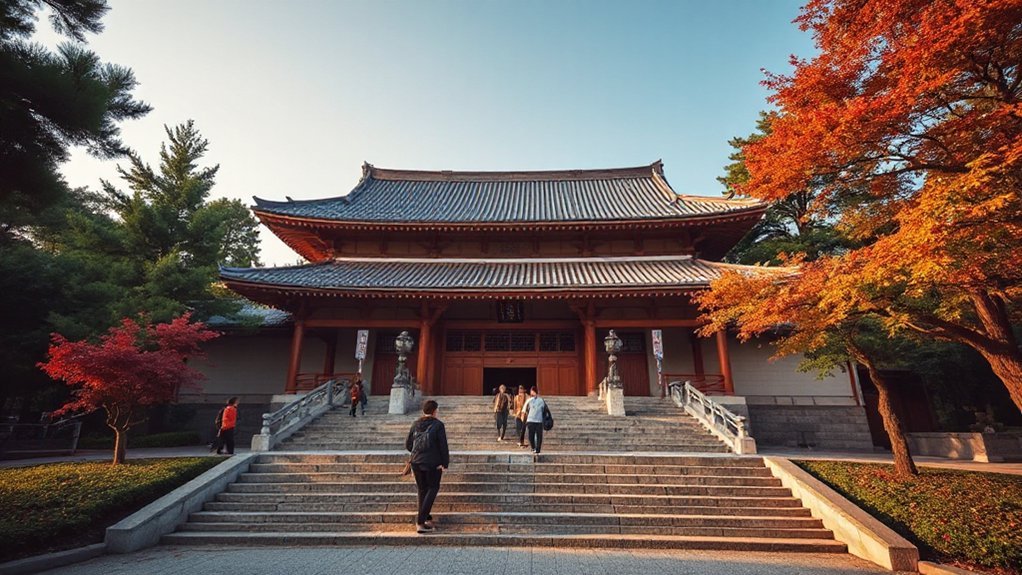
The Tokyo National Museum in Ueno Park is the big one, Japan’s oldest and largest museum since 1872, and you feel that weight the minute you step through the gates. You head to the Honkan first for the Honkan Highlights, where samurai armor shows every dent and stitch, and embroidered kimonos glow under calm lights. The Toyokan Treasures pull you across Asia, with ancient ceramics and Buddhist statuary that whisper about roads you haven’t walked yet. The numbers are huge—over 110,000 artifacts, with 89 National Treasures and 319 Important Cultural Properties—but the layout keeps you steady. Duck into the Horyuji Homotsukan for quiet gold and wood that looks newly breathed on. Check the Heiseikan schedule, because big rotating shows land there, and you’ll want a few hours. Grab the audio guide; it fills in the people behind the pieces, and it keeps you from nodding and passing by.
National Museum of Nature and Science
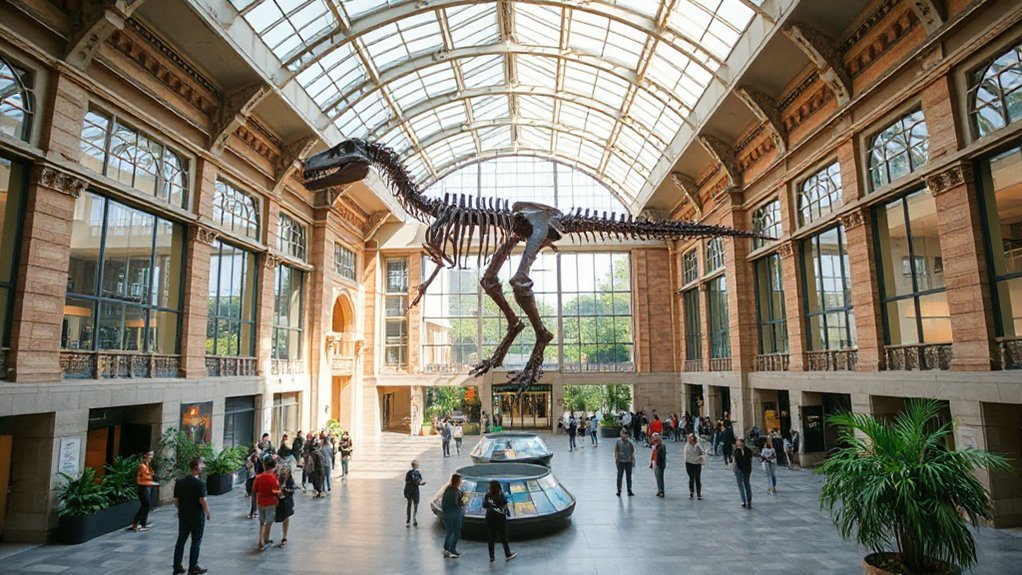
A short walk from Ueno Park’s ponds lands you at the National Museum of Nature and Science, a grand old science hall with roots in the 1870s that still feels busy and bright. You step in and get pulled through time, from early tools and fossils to Japan’s engines and robots, and you realize fast you can’t see it all in one go, so pick your hits. The Meteorite Showcase gleams like a roadside trophy, and the whale and mounted animals make solid company, no fancy gloss needed. Kids plug into Interactive Dioramas and hands-on buttons, and you’ll learn something right beside them, which is half the fun.
- Plan two hours, then add one more if you’re rolling.
- Adults pay about ¥800–¥1,000; under-18s often free.
- Weekdays feel calmer; start upstairs and work down.
Step outside and you’re back in the park, cheeks warm and head buzzing with stories.
The National Art Center, Tokyo
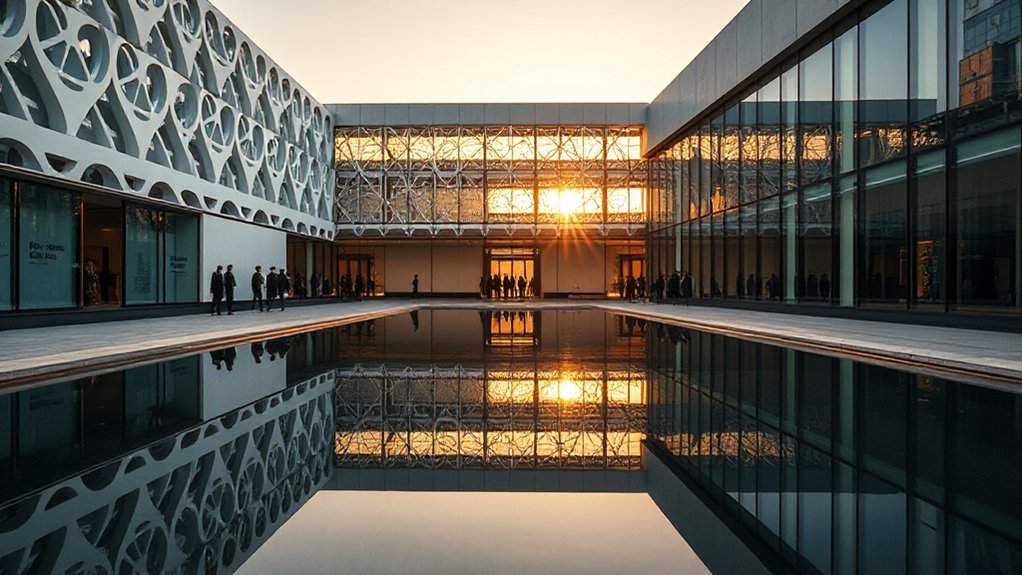
Right in Roppongi, you spot an undulating sweep of glass and concrete, Kisho Kurokawa’s landmark that looks like it’s breathing in and out. Step closer and you’ll see the Kurokawa Design isn’t a gimmick; it funnels you into a vast atrium and 150,700 square feet of show space that moves like a toolbox. Twelve interchangeable galleries slide from small to stadium, so the museum can run up to four big temporary exhibitions at once. No permanent collection means fresh work every visit, from blockbuster traveling shows to design fairs and hush-quiet, room-sized installations. You can enter the building free, poke around, and linger at Atrium Events, but you’ll need tickets for the exhibitions. Check the schedule before you go, pick a lane, and give yourself time, because the scale can swallow a quick visit. Weekday mornings stay looser, and the lines tell you what’s hot right now today.
Mori Art Museum
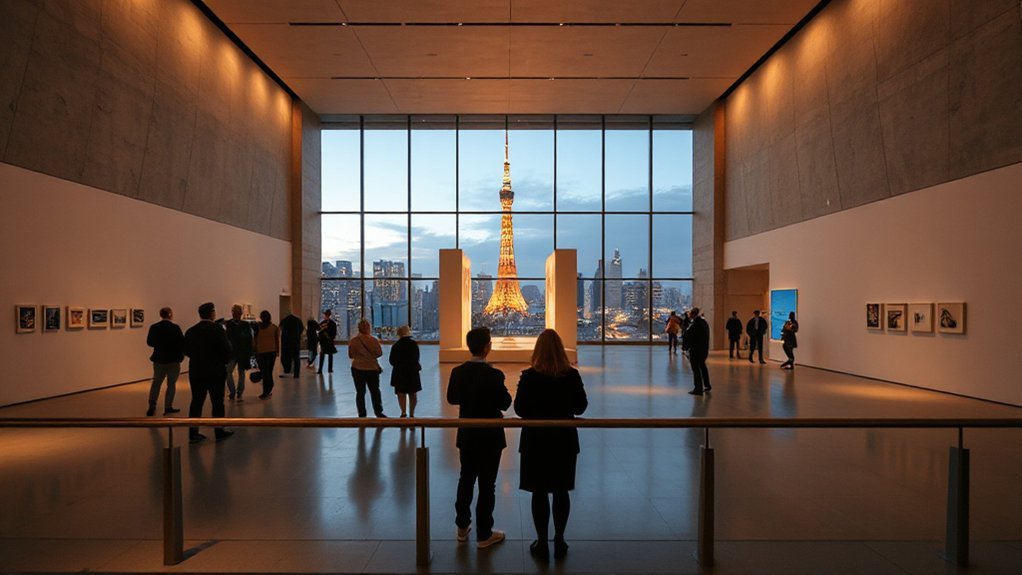
From Roppongi’s shape-shifting halls at the National Art Center, you can wander a few blocks and ride an elevator straight into the sky, up to the 52nd and 53rd floors of Mori Tower, where the Mori Art Museum pairs big, international contemporary shows with a wraparound view of Tokyo that goes on and on. You step right out to white galleries, then swing back to the glass and city light, which is half the show. Recent headliners have ranged from Louise Bourgeois to Basquiat, Ai Weiwei, and Dinh Q. Lê, so the Global Programming stays sharp and big-hearted. Tickets run about $14, depending on the show, and you should book online; your timed slot opens 15 minutes early at the machines, which saves you from standing around. After you look, ride up for Rooftop Views, then loop to Nezu or Suntory nearby.
Elevator to sky-high galleries, global art meets Tokyo’s endless glow and rooftop views.
- Timed tickets
- 360° views
- Easy hop
Tokyo Photographic Art Museum
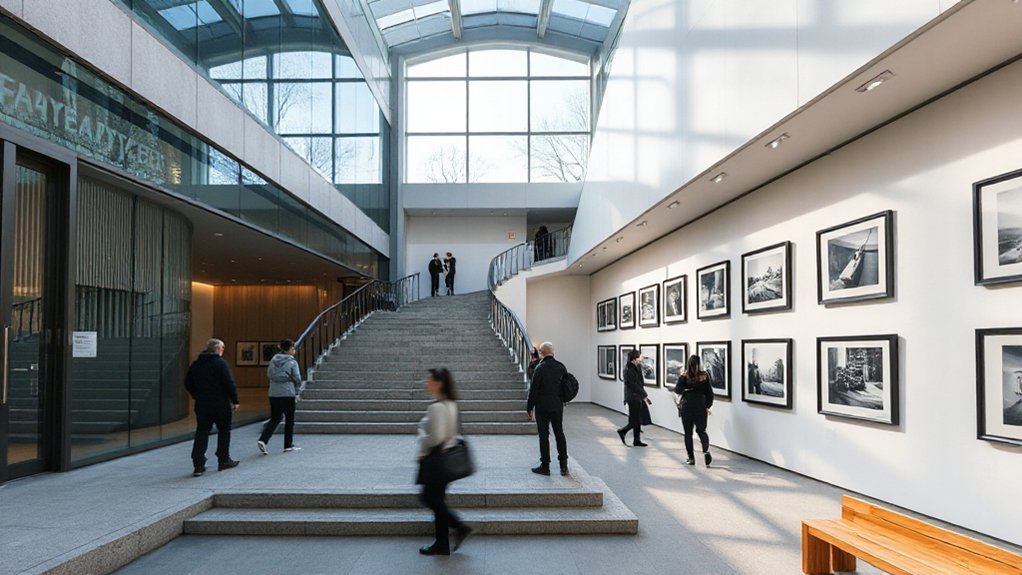
You’ll find the Tokyo Photographic Art Museum tucked into Yebisu Garden Place in Ebisu, a calm, four‑story spot that feels more neighborhood than headline, which is part of the charm. Inside, you usually get three small, tightly focused shows at once, mixing Japanese and international photographers and bits of photo history, so you see a lot without getting lost or tired. It’s the kind of place where you move room to room at an easy pace, catch a sharp series you didn’t expect, and step back out to the plaza feeling like you used your hour well, no fuss.
Focused Rotating Exhibitions
While some museums try to show everything at once, the Tokyo Photographic Art Museum keeps you on a tight track with three rotating shows, each zeroed in on one photographer, a clear theme, or a single slice of the medium.
Smart Curatorial Processes make the mix feel crisp, not crowded, and your Visitor Engagement stays high because you’re never guessing what matters. You might step from a Walker Evans eye study to a Robert Capa war frame, then meet a sharp contemporary Japanese voice, all in bright, walkable floors. Simply steady focus.
- Small retrospectives and tight group shows suit the four-story layout.
- Talks, screenings, and the photo library stretch the story beyond walls.
- Open daily except Monday, short runs are easy on any visit.
Yebisu Garden Place Location
In Yebisu Garden Place, the Tokyo Photographic Art Museum sits a short, well-signed walk from Ebisu Station, tucked among brick plazas and glassy towers, so you won’t sweat the map (directions: https://maps.app.goo.gl/6srPtqV4UCQrzMRW9). It’s a four-story spot, right inside the complex, and you can just follow the signs past the courtyard and up to the glass front. Transport options are easy: head to Ebisu Station and stroll over, and if you’re tired, there are benches on the way, a small kindness in summer.
You’ll find Nearby amenities everywhere, with a cafe on-site doing sweets and simple curry lunches, plus restrooms and calm halls. The museum stays open most days, closed Mondays, and there’s a handy photography library for digging deeper. Students and enthusiasts feel welcome.
Sumida Hokusai Museum
You step into the Sumida Hokusai Museum and Hokusai’s life and legacy roll out in order, from the big-name ukiyo-e prints to rough sketches and personal drawings, with a life-size Hokusai and his daughter standing there so you can picture the workroom. Focused, rotating displays help you track how his style shifts over the years, so you spot a wave edge getting sharper here and a sky opening wider there, like someone showing you the steps instead of only the finish. Step back outside and you’ll see Kazuyo Sejima’s shiny, sharp-edged building catching clouds and phone cameras, all clean cuts and mirror panels that make you circle the block for one more look, no shame in that.
Hokusai’s Life and Legacy
Legacy feels close at the Sumida Hokusai Museum, where Hokusai’s long life unrolls in order like a neat scroll and you can trace his hand from quick pencil scratches to the thunder of The Great Wave off Kanagawa. You start in his Apprenticeship Years, looking at scrappy notes and tryouts, and you end amid the Thirty-Six Views, where the craft turns fearless. Chronology keeps it simple, and the sketches show the gears turning. The life-size scene of Hokusai working beside his daughter makes the room feel busy, ink on air. You also see the European Influence bloom, feeding Japonisme and tipping Impressionists toward bold crops and fresh angles.
- Fast pencils to finished blocks
- Family at the workbench
- Prints as fine art
Sejima-Designed Architecture
Though the art inside is centuries old, Kazuyo Sejima of SANAA wraps the Sumida Hokusai Museum in crisp, mirrored panels that snag clouds and crosswalks, so the sliced, geometric shell becomes a photo stop before you’ve even found the handle. You’ll see your own shoes flash in the Reflective Facade, a quiet nudge to stay alert and light on your feet. Step inside the compact, multi-story box and the noise drops; bright, clean rooms stretch ahead with easy sightlines and a calm that flatters fragile ukiyo-e. The galleries move you through Hokusai’s career in order—prints to sketches to late drawings—no fuss, just clear steps. Spatial Minimalism isn’t cold here; a small model of Hokusai and his daughter gently brings the legend down to size.
Nezu Museum
A bamboo-lined path leads you to the Nezu Museum in Minami-Aoyama, where a calm, low-slung Kengo Kuma building from 2009 mixes modern lines with wood and soft, natural light. Inside, you move from hush to hush, past paintings, calligraphy, ceramics, and Tea Implements, all part of a pre-modern Japanese and East Asian trove gathered by industrialist Nezu Kaichirō. The team rotates Important Cultural Properties and National Treasures, so what’s on view keeps shifting.
Step outside and the garden takes over, with stone lanterns, a pavilion, and winding paths that glow during the spring Azalea Bloom. English captions and pamphlets keep you oriented without fuss, and the place sits a short walk from Omotesando and Gaienmae, so it’s easy to fold into a calm afternoon in the city.
- Best time: late April to early May.
- Look for: ink scrolls, rustic tea bowls.
- Tip: reserve tickets, allow 90 minutes, breathe.
Yayoi Kusama Museum
From the hush of Nezu’s bamboo path, you swing over to Shinjuku/Waseda for the Yayoi Kusama Museum, the only place on earth that’s all Kusama, all the time.
Inside, crisp white floors, bold dots, and the Infinity Rooms pull you forward, while a rooftop gourd winks above the reading room near Kusama’s own studio.
Visits run on 90-minute Timed Tickets, only about 200 people a day, so reserve early—slots sell out weeks ahead and keep the place calm and unrushed.
Exhibits rotate twice a year, so each visit stays sharp.
You’ll see clearly.
| What | Why it matters | Pro tip |
|---|---|---|
| Infinity Room | Mirrored immersion, photos pop | Linger, but keep pace |
| Paintings & sculptures | Bold color and pattern | Trace dots from wall to floor |
| Timed Tickets | Calm rooms, no crush | Arrive 10 minutes early with ID |
| Reading room + rooftop gourd | Quiet view, playful icon | Look up after you sit |
Ghibli Museum
How does a museum feel like stepping into a storybook you can touch? You step off the train, stroll into Inokashira Park, and the Ghibli Museum rises like a sun-warmed Italian villa that Miyazaki sketched in a daydream, all curved lines and secret corners you can nose into.
Inside, you wander narrow stairs and peeky windows, then settle into the tiny theater for Exclusive Shorts you won’t see anywhere else, which is half the fun and sometimes the wait. Head up to the rooftop garden for the Rooftop Robot from Laputa, a 16-foot sentinel that makes a fine photo and a better memory, even if the wind kicks up.
- Book tickets on the first of the month; they vanish fast for the next three months.
- Plan one hour to a lazy afternoon, depending on queues and film length.
- Pack light; lockers fill, and tight stairs mind your bag.
Teamlab Borderless
You trade storybook stairs for a maze of light at teamLab Borderless, where walls don’t mind their edges and art keeps walking from one room into the next. You step in and rooms stop behaving, as art drifts across doors and floors and minutes stretch funny, like gum. This is Interactive Immersion with Light Architecture, where mirrors, sound, and walls fold together so your shadow nudges rivers and your hand wakes flowers. Move slow, then fast, and the projections answer back; birds re-route, water parts, and the music leans into your pace, so no two walks match. Captions are scarce, so grab the teamLab app for titles, notes, and a simple map when you want context. Blossoms scatter under your feet and koi flip into petals, a neat trick even when you know it’s light doing the work. Book timed-entry tickets early and leave a buffer after too.
Frequently Asked Questions
Are There Museum Passes or Discount Cards for Multiple Tokyo Museums?
Yes you’ll find multi-museum passes. Consider the Tokyo Museum Grutto Pass covering dozens with free/discounted entry. For Pass Comparison, weigh Ueno Park combo tickets. Purchase Options include participating museums, stations, online vendors and kiosks too.
What Are Typical Museum Opening Hours and Closed Days in Tokyo?
You’ll find Tokyo museums open 10:00–17:00, sometimes until 18:00; last entry is 30 minutes earlier. You’ll hit Monday and year‑end closures, shifting after holidays. Expect Friday late openings, seasonal variations, weekday differences, and exhibition-related closures.
Do Tokyo Museums Offer English-Language Labels, Guides, or Audio Guides?
Yes, many Tokyo museums provide English labels, brochures, and audio guides. You’ll also find multilingual signage and occasional staff interpreters. Availability varies by venue and exhibition, so check official sites, reserve tours, or rent devices.
How Accessible Are Museums for Wheelchairs and Strollers in Tokyo?
Like cruising in a DeLorean, you’ll find Tokyo museums largely accessible for wheelchairs and strollers: entrance ramps, elevators, stroller routes, and restroom access abound, though older or smaller venues vary—check site maps and contact staff.
Are Photography and Tripods Allowed in Most Tokyo Museum Exhibitions?
Usually, you can take non-flash photos in many exhibitions, but tripods aren’t allowed. Follow posted rules, practice photo etiquette, and ask staff. Expect restrictions for special shows due to copyright issues; silence shutters, avoid crowds.