
You want Tokyo’s tastiest hits, fast and smart: start at Tsukiji Outer Market for sushi, tamagoyaki, and grilled scallops; weave through Shinjuku’s Omoide Yokocho for smoky yakitori and sake; flip monjayaki in Tsukishima; slurp tonkotsu and tsukemen in Ikebukuro; finish with Ginza depachika wagashi. Pay cash where needed, mind queues, order small, share bites. Here’s the tight route, timing, and must-try stalls—ready for the game plan?
Tsukiji Outer Market Seafood Safari
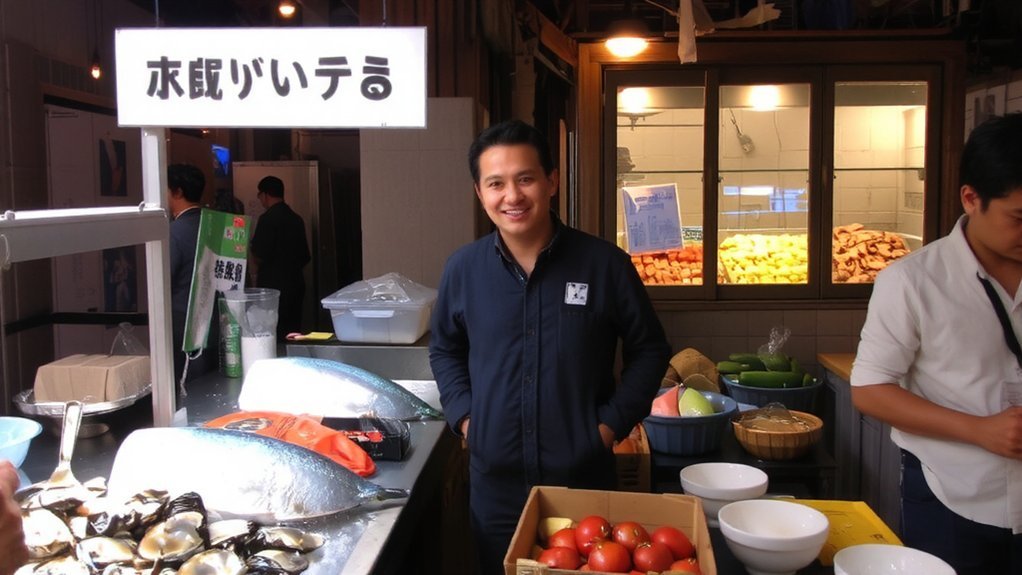
A paper cup of hot dashi warms your hands as you step into Tsukiji’s Outer Market, and the seafood safari begins. Move with purpose: arrive by 8 a.m., weave past seafood vendors flashing glistening tuna, uni, and silver sardines. Start light with tamagoyaki on a stick, then graduate to nigiri at standing sushi stalls; choose omakase, trust the knife. Ask for shoyu sparingly, thumb the wasabi, take one clean bite. Snag a grilled scallop, buttered and torched, then a paper cone of fried shrimp heads—crunchy, salty, ridiculous. Hydrate, reset, keep roaming. Peek at knives, pick up nori or bonito flakes for later. Pay in cash, mind queues, thank with a bow. Leave full, curious, unboxed, ready for whatever’s next. You chased flavor, found freedom.
Shinjuku Omoide Yokocho Yakitori & Sake Alley Crawl
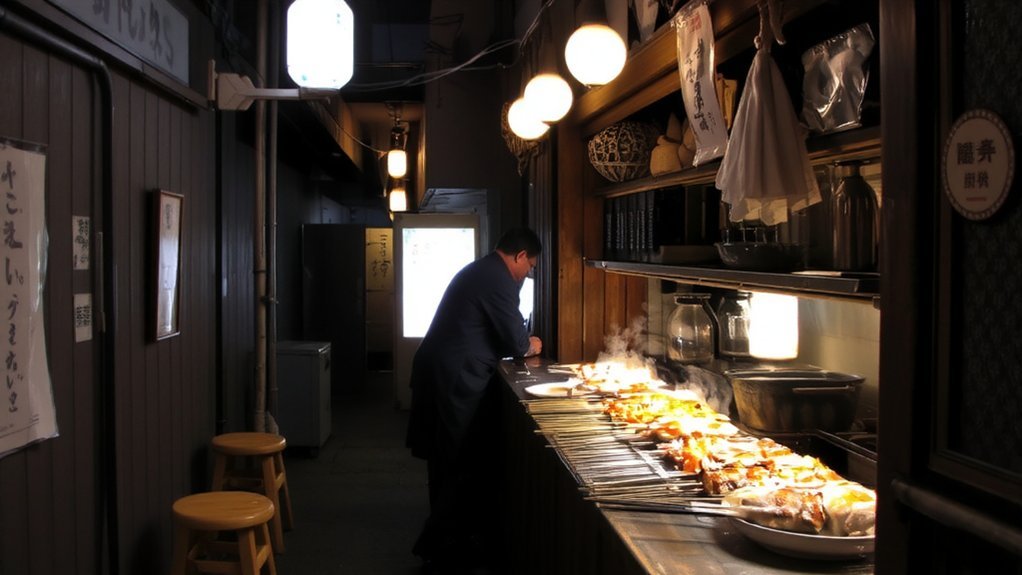
When dusk drops over Shinjuku, you thread into Omoide Yokocho—Memory Lane—where lanterns glow, smoke curls, and grills hiss like cymbals. Slide onto a narrow stool, claim elbow room, and order negima, tsukune, and chicken hearts—yes, trust me. Follow Yakitori Etiquette: don’t douse with sauce; taste tare, then salt, one skewer at a time, no double-bite shuffle. Say “omakase” if you want the chef’s picks, and keep your bag tucked high. For Sake Pairings, start light—junmai ginjo with shio yakitori—then step bolder with honjozo for rich tare. Sip, bite, pause. Chat with the grill master, but don’t block the draft. Cash ready, quick exit, next counter. Try yuzu kosho, shichimi, and a crisp highball between stops. Freedom in ten smoky meters. Keep moving, night blooms.
Tsukishima Monjayaki Griddle Walk
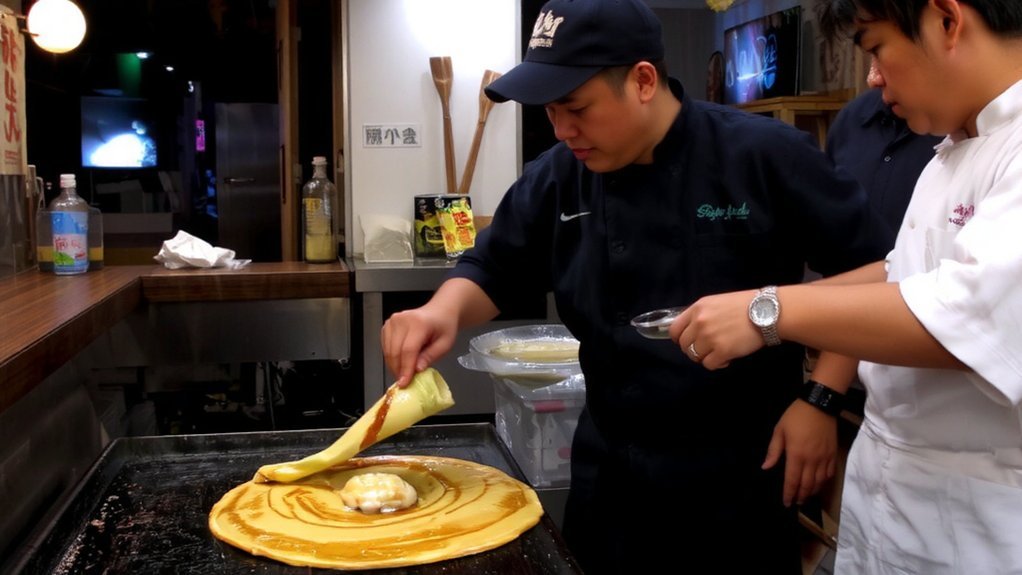
Smoke still on your jacket, you trade skewers for spatulas in Tsukishima, home turf of monjayaki. You stroll the canal-side street, duck into a retro joint, and grab a hotplate seat. First rule of griddle etiquette: oil, ring of cabbage, moat of batter. Let it sizzle, then chop, stir, spread thin like lava, and scrape crisp bits—yes, the yaki is the point.
Go classic with mentaiko, mochi, and cheese. Or go wild: corn, squid, kimchi, scallion, a butter bomb at the end. Share spatulas, rotate cooks, sip highballs between flips. Ask for house ingredient combos, locals love to brag. Burn a little, learn a lot, laugh it off. Freedom is heat, timing, texture. You cook it, you own it. Street buzzing, bay breeze approving.
Ikebukuro Ramen & Tsukemen Slurp Session
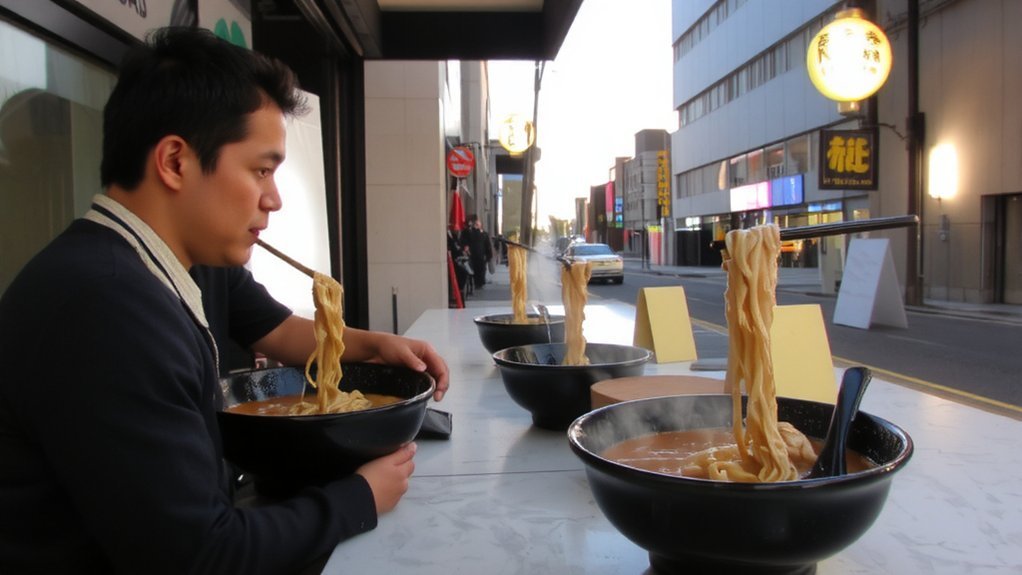
Where to point your chopsticks first in Ikebukuro? Hit Higashi-Ikebukuro’s Higemonzu for tonkotsu that roars, then pivot to Menya Musashi for bold tsukemen. Order small bowls, chase variety, not volume. Watch the broth layering: fat cap, soy depth, aromatics riding steam. Dip, taste, reset with water, repeat. For tsukemen, go medium-thick noodles; you want spring and chew, real noodle texture. Ask for kaedama only if you’ve still got runway. Top with ajitama, menma, a slab of chashu—simple, decisive. Stand in line; it moves. Pay at the vending machine, snap the ticket, slide in. Slurp loud, breathe, smile. You’re here to move, not camp. Finish with soup-wari at the end, lighten the dip, sip the last notes, and go. Freedom tastes hot, salty, and clear.
Ginza Depachika Wagashi & Seasonal Sweets Hunt
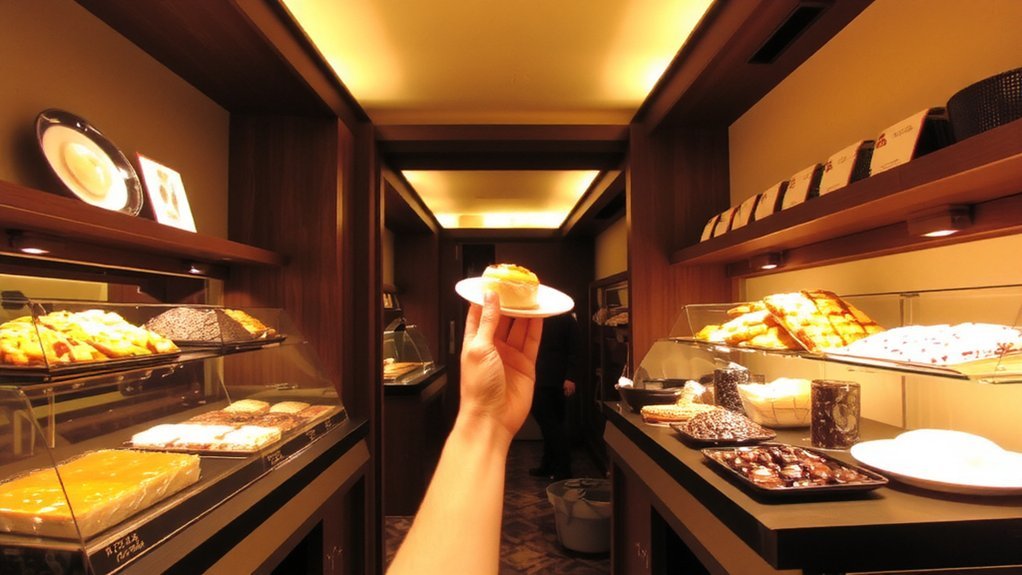
Strolling into Ginza’s depachika, you’re hunting beauty you can eat—start at Mitsukoshi B1, loop clockwise, and let the counters pull you in. Scan the jewel-box wagashi: nerikiri shaped like plum buds, daifuku stuffed with ichigo, yokan cut with precision. Ask for half-sizes; you want range, not a sugar coma. Note the seasonal motifs, then glance at the packaging craftsmanship—wrapping here is part theater, part art. Pay, step aside, taste. Breathe, smile, keep exploring. Reset your palate with green tea, keep moving, chase the next bite. Freedom rule: you sample, decide, no guilt.
- Start: Toraya counter—order one nerikiri.
- Hit: Minamoto Kitchoan—peach jelly, chilled.
- Swing by: Kasho Sanzen—momiji manju on the griddle.
- Finish: Depachika rooftop or pocket park—unwrap, savor, toss wrappers responsibly.
Conclusion
You did it—one city, five feasts, a thousand flavors. Start early, cash ready, and you’ll blitz Tsukiji—sushi, tamagoyaki, a scallop seared like thunder. Slide into Omoide Yokocho, order yakitori by the stick, sip sake, don’t block the lane. Flip monjayaki in Tsukishima, laugh, share. Slurp Ikebukuro ramen and tsukemen, half bowls, maximum wins. Then glide through Ginza depachika, bag seasonal wagashi, bow, thank, repeat. Move fast, sample small, mind etiquette. Your tour? Legendary. Forever brag-worthy.