
You’re about to walk Tokyo like you mean it—Asakusa’s Kaminarimon breeze, Nakamise snacks in hand, then Yanaka’s quiet lanes and Nihonbashi’s merchant spine. You’ll choose free strolls or expert-led detours, from Kagurazaka’s geisha alleys to Fukagawa’s waterways and Kiyosumi’s calm. I’ll nudge you on shrine manners, smart pacing, even where chanko warms the soul. Lace up, keep curiosity handy, and let one question lead the next—where do we start?
Asakusa Temple Quarter & Backstreet Snacks (Self-Guided)
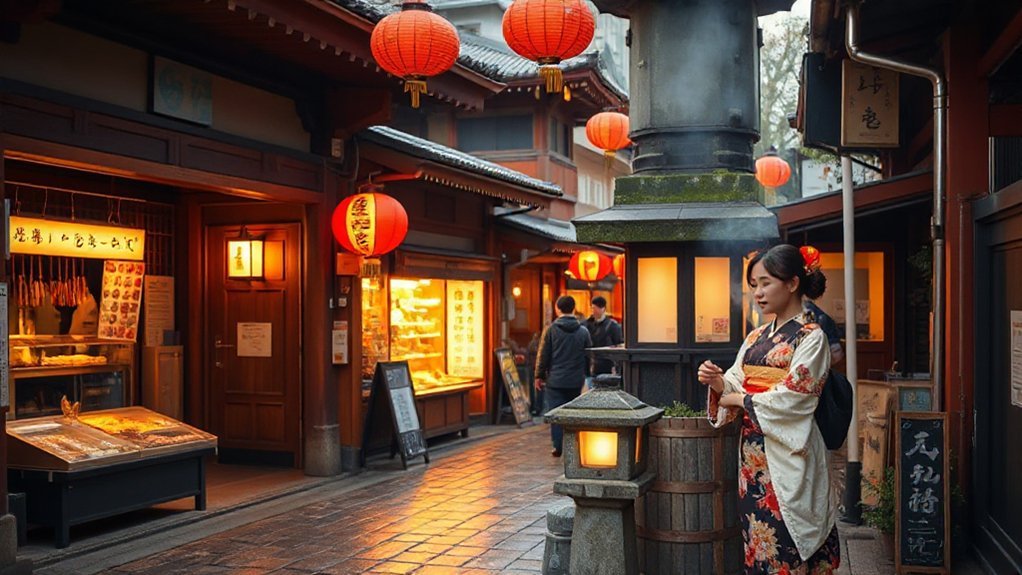
Tokyo’s oldest soul lives in Asakusa, and you can feel it the moment you pass under the giant red lantern at Kaminarimon. Breathe, then set your pace down Nakamise, tasting sesame crackers, melon pan, a skewer of soy-glazed dango. You’re free to wander, linger, to double back when drumbeat calls. Slip into the temple court, watch lantern rituals flicker, clap twice, bow once, whisper a wish you’ve been hiding. If it helps, I do the same, nerves and all. Circle the incense, let the smoke lift doubt.
Crave a costume shift? Try kimono rentals; choose bold stripes, soft indigo, a sash that says today you’re brave. Then duck into alleys where grandma grills yakitori and a teen runs a taiyaki stand. Spend coins, not hours. Read the side streets, not the guide. When your feet ask for rest, find the river, breathe wider, and promise yourself you’ll return.
Yanaka–Nezu–Sendagi Old Town Stroll (Self-Guided)
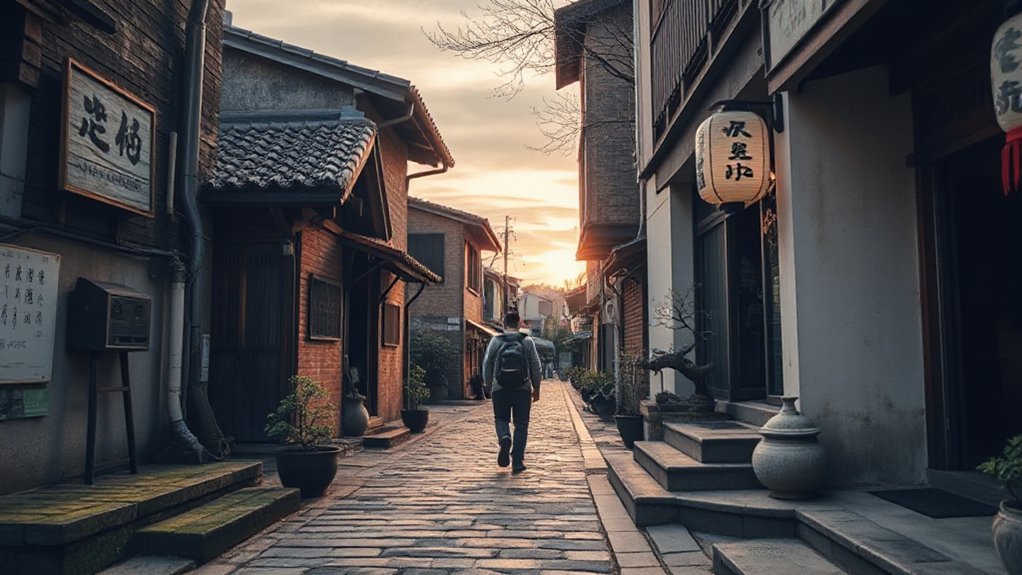
Old wood, warm light, and cat shadows pull you into Yanaka–Nezu–Sendagi, where the city forgets its rush and you finally hear your own feet. Start at Yanaka Ginza and wander without apology. Peek into artists studios, sip a sweet bean bun, then follow the slope toward Nezu Shrine’s vermilion tunnels. You don’t need a timetable; you need curiosity. I’ll admit, I come here when I’m stuck, and the quiet alleys always loosen the knot.
Follow warm light and cat shadows to Yanaka’s alleys; curiosity is your compass.
Move slow, notice details, trust your feet. Let this self-guided stroll be practice for a looser life.
- Pause at weathered shop signs; read the scratches like diaries.
- Step into hidden courtyards; breathe, then leave lighter than you came.
- Count temple bells, then count your worries—they shrink.
- Talk to a craftsperson; learn how patient hands make brave choices.
- Take the long turn; freedom lives in detours and small risks.
Keep walking; your courage grows here.
Nihonbashi Merchants’ Heritage Walk (Expert-Led)
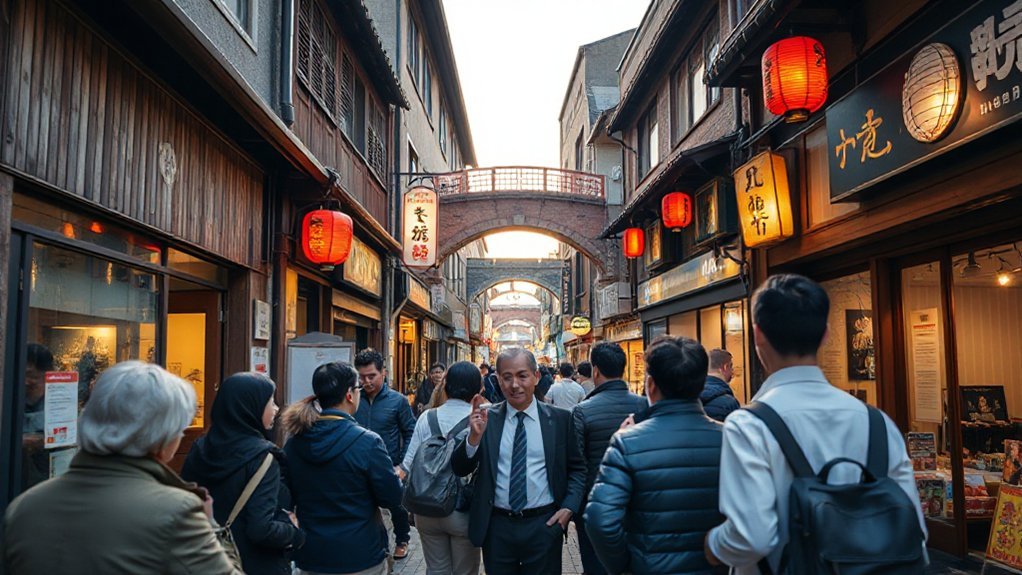
Walk Nihonbashi with an expert, and you’ll stand where Edo-era wholesalers set prices before sunrise, barges unloading rice, sake, and silk by the bridge. Ever wonder how Mitsukoshi started—as a kimono draper tied to tight-knit guilds—then grew into a trend-setting store; I love pointing out old receipts, house crests, and strict rules (I know, I’m a happy history geek). You’ll track those merchant codes, hear the quiet hustle in narrow lanes, and feel how networks—not luck—built fortunes, so let curiosity lead and use their playbook to read the city today.
Edo-Era Trading Hubs
Lanterns and ledger books set the scene as you step into Nihonbashi, where an expert guide helps you read the streets the way merchants once did—by prices, routes, and whispers. You follow the spine of Edo’s trade, from river wharves to rice marts, sensing currency evolution and strict market regulations shaping every deal. Breathe, listen, imagine the clatter, then choose your pace. I’ll nudge, you decide. Want freedom? Learn the rules, then step past them with care.
- Tally marks on stone show volume, not vanity.
- Rice coupons hint at futures, faith, and fear.
- Toll posts teach timing, detours, and grit.
- Tea houses double as offices, soft power in cups.
- Bridges bind neighborhoods, your map and mindset.
Walk lighter, trade wiser, and claim open horizon.
Mitsukoshi Origins and Guilds
From the rice marts you just traced, you turn toward a draper’s bold bet—Echigoya, the seed of Mitsukoshi—where prices went public and trust wore a curtain. Here, you feel rules loosening, bargains posted, doors open to anyone with courage and coins.
On this Nihonbashi Merchants’ Heritage Walk, your guide lifts a fan and points out Crest Symbolism on shop curtains, little suns for honesty, waves for steady delivery. You picture clerks hustling, not haggling, and you breathe easier. Fair is freeing.
Then comes the guilds. Apprenticeship Rites meant long hours, shared meals, secrets sworn. I’ll admit, I love that grit; it says you can start small, then rise. Ask, listen, copy, improve, repeat. Claim your craft, claim your price, claim your street. Own it.
Kagurazaka Geisha Lane Meander (Self-Guided)
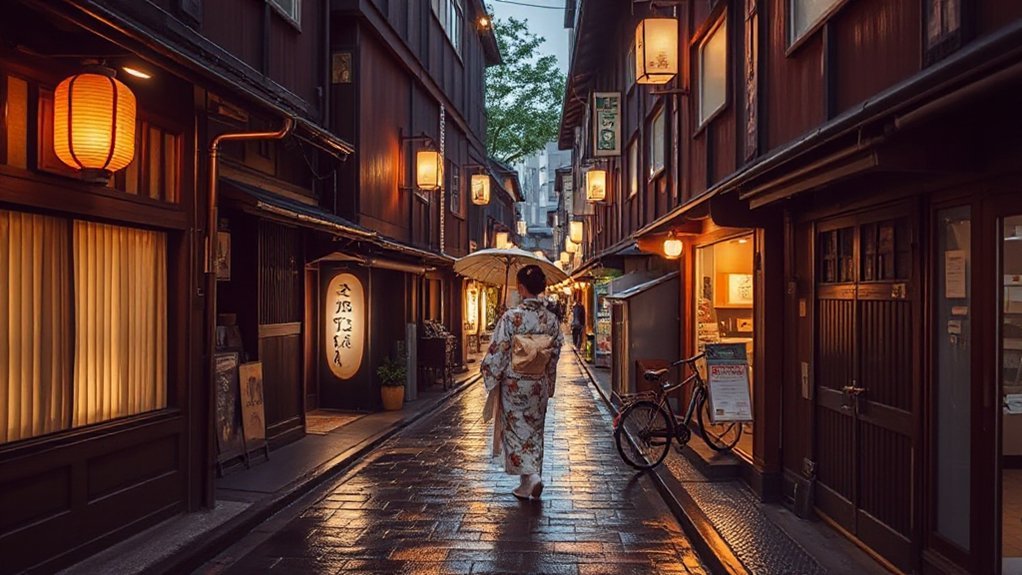
Though the name sounds fancy, you’re here for something simple: slip into Kagurazaka’s narrow geisha lanes, set your own pace, and let curiosity steer. You’ll spot lanterns, a hidden ryokan or two, and stone steps brushing saké bars. Keep your voice low; Geisha etiquette lives here, quiet, precise, kind.
- Pause at a quiet shrine; breathe, bow, belong.
- Read wooden nameplates; imagine rehearsals behind screens.
- Trace alley curves; notice cats, scents, footsteps.
- Step aside for locals; gratitude travels faster than feet.
- If lost, smile; the lane will teach.
Turn corners like pages, brave. Peek at noren, move; privacy matters, and mystery tastes sweeter. I’ll admit, I rush photos; today I pocket the phone and listen—heels on cobbles, shamisen in memory, my breath settling. Buy a warm manju, nod to the shopkeeper, let twilight paint the walls. Walk a little farther, then a little further, until the city releases you.
Fukagawa Edo Waterways & Kiyosumi Gardens (Self-Guided)
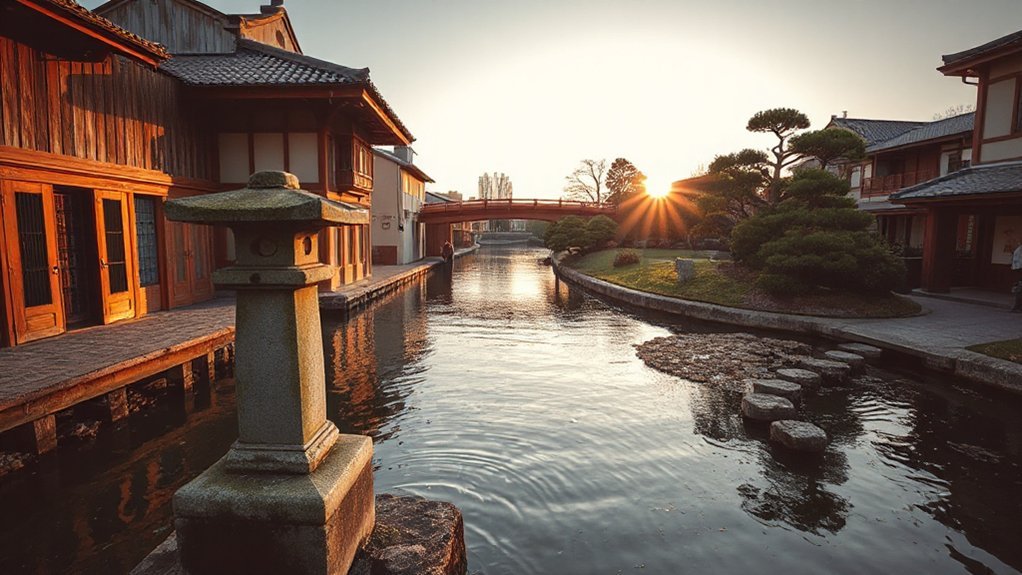
Carry that quiet out of Kagurazaka and let it lead you east to Fukagawa, where canals lace the old city and the air tastes faintly of tide. You walk levees and backstreets, reading moored boats like diaries, noticing reeds that shiver when trains pass. Think Canal ecology as practice, not lecture: brackish water, egrets hunting, mullet flashing silver under bridges. You cross to Kiyosumi Gardens and slow down. The paths curl, islands step forward, stones ask for careful feet. Garden restoration lives here—pine trained by hand, borrowed scenery framed just so, carp patrolling like old guards. Pause at the teahouse view, breathe, choose your pace. You’re free to linger, free to loop, to double back when curiosity tugs. I do; I always do. Touch basalt, count turtles, sketch a lantern, laugh when your line wobbles. Leave lighter, with water in your ears and room in your day.
Sumida River Promenade to Ryogoku Sumo History (Self-Guided)
While the river slides steady beside you, you fall into stride along the Sumida Promenade, wind on your cheeks, city at your shoulder. You pace beneath bridges, watch water buses skim, and let your shoulders drop. Lanterns hint at Riverside Festivals; I grin remembering my first summer night here. Keep south toward Ryogoku, where Sumo Traditions breathe in dohyō sand, in drumbeats, in hearty chanko stew. Pause at Sumida Park, read the plaques, trace histories with a fingertip. Then move again—curious, open, a little brave. You’re here to walk and to wonder, to learn the city’s muscle and its mercy. Glance at Kokugikan Arena, hear a taiko thrum, feel respect rise with each echo in your chest. Ready for a small dare?
- Walk slower than your worry.
- Let bridges frame new choices.
- Bow to craft, not spectacle.
- Carry light, notice heavy stories.
- Leave space for surprise to lead.
Kanda Shrines, Booktown Jimbocho, and Coffeehouses (Self-Guided)
Start at Kanda Myojin: pass the vermilion torii, trace the lion-dog carvings, grab a charm for love, exams, or gadgets—I swear I still carry mine. Then wander to Jimbocho, where secondhand stacks lean like friendly walls and cafes pour kissaten coffee with buttered toast—doesn’t the paper-and-coffee scent already steady your heart? Read a page, sip, breathe; browse a shelf, sip, smile; and keep going, because this is your quiet power walk through stories and steam, and I’m right here cheering you on even when I get lost too.
Kanda Myojin Highlights
A short, soulful loop links Kanda Myojin’s bright shrine, Jimbocho’s book-lined streets, and the kind of kissaten where time slows with each siphon brew. You climb the stone steps, exhale, and feel the city loosen its grip. At the honden, you bow, you listen. Ask for Tech Blessings, smile at the Omamori Evolution—charms for laptops, startups, stubborn code. Write a wish on an ema, let your shoulders drop. I do the same, still learning to trust small rituals. Move light, move curious, move free.
- Trace merchant gods; honor hustle without burning out.
- Touch bronze lion-dogs, then guard your own boundaries.
- Read ema whispers; write yours boldly, release control.
- Hear drums; set a steady beat for leaps.
- Step back downhill, carry silence like open space.
Booktown Cafes and Stacks
This is Booktown as it hums—Kanda shrines at your back, Jimbocho’s stacks ahead, coffeehouses glowing like small lighthouses. Breathe, then step. You set your own pace. Slip past ramen steam, paper dust, and handwritten price tags; turn into an alley where a bell rings once, then fades. I’d start at a shrine side gate, whisper thanks, then chase the scent of beans.
Order a small pour-over, note the Shelf curation: first editions, dog-eared guides, zines. Sit, stay, wander. Build your Reading rituals—ten pages, one sip, look up, smile. Ask the barista for a used-map stash; some do. Pocket a bookmark, skip the guilt. Freedom loves small choices, and you’re making them—left, right, pause. Keep walking, keep reading, keep choosing. I’m proud you chose wonder.
Tsukiji Outer Market to Tsukudajima Shitamachi Alleyways (Self-Guided)
From the clang of knives at Tsukiji to the hush of Tsukudajima’s alleys, you’ll feel Tokyo shift under your feet. Start where Market Butchery sings—steel, orders, steam from miso. Taste a skewer, breathe brine, then slip toward the Sumida. Cross Kachidoki Bridge, keep water on your right. You’re leaving noise, choosing nuance.
Leave clang for hush: cross Kachidoki, breathe brine, keep water right, choose nuance.
On Tsukudajima, follow wood eaves and stone lanterns. Peek into shops guarding Tsukudani Traditions, seaweed that tastes like tide and time. I’ll nudge you: walk slower than you think, then slower still. Freedom isn’t far; it’s here, between steps.
- Notice doorbells tied with string; they whisper thrift and care.
- Read manhole covers; they map pride underfoot.
- Listen for shamisen practice; it’s faint, it’s enough.
- Buy a tiny jar of tsukudani; carry the island home.
- Thank the river; it ferried stories before it carried you.
Take your own turn, and own it.
Imperial Palace East Gardens & Marunouchi Modern Classics (Expert-Led)
Step into the East Gardens with a guide who connects dots you didn’t know were there—moat to glass, shogun to shareholder. You pass Otemon’s stout gate, touch cool stone, breathe deeper. Seasonal plantings frame the Ninomaru pond; carp flicker like thoughts you almost catch. You stand on the old donjon base, and yes, you feel taller—history under your shoes, sky in your chest. I’ll admit, I get goosebumps here every time. Freedom starts with seeing, then stepping.
Walk out to Marunouchi, where classic red brick meets sleek steel. Your expert opens shortcuts through arcades, shows you corporate art hidden in lobbies, points to terraces where workers chase sunlight. You scout Tokyo Station’s clocklines, Mitsubishi Ichigokan’s curves, a courtyard café that forgives late arrivals. Ask questions, take the lane, own the pace. You’re allowed to linger, to leave, to return. That’s the point—move lightly, learn fiercely, carry it forward.
Shibamata Taishakuten Temple Town & Riverside (Self-Guided)
Ready to slow your heart without losing your spark—start at Shibamata Taishakuten, trace the cedar-scented halls, study the swirling wood carvings, and ring the bell if your courage says yes; I still get goosebumps. Then wander the traditional shotengai, taste kusa dango and crackly senbei, peek into film-era storefronts, and smile at Tora-san’s bronze charm (I always buy snacks I don’t need). Finish with the Edo River walk—wind on your face, boats sliding by, sky wide and kind—and let the steady rhythm reset you from hurried to hopeful.
Taishakuten Temple Highlights
Carved panels catch your breath the moment you pass the Nitenmon gate, all swirling lotus scenes and patient deities etched deep into warm wood. You slow down; you listen. The corridor smells like cedar and rain, and carvings whisper patience. Circle the halls, trace stories with your eyes, not your hands. Step into the inner garden, hear the water-harp sing. If timing’s kind, join gentle bell rituals; feel the strike settle your spine. I’ll admit, I arrived hurried, left light. Breathe, bow, wander—freedom in small steps. Let incense write a new headline for your day; let the temple hold the rest a minute longer.
- Follow sandals, trust detours.
- Count breaths between chimes.
- Notice guardians’ worn toes.
- Seek the suikinkutsu’s echoes.
- Leave wishes, carry courage.
Traditional Shotengai Stroll
When the bell’s hush fades, the street wakes. You step into Shibamata’s shotengai, where sweet soy drifts, geta tap, and retro signage flickers like memory. Start slow. Let candy makers call you closer, taste a warm kusa dango, then breathe. You’re not late; you’re here. Ask for stories—shopkeeper anecdotes turn benches into time machines, and you’ll leave with more than wrappers. Peek at woodblock prints, thumb a lucky charm, laugh when I admit I always buy two. One to eat, one to promise I’ll save. Keep moving, pause often. Freedom works that way—choice by choice, stall by stall, you design the pace. Hear the chatter, the clack, the soft hello. This isn’t performance. It’s everyday magic, and it’s yours. Take it, keep walking brave.
Edo River Riverside Walk
Along the levee by the Edo River, you slip out of the temple’s shade and into open sky. You breathe easier, legs loose, mind clear. Shibamata’s shop bells fade behind you, and the water calls. Follow path north, read the river’s scars, learn its Floodplain Ecology. I whisper, keep moving; freedom likes momentum. Watch boats drift, watch doubts do the same. Pause for tea, or don’t; you choose. Look up—Seasonal Birdlife turns the air into a page.
- Step steady, carry light, trust lighter.
- Watch reeds bow; practice bending, not breaking.
- Count wings, then count blessings, twice.
- Map your pace to the tide’s hush.
- Leave room for wonder, leave room.
When the sun tilts gold, you turn back stronger, softer.
Koenji Showa Retro Thrift Lanes & Izakaya Nooks (Expert-Led)
Though the Chuo Line hums above, you slip into Koenji’s time-warped backstreets and feel your shoulders drop. An expert guide leads you past Retro Signage, lantern-lit alleys, and thrift lanes stacked with band tees, kimono scraps, and chrome radios. You breathe easier. You wander on purpose.
We duck into Vintage Recordshops, test a needle, grin at a crackle. You bargain gently, then let go—because the point isn’t stuff, it’s story. I nudge you to trust your eye, to try the jacket, to say yes to the weird. Freedom looks like pockets full of change and time.
Now the izakaya nooks call. Slide the door, bow, order highballs and karaage, then chat with the owner about Koenji festivals. Our guide translates, you connect. You laugh, I laugh, we all exhale. Stay curious, move slow, repeat. And when the train roars again, you’re ready to choose your own noise. Tonight.
Shinagawa Post Town on the Old Tokaido & Ebara Shrines (Expert-Led)
Step onto the Old Tokaido in Shinagawa and feel the road rise to meet you, first post town out of Edo, still humming under your shoes. Your guide opens the map, but you set the pace. You trace tea-house fronts, salt air from the bay, echoes of travelers chasing dawn. We pause at a preserved inn to unpack the Honjin layout—status at the door, secrecy in the back, stories in the beams. Then we slip toward the Ebara shrines, quiet, cedar-cool, where Ebara rituals braid gratitude with grit. You breathe out, you stand taller. Freedom likes a path with edges.
- Learn the road rule, then walk past it.
- Touch stone, notice warmth, question the plaque.
- Follow drums; don’t fear silence between beats.
- Trade shoes for presence; let speed fall behind.
- Bow once, then choose your next mile with intent.
I’ll nudge; you’ll lead.