
Choose your pace, choose your path, choose your price. You can join a volunteer-led walk—book online, meet at a landmark, tip what you wish—or go self-guided through Asakusa’s temples, Shinjuku’s neon, Shibuya–Harajuku’s lanes, even quiet Yanaka. Start early, carry small cash for yakitori and shrine coins, mind bar etiquette—I once fumbled that, you won’t. Ready to turn big-city chaos into a confident, soul-filling stroll? Here’s the simple plan that reveals it.
How Free Walking Tours Work in Tokyo (What’s Included & What’s Not)
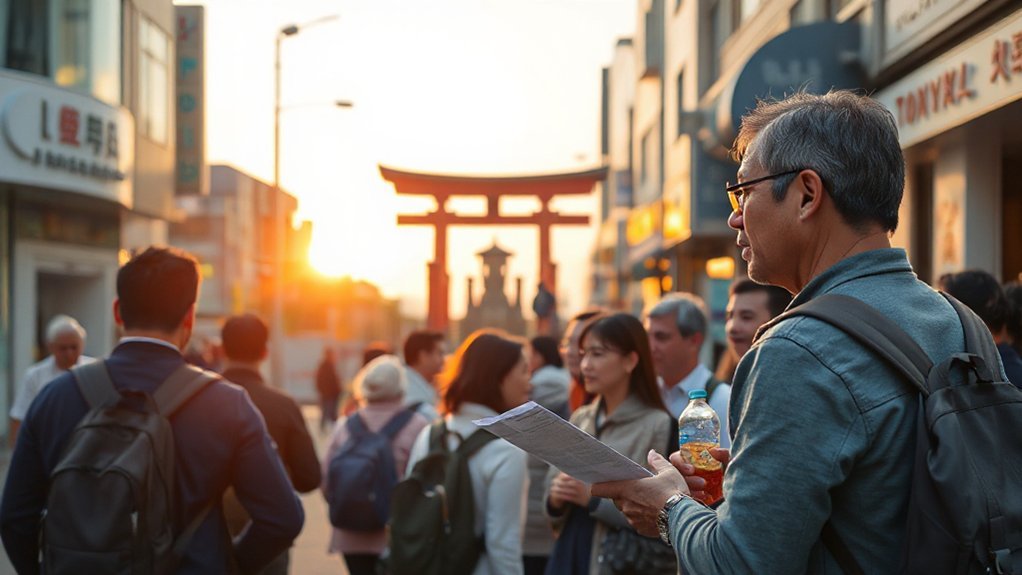
So how do Tokyo’s free walking tours actually work? You book a slot online, get a meeting point, then show up ready to roam. A local guide leads, you choose the value. What’s included: stories, orientation, cultural context, a safe pace through busy streets. What’s not: train fares, entrance fees, snacks, souvenirs, and insurance. Bring water, curiosity, and a light daypack.
Tip expectations? They’re real but flexible; cash yen helps. You pay what it was worth, not what you’re told. I love that freedom, and yes, I’ve tipped more when a guide opened up the city for me.
Group sizes vary, so arrive early. Tours run rain or shine—carry a compact umbrella. Read cancellation policies before booking; some ask for notice, others let you bail by email. If you can’t make it, cancel fast so a traveler like you gets the spot. Show respect, earn better travel karma today.
Self-Guided Route: Asakusa Temples, Markets & Riverside Loop
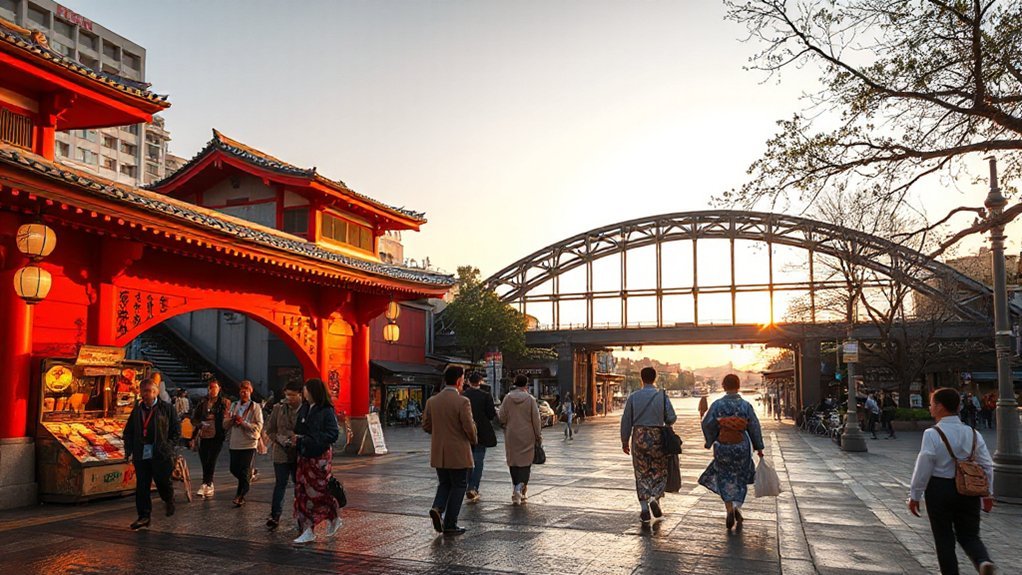
Ready to set your own pace? Start at Kaminarimon, breathe in the buzz, then look up—Lantern Iconography steals the show. Stroll Nakamise for taiyaki and fans, slip past the crowds to Senso-ji’s incense, and let the smoke feel like a reset. Bow at Asakusa Shrine, no rush, just you and the rhythm you choose.
Cut through alleys toward Hoppy Street for a quick yakitori, or save it; freedom tastes better later. Wander Kappabashi Street, testing knives, laughing at plastic sushi I secretly love too. You’re building your own map, souvenir by useful souvenir.
Drift to the Sumida riverside, trace Sumida Park’s trees, follow the water north, then loop back over Azumabashi for Tokyo Skytree views that make you stand a little taller. Pause, sip from a vending machine, breathe. If you want more, cross to quiet backstreets and listen to bicycles hum. You’re not lost—you’re choosing. Today, bravely.
Self-Guided Route: Shinjuku Skyscrapers, Omoide Yokocho & Golden Gai
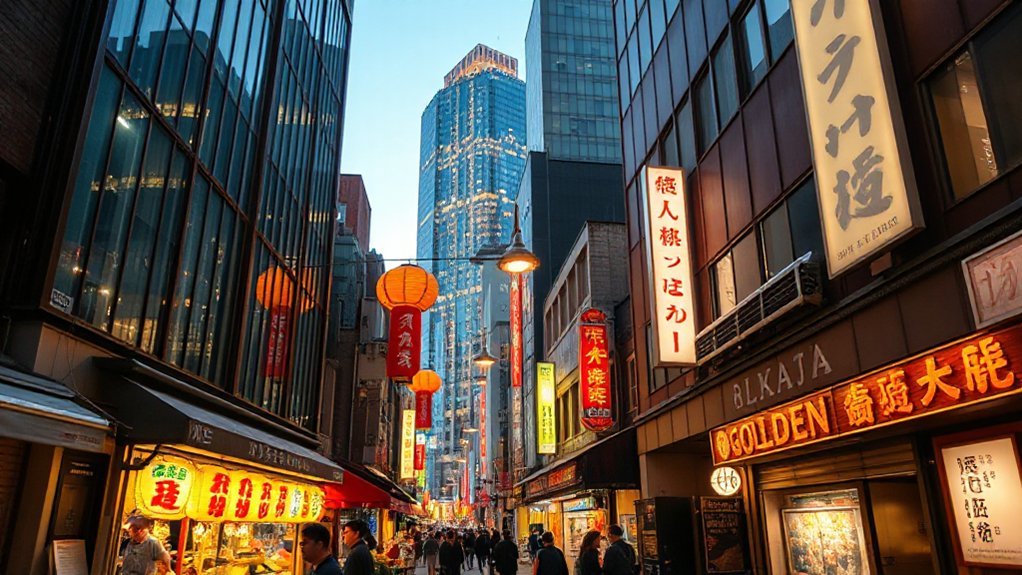
Start with the skyline: ride up to the Tokyo Metropolitan Government Building or Shinjuku Sumitomo’s free decks, hit golden hour, and let the city stretch under you. Then thread Omoide Yokocho’s smoky lanes, grab yakitori or a quick ramen, carry small cash—I always overorder, then laugh at myself on those tiny stools. For Golden Gai, go early, check for cover charges, keep voices low, be kind to the regulars, and pick one cozy bar at a time—because hopping slowly, respectfully, joyfully is how this quirky night opens up.
Skyline Viewpoints & Observatories
Elevators and neon—this route lifts you from cloud-high views to lantern-lit alleys in one sweep. Start at the Tokyo Metropolitan Government Building; ride up to its free observatories and breathe. You’ll face Fuji on clear days, Skytree on others, and a sea of roofs always. Check Admission Costs signs (they’re zero here), scan the Panorama Maps, and let your plan loosen.
If the line’s long, pivot: Nomura Building’s high-floor lobby windows, the NS Building’s sky atrium, or Takashimaya’s terraces give quick wins. Hit blue hour; stay through first sparkle. I whisper this to myself too—don’t rush the horizon. Move, pause, look again. Freedom lives in the repeat. Then drift streetward, lighter, steadier, ready for whatever waits below. You chose the sky; it chose you.
Omoide Yokocho Food Stops
Sometimes the night decides for you, and Omoide Yokocho answers with smoke, salt, and laughter. You turn down the narrow lane, shoulders brushing noren curtains, and your courage shows up hungry. Slide onto a stool. I’ll coach gently: places are tiny, orders are quick, joy is quicker. Learn Yakitori etiquette, smile often, and let the grill master guide you.
- Start with shio or tare skewers; chicken thigh, negima, hearts—simple, salty, perfect.
- Menu decoding: look for “tsukune” (meatball), “shishito,” and “nankotsu” (cartilage) if you’re curious.
- Share space, not volume; bags under stools, elbows tucked, gratitude up front.
- Pay, bow, move on; two shops make a meal, three make a story.
Ask questions, celebrate small plates. One brave bite per stop. Freedom tastes charred, sweet, alive.
Golden Gai Nightlife Tips
How does a night shrink a city to six alleys and a hundred doors? In Golden Gai, you choose your own doorway, your own soundtrack. Walk slow, read tiny signs, listen for laughter. Many bars welcome travelers; some are regulars-only—no hard feelings, just try the next. Check cover charges at the door, cash ready, smile ready. Sit, sip something small, keep space for others. Mind the smoking culture; many rooms allow it, and it’s part of the charm, but step out if you need air—I do, often.
Ask the bartender’s favorite spot; follow that thread. Be kind, buy a drink, share a story. Small risks, big memories. When you’ve had enough, bow out, wander on, free again. Tokyo hums, you choose the exit tonight.
Self-Guided Route: Shibuya Crossings, Harajuku Lanes & Meiji Shrine
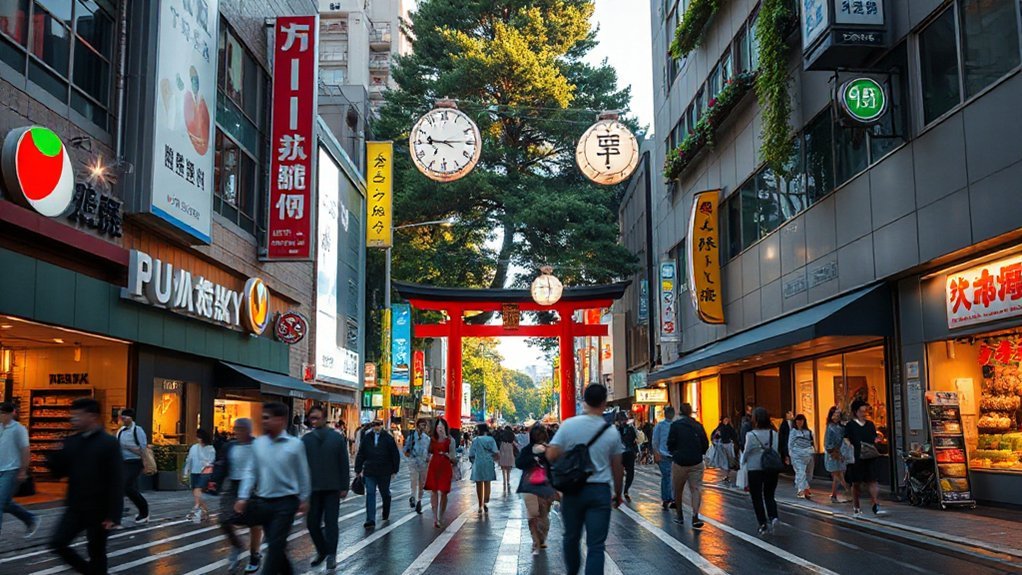
While the city hums around you, start at Shibuya Crossing and let the scramble pull you into its current—cross on green, feel the rush, then look back from the Tsutaya/Starbucks corner for that goosebump view. Read the Crossing Dynamics like a surfer: lights, lenses, tides of people. Touch Hachiko for luck, then slip into Center Gai; you’re moving, not drifting, and it feels brave.
Angle north to Cat Street and Takeshita-dori. Cosplayer Spotting? Yes, but be kind—ask before photos, smile after. I’ll admit, I freeze up sometimes; you won’t, not today. Meiji Shrine waits with shade and cedar air, a slow exhale in a loud life.
- Follow the giant torii, rinse hands at the chozuya, walk softer.
- Detour through Ura-Harajuku lanes for indie shops and small roasters.
- Pause for street snacks; keep wrappers, keep momentum.
- End at the hall, set a wish, bow once, breathe—freedom in, fear out.
Self-Guided Route: Yanaka Old Town, Cemeteries & Artisan Alleyways
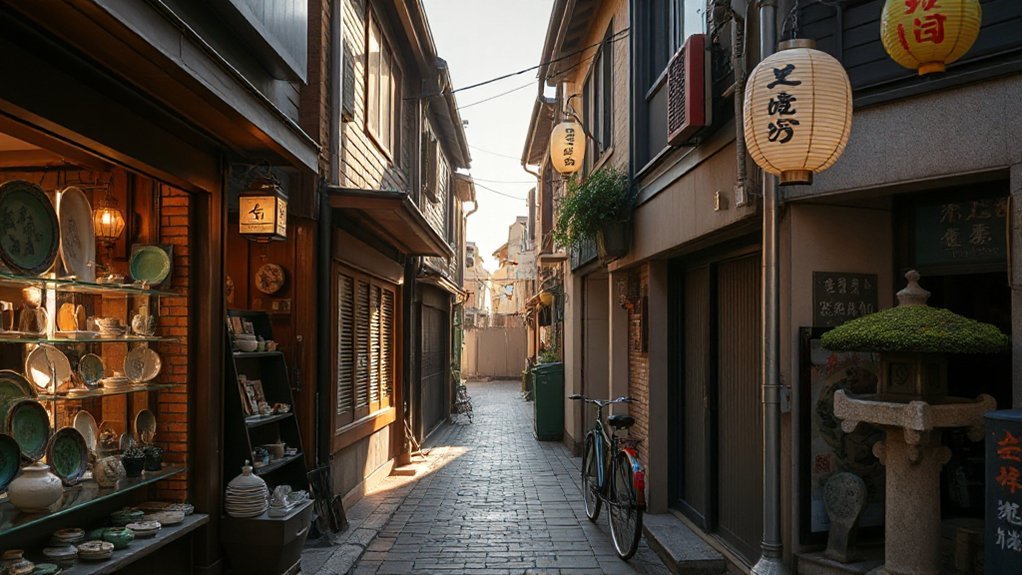
Start in Yanaka’s artisan alleyways: step into tiny workshops where a potter’s wheel hums, lacquer cures, and a metalworker taps out charms. You’ll chat if you’re brave—it’s worth it, I promise, and if you stumble over a greeting (I still do), they usually grin and guide you. Then slow your pace through Yanaka Cemetery, follow stone paths under whispering cedars past family shrines and lazy cats, and let the quiet history steady your breath as you plan the next stop with calm, curiosity, and a little wonder.
Artisan Alleyway Workshops
Winding through Yanaka’s narrow backstreets, you slip from sunlight into small workshops where hammers ring, dye pots steam, and sawdust hangs sweet in the air. You pause, breathe, and let curiosity lead. Makers nod you in, no pressure, just process. I whisper the same reminder I use: ask questions, smile, keep moving when you’re full.
- Watch metalworkers demo Tool Techniques, then try a safe, tiny tap yourself.
- See indigo swirl as a dyer lifts cloth; note hours posted for short drop-in lessons.
- Peek at woodcarvers shaping charms, simple forms with brave lines.
- Scan flyers for Residency Programs and open-studio days; photograph, then step aside.
Buy a small piece or don’t. Your choice, your pace. Freedom needs practice, and you’re practicing now. Keep walking, braveheart.
Historic Cemetery Strolls
Stepping into Yanaka’s old cemetery, you trade shop chatter for soft gravel and crows, cedar shade and moss-bright stone lanterns. You slow down, breathe, read names you can’t pronounce, and feel strangely brave. Follow the central lane, turn left at the camphor tree, and notice Gravestone Symbolism: lotus for purity, cranes for long life, family crests repeating like quiet drumbeats. I whisper it too—you’re allowed to wander, to wonder. Pause where cats nap on warm stone; this calm is theirs and yours.
Keep going toward Tennoji, where pagoda ruins once stood. Listen for woodpeckers, note these subtle Wildlife Habitats stitched between crypts, hedges, and shrines. Take nothing, leave sunlight. Freedom grows here—step by step, breath by breath, story by story. You keep walking, lighter.
Volunteer-Led Tours: Top Groups, Booking Steps & Meetup Points
Because Tokyo can feel endless at street level, volunteer-led tours give you a friendly human compass. You get locals who’ve passed Guide Training, plus routes that flex with your mood. Book online, state your interests, then meet at clear landmarks—no turnstile anxiety. Donations? Check each group’s Donation Policies; most are free, tip-welcome. I’ll say it: let them help you breathe in the city, not chase it.
- Tokyo Free Guide — request a private walk; usual meetups: Tokyo Station Marunouchi exit or Asakusa Kaminarimon Gate.
- Shibuya Welcome Volunteers — quick same-day counters near Hachiko, short neighborhood loops with pop culture sparkle.
- Sumida/Asakusa Goodwill Guides — temples, crafts, snack breaks; meet by the golden Asahi Flame.
- Taito SGG Club — museums and old lanes, Ueno Park fountains as the standard rendezvous.
Book early, but stay loose. Ask bold questions, trade stories, share laughter, and keep moving.
Timing Your Walks: Best Hours, Crowd Dodging & Photo Spots
If you time your steps, Tokyo opens like a backstage door at dawn. Start early: Asakusa’s lanes breathe, Tsukiji’s outer market hums, Shinjuku Gyoen glows. You walk free, no elbows, no rush.
Time your steps: Tokyo opens at dawn—Asakusa breathes, Tsukiji hums, Shinjuku Gyoen glows.
Chase golden hour twice. Sunrise paints Skytree soft pink; sunset wraps Shibuya Crossing in honey and neon. Midday? Slip into shade—Yanaka’s alleys, Kiyosumi gardens, the riverside by Nakameguro. I’ll be honest—I’ve blown shots by sleeping in, then vowed to never miss that first light again.
Plan for crowds like a tactician. Weekdays beat weekends; rain scares lines away; festivals flip the script. Do simple weather planning: check wind for rooftop views, clouds for drama, humidity for stamina. Aim for twelve to two only when you want motion blur and reflections after sudden showers.
Pick anchors: Odaiba skyline, Meiji’s torii at first light, Rainbow Bridge at blue hour. Breathe, pivot, linger, then move, with ease and joy.
Etiquette, Language Hacks & Cashless Tips for Smooth Exploring
Though Tokyo moves fast, you’ll glide when you match its manners and master a few tiny phrases—and tap to pay like a local. Bow lightly, keep your voice low, line up without crowding. Smile, say “sumimasen” to pass, “arigatou” to thank, and you’ll feel doors open. I still trip sometimes; you will too. That’s okay—politeness fixes almost everything.
- Slip off shoes at temples and some restaurants; look for slippers, point toes inward, never on tatami.
- Carry a small trash bag; bins hide, but streets stay spotless because people pack it out.
- Use mobile wallets or contactless cards on phones for konbini runs, vending machines, and café bills.
- Learn five polite phrases: ohayou, sumimasen, arigatou, onegaishimasu, daijoubu—short, friendly, powerful.
Ask before photos, especially at shrines or markets. Stand to the left on escalators? When in doubt, copy locals. Move gently, speak clearly, pay seamlessly, and your walk turns fearless.
Transit Shortcuts, Luggage Storage & Seasonal Add-Ons (Sakura to Autumn)
Start your day smart, and Tokyo opens up like a level you suddenly know by heart. Cut commute time with station shortcuts: transfer at Kanda to dodge Tokyo crowds, use Otemachi’s tunnels to pop into Nihonbashi dry, follow JR orange signs and trust the floor arrows. Load a Suica, tap, go. When bags slow you down, pick locker alternatives: hotel day-use storage, Yamato’s same-day courier to your next stop, or AirDrone lockers in cafes—I’ve used all three, and yes, freedom feels lighter. Pin backup options on Google Maps, screenshot hours, then walk hands-free.
Seasonal add-ons? Chase sakura at Chidorigafuchi at dawn, then hop to Nakameguro by Hibiya Line; arrive early, leave before the crush. In summer, duck into station basements for AC breaks and cold barley tea. Come autumn, string together Ueno, Rikugien, and Meiji Jingu Gyoen for blazing leaves. Move light, move early, move brave, today, always.