
Tokyo mornings can feel like a sprint, but the Tsukiji Fish Market operates with a different kind of energy. Knives tap against cutting boards, grills hiss, and someone nearby is likely holding a perfect piece of tuna as if it were a tiny trophy. For first-time visitors, Tsukiji Outer Market tours turn that glorious chaos into an easy, delicious breakfast plan that offers a deep dive into authentic Japanese food culture.
The goal is not to eat everything. It is tempting, but physically possible? Not even close. A good walk helps you taste the right things, learn exactly what you are looking at, and avoid becoming the person blocking a delivery cart with a camera.
Key Takeaways
- Arrive early, ideally in the morning, when the Tsukiji Fish Market feels busiest and breakfast choices are at their strongest.
- Tuna auctions no longer happen at this location; they officially moved to Toyosu Market in 2018.
- Pick a food-focused small-group walk if you want help ordering and understanding unfamiliar dishes.
- Bring cash as a backup, even though many stalls now accept cards or mobile payments.
- Stay alert around working shops, don’t block entrances, and eat where the vendor tells you to eat.
What Tsukiji Outer Market Is, and What It Isn’t
Let’s clear up the one thing that trips up almost everyone: the Tsukiji Outer Market is not the place to watch the famous tuna auction anymore. To understand the site’s history, it helps to know that the inner market moved to the new Toyosu Market in October 2018. While the famous auction moved, the Tsukiji Outer Market stayed put, preserving the spirit of the original Tsukiji Fish Market. If you want the early morning auction viewing experience, check the official Toyosu Market visitor information before building your day around it.
Tsukiji is still absolutely worth visiting. The neighborhood is a compact collection of food shops, sushi counters, tea sellers, knife specialists, produce stands, and various wholesale shops that have served the community for decades. It has the feeling of a vibrant food district, but it is not a museum set. People are working, deliveries are happening, and someone may be carrying a giant polystyrene box past you at speed.
That working energy is the whole point.
A Tsukiji breakfast walk is best when you treat it like a food neighborhood rather than a single attraction. You might start with tamagoyaki, that soft rolled Japanese omelet, then go for grilled scallops or fresh tuna sushi. Add a strawberry daifuku if you have room. Then suddenly you don’t have room, but you somehow keep walking. That is the charm of the Tsukiji Outer Market.
For current market maps, shop updates, and seasonal notices, look at the Tsukiji Outer Market official site before you go. Vendor schedules can shift due to holidays, supply, private events, and plain old Tokyo logistics.
Tsukiji works best as an early food walk, not an all-day shopping mission. Eat a few great things, leave space for lunch elsewhere.
Choosing the Right Tsukiji Breakfast Tour
A guided tour isn’t mandatory. You can absolutely wander independently and have an amazing morning. But for your first Tokyo trip, a good guide removes the little frictions that can eat up time: where to begin, what to order, whether a stall has seating, and how not to accidentally commit a market faux pas before coffee.
The best fit depends on how you like to travel.
| Tour style | Best for | What to expect |
|---|---|---|
| Small group | First-time visitors | Tastings, local context, help ordering, a social pace |
| Guided walking tour | Families or picky eaters | Flexible stops, easier dietary conversations, more control |
| Self-guided breakfast walk | Confident planners | Lowest cost, complete freedom, more research needed |
| Tsukiji and Toyosu combo | Serious food fans | A longer morning with two very different market experiences |
A small group food tour is the easiest choice if you want a few curated bites without researching every stall. Guides can point out the difference between a snack stand and a serious sushi counter. They can also explain why one shop has a queue and another doesn’t. Sometimes a line means legendary food. Sometimes it means only six seats. Tokyo keeps you humble.
Private tours make sense if you have dietary needs, young children, mobility concerns, or a very specific wish list. Maybe you want sushi but no raw shellfish. Maybe your group wants kitchen knives, tea, or Wagyu beef skewers more than a traditional meal. A private fish market tour can adjust the pace without everybody doing that polite “we’re fine!” thing while clearly not being fine.
Before booking this type of food tour, check four details: the meeting point, the walking distance, whether food is included, and the maximum group size. “Food included” can mean several solid tastings or one tiny snack, so read the latest description closely. Also check cancellation terms and the tour’s current start time, because market rhythms matter.
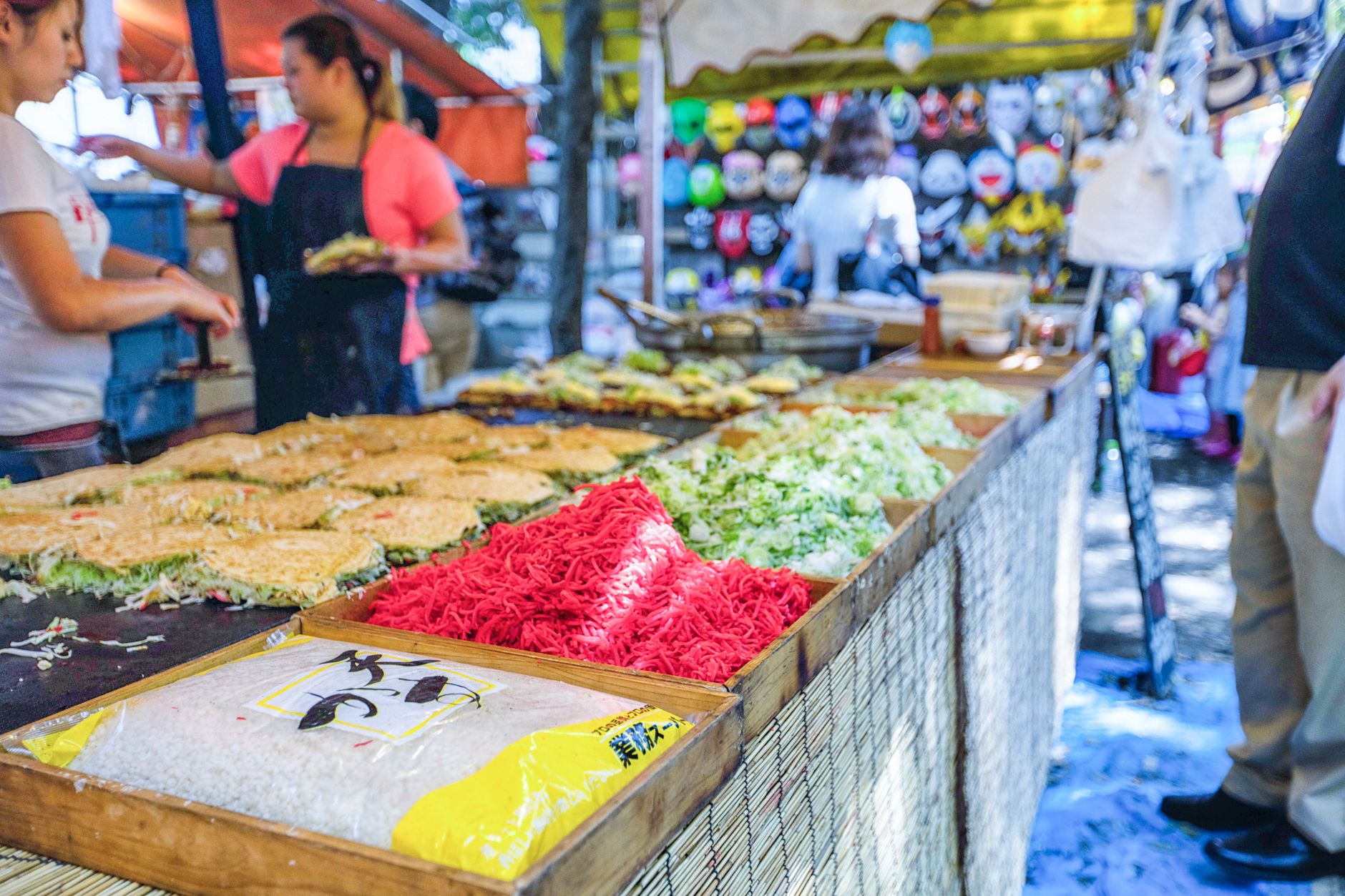
Photo by Arnie Papp
A Breakfast Route That Doesn’t Leave You Overstuffed
The trick at Tsukiji is pacing. The market is packed with foods that look snack-sized but hit like a full meal. Start gently, then build.
Begin around the main lanes near Tsukiji Station. The Tokyo Metro route guide is useful if you’re coming by subway, while Tsukijishijo Station on the Toei Oedo Line is also a handy arrival point. Give yourself a little time to orient yourself before joining a queue.
Your first stop should be something warm and easy. Tamagoyaki is the perfect introduction to local street food. The omelet is sweet-savory, soft, and familiar enough to calm any first-morning food nerves. You may see it served on a stick or in a small portion, which is dangerous because it makes you think you are still hungry. You probably are, but let us not get cocky.
Next, choose one seafood bite to explore the fresh seafood on offer. Grilled scallop, oysters, tuna skewers, or a small sashimi set all work well. If you are new to raw fish, Tsukiji is a great place to start with tuna or salmon from a busy, reputable counter. Let the ordering system of these tasting locations guide you. Some places want you to queue first, others have a ticket machine, and a few are basically a tiny opera of hand gestures.
Save one stop for something less obvious. Try a fish cake, roasted green tea, senbei rice crackers, or seasonal fruit. Japanese strawberries can be wildly good. Yes, they can cost more than you expect. No, you do not need to buy the fanciest box in the market to have a great time with this street food.
If you want a sit-down sushi breakfast, make that your main event. Don’t eat five skewers first and then wonder why you cannot finish the sushi set. Future you will be staring at beautiful toro with no available stomach space. Tragic.
Market Etiquette That Keeps the Morning Fun
Tsukiji can feel casual because everyone is eating and walking around. Still, basic market manners matter a lot. Remember that this is an active workplace and not a theme park food court, so following these guidelines is key to ensuring an authentic experience during your visit to the Tsukiji Fish Market.
Keep your group narrow. Don’t stop suddenly in the center of a lane. If you are taking photos, step to the side and check that you are not blocking a shopfront, doorway, scooter route, or worker carrying stock. Those narrow lanes get busy fast.
Ask before photographing people or food displays up close. Some seafood vendors are happy with it, while others do not want cameras in their workspace. A quick gesture and “shashin, daijobu desu ka?” gets the point across. It means, roughly, “Is a photo okay?”
Follow eating instructions. Many stalls have a small area beside the counter where you are meant to stand and eat. Others expect you to move along after buying. Don’t carry messy food through crowded lanes if you can avoid it, and don’t leave wrappers behind. Tiny bin space is normal in Tokyo, so keep a small bag for rubbish if needed.
Cash is smart to carry, even if your card works at most of your Tokyo stops. A mix of yen notes and coins makes small purchases easier, especially at older stalls. ATMs at convenience stores are often useful for international cards, but don’t wait until you are already hungry and standing in front of a sizzling grill.
Also, skip the giant suitcase. Use your hotel luggage storage or a station locker. The lanes at the market are tight enough without dragging a rolling bag through breakfast traffic. Nobody wants to become the suitcase person. Not today.
Timing Your Visit Without Chasing a Fantasy Schedule
For most visitors, the sweet spot is early morning through late morning. You will get a lively atmosphere, better breakfast options, and fewer chances of arriving after a must-try item sells out. While many businesses here operate as retail stores serving tourists, others remain active as wholesalers supplying professional chefs. Because exact opening days and times vary by vendor, treat every online schedule as a starting point rather than a promise written in stone.
Weekends can be fun, but they can also be intense. You will share the lanes with Tokyo residents, domestic visitors, international travelers, and people who have somehow already eaten three seafood bowls before 9 a.m. Weekday mornings often feel easier if your itinerary allows.
Tsukiji pairs nicely with Ginza afterward. Once you have had your fill of local specialties, walk north toward the department stores, coffee shops, and wide sidewalks. The contrast is quite striking. One minute you are beside a grill with smoke curling into the lane, and twenty minutes later you are looking at polished storefronts in Ginza.
If Toyosu Market is also on your list, do not try to squeeze both locations into a rushed morning unless you are on a guided itinerary built for it. Toyosu Market is more structured and modern, whereas Tsukiji is more about wandering, tasting, and finding your own favorite little stop.
Frequently Asked Questions
Do I need a reservation to visit the Tsukiji Outer Market?
No, the market is a public area that is free to enter and explore at your own pace. While booking a guided tour can help you navigate the busy lanes and understand the food scene, independent visitors are always welcome to walk through the shops during business hours.
What are the best days and times to visit the market?
Tuesday through Saturday mornings are generally the best times to experience the market’s authentic energy. Try to arrive between 8:00 AM and 10:00 AM, as many stalls start to wind down or sell out of their popular items by early afternoon.
Are there vegetarian or vegan options available at Tsukiji?
While the market is famous for fresh seafood, you can definitely find vegetarian-friendly snacks like tamagoyaki (Japanese omelet), grilled rice balls, fruit skewers, and roasted green tea. It is worth noting that many dishes are cooked on shared grills or contain dashi (fish stock), so be sure to ask vendors about ingredients if you have strict dietary requirements.
Is it okay to eat while walking through the market lanes?
It is generally discouraged to eat while walking, as the narrow lanes are often crowded and used by workers transporting goods. Most vendors prefer that you stay near their stall to enjoy your food or move to a designated standing area if one is provided.
Make Tsukiji Your First Great Tokyo Meal
A great morning in this iconic area is not about finding one perfect stall. It is about the rhythm of it all: a warm omelet, a salty seafood bite, the smell of grilled fish, and that first moment when Tokyo starts making sense.
Arrive early, bring some cash, respect the people working around you, and leave room in your stomach for one thing you did not plan to eat. The Tsukiji Outer Market rewards curiosity, especially before the rest of the city has fully woken up. Whether you are a first time visitor or a returning fan, your time at the Tsukiji Fish Market serves as the perfect introduction to the incredible depth of Japanese cuisine.