
You want Tokyo’s greatest hits without wasting steps, right? Start with Shibuya–Shinjuku neon shots after dark, trace history at Asakusa’s Senso‑ji, snack smart at Tsukiji, bow at Meiji Shrine then people‑watch in Harajuku, geek out in Akihabara (yes, a maid café), coast Odaiba’s bayside bike path, and save a day for Mt. Fuji and Hakone. I’ll map timing, transit, and must‑book spots—and the tiny etiquette move that saves you blushes…
Shibuya & Shinjuku Night Lights Walking Tour

As dusk slips in, start at Shibuya’s Hachiko Statue, sync your meet-up there, then ride the neon wave across the Scramble—twice for the thrill, once for the photos. Pivot down Center-gai, chase color bursts for Neon Photography, then duck into Hidden Backstreets behind Dogenzaka for ramen steam and vinyl bars. Hop the Yamanote Line to Shinjuku, five minutes, easy. Hit Omoide Yokocho for yakitori, then slip to Golden Gai’s tiny doorways—quietly, respectfully. For sharp shots, set ISO 800–1600, shutter 1/60, brace on a railing; rain? even better, puddle reflections. Need a breather? Konbini onigiri, then Kabukicho’s gate, bright as noon. Keep moving, don’t block, tip with a smile. You’re freewheeling, but you’re dialed—open eyes, steady pace, go. Map offline, battery full, curiosity on high.
Asakusa and Senso-ji Historic Highlights Walk
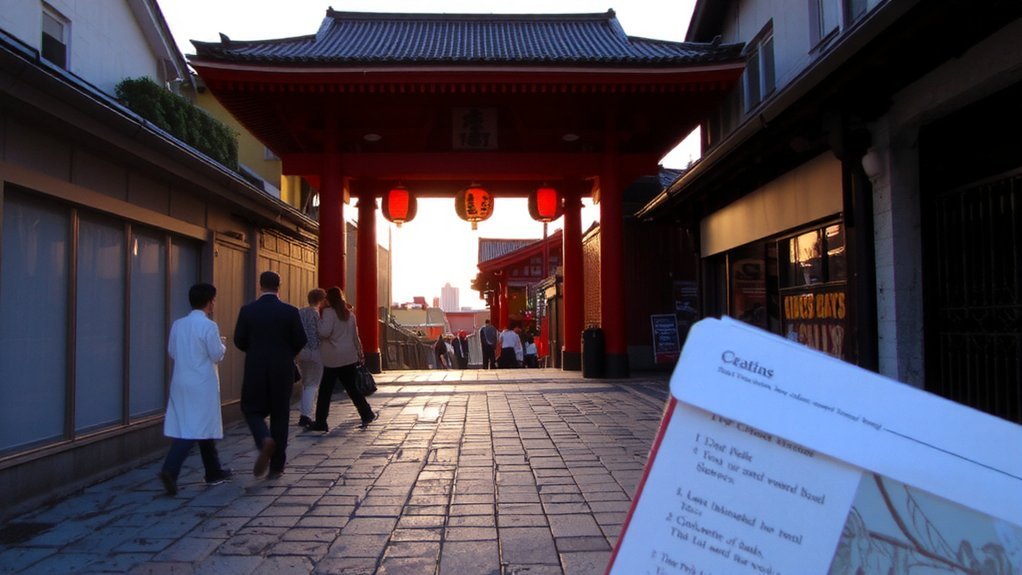
Swap the neon for vermilion and wood, and set your morning in Asakusa at Senso-ji. Enter through Kaminarimon Gate, breathe in the incense, and let the crowds flow around you while you choose your own path. Walk the Nakamise Arcade for charms, handheld fans, and a quick photo of lanterns and shop signs, then slip into the temple’s quiet corners. Purify at the chozuya, offer a coin, draw an omikuji fortune—good or bad, it’s a story. Circle the five-story pagoda, note the carp on roof tiles, and listen for the gong. Want context? Your guide decodes symbols and legends, fast. Want space? Wander, no apologies. Finish at Sumida Park for river views, or duck into a back lane of old timber and soft light.
Tsukiji Outer Market Street Food Safari
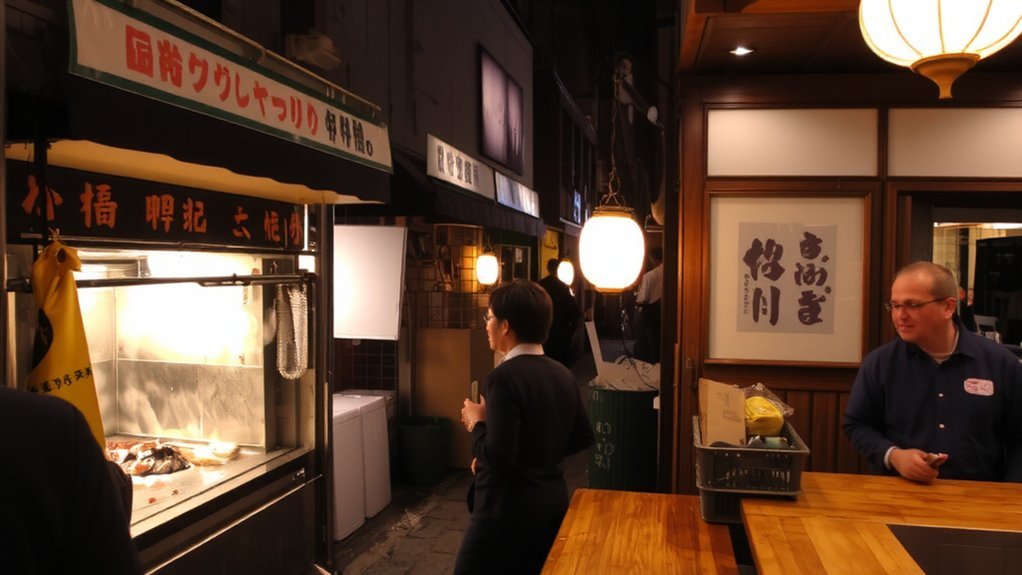
You’ll snack your way through Tsukiji Outer Market with must-try seafood bites: buttery toro nigiri, soy-butter grilled scallops, uni gunkan, briny oysters, and a sweet tamagoyaki slice for balance. Slip into the narrow back lanes for hidden stall gems—tuna collar seared to order, ikura-onigiri that pops, a tiny counter torching aburi salmon—then ask for “osusume,” the vendor’s pick, and thank them with a quick “arigatou.” Mind market etiquette: join the queue, order decisively, pay cash with small bills, eat beside the stall (don’t block foot traffic), use the bins provided, and ask before photos—simple, smooth, respectful.
Must-Try Seafood Bites
Scallops sizzle on iron griddles, butter and soy caramelizing into a smoky-sweet cloud that leads you straight through Tsukiji’s outer market.
| Bite | Where | Pro Tip |
|---|---|---|
| Scallop skewer | Naka-dori lane | Ask for butter-soy |
| Grilled eel | Namiyoke side | Half-portion first |
| Uni tasting | Alley 6 | Start sweet, then briny |
Follow your nose, grab napkins, and move with the tide. You’ll graze, not sit. First, share a scallop, then chase it with a smoky cup of fish broth. Slide over for Grilled eel, lacquered and tender, a quick hit of power. Brave an Uni tasting next—creamy, ocean-sweet, little wild. Keep cash ready, point, smile, go. Pace yourself, sip tea, reset. Hate lines? Arrive by 9 a.m. Want photos? Step aside, then bite. Freedom tastes like salt and fire.
Hidden Stall Gems
Where do the locals eat when the tour groups clog Naka-dori? You duck into side lanes and follow the smoke. Hit a charcoal stand for alleyway yakitori, order liver and negima, then chase it with yuzu soda. Pivot to a tuna-skewer kiosk; ask for akami salt-only, clean and bright. Keep moving—there’s a tamagoyaki window, sweet-savory, still steaming. Next, spot the auntie selling secret wagashi from a lacquered tray; pick the yomogi mochi, herbaceous and soft. Crave crunch? Grab freshly fried kakiage, paper-thin veggies stacked into a golden puck. Finish with a pour-over at a three-stool coffee nook, beans roasted on-site. You set the pace, you choose the bites, and yes, you’ll leave smelling like heaven. Freedom tastes crispy, smoky, a little sweet, and unforgettable.
Market Etiquette Tips
Before the first bite, remember it’s a working market, not a theme park. Walk left, keep moving, and step aside to eat; vendors need space, so do the fishmongers hauling boxes. Queue etiquette matters: join the line at the end, not the side, and don’t hold spots for a battalion. Cash ready, small bills best. Taste with your eyes first, then ask; a smile and a simple “Can I?” goes far. Bargaining norms here are gentle—prices are posted, quality is the flex—so skip haggling and reward craft. Don’t poke produce, don’t drip soy on displays. Trash? Carry it until you find a bin. Photos are fine when you ask. Thank people—arigatou works—and keep the vibe light, curious, respectful. Leave room for locals, move on.
Meiji Shrine and Harajuku Culture Stroll
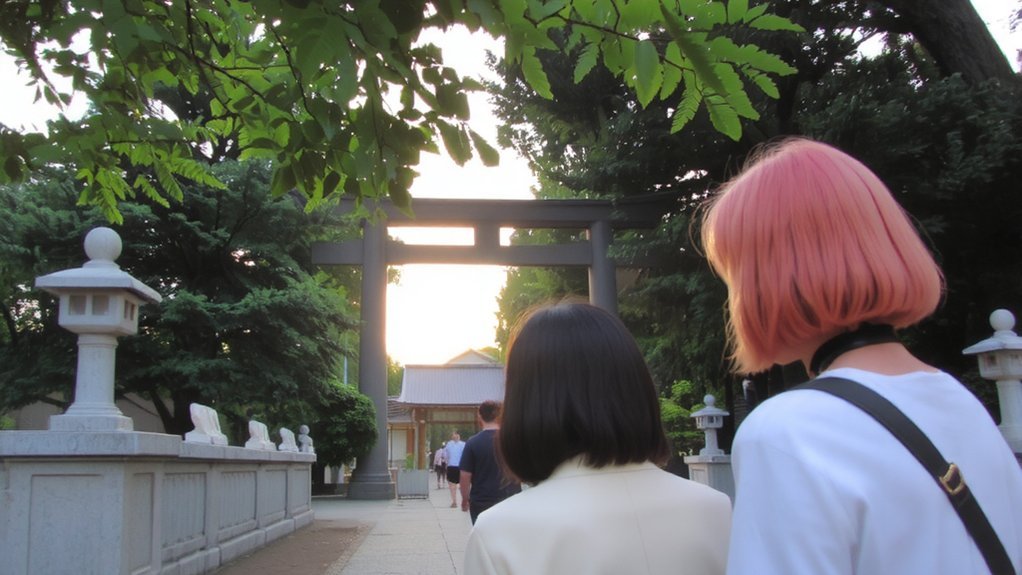
Although Shibuya’s neon steals the headlines, you’ll start this stroll in calm: walk under the giant torii by Harajuku Station and follow the cedar-lined path into Meiji Shrine. Breathe, rinse city noise, then cleanse at the temizuya, left hand, right hand, mouth. Watch a wedding procession if you’re lucky, then write wishes and try Omikuji Rituals—accept the fortune, fold the lesson, tie it neatly, keep moving. Exit to Harajuku’s lanes and flip the script. Hunt bold Street Fashion on Takeshita Street, then drift to Cat Street for indie labels and vintage scores. Grab crepes, or a matcha float, no judgment. Snap murals, but ask when people are close. When crowds swell, slide to Yoyogi Park, picnic, and people-watch. Freedom in motion. Stay curious, unbound.
Akihabara Anime and Pop-Culture Experience
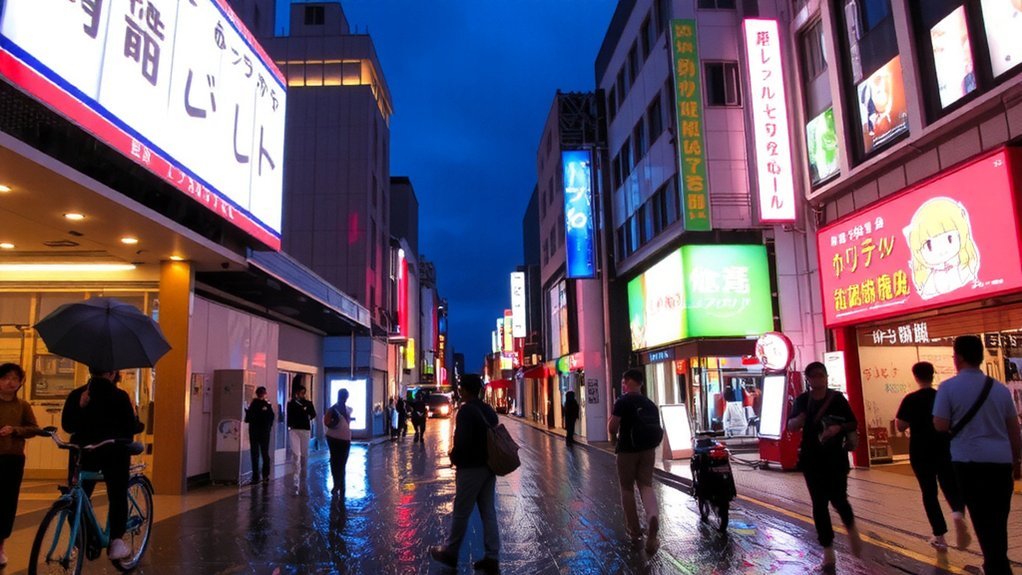
Start at Akihabara Station’s Electric Town exit, walk Chuo-dori under those bold anime billboards, then browse Animate and Mandarake for figures, posters, and a few impulsive gachapon pulls. Next, hit the retro game arcades—Taito Station for rhythm games, GiGO or HEY for shooters, and Super Potato’s retro floors for Famicom nostalgia—coins ready, backpack light. Curious about maid cafes? choose a beginner-friendly spot like Maidreamin, expect a table charge and photo rules, mind etiquette—be polite, no touching, clap along, maybe a cheerful “moe moe kyun.”
Iconic Anime Streets
How do you step into anime’s beating heart without getting lost in the glow? Start in Akihabara, then walk slow. Scan Manga Murals on side streets, snap, move on. Follow Pilgrimage Routes fans map online; they trace scenes from hits like Love Live! and Steins;Gate. Step into themed cafés for quick fuel, not a full sit-down. Watch cosplay at crosswalks, stay respectful, ask before photos. Buy small, travel light.
- Find the Manseibashi bridge view; skyline + neon = frame-worthy.
- Duck into back alleys by Chuo-dori for character stickers and zines.
- Visit Kanda Shrine; many series reference it, charms included.
- Time your visit for golden hour; colors pop, crowds thin.
- Use Suica and cash; tiny shops skip cards.
Leave room for surprise; that’s the point.
Retro Game Arcades
Often, you’ll hear the 8‑bit chime before you spot the marquee, so swing off Chuo‑dori and head for two essentials: HEY (Hirose Entertainment Yard) for rows of shmups and fighters, and Super Potato’s top floors for a cozy retro corner that feels like a time capsule. Load up on ¥100 coins, test your reflexes, and don’t be shy—Tokyo players are welcoming, if competitive. Watch deft hands, then join in. You’re not just passing through; you’re leveling up.
| Spot | Why it matters |
|---|---|
| HEY (Akihabara) | High Score Tournaments, late-night energy |
| Super Potato | CRT cabinets, soundtrack CDs, playable nostalgia |
| Try Next | Two-coin challenges, quick combos, polite trash talk |
Curious about Cabinet Restoration? Spot rebuilt Astro City rigs, crisp scanlines, perfect sticks. Set a goal, claim glory today.
Maid Cafe Culture
Score tallied at the arcades? Swing into Akihabara’s maid cafes, where playful theater meets quick service. You’re the master or princess, sure, but kindness rules. Watch the Service Rituals: greeting chants, heart-sign poses, omurice art drawn tableside. It’s quirky, and oddly soothing.
Book a seat or walk in off-peak, budget a cover plus one drink. Photos? Usually only of food, unless you buy a snap. Respect boundaries, tip by ordering sets, not cash. Track the Costume Evolution too, from classic frills to cyber-neon and seasonal drops.
- Pick a theme: retro tea room, space lounge, or cat kingdom
- Order the omurice art set
- Learn the “moe” chant, play along
- Buy a photo token, ask gently
- Keep visits to 60–90 minutes
Tokyo Bay and Odaiba Scenic Bike Ride
Gliding along Tokyo Bay on two wheels, you’ll stitch together Odaiba’s best views in an easy, flat loop that’s equal parts skyline, sea breeze, and photo ops.
Pick up rental bike near Daiba Station, grab a helmet, and roll. Follow Seaside Promenade past beach parks, then pause at Statue of Liberty replica for harbor shots. Keep cruising toward Rainbow Bridge viewpoints, steel and skyline stacked behind it. Thirsty? Convenience stores sit off path, so you’re set. Traffic stays light, lanes are clear, and route is flat. Time it for late afternoon; golden hour turns water to glass. Pack a windbreaker, secure your phone mount, bring lights if you’ll linger. One to two hours is perfect. Feel the salt air, set your pace, and go.
Mt. Fuji and Hakone Day Trip From Tokyo
While Fuji plays hard to get, a smart day trip stitches the mountain with Hakone’s hot springs and lake views—without wasting time. Leave Tokyo early, ride the express to Odawara, then hop the Hakone loop. Float over Owakudani on the Hakone Ropeway, watch plumes curl, and, if skies cooperate, frame Fuji like a postcard. Cruise Lake Ashi on a boat, then you soak right—follow Onsen Etiquette, wash first, keep towels out. Hungry? Try black eggs, weirdly good. Time tight? Book a guided bus for transfers.
- Best visibility: winter mornings, plan flexible dates.
- Seats matter: reserve train spots, aisle out, window back.
- Pack layers, sunblock, and yen for snacks.
- Backup views: Hakone Open-Air Museum when clouds win.
- Last train: aim back home before 8 p.m.
Conclusion
Now you’ve got a game plan: neon nights in Shibuya–Shinjuku, shrine calm in Asakusa and Meiji, snacks at Tsukiji, cosplay vibes in Akihabara, bayside bikes in Odaiba, and that Mt. Fuji day escape. Book two for day one, two for day two, leave one flex slot, then Fuji on your best-weather day. Comfortable shoes, Suica topped up, camera charged. Ready to trade jet lag for joy? Good. Tokyo’s waiting—busy, generous—and you’ll move like a pro.