
Think Moria, but under Tokyo. You can actually walk the flood tunnels—guided tours take you past giant pillars, damp concrete, and echoing pumps, and you’ll wear a helmet and mind the steep stairs. You book ahead, catch a small bus near Minami‑Sakurai, sit through a safety talk, then step into that cool, humming space. It’s not a theme park; it’s serious kit that saves the city. Here’s what most folks miss—and how not to.
Key Takeaways
- Yes—G-Cans (Metropolitan Area Outer Underground Discharge Channel) offers guided tours of its vast underground tank, shafts, and flood-control equipment.
- Tours: Underground Temple (~55 minutes, ¥1,000), Shaft Experience (~110 minutes, ~¥3,000), plus pump/impeller courses and occasional seasonal light-ups.
- Book around four weeks ahead via the official site or authorized partners; tours sell out and pause during inspections or flood operations.
- Go via Minami-Sakurai Station (Tōbu Urban Park Line); 7–10 minute taxi (~¥1,500–¥1,800) or a 30–35 minute walk.
- Expect steep stairs, wet floors, and narrow catwalks; not barrier-free or for small children; helmets and harnesses provided where required.
What Is the Metropolitan Area Outer Underground Discharge Channel (G‑Cans)?
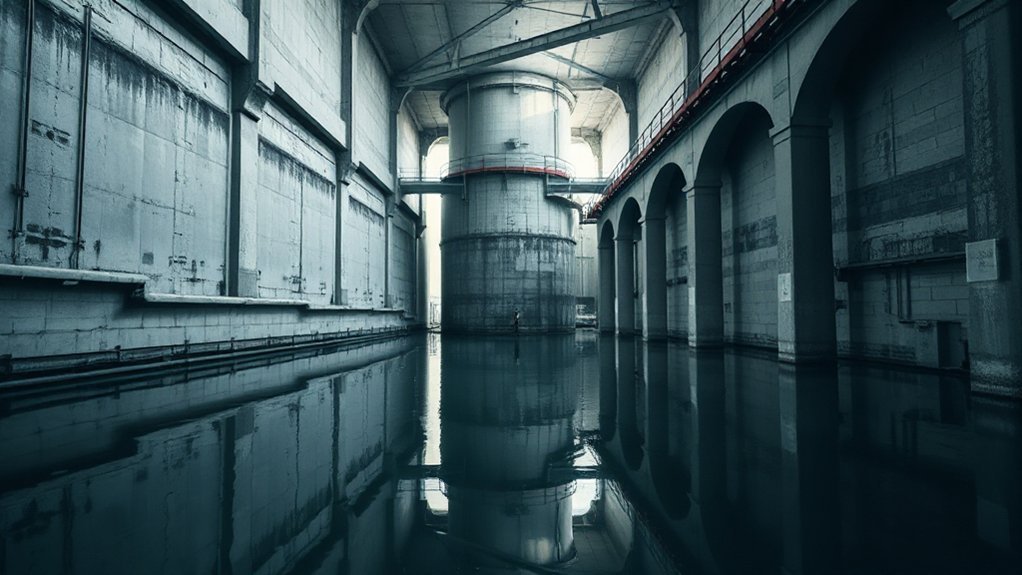
The Metropolitan Area Outer Underground Discharge Channel—most folks just say G‑Cans—is Tokyo’s giant safety valve for floods, a hidden maze under the northern suburbs that wakes up when storms get mean. You’re looking at an engineering marvel built like a city beneath a city, with five round shafts sunk about 50 meters down, each wide as a small arena, linked by about 6.3 kilometers of tunnels ten meters across. Those tunnels steer water into a central pressure‑adjusting tank that feels like a cathedral, 177 meters long, 78 wide, and 18 high, its ceiling riding on 59 hulking pillars that scuff your sense of scale. The structural design keeps everything calm and steady, then pumps push the load to the Edo River and out toward Tokyo Bay. It’s been on duty since the mid‑2000s, kicks in several times a year, and ranks among the world’s largest underground flood works.
Why This Underground Cathedral Exists
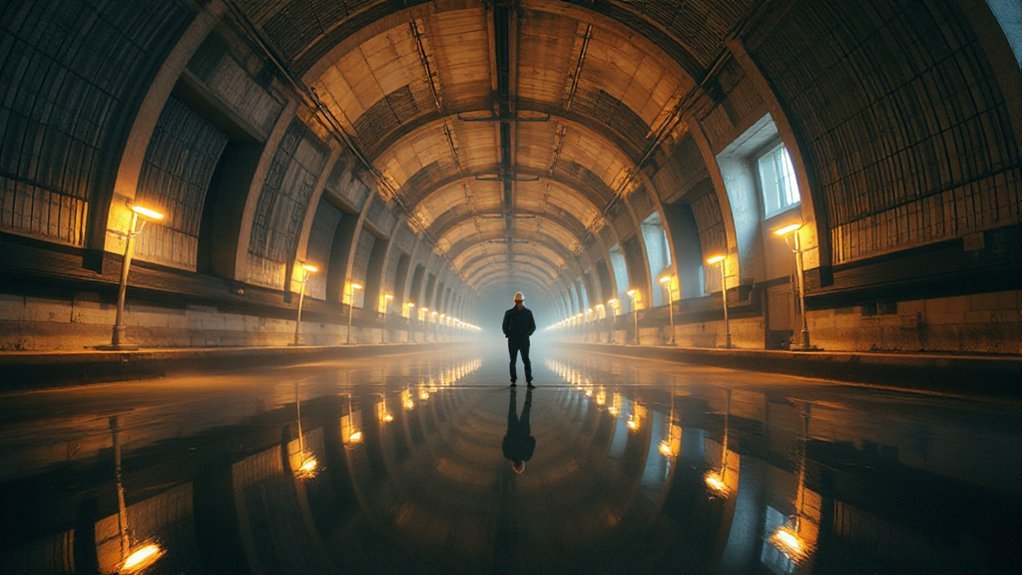
After too many floods swamped the Tokyo plain, engineers dug a safety net under the city so the rivers would have somewhere else to go. You’re looking at a fix born from historical floods that kept bursting low banks and drowning neighborhoods, so the plan wasn’t fancy, just smart flood mitigation at scale. They started in 1993, carved five giant silos and 6.3 kilometers of tunnels as wide as subway cars stacked side by side, and led them to a huge pressure tank folks call the underground cathedral. In heavy rain, overflow from several rivers drops into those shafts, rushes through the tunnels, and settles in that 177 by 78 by 18 meter room where 59 thick columns calm the water’s punch. Then pumps shove millions of cubic meters toward the Edo River, usually about seven times a year, keeping streets dry, basements quiet, and tempers, well, manageable.
Highlights You Shouldn’t Miss Underground
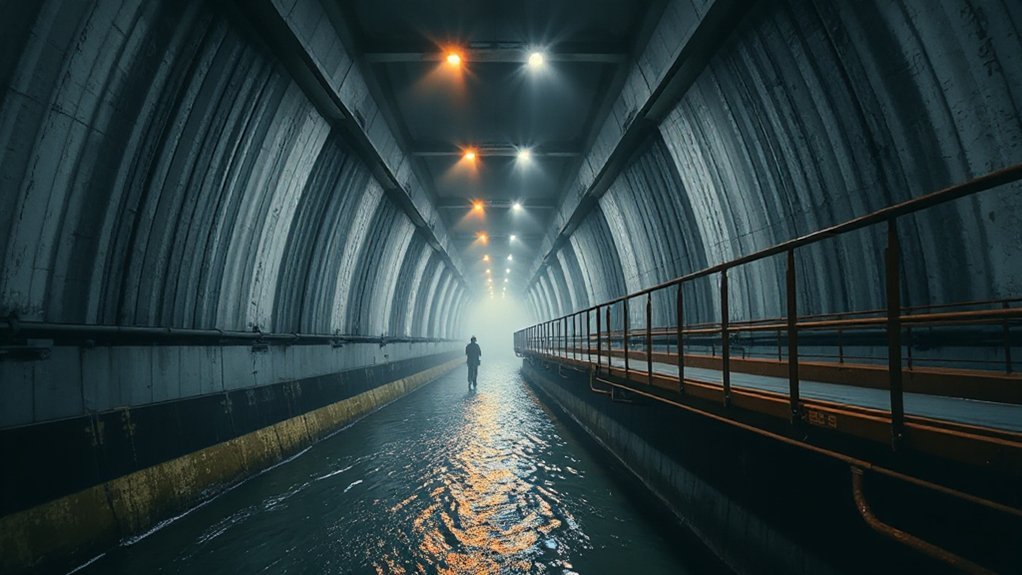
Walking into the so‑called underground temple, you step into a cool, concrete giant that’s 177 meters long, 78 wide, and 18 high, with 59 fat pillars about 2 meters across holding the hush like a real cathedral, just without the hymns.
Enter the underground temple: a cool concrete giant, 177 by 78 by 18, hushed cathedral without hymns.
You walk between cathedral pillars, and the scale goes quiet inside.
- Light pools on wet concrete, and boots clap, and the echo rolls like surf.
- A row of pillar bases wears marks and chalk lines from crews who know every inch.
- Catwalk rails lead eye to the No.1 shaft, a dark cylinder that feels bottomless.
- Red valve wheels and pump impellers sit clean and tough, ready to gulp a pool in a blink.
- A model board shows five shafts feeding a 6.3 km tunnel web, simple and ruthless.
Beside the shaft, you imagine the Statue of Liberty inside, then glance back to the pumps and believe it.
Tour Options and How to Book
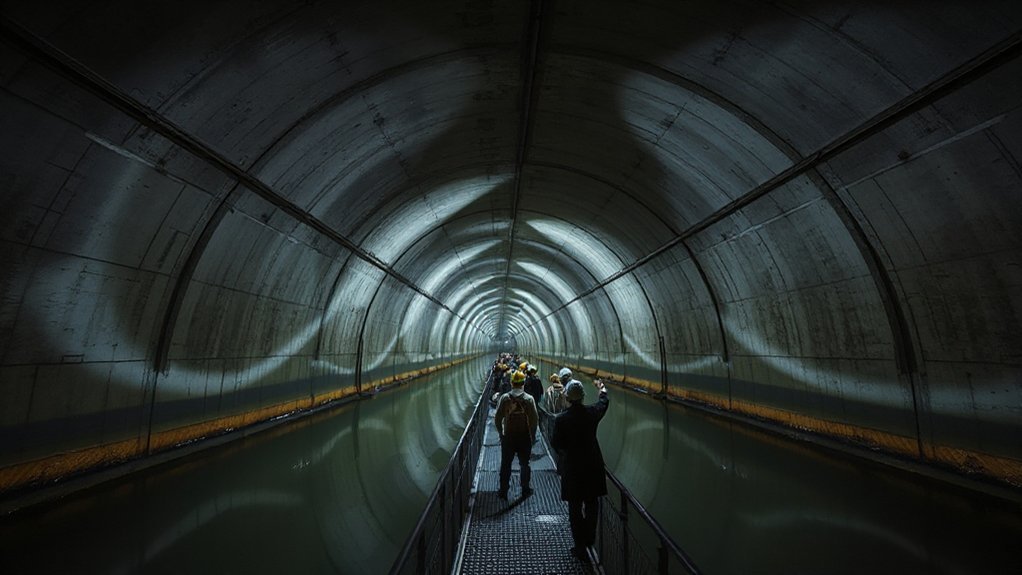
You can pick from the regular tours, like the 55‑minute Underground Temple for about ¥1,000, or go bigger with the 110‑minute Shaft Experience (≈¥3,000) and the Pump or Impeller courses (¥2,500–¥4,000), helmets and safety belts included where needed. Watch for seasonal specials too—Halloween light‑ups, light‑and‑sound shows, and limited “light‑up” Temple runs—since they pop up on odd dates and often book through Tobu Top Tours. To book, hit the official G‑Cans calendar about four weeks out, grab a slot before it vanishes, then recheck close to your day because inspections or flood work pause tours, and plan your last leg from Minami‑Sakurai Station—a 7–10 minute taxi or a steady 35‑minute walk, your call.
Regular Tour Options
How do you pick the right G‑Cans tour? Start with time and comfort. The 55‑minute Underground Temple course runs about ¥1,000 and keeps you on the grand tank floor. Want more grit? The ~110‑minute Shaft Experience costs around ¥3,000 and adds helmets, belts, and some damp, uneven footing. Pump or impeller courses run ¥2,500–¥4,000 and show you the muscle. Check photography policy and any souvenir availability before you go. Book about four weeks out on the official system, bring a Japanese speaker for briefings, expect capped groups and occasional cancellations, and remember, weekends run but not during operations. Check the calendar.
- Forest of concrete columns
- Cool, echoing air and drips
- Narrow stairs and safety lines
- Steel pumps humming nearby
- Mud-slick boots at the exit
Seasonal Special Tours
Chasing the big moments at G‑Cans means eyeing the seasonal specials, which flip the usual switch from awe to “okay, that was wild.” Around Halloween you’ll find light‑up events, and starting November 2025 there’s a Special Light‑Up version of the Underground Temple that runs about 6–7 times a month through partners like Tōbu Top Tours, adding a tight 4‑minute light‑and‑music show to the regular walk on the tank floor. You’ll stand under pillars, lighting choreography and composer collaborations ripple; photos, then out. Shaft or Pump editions add extra access and demos, priced above ¥1,000. Reserve a month ahead; spots vanish. Book via official page or authorized operators. Wear a helmet, clip a belt for shafts, bring a Japanese speaker/interpreter; age and mobility limits apply.
Booking Steps Online
After those light‑up nights have you itching to go, the next step is simple: lock in a spot online before the calendar dries up.
Book on MAOUDC/G‑Cans; use Tōbu Top Tours for light‑ups. Choose a course: Underground Temple (¥1,000, ~55 min), Pump (¥2,500, ~100 min), Shaft (¥3,000, ~110 min), or specials up to ¥4,000. Slots vanish about four weeks out, so book quickly. Check the calendar; tours pause for inspections, operations, and events requiring reservations. Read the rules: have a Japanese speaker, no kids under elementary age, and some routes need helmets and harnesses. Confirm payment methods and the cancellation policy. Your confirmation lists Minami‑Sakurai directions, taxi tips, stairs and fitness notes—follow it, bring ID.
- Photo ID
- Steep stairs
- Damp floors
- Quick taxi
- Harness
Getting There From Central Tokyo

From central Tokyo, you’ll head north about 20 miles to Kasukabe, where the G‑Cans tunnels sit under the suburbs like a secret basement. Your best Transfer options run through Ōmiya: ride the Tōhoku/Takasaki or Utsunomiya Line from Tokyo or Ueno, or hop a shinkansen if that’s easier for you, then switch to the Tōbu Noda (Urban Park) Line for Minami‑Sakurai. Count on a Travel time of about 60–90 minutes, depending on connections and how briskly you move between platforms.
From Minami‑Sakurai, you can walk 30–35 minutes through neighborhoods, but most visitors grab a taxi right outside the station. The ride takes about seven minutes and usually runs ¥1,500–¥1,800, which feels fair when the summer sun is barking. Ask the driver for the Metropolitan Area Outer Underground Discharge Channel entrance. For the trip back, arrange a pickup or reserve by app at drop‑off time, since buses don’t run often.
Safety, Age Limits, and Accessibility
Putting safety first, the tunnels run on firm rules, and they’re good ones. You join a staff-led group, wear a helmet, and on shaft courses clip into a belt or harness. Kids below elementary-school age can’t join, and some routes set minimum age or fitness. Expect more than 100 steps, tight catwalks, and wet patches, so tours aren’t barrier-free and wheelchairs or strollers won’t work; visitor accommodations are limited. You must follow safety briefings and any emergency instructions, mostly in Japanese. Some special courses drop roughly 70 meters beside live machinery, so stay sharp. Tours can pause for inspections or active floods, and many need advance booking and a safety check. Share medical considerations early; staff will tell you if today doesn’t fit.
Staff-led, helmeted, harnessed. Steep steps, tight catwalks, wet patches; rules first, briefings in Japanese.
- Hard hats bumping under low beams.
- Harness buckles clicking at edges.
- Spiral stairs stealing your breath.
- Wet grating testing steady steps.
- Pumps humming beyond safety rails.
Tips for Visiting and Seasonal Events
Though it feels like a hidden wonder, you’ll want a plan: book your spot about four weeks ahead, since regular tours start near ¥1,000 and the special, hands-on ones can run to about ¥4,000 and sell out fast, especially on the few nights each month when they do the Halloween light‑ups or the new light‑and‑music show rolling out from November 2025. Build in weather prep, since routes may change or tours pause for inspections or rain. Check the official calendar before you go.
Ride to Minami‑Sakurai on the Tobu Noda Line, grab a seven‑minute taxi (about ¥1,500–¥1,800). Some courses mean over 100 steps, so no small kids, you’ll need sturdy shoes. Bring a Japanese speaker or interpreter. On shaft or pump tours, helmets and safety belts stay on and the guide’s word is law. Mind photo etiquette: don’t block stairs, ask before flash, always keep the line moving.
Frequently Asked Questions
Are Photography and Tripods Allowed Inside the Flood Tanks?
Yes, you can take photos, but tripods usually aren’t allowed; only media with special permits may use them. Follow permit requirements, obey lighting restrictions, avoid flash, and keep gear minimal. Guides often limit shooting time.
Is There Mobile Phone Signal or Wi‑Fi Underground?
Like entering a cathedral beneath the sea, you find no mobile signal or Wi‑Fi—it’s a Signal Deadzone. You can’t browse, but staff maintain Emergency Communication systems, and guides advise downloading tickets, maps, and translations beforehand.
Are Lockers or Luggage Storage Available at the Visitor Center?
Yes, small lockers are available at the visitor center, but capacity’s limited. Arrive early, check Operating hours, and confirm sizes. Payment methods typically include coins or IC cards. For oversized bags, ask staff about alternatives.
Do Tours Offer English Guides or Multilingual Audio Support?
Looking for English guides or multilingual audio? You’ll get both on most tours, with clearly stated Guide qualifications and vetted scripts prioritizing Translation accuracy. You can request English commentary, borrow headsets, or download an app.
Is There a Gift Shop or Café On-Site After the Tour?
Yes, you’ll find a small gift shop and a simple café on-site. You can browse a curated souvenir selection, then grab light snacks and drinks from a rotating seasonal menu before heading back to town.