
To you, free tours in Tokyo can look like a magic carpet—no fee, friendly guide, local secrets. But you still cover subway fares, shrine tickets, snacks, maybe a coffee. Volunteers don’t take tips, though a small gift or discreet donation is kind. Book weeks ahead, stay flexible, expect 2–4 hour walks. Wondering which groups are legit, what to bring, and when a paid pro is smarter? Let’s unpack it.
How “Free” Volunteer Tours Work in Tokyo
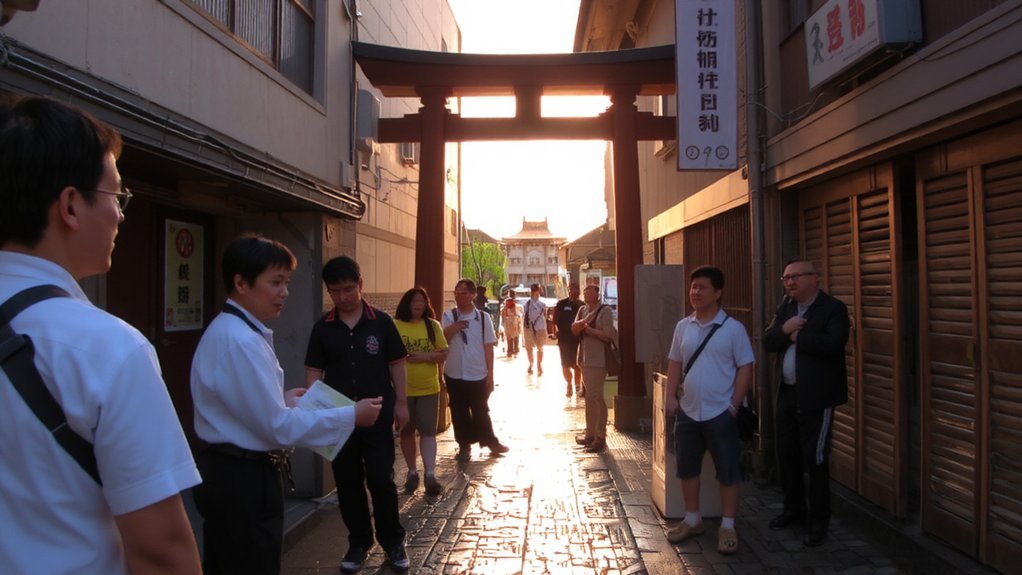
While they’re called “free,” Tokyo’s volunteer tours are really free‑ish: you don’t pay a guide fee, but you cover your own costs and the guide’s transport, admissions, and usually a simple lunch.
Here’s how it works: you request a date on an association site, share interests, and wait for a match. The organizational structure is simple and volunteer‑run. A coordinator assigns a vetted local; you’ll get an email with the meeting point and a flexible draft route. You set the pace, ask for detours, skip tourist traps. Why guide? Guide motivations include language practice, civic pride, and cultural exchange. Expect clear boundaries: no shopping kickbacks, no hard sells. Bring a transit card, a charged phone, and curiosity. Say thanks, share feedback, pay it forward.
What Costs You Still Pay

So yes, there’s no guide fee, but you still pick up the tab for the day-to-day stuff—yours and your volunteer’s. You cover Admission fees at museums and gardens; tickets for exhibits; and any timed-entry reservations. You also pay Transport fares—subway, JR lines, buses, even the monorail if your route needs it. Easiest move: load IC cards (Suica/PASMO), grab a 24–72 hour pass if it fits the plan, and budget for transfers.
Meals and fuel matter. You choose where to eat, and you pay for both lunches, coffees, and the odd taiyaki break. Add small items: coin-lockers, umbrella or bike rentals, photo spots that charge, river boats, and temple treasure halls. Ask beforehand what’s on route, confirm costs, and keep cash handy—Tokyo can be analog.
Tipping, Gifts, and Donation Etiquette

Even though tipping isn’t a thing in Japan, you still have great ways to show gratitude to a volunteer guide. Bring a small, locally flavored gift from home—chocolate, maple candy, a pin from your city. Hand it over with both hands, smile, and use simple Thank you phrases like “arigatou gozaimasu.” Want to donate? Many groups accept site donations; give modestly, discreetly, no fanfare.
If your guide refuses the gift, don’t push. That’s Refusal etiquette: they may decline once or twice. Offer again gently, then accept their no with grace. You can also buy their coffee, cover subway fares used together, or mail a postcard later. Keep cash tips pocketed. Your respect, punctuality, and a sincere review go further. Freedom with manners—perfect. For you.
How to Choose a Reputable Volunteer Guide Group
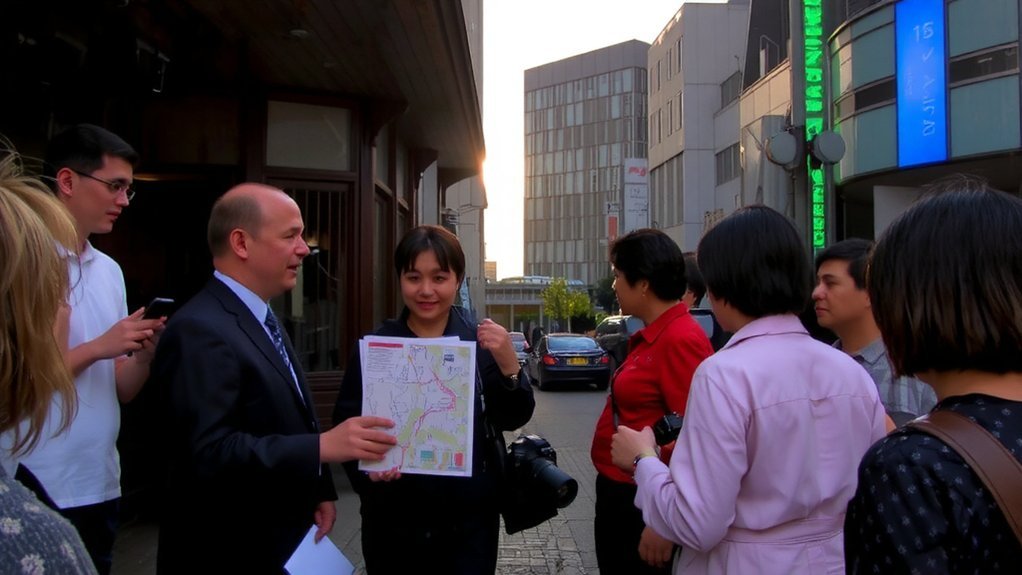
You’ve got the etiquette down; now pick a group you can trust. Scan their website for mission, leadership, and a clear code of conduct. Do they run Background checks on volunteers, list Training standards, and require ongoing workshops? Good signs. Look for ties to city tourism boards, museums, or universities, plus a real address and a non-profit label. Read recent reviews on Google and TripAdvisor; note patterns, not one-offs. Safety first: guides wear badges, carry emergency contacts, and never push kickback shopping. Language matters—ask how they assess fluency. Professional touches count: insurance, child-protection policy, and transparent expense rules. When in doubt, email them. Note how fast, how human, how specific the reply feels. Trust your radar—and walk. Freedom loves due diligence; you’ll tour happier.
Booking Tips, Availability, and Itinerary Limits
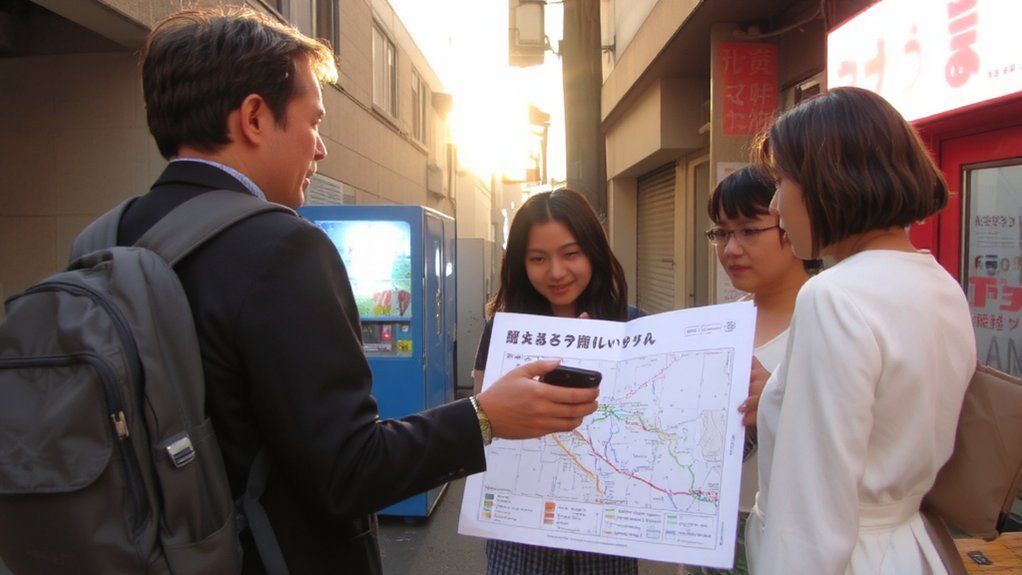
Because volunteer guides book up fast, treat this like snagging a popular ramen seat—plan ahead and move decisively. Request 2–3 weeks ahead in normal months, 4–6 in Peak seasons. Be flexible with dates, neighborhoods, and meetup spots, you’ll open up more options. Read scope: most groups cap tours at 3–4 hours, no cars, no reservations made for you.
- Pick two must-see areas, keep transit hops under 30 minutes.
- Offer two time windows; weekdays after 10 a.m. fill slower.
- State interests clearly: food alleys, quiet shrines, street art.
- Mind group size limits, usually 1–6; kids count.
- Confirm meeting point, language, and Cancellation policies.
After confirmation, reply fast, say thanks, and show up on time. Plans change? Cancel early so another traveler flies free in your slot.
Alternatives: Student Guides vs. Paid Tours
While free volunteer slots vanish, you’ve got two solid backups: student guides and paid tours—and they serve different needs. Student guides keep things flexible, cheap, and curious. You set a loose plan, wander streets, practice phrases, and swap culture. Great for Language Practice, photo stops, ramen detours. Expect enthusiasm, not deep expertise. Many are exploring Career Pathways in tourism. Tip them, cover transit. Paid tours deliver structure and efficiency. You get licensed pros, timed entries, skip lines, and storytelling. Want Tsukiji at dawn, a tea ceremony, then Meiji Shrine without guesswork? Book it. Clear price, clear scope. How to choose? Match your goal and time. Learning and serendipity—go student. Precision and access—go paid. Mix both if you’ve got days. Freedom loves options, not fences.
Conclusion
You can book a free volunteer tour, enjoy local insight, and still keep costs sane. You’ll pay your subway rides, admissions, snacks, maybe a coffee for your guide—no kickbacks, no detours. Say thanks with a small souvenir or discreet donation, optional. Reserve weeks ahead, offer flexible times, expect a 2–4 hour walk. Need timed entries or expert in-depth tours? Hire a pro. Otherwise, student groups shine. Tokyo opens up, and—boom—your map sings like thousand lanterns.