
Strange thing about Tokyo guiding: a small plastic badge and two tight itineraries can open more doors than charm ever will. You’ll want language proof or the National Guide‑Interpreter license, a couple of sample routes (Asakusa‑Ueno and Shibuya‑Harajuku work), and real shifts—JNTO desks, hotel lobbies, or gigs on Veltra/ToursByLocals—to get reviews. Pack ATS‑clean resumes and copies of licenses and insurance. Now, here’s the fast way to stack those pieces.
Key Takeaways
- Understand legalities: you can guide without a license, but only licensed passers may use the title; remote guiding permitted since 2018.
- Earn the National Government Licensed Guide-Interpreter credential to increase callbacks, rates, and access; prepare via JTA past papers; language proofs can waive parts.
- Add Tour Conductor or Travel Services Manager licenses for group tours and operations roles, boosting hireability with agencies.
- Get experience fast: volunteer with JNTO SGG clubs, shadow licensed guides, take concierge/visitor center shifts, and list on GoWithGuide, Veltra, or ToursByLocals.
- Build a portfolio and apply: create 3–5 itineraries, show badges on resumes, bring physical proof to interviews, and practice bilingual hospitality and shrine etiquette.
Understanding Japan’s Guiding Rules in 2025

So what actually counts as “legal” guiding in Japan in 2025? You can guide travelers, paid or not, without a license, on foot in Asakusa or over Zoom, and the law’s been that way since 2018. The one hard line is the title: don’t call yourself 通訳案内士 unless you’ve passed the national exam. You can do the work, you just can’t wear that name without earning it. The exam sits under the Japan Tourism Agency, open to folks 18 and up. It tests your chosen foreign language, plus Japanese geography, history, general knowledge, guiding skills, and laws, and most parts are in Japanese. Some licensing updates include exam breaks for top language proofs, like a TOCFL C2 waiving pieces. Remote guiding still counts, but agency group tours need a Tour Conductor License, and travel-agency bosses need a Travel Services Manager. Local guide programs exist, with their own rules.
Credentials That Boost Your Hireability
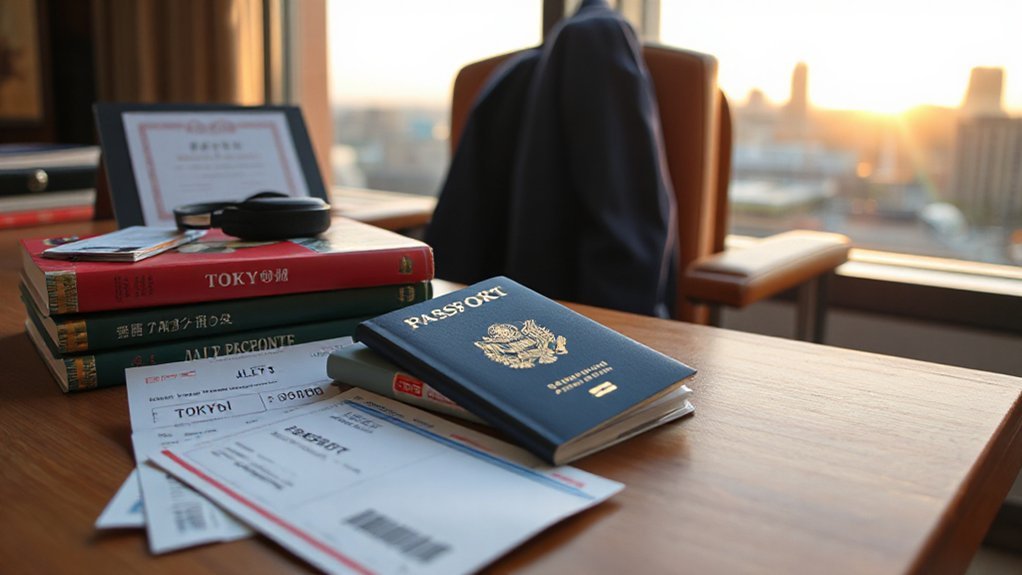
Credibility is your currency in Tokyo guiding, and the 通訳案内士 (National Government Licensed Guide Interpreter) stamp spends everywhere—agencies call you back faster, and you can quote higher fees without feeling cheeky. Since 2018 anyone can guide tourists, but only licensed folks may use the title, so the badge still carries weight with agencies and DMCs. You’ll take a language test and written sections on geography, history, laws, guiding techniques, and general knowledge, most in Japanese; top approved scores—say TOCFL C2—can waive parts. Add Industry Accreditations like the Tour Conductor License for package groups, and the Certified Travel Services Manager certificate if you aim to supervise operations. Together they open up better Supplier Partnerships, steadier shifts, and nicer day rates. It’s not fancy, just proven; the more boxes you tick, the more doors open.
In Tokyo guiding, credentials are currency—licenses unlock calls, confidence, and better day rates.
- Agencies cut risk and call first.
- Contracts and insurance clear faster.
- Credentials signal grit, care, steadiness.
Core Skills: Language, Service, and Cultural Know-How
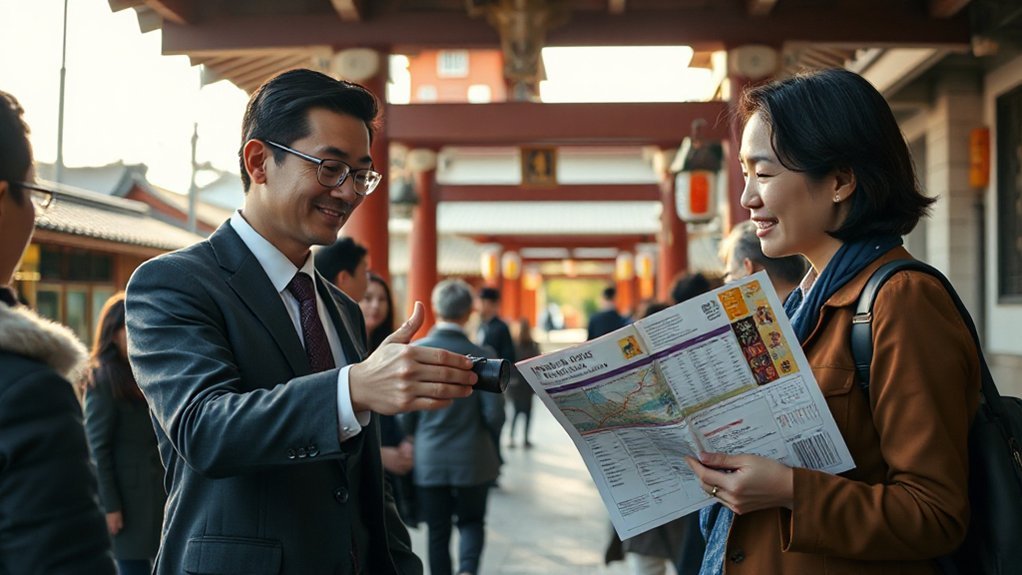
You need to talk in two worlds at once—your guiding language and Japanese—switching cleanly with guests, station staff, and vendors, reading signs and timetables, and using clear, neutral words so a mixed group stays with you. At Meiji Shrine you show, not scold, how to bow at the torii, rinse at the basin, and do two bows, two claps, one bow, while explaining why folks keep to the side of the path. You back that up with festival basics, local rules, and calm service moves—like asking a shop in Japanese to fix a seating mix‑up or reminding folks to stand left on the escalator—little fixes that keep the day smooth and make it clear you’ve been around the block.
Multilingual Communication Essentials
How do you guide a mixed crowd in Tokyo without losing anyone at Shibuya Crossing? You start with audience segmentation and message tailoring, then you back it up with solid fluency. The guide exam tests language plus Japan’s history, geography, and laws, so you study those and learn to explain them in clean, short lines. Practice live: volunteer with JNTO or an SGG club, walk a route, narrate on the move, pace your breath, and sharpen those crowd-control phrases. Learn service English and Japanese for trains, tickets, restaurants, and emergencies, and boil complex bits into plain steps. Manage expectations with clear times and weather plans, and keep repeating key points with friendly cues.
- Orange post, 10:15 meet.
- Two stops, ramen lunch.
- Lost? Meet Hachiko.
Cultural Etiquette Mastery
Language gets you heard; etiquette gets you trusted, and that’s what keeps a mixed crowd with you from shrine gate to last train. You learn basic keigo and 100–200 hospitality phrases—irasshaimase, arigatou gozaimasu, omatase shimashita—so service sounds smooth and kind. Then you move like a clock: build buffer time, reach every meet point 5–10 minutes early, and you never sprint guests through a transfer. Mind bowing nuances, skip the iron handshake, and slip off shoes where signs say so. Keep phone calls low and quick, because trains are quiet on purpose. Treat meishi right—offer and receive with both hands, read it, then put it away neat. Steer clear of politics and WWII; talk food, festivals, trains, temples. Brush up on gift etiquette —small wins.
Where to Get Experience Fast in Tokyo
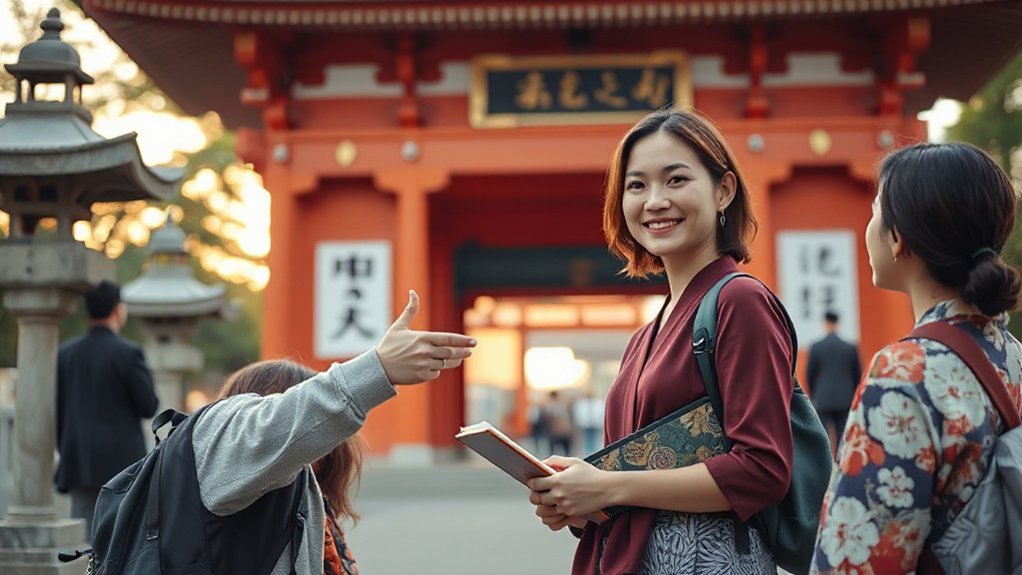
Starting fast in Tokyo means getting your boots on the pavement and stacking real reps where travelers actually show up. Join a JNTO‑affiliated SGG club and volunteer on temple walks and museum days; you’ll learn routes, timing, and how to steer a group without barking. List yourself on GoWithGuide, Veltra, or ToursByLocals; since 2018 many gigs don’t need certification, just reliability and quick replies. Pick up shifts at visitor centers, concierge or tour desks, or even event ushering and hotel internships; you’ll practice ticketing and calm check‑ins when lines get jumpy. Sign up with Jasumo to handle concert, sumo, and shinkansen bookings. In peak spring and autumn, take short workshops and shadow licensed guides; watch how they pace, pause, and recover when plans wobble.
- Keep a notebook: names, transfers, rain plans, restrooms.
- Speak first: set expectations, then add steady charm.
- Learn tools fast: IC cards, portals, timings, refunds.
Building a Standout Guide Profile and Portfolio

Lead with your signature experiences—say a Tsukiji-to-Toyosu seafood sprint or a back‑alley Shitamachi photo walk at dawn—spell out what’s included with clear pricing, and pin your National Government Licensed Guide Interpreter badge and any language test exemptions up top so people know you’re the real deal. Build a visual storytelling portfolio with 3–5 downloadable itineraries (half‑day, full‑day, themed), sharp photos, a 60–90 second video intro, and steady social proof—show your average rating and review count, aim for 20 detailed reviews in year one, and hold yourself to benchmarks like 4.95/5 with 390 reviews. Back it up with dates and outcomes from SGG or festival gigs, note group sizes and repeat‑booking rates, then put the same tight story on GoWithGuide, ToursByLocals, Veltra, and your own site, and track clicks → inquiries → bookings so you keep what converts and cut what doesn’t—unglamorous work, sure, but it pays for ramen and rent.
Showcase Signature Experiences
How do you get a traveler to stop scrolling and click book? You show clean, ready-to-go tours. Build 3–5 signature routes, like a morning fish-market walk plus an artisan workshop, or an afternoon shrine trail with a calm matcha stop, with start/finish times, metro links, and price ranges. Lean into Pricing Transparency and Local Partnerships so folks see where their yen goes. Post proof: “Akira N.: 4.95/5 from 390 reviews,” plus 3–5 short quotes tied to each tour. Note JNTO volunteer days, spring/fall pop-ups, dates and guest counts. Offer ticket help via Jasumo Tickets, flexible payments, straight refund rules, and a one-page itinerary with packing notes.
- Name meeting spot, to the minute.
- Show transit steps, platform numbers, exits.
- State group size caps, what’s included.
Visual Storytelling Portfolio
You’ve shaped clean, ready-to-book routes; now show them so clearly a tired traveler thinks, “Yep, that’s for me,” and taps book without squinting. Build a visual Tokyo story: 12–20 high‑res photos in Photo Sequencing from arrival to ramen slurp to happy goodbyes. Use a tight Caption Strategy, 1–2 sentences each, covering time of day, access, and pace. Add 1–2 short showreels, 60–120 seconds, stabilized, with natural sound and a calm voiceover that shows language skill and group flow. Drop in 3–5 mini‑itinerary thumbnails—map, timeline, walking minutes, trains used. Show proof: recent reviews with stars, headshots, dates. Top and tail with badges, insurance, and booking links.
| Asset | Spec | What it proves |
|---|---|---|
| Photos | 1200–2000px, 12–20 | Clear route, accessibility |
| Showreel | 60–120s, stabilized VO | Style, language, crowd care |
Finding and Applying to Jobs: Agencies and Marketplaces
Where do you start when Tokyo’s job posts feel like a crowded train at rush hour? Begin with a platform comparison. GaijinPot and Jobs in Japan tend to get replies for English-friendly roles, while Indeed and LinkedIn spray leads and invite ghosting, so budget your time. Mix in application timing: check target tour operators and hotels early in the week and apply same day on their careers pages—many only post there, and small teams hire fast. Use niche marketplaces to earn reviews and gigs: GoWithGuide for private, flexible days, ToursByLocals for traveler-led requests, and Veltra or Voyagin for company-run experiences across the city.
Keep your resume ATS-friendly—plain Word or PDF, keywords matched—and bring proof of any licenses that matter: National Guide Interpreter, Tour Conductor, or Certified Travel Services Manager.
- Aim for proof, not promises.
- Treat silence as a “no,” and move on.
- Stack reviews; they travel farther than ads.
Practical Next Steps and Useful Resources
After sending a smart batch of applications and staking out the right platforms, the real traction comes from stacking skills, paperwork, and proof, and here’s the short road map that actually moves the needle in Tokyo. Block quiet study time for the National Government Licensed Guide-Interpreter exam; work past papers, JTA pages, and prep courses on history, geography, laws, and guiding craft. Join a JNTO SGG club or a Temple University tour-leading class to get reps, photos, and references. Level up language with weekly chats with natives and a recognized test; a TOCFL C2 can open up exemptions.
Polish your profiles and pitch on GaijinPot, Jobs in Japan, GoWithGuide, ToursByLocals, and Veltra, then message small tour firms and hotel concierges with two crisp sample itineraries. If you’ll run groups, secure the Tour Conductor License and Certified Travel Services Manager, review JTA registration, and sort tax obligations and insurance options.
Frequently Asked Questions
What Are Typical Earnings and Tipping Norms for Tokyo Tour Guides?
You’ll typically earn ¥2,000–¥5,000 in hourly earnings; licensed private guides often charge ¥20,000–¥40,000 per day. Japan’s gratuity culture avoids tipping, but foreign guests sometimes tip discreetly (5–10%) or offer small gifts; don’t solicit, graciously accept.
Do I Need a Work Visa or Residency to Guide in Tokyo?
Like a train ticket, you need authorized status: yes, you’ll need a work visa or appropriate residency. Choose applicable visa categories, keep residency documentation current, and register for permitted activities with immigration before guiding professionally.
How Do Guides Handle Taxes and Invoicing in Japan?
Register as a sole proprietor, track income and expenses, and file returns. If sales exceed thresholds, register for consumption tax and Qualified Invoice. Use invoice templates, include required fields, keep receipts, you’ll remit taxes quarterly.
What Insurance Should Tour Guides Carry for Liability and Accidents?
Smart, savvy, and safety‑minded, you’ll want to carry Public Liability insurance for third‑party injury or property damage, plus Personal Accident cover for your injuries, income protection, and medical costs. Consider equipment and professional indemnity add‑ons.
Which Seasons Offer the Most Consistent Bookings in Tokyo?
Spring and autumn offer the most consistent bookings. You’ll see peak demand during Cherry blossom season and Autumn foliage weeks. Summer brings steady tourism despite heat, while winter slows except New Year and illumination periods.