
Thinking about a Tokyo go‑kart tour? It can be safe—if you do it right. You’ll need a valid driver’s license and the correct IDP, a reputable operator, and a proper briefing with helmet, gloves, and radio. Ask about insurance, rain plans, and routes; avoid cash‑only places and vague answers. On the road, ride in staggered formation, watch taxis, slick paint, and scooters. Simple, smart habits. Want the exact checklist—and red flags to spot fast?
How Go-Kart Tours Work in Tokyo Today
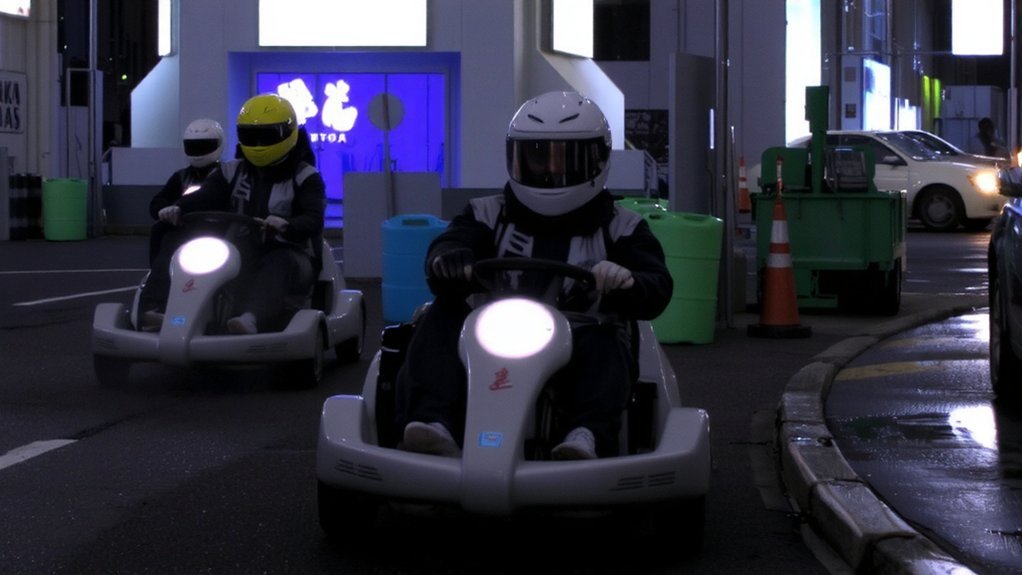
How do these tours actually run today? You book a time slot online, pick a route—Shibuya, Odaiba, or a night skyline—and show up twenty minutes early. Staff fit you with helmets, gloves, and a headset, then give a street-safety briefing, hand signals, spacing, and speed caps. A guide leads the convoy, another rides sweep, and you roll as a tight, colorful pack. Quick stops for photos, bathrooms, and water. Rain plan? They pause or reschedule.
The cost structure is simple: base fee per seat, optional insurance, costume rental, photo package, sometimes fuel and tolls included. Groups run four to ten karts, sixty to ninety minutes. You’ll navigate real city streets, soak neon and side-street scents—cultural immersion on wheels. Freedom, yes, with boundaries. And grins.
Licensing and International Permit Requirements
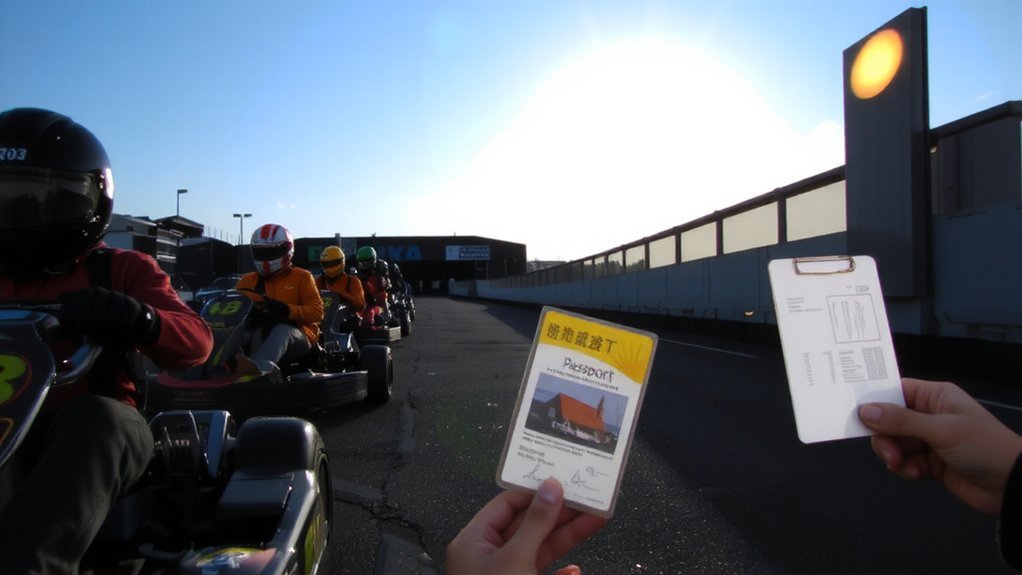
Before you book, you’ll need to gather your required license documents: your original, unexpired home-country driver’s license, an International Driving Permit under the 1949 Geneva Convention (not the 1968 one), and your passport—no photos or copies. Your IDP has to match a car license class, be issued within the last year, and stay valid for your trip; tourists can use it, but residents or long-stayers need a Japanese license or an official translation—no exceptions. Eligibility’s simple: you must be at least 18, hold a full license (no learners or provisional), meet the tour’s health and sobriety rules, and follow the guide’s instructions—yes, even when the kart looks like a toy.
Required License Documents
Even if the kart looks like a toy, Japan treats it like a car, so you’ll need real, road‑legal documents or you won’t drive. Bring your original, physical driver’s license, not a photo. If you have a Japanese license, you’re set. Visitors usually need their home license plus an International Driving Permit issued under the 1949 convention. Some licenses from countries not covered require a JAF Document Translation instead, paired with the original license. Carry your passport for ID checks, and your residence card if you live in Japan. Keep a Digital Backup: clear scans in cloud storage, and a spare photocopy in your day bag. Before the tour, email the operator to confirm their checklist. Save time, dodge hiccups, enjoy the road today.
International Permit Validity
You’ve got the right documents lined up; now make sure your International Driving Permit actually counts in Japan. Here’s the deal: Japan accepts IDPs issued under the 1949 Geneva Convention, not the 1968 Vienna version. So an AAA/CAA permit works; some others don’t. Expect validity disparities by country—drivers from France, Germany, Switzerland, Monaco, and Taiwan must carry an official Japanese translation instead, usually from JAF. Always carry your original license with the IDP, and check the issue date—the IDP is valid for one year from issuance. Before booking, confirm with the tour operator in writing, and screenshot their reply. Stuck or unsure? Call your embassy for Consular assistance, or ask JAF. Quick cross-checks now keep your freedom rolling later. No surprises at the curb.
Age and Eligibility
While the costumes are playful, the rules aren’t: to drive a street go‑kart in Tokyo, you must be at least 18 and hold a full, valid driver’s license that lets you drive a regular car in your home country—no learner’s permits, no motorcycle‑only licenses, no expired or suspended privileges.
Tours also require age verification, so bring your physical license and passport.
If your license isn’t in English, carry an International Driving Permit under the 1949 Geneva Convention, plus the original license.
From Switzerland, Germany, France, Monaco, or Taiwan? You’ll need an official Japanese translation instead.
Digital copies don’t fly; paper does.
Your name must match your passport, no nicknames.
Under 18 with parental consent? Sorry, not enough—the law controls the throttle.
Bring courage, documentation.
Insurance Coverage: What’s Included and What’s Not
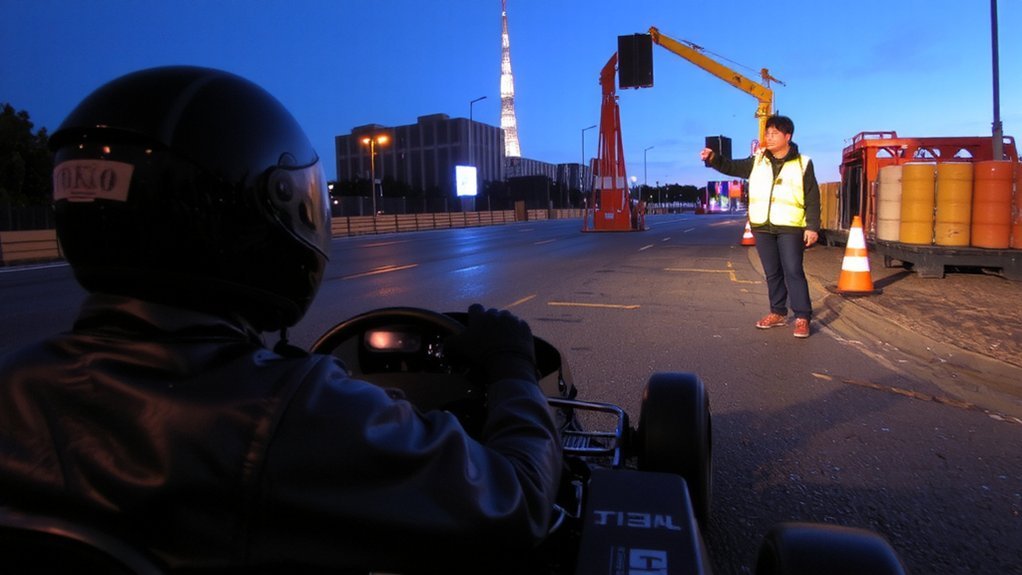
Most Tokyo go‑kart operators include basic third‑party liability coverage, but it’s narrower than you think. You’re covered if you accidentally nick another car or tap a fence, yet your own injuries or the kart’s damage often aren’t. Read the contract, check coverage limits, and spot policy exclusions before you rev off.
- What’s usually included: third‑party injury and property damage up to a set cap, sometimes a tiny medical stipend.
- What’s often excluded: your injuries, passenger injuries, weather events, reckless driving, alcohol, and license issues.
- What you can add: optional personal accident insurance, rental damage waivers, and a higher liability cap.
Call your travel insurer, ask if karting counts as motor sports. If not, upgrade. Keep receipts, snap policy pages, confirm deductible.
Vehicle Safety, Helmets, and Visibility Gear
Before you hit the starter, treat the kart like a tiny road car—because it is, just lower and louder. Do a 60‑second check: tires firm, lug nuts tight, steering smooth, throttle snaps back, brakes bite, seat belt locks, mirrors set, lights and horn alive. If something feels off, pause. Freedom loves working parts.
Wear a full‑face helmet that fits: brow low, strap snug, no wobble. Helmet maintenance matters—clean the visor, check the liner for cracks, swap it after any hit or five years. Add gloves, a light jacket, and closed shoes.
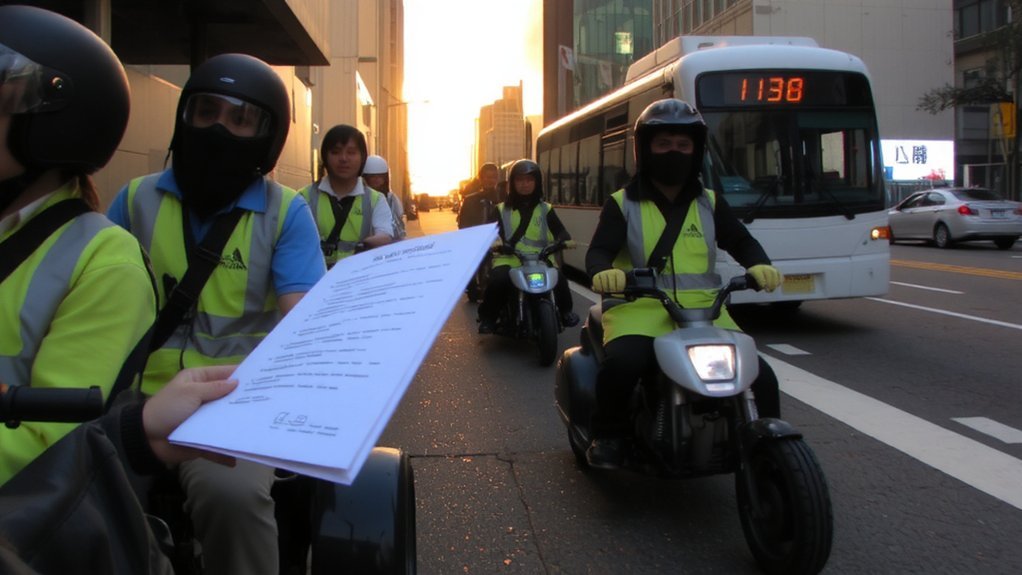
Be seen. Visibility upgrades help: hi‑vis vest, reflective ankle bands, helmet decals, bright gloves, even low‑draw LED edge lights approved by the operator. Quick test: step back, take a photo; do you pop?
Traffic Conditions, Routes, and Real-World Risks
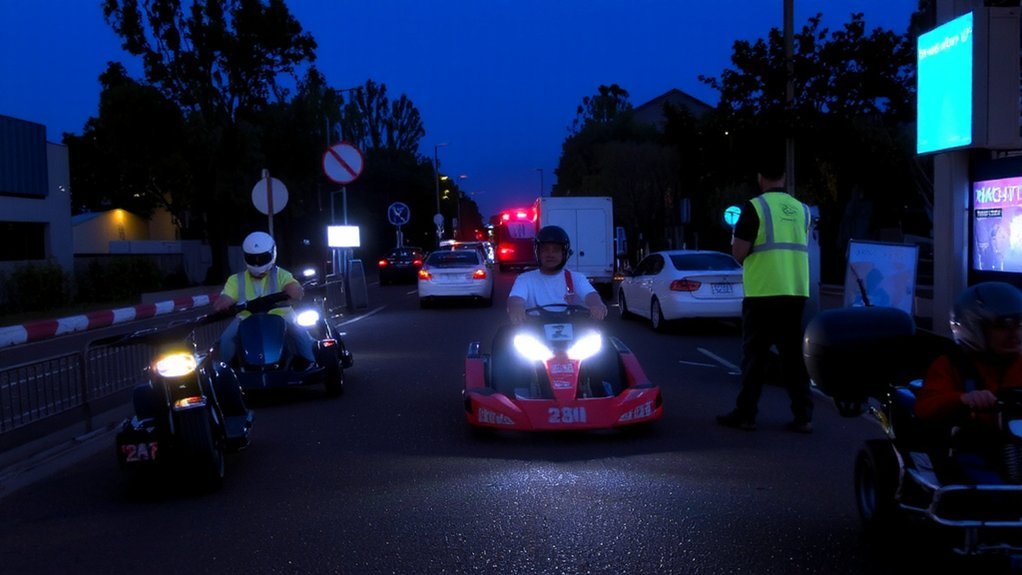
You’ll meet Tokyo’s urban traffic patterns head-on: left-side lanes, tight streets, buses and taxis jockeying, cyclists and delivery scooters slipping through gaps, and crosswalk waves that never seem to end. Pick smart routes—off-peak times, calmer side streets, wider lanes when possible, fewer bus corridors—and pre-check turns and choke points on a map or Street View, then stick to your guide’s staggered formation, no hero moves. Watch for the big three accident triggers: rushed turns at busy intersections, sudden taxi stops and doors, and slick paint or manholes in the rain—slow before intersections, keep a two‑second buffer (three in wet), don’t lane-split, and eyes up, always.
Urban Traffic Patterns
Often, Tokyo’s traffic pulses in waves—predictable, then suddenly not—so you plan your route like a pro and leave ego at the curb. You feel the city breathe: green bursts, red stacks, then a glide. Left-hand flow matters, and so do buses, taxis, and delivery scooters that appear like ninja side quests. Watch the intersection design; it funnels cars cleanly, then hides a pedestrian surge. Signal timing is tight, precise, and unforgiving if you daydream.
Here’s how the pattern looks when you’re low to the ground:
- Morning squeeze, brisk and with trucks owning the curb lanes.
- Midday looseness, faster gaps, plus tourists drifting at crossings.
- Dusk compression, always, with glare, reflections, and surprise lane changes.
Stay nimble, not noisy. Freedom loves attention.
Route Selection Strategies
Now that you can read the city’s pulse, pick routes that keep you visible, legal, and calm. Start with wide boulevards, steady limits, clear lane markings. Skip pinch points: flyovers, tunnel mouths, ferry ramps. Check live traffic and stadium events; Tokyo moves in bursts.
| Choice | Why |
|---|---|
| Broad arterials | Space to be seen, simpler merges |
| Riversides | Fewer driveways, calmer speeds |
| Backstreets with lights | Breaks in flow, clear right-of-way |
Link Scenic Viewpoints and safe Photography Stops, never forcing U-turns. Favor left turns at signed junctions, predictable and slow. Shadow bus corridors off-peak; skip rush. Shorten legs when rain’s coming, widen when skies open. At night, choose bright storefront streets, not neon canyons. Keep exit options five blocks, and a bailout station pinned. Freedom loves practical foresight.
Common Accident Scenarios
A few crash patterns repeat in Tokyo, and spotting them early keeps your tour smooth. You’ll share lanes with buses, taxis, and bikes, so expect tight merges and sudden stops. Watch blind corners near convenience stores; pedestrians step out fast. Night rain? Slick paint lines turn into tiny ice rinks.
- Lane squeezes: delivery trucks pinch space, you drift, a mirror taps. Hold your line, ease throttle, signal early.
- Photo distractions: friends pose, you glance, brake late. Delegate the shots, or stop safely, then flex.
- Clothing entanglement: loose capes, scarves, or shoelaces snag the axle. Tie, tuck, tape.
Intersections bite most. Scan wheels, not faces; wheels move first. Follow guides, but own your gaps. And breathe—steady, alert, playful. You’ve got this. Smooth.
Group Riding Etiquette and Guide Communication
Before wheels turn, lock in the basics: ride as one, speak as one. Your guide sets formation and signals; you mirror them, hold your lane, and keep safe gaps—two kart lengths, not a bumper kiss. Agree on Pace Agreements at the briefing: comfortable speed, catch-up spots, and what “slow” really means. Use clear hand signs, nods, and radio checks; confirm you heard directions. Missed a turn? Don’t dart. Maintain line, wait for safe regroup.
Photo Etiquette matters. No mid-lane selfies, no hands off the wheel, ever. The guide will call photo stops; park straight, engine idle, visors up, smiles on. Start clean, leave together. If a kart stalls, raise a hand, stay visible, let the guide handle it. Freedom loves discipline. On purpose, always.
Weather, Night Rides, and Seasonal Considerations
While Tokyo’s neon can make you feel invincible, weather and darkness change the game—so you adjust, on purpose. Night rides feel cinematic, but visibility drops, and road sheen hides hazards. You pace yourself, widen gaps, and let brake lights set the rhythm. In rain, throttle gently, avoid painted lines, and treat puddles like question marks. Winter? Wear clothing layers, glove up, and watch for black ice near bridges. Summer heat? Hydrate, and cool down at stops.
- Summer sunsets: long light, warm air, but oily asphalt after showers—ease in for the first minutes.
- Autumn nights: crisp views, faster fatigue; stretch at lights, keep fingertips warm.
- Rain or wind: expect event cancellations; if you roll anyway, shorten the route, and keep speeds humble.
Pre-Booking Checklist and Red Flags
How do you know a tour’s legit before you pay? Start with basics: business address, phone, real names, and recent photos of karts with license plates. Cross-check reviews across Google, TripAdvisor, and Japanese sites, looking for specifics about safety briefings and guide conduct.
Ask direct questions. Helmet type, insurance coverage, route rules, rain plan, passenger limits. Note vendor responsiveness—clear, fast replies are good; vague answers, delays, or pressure tactics are red flags.
Read the cancellation policy like a lawyer. Fair terms allow weather pivots and emergencies without gotcha fees. Demands for cash-only, wire transfers, or passports at booking? Hard no. Require international licenses? Good. No mention of traffic laws, radio comms, or reflective gear? Walk. Bonus green flag: pre-ride waiver and liability explanation included.
Conclusion
You can enjoy Tokyo’s kart tours—and get home with great photos, not a horror story. Pick a reputable operator, bring the right license or IDP, confirm insurance, arrive early, gear up—helmet, gloves, high-vis—and ride the staggered formation. Watch slick paint, taxis, scooters. Rain plan? Ask. Night route? Ask. If answers are vague or cash-only, walk. This isn’t Rainbow Road; it’s real traffic. Follow the guide, leave space, stop for pics, and you’ll roll safely, smiling.