
Tokyo can be… a bit of a handful. You’ve got packed trains, ticket machines that blink at you, and a ramen stall you can smell but can’t quite find. A private guide cuts the zigzag: they handle routes, reserve lunch, explain shrine etiquette, steer you past the worst lines at Senso-ji, and swap plans when it rains. It costs more, sure, but here’s when that extra yen pays for itself—and how to spot the right guide.
Key Takeaways
- Save time with crowd-dodging routes and seamless navigation through stations, transfers, and busy sights.
- Enjoy flexible schedules that pivot with weather, interests, and on-the-fly detours.
- Get cultural decoding and etiquette coaching, plus real-time translation and ordering support.
- Split costs across your group for strong value; confirm transparent inclusions and platform protections.
- Build a made-for-you itinerary—food, history, or pop culture—hitting icons and hidden gems efficiently.
The Case for Going Private: Time, Flexibility, and Depth
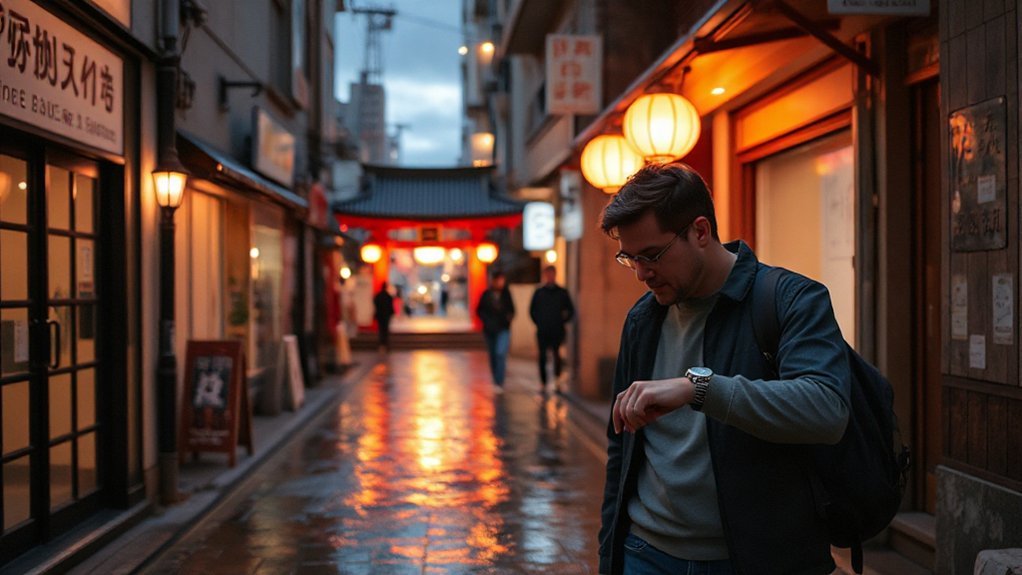
Because Tokyo moves fast and doesn’t slow down for lost visitors, going private buys you time, calm, and a bit of local magic. A good guide threads you through stations and side streets, knows which shrine gate is quiet at 9 a.m., and which ramen shop takes names, so you spend your day moving, not guessing. That’s Time Optimization in plain clothes.
You also get Schedule Freedom. Want a photo stop in Golden Gai, then a detour for melon pan, then a peek at a pocket garden you’d never spot alone? Say it, and you’re there. When rain hits, you pivot indoors; when the sun pops, you chase views. Your guide handles signs, trains, transfers, and reservations, so your energy goes to seeing.
Depth is the real treat. You learn chopstick etiquette at lunch, decode a shrine ritual by dusk, and slip into backstreet neighborhoods that still whisper.
What It Costs and When It Pays Off
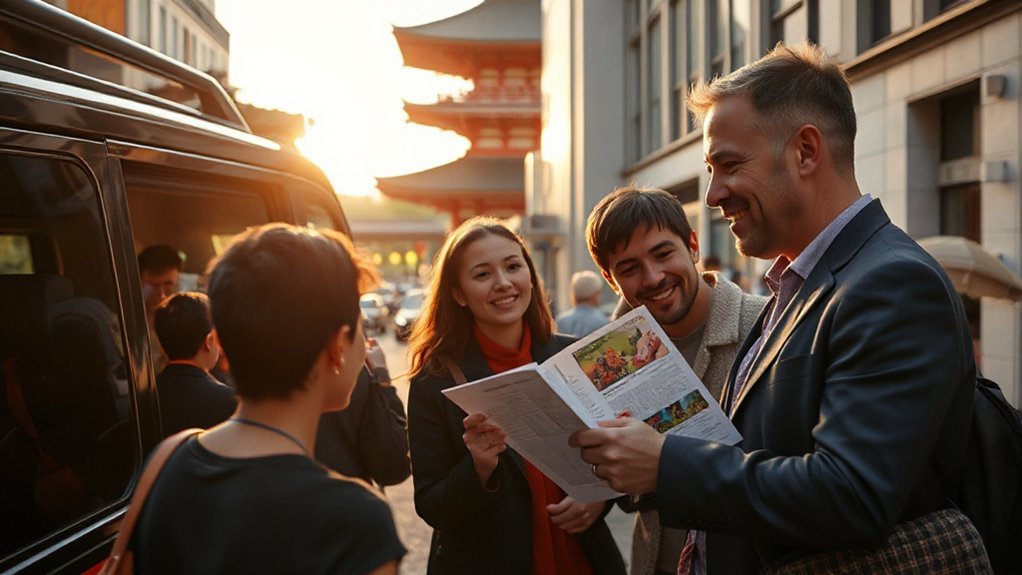
How much does going private actually cost, and when is it worth it? Typical guide rates in Japan run about $35–$45 for the whole group, so the math starts in your favor, and Group Economics kick in fast once you’re three or more. Marketplace tours run roughly $240 for a half day and $364–$475+ for a full day; a 4‑hour Tokyo Must‑Sees sits near $241. Split that four ways and you’re paying about what a group bus tour costs, you’re not waiting on strangers.
It pays off most on short or first-time visits. A good guide strings sights in a line, dodges crowds, and trims transit time, so you see more in fewer hours. Families and crews often find it cheaper than buying several individual seats. Vetting matters, though—check reviews, ratings, and reputation. Weak fit, weak value. Offseason Savings help too; calendars mean better rates and breathing room.
Crafting a Made-for-You Tokyo Itinerary
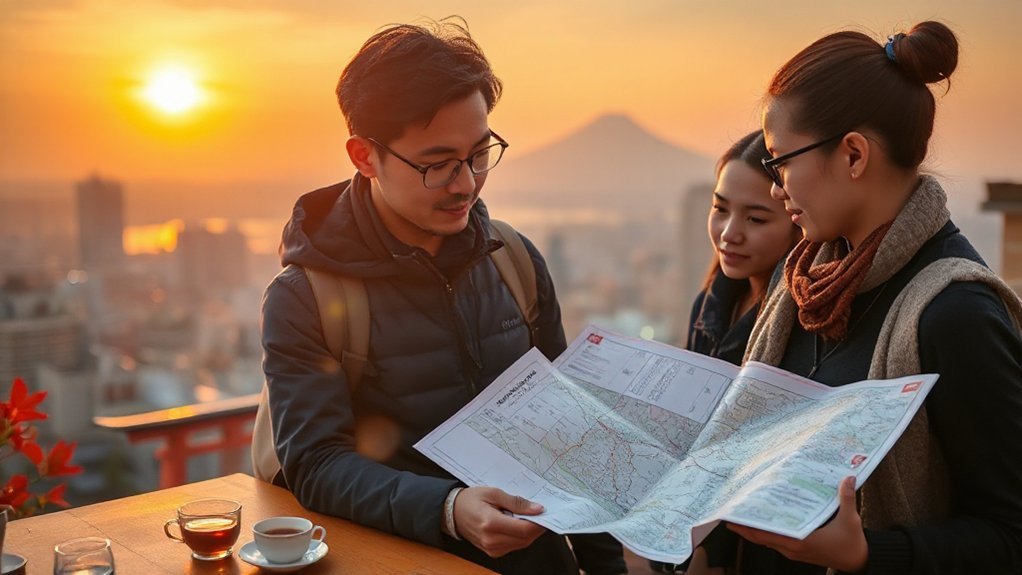
Now that the math makes sense, let’s put it to work and shape a day that fits you like a well-worn sneaker. Start by telling your private guide what you love and how fast you like to move, since most tours flex from a 3‑hour Hidden Gems walk to a 6–8 hour day. Block the map by neighborhoods: 2–3 hours for Asakusa and Senso‑ji, 2–3 for Shibuya and Harajuku, and 1–2 for Ginza, with a detour to Yanaka Ginza.
Pick one theme—food, history, architecture, or pop‑culture—so your guide can slot in market tastings, shrine rituals, or off‑beat photo stops. Fold in Seasonal considerations and Accessibility planning, like shade and elevators, rainy backups, and sensible breaks. For multi‑day plans, a guided hop to Nikko, Hakone, Kamakura, or Kawagoe saves guesswork and transit drag. Confirm costs early: some guides list $35–$45 per group, while full‑day tours run about $240–$626 total.
Iconic Highlights With Local Context
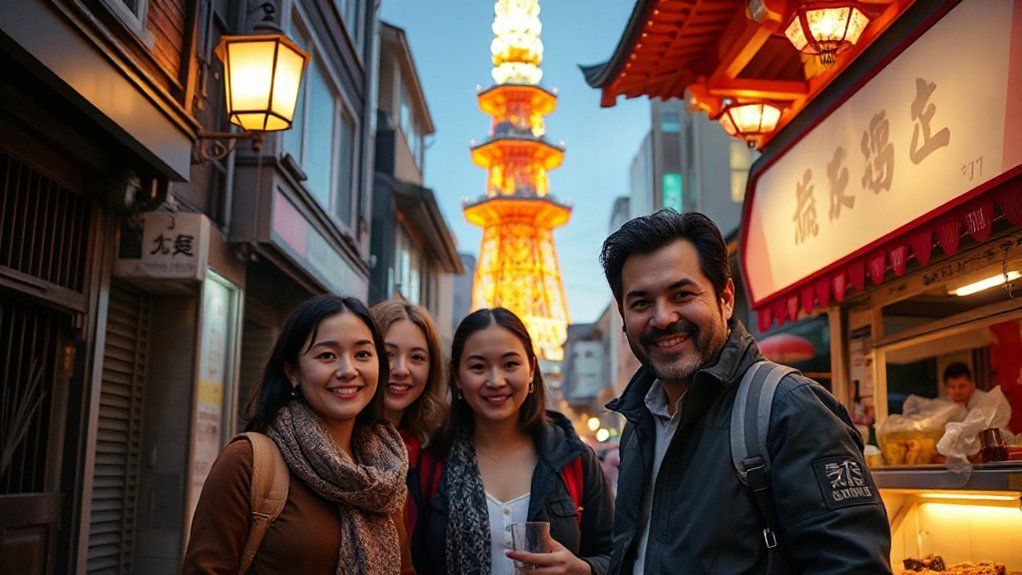
You hit Shibuya Crossing with a guide who tells you it’s a post‑war rebuild symbol, then points you to the ledge by the station for a clean shot and the few minutes after the big green light when the crush eases, which beats guessing and getting only elbows. In Asakusa, you pass under Kaminarimon, hear how Senso-ji began in the Edo days, wash your hands the right way at the basin, and slip into Nakamise-dori for a hot senbei from the stall that’s older than your map. At Meiji Shrine, your guide shows temizu step by step, shares simple offering manners, and ties the calm woods to modern nationalism and the imperial story, then tucks you into nearby quiet corners so the big stuff feels human, not homework.
Shibuya Through Local Lens
Even if you’ve seen it in a hundred videos, Shibuya hits different in person, and a local guide helps you thread the needle between the wow and the why. They read the Commuter Flow like a tide chart, timing the Tsutaya/Starbucks second-floor window or a nearby overpass for the Scramble Crossing, then easing you out before the crush. At Hachiko, they share the loyalty tale and a couple of everyday manners, no lecture, just real talk.
Down Center Gai and into Nonbei Yokocho, they point out tiny izakaya, late-night stalls, and back lanes humming with Underground Music and indie boutiques. For about $35–$45 per group, you get sly detours to hidden courtyards and clean photo angles, plus crowd-dodging routes that skip peak evening tangles.
Asakusa History Explained
A good Asakusa walk starts at the Kaminarimon, that big red “Thunder Gate” with the lantern you’ve seen in a thousand postcards, because it still does what it did in Edo times—pulls folks in and sets the tone. You roll through Nakamise-dori, past rice crackers and fans, and land at Sensō-ji, Tokyo’s oldest temple, standing since 628. A private guide threads the past for you—Edo Entertainment streets, river trade on the Sumida, and the quiet grit of Earthquake Reconstruction after 1923 and wartime fire. You see how the lanes stayed put even when buildings didn’t, and why boats still matter for easy hops to spots like Yanaka Ginza.
| Spot | What to notice |
|---|---|
| Kaminarimon | Lantern, guardians |
| Nakamise-dori | Senbei, fans |
| Sensō-ji | Incense, omikuji |
| Sumida dock | Boats, routes |
Meiji Shrine Cultural Insights
While Harajuku blares pop from shopfronts, the path into Meiji Shrine drops the volume fast, and the gravel crunch and cedar smell do most of the talking. Your guide steers you through the first giant torii toward a 70-hectare man-made forest, planted from some 100,000 donated trees, a quiet lesson in forest symbolism and patience. At the stone chozuya, you learn temizu, ladle in hand, rinse left, right, mouth, and handle, simple and steady. Past barrels of colorful sake offerings and Burgundy wine casks, you reach a shrine dedicated to Emperor Meiji and Empress Shoken, built in 1920, rebuilt after the war. Ceremonies hum here, with Shinto weddings most weekends, and on hatsumode millions shuffle in, polite, layered, purposeful. You feel Tokyo breathe out.
Hidden Gems, Food Finds, and Neighborhood Nooks
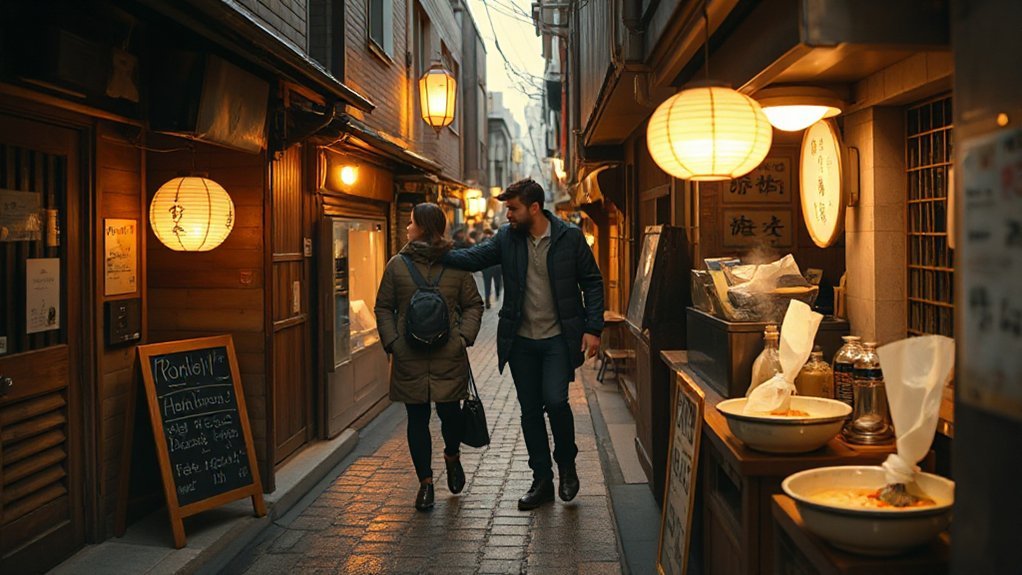
Finding Tokyo’s best-kept corners gets easier when you’ve got a savvy local walking beside you, someone who’ll steer you off the main drag and into Yanaka Ginza’s old Edo streets, past Nezu Shrine’s quiet gates, and into courtyards you’d swear were hiding on purpose. You slip through Hidden Courtyards, spot stone foxes, and pause for steam curling from a sweet-potato stand, then duck into Indie Cafés where the toast is thick and the playlists are thicker. It’s a slow loop, with photo nooks, shop cats, and short stories in every alley.
On a Hidden Gems — 3 hours, rated 5.0, stroll, your guide threads you into depachika counters for pickled plums, then a standing sushi bar that hums at lunch. In Shimokitazawa or Koenji they slip you into a tiny izakaya, explain ordering, and decode menus at Toyosu and morning markets, plus Kappabashi tools for tomorrow’s kitchen wins.
Family, Foodies, and History Buffs: Tailored Tour Types
How do you want to see Tokyo—hands sticky with taiyaki, kids grinning at teamLab lights, or tracing old stone under cedar shade? With a private guide, you pick the lane. Families do best with 3–4 slow-and-fun hours, hitting Shibuya Scramble, Senso-ji in Asakusa, and one big interactive stop, maybe teamLab or Toyosu Market, around $241 for a half day, plus playful Museum scavenger hunts that keep little legs moving. Foodies can book tight 3‑hour sushi tastings—5.0 from 59 reviews—or stretch into a 7‑hour Tokyo Foodie day near $626, with market strolls, izakaya hops, and the kind of Chef encounters where you learn why the rice is warm. History buffs get Edo and Meiji in focus: Meiji Jingu, Imperial Palace East Gardens, Fukagawa Edo Museum, and Yanaka Ginza lanes where laundry flaps. Guide rates run $35–$45 per group, and day trips to Kamakura, Hakone, or Nikko deepen the story.
Language Help, Etiquette Tips, and Seamless Logistics
After you pick your lane—family fun, food trails, or old Tokyo stones—the next thing that makes the day feel easy is a guide who speaks for you and steers the small stuff. They read the kanji on a lunch menu, ask for the set you really want, and sweet-talk a ticket machine so it spits the right fare instead of a mystery stub. You’ll pick up a few Emergency Phrases, and a couple of Payment Hacks for when a spot is cash-only or the IC card needs a quick reload.
Your guide translates more than words, they decode tone—how deep to bow at a shrine, when to add a “sumimasen,” and when silence is the polite choice. At a Shinto basin they show you the rinse-and-swirl, at tea they cue your pace, and in an izakaya they order without fuss. Routes tight, crowds dodged, entries timed, rides ready.
How to Choose a Trustworthy Guide and Platform
Start on reputable platforms like GoWithGuide and ToursByLocals, check the guide’s ratings and review count (think Akira N. 4.95/5 from 390 or Kahoko K. 4.96/5 from 389), read the profile for language skills, licenses, and years on the ground, and message them to confirm they fit your interests. Make the money plain: typical private rates run about $35–$45 per guide for groups, so ask what’s included, what transport and entrance fees you’ll cover, and how the cancellation policy works, no mystery fees hiding in the weeds. Choose platforms that show verified reviews, guide videos, availability, and clear payment rules, and ask for a sample itinerary, an off-the-beaten-path idea, and a recent guest highlight—good guides answer quick, and good platforms back you up when plans wobble.
Verify Credentials and Licenses
Why hand your day in Tokyo to a stranger without checking their papers first? Start with a quick License lookup and dodge Credential fraud before it bites. On reputable hubs like GoWithGuide and ToursByLocals, favor profiles that plainly say “licensed guide” or “national guide-interpreter.” You’ll see solid examples in folks like Akira N. and Kahoko K., who list credentials and experience. Don’t stop at stars; pair rating with review volume, because 4.95/5 from 390 reviews tells a sturdier story than a lonely 5.0. Watch the guide’s intro video and check their calendar so you know they’re real and active today, not idle. Before you book, message them: ask for a license number, years guiding, languages, and whether they’re insured or registered with local authorities.
Transparent Pricing and Inclusions
While Tokyo can feel pricey, a straight-dealing guide makes costs simple: expect roughly US$35–$45 for the guide’s time (per guide, not per person), but know that some full-day listings on places like ToursByLocals jump to several hundred dollars when a car/van, tickets, or meals are baked in, which is fine if you actually want those things. Ask for Itemized breakdowns in plain sight and Currency transparency, so you see yen and dollars side by side and no sneaky add-ons. Verify what the quote covers, in writing, and what it doesn’t.
- Compare profiles on GoWithGuide and ToursByLocals, check ratings and review counts, and scan comments for surprises.
- Message the guide, confirm transport, entrances, meals, and car/van fees.
- Request sample itinerary and one-page inclusions/exclusions list now.
Reliable Platform Protections
Before you hand over a yen, pick a platform that shows its work, not just pretty photos and a “book now” button. You want verified guide profiles with languages, licenses, and a quick intro video, like GoWithGuide pages that list availability and service cost, so you’re not guessing.
Start with ratings that have depth: Akira N. at 4.95/5 from 390 reviews or Kahoko K. at 4.96/5 from 389 tell you quality isn’t a lottery. Message guides before booking to confirm the route, what’s included, and local add‑ons.
Check the boring stuff too: cancellation, refunds, payment security, Dispute Resolution, and Data Privacy. Many basics run about US$35–$45 per guide. Favor platforms with clear support, calendars, and real reviews—ToursByLocals, GoWithGuide, and Viator/Klook, for smooth after-booking help.
Frequently Asked Questions
Are Private Tours Wheelchair-Accessible and Stroller-Friendly?
Yes, many private tours are wheelchair-accessible and stroller-friendly, but you’ll want to confirm ramps, venue accessibility, and restroom availability. Ask about curb-free routes and elevator access. Request pacing, pickup, and assistance to guarantee smooth experiences.
Can I Bring My Pet on a Private Tour?
Yes—since 67% of pet owners travel annually, many private tours let you bring pets, provided you confirm carrier requirements, leash rules, and pet etiquette with your guide. You’ll verify policies, size limits, and cleanup expectations.
Is Travel Insurance Required or Recommended for Private Tours?
It’s not required, but it’s strongly recommended. You protect deposits, cancellations, delays, and medical costs. Compare coverage options, confirm pre-existing condition rules, adventure limits, and insolvency coverage. Understand documentation needs and claim process for reimbursements.
Can Tours Accommodate Professional Photography or Videography Needs?
Plan shots, secure permits, coordinate access—yes, tours can accommodate professional photography and videography. You’ll get permit assistance, guidance on drone policies, location scouting, crowd control, golden-hour timing, logistics. Share gear lists; they’ll tailor support precisely.
Do Tours Operate During Typhoons or Extreme Weather?
No, tours don’t operate during typhoons or extreme weather; operators prioritize safety and contact you to postpone. You’ll review Cancellation Policy, reschedule when conditions improve, or accept Alternate Itineraries like indoor experiences or shortened routes.