
Imagine this: you slip into a Mario cap, sit low in a street‑legal kart, and roll from Shinjuku toward Shibuya Scramble as neon skims your visor and a guide blocks traffic like it’s their day job. You’ve got a quick safety briefing, a no‑phone rule, and your license checked, then a 90‑minute loop hits Harajuku and Kabukicho with photo stops that actually look good. Want the smooth version, with zero gotchas before you buckle in?
Key Takeaways
- 90-minute guided loop from Shinjuku through Harajuku, Omotesando, Takeshita Street, Shibuya Crossing, and Kabukicho, with neon-enhanced night runs and staged photo stops.
- Street-legal single-seat karts with provided costumes; small packs led by guides and blocking cars; free pro photos and narration included.
- Drivers must be 18+ with a Japanese license, 1949-IDP, or SOFA; some countries need license plus official Japanese translation; originals and passports required.
- Prices around JPY25,000; starts 10:00, 13:00, 16:00, 19:00; book online or phone; arrive 10–15 minutes early; pay by card or yen cash.
- Safety briefing; solid shoes required; no phone use; standard insurance with JPY50,000 deductible; free cancel >24h; light rain runs, severe weather cancels.
Why the Shinjuku Street Kart Experience Stands Out
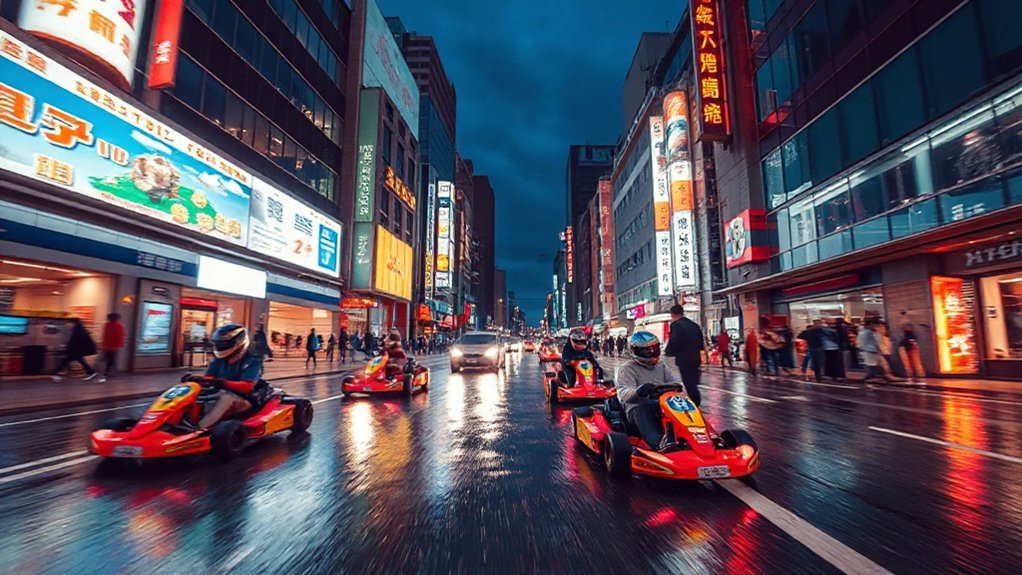
Even if you’ve seen Tokyo from a bus or a sidewalk, this Shinjuku street‑kart run hits different, because you’re low to the road and rolling a 90‑minute loop that stitches Harajuku, Shibuya, and Kabukicho into one quick, high‑energy reel. You slip into a clean costume, hop in a Japan‑built street‑legal kart, and feel the city slide past at eye level, shop signs and ramen steam right there. Small groups, usually five or six karts, tuck in behind a lead with blocking cars, so you get close to the action without playing hero. The guide charisma matters here, and these folks know where to pause, where the light hits, and when to nudge you forward. They stage pro photo stops that crank the Instagram appeal, not cheesy, just sharp. Night runs add neon and reflections, like wet paint. Multilingual briefings keep it simple, and basic insurance keeps surprises small.
License, Age, and Documents You Must Bring
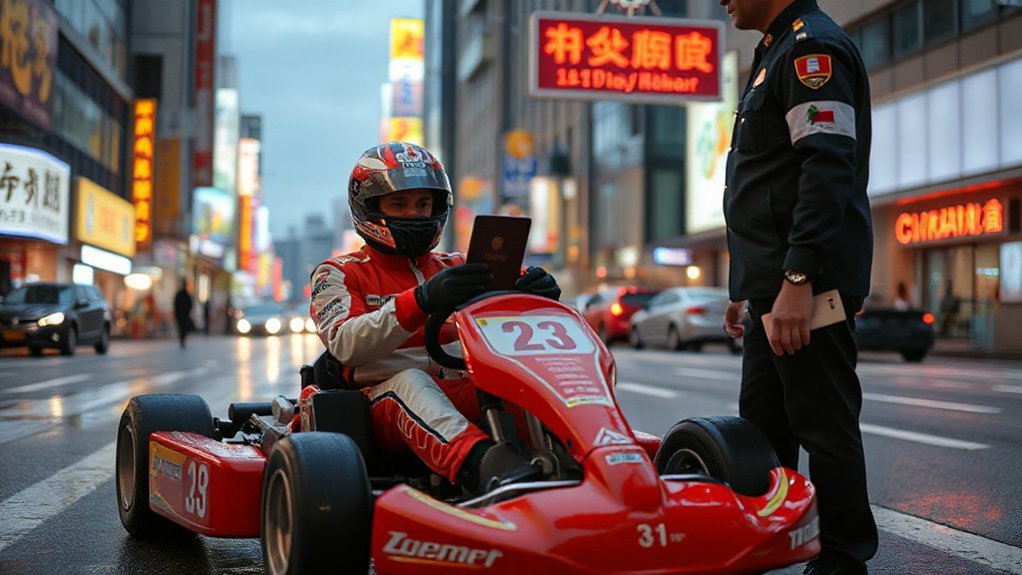
Before you zip into that costume and line up behind the lead kart, you’ve gotta pass the paperwork gate, because the city’s fun but the rules are firm. You must be 18 or older, no wiggle room. Bring a real driving credential: a Japanese license, an International Driving Permit under the 1949 Geneva Convention, or a SOFA military license. International Permits must be issued in your home country, not in Japan, and you’ve gotta show the original, plus your passport and your reservation at check‑in.
There are Country Exceptions, too. If you’re from Switzerland, Germany, France, Belgium, Monaco, or Taiwan, you can drive with your home license as long as you add an official Japanese translation and carry your passport. Show up ten to fifteen minutes early, because staff inspect documents on arrival. No license means no drive and no refund, and missing originals forfeit your spot, period.
Routes and Highlights: Shinjuku, Harajuku, and Shibuya Crossing
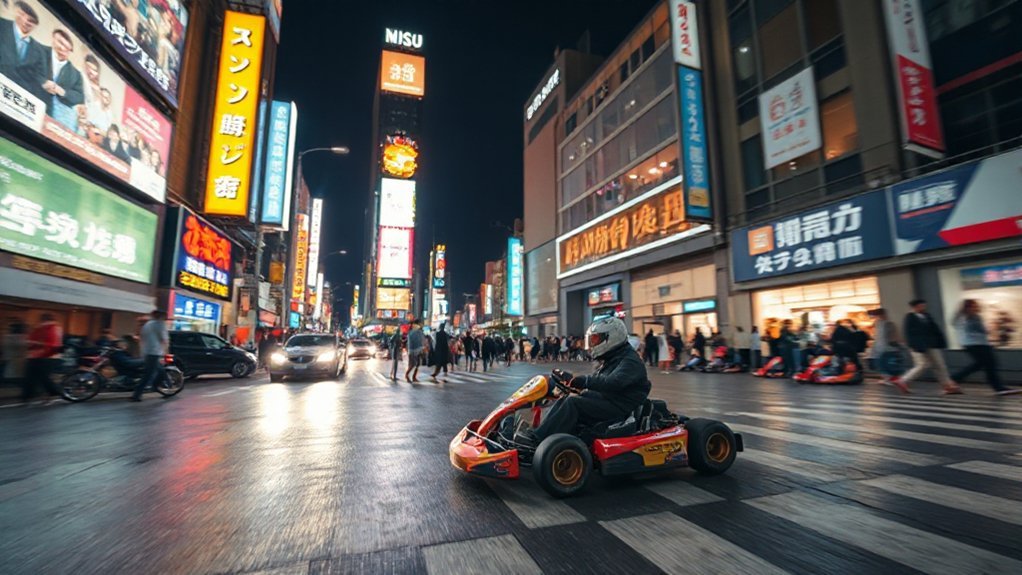
The throttle clicks and you roll out of Shinjuku on a 90‑minute guided loop that threads Harajuku, Shibuya’s famous scramble, and the neon bite of Kabukicho. You hug tidy lanes past station canyons, and your guide keeps the pack tight, talking you through hand signals and simple turns. In Harajuku you drift by Takeshita Street and down toward Omotesando, where street fashion pops like candy, and the evening ambiance makes chrome shine. You’ll park in a safe pull‑off, pose by the karts, and snag costume‑friendly shots that look like you walked out of an anime, minus the plot holes. Shibuya Scramble Crossing rolls up big, sometimes with 3,000 people flowing at peak, so the guide lines your karts just right for a bold, tidy photo. Back in Kabukicho, the signs buzz, and you feel the city breathe. Multilingual guides snap free digital images, then wave you home smiling.
Tour Options, Durations, and Prices
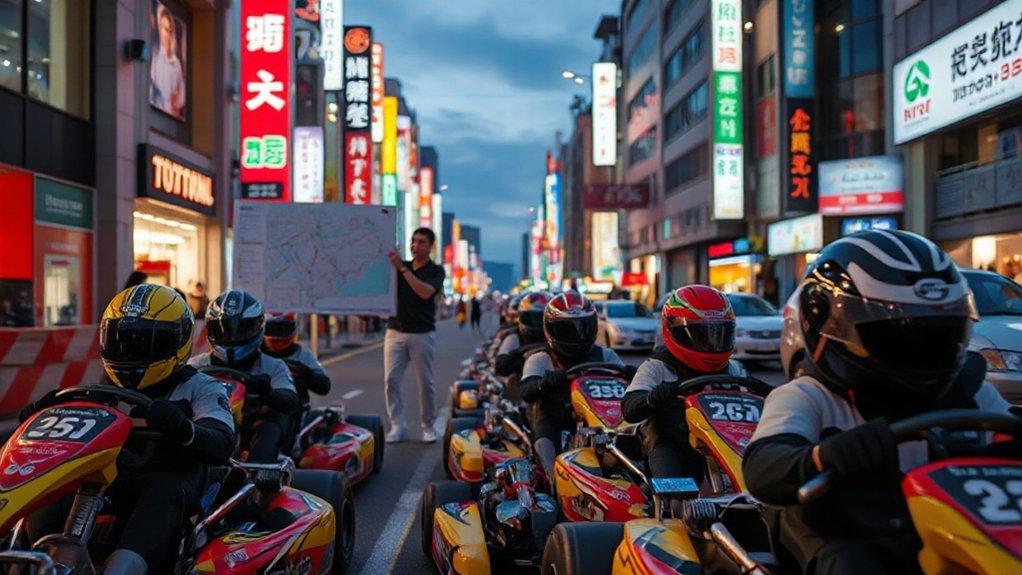
While you’ll spot a handful of choices on the calendar, the Shinjuku run keeps it simple: a 90‑minute loop through Harajuku, Shibuya, and Kabukicho, with daily start times around 10:00, 13:00, 16:00, and 19:00 so you can chase daylight or neon as you like. Baseline price sits near JPY25,000 per person, which is the regular tag you’ll see for city loops like this. Watch the calendar: early‑bird, “Review,” and flash‑sale slots pop up, and I’ve seen them slide to JPY22,000, JPY15,000, even JPY7,500 when they’re clearing seats.
Even within one day, peak pricing nudges brighter hours, while late runs and midweek dip. Pick a time, then check boxes: add full‑coverage insurance if you want the extra cushion, but it bumps the total. Bring friends and you may catch group discounts; four seats booked together tend to reveal nicer numbers. Book early, then keep reloading—Tokyo rewards the patient clicker.
Safety Briefing, Gear, and Vehicle Features
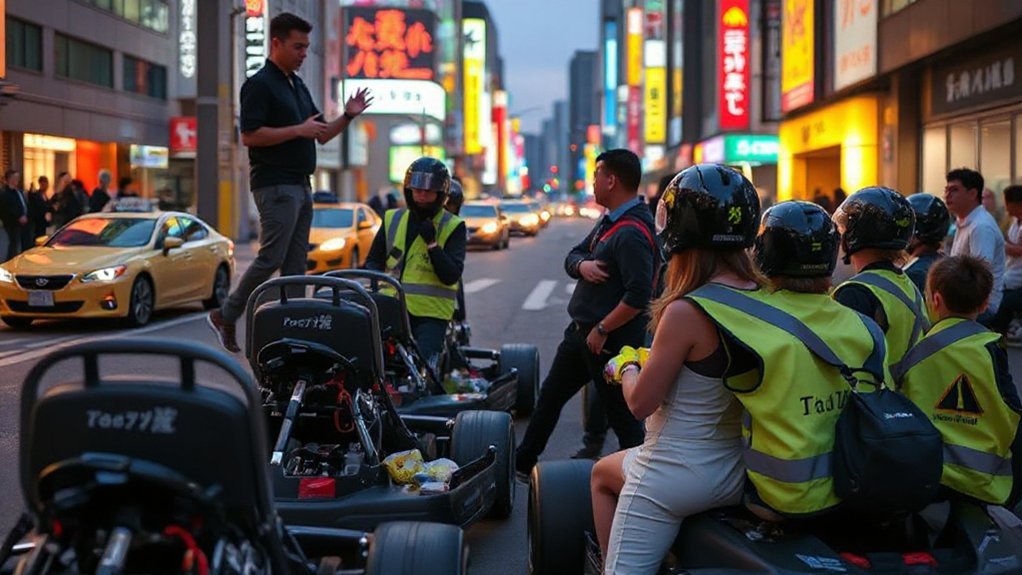
Showing up 10–15 minutes early pays off, since staff will check your license and passport, then walk you through a short, straight-talking safety briefing on driving procedures and Tokyo traffic rules. They cover hand signals, lane choice, what to do at lights, and you’ll meet the lead guide car and the front and back cars that block and steady traffic so the line sticks together.
You slide into a single-seat, street‑legal kart with a big F1‑style shell, and you’ll notice the strengthened springs and careful spring damping that keep chatter down over seams and manholes. Night runs use small lanterns mounted behind the seats, so lantern visibility stays high without blinding anyone. Phones stay tucked away by law, but hands‑free action cams are fine, and they’ll clip a GoPro mount to your chest. Standard insurance is included; damage carries a 50,000 JPY deductible unless you add full coverage.
How to Book, Check In, and What to Expect on the Day
You book online or by Messenger/LINE/phone, confirm the email, and bring your passport plus a valid license (JP license, 1949 IDP, SOFA, or license with an official Japanese translation), because staff check the originals and no license means no go and no refund. On the day, roll in 10–15 minutes early, show your papers, get a wristband, fill a quick form, stash your stuff in a locker (they may hold your ID), pick a costume, and hear a clear safety and route talk that lets you know where the scuff marks came from. You’ll drive a single-seat street kart, not a taxi, so no passengers and no phones in hand, wear solid shoes and sane clothes, and if you want no JPY50,000 damage deductible you add full coverage at booking or at the shop, and cancellations over 24 hours get a full refund while inside 24 hours don’t.
Booking & Requirements
How do you lock in a Shinjuku go‑kart run without any hiccups? Book your 90‑minute slot online or by phone, keep your confirmation. Ask about Group Discounts, and check Accessibility Options so everyone’s set. You must be 18+ and carry a valid driving document: a Japanese license, a 1949‑Convention IDP, a SOFA license, or an original license with official Japanese translation where allowed. Pay by major credit card or yen cash. You can add full‑coverage insurance at the shop to skip the usual JPY50,000 deductible. Cancel more than 24 hours ahead for a full refund; inside 24 hours, no refund. Costumes are included, just not Nintendo‑themed—save Mario for the arcade. No surprises.
| Do | Show | Result |
|---|---|---|
| Reserve | Confirmation | Spot |
| Eligibility | License | Go |
| Pay/Insure | Card/yen | Coverage |
Check-In & Day-Of
On the day, roll in 15 minutes early and head straight to the Shinjuku shop desk with three things in hand: your reservation confirmation, your passport, and the license that lets you drive here (valid Japanese license, 1949 IDP, SOFA license, or an EU license with an official Japanese translation where that’s allowed). Scan the arrival checklist, get a wristband, fill a form, and stash bags in lockers with your ID; pick a costume if you like. Restroom access is inside; use it. A staffer checks your license and age 18+, covers safety, no‑smartphone rule, and route.
- Docs check, locker tag.
- Attire: no heels, sandals, or long skirts.
- Insurance: standard JPY50,000 deductible or add full coverage; pay by card or yen.
Weather, Cancellations, and Rescheduling Policies
When the sky looks iffy or plans shift, the tour plays by clear rules so you know where you stand. Here’s how the Refund timelines work: cancel up to 24 hours before your 90‑minute Shinjuku spin and you get all your money back, cancel inside 24 hours and it’s non‑refundable, no sugarcoating it. Late or a no‑show? That’s usually treated like a same‑day cancel. Light rain doesn’t stop the carts, so pack a jacket, but if the company calls it for nasty weather, they’ll cancel, give a full refund, and usually slot you into a later run if there’s space. Check your own insurance coverage for travel hiccups, because storms don’t argue.
Need to tweak the date, time, course, or driver count? Ask early; within six days (JST) it’s tighter and depends on slots. Mechanical issues or full capacity may bump you to another time. Arrive 10–15 early.
Frequently Asked Questions
What Is the Maximum Group Size Allowed on a Tour?
The maximum group size allowed on a tour depends on current safety limits; most operators cap group capacity at 6–10 karts. You should confirm your date; they’ll split larger parties into staggered departures if needed.
Are Lockers Available for Storing Bags and Valuables?
Yes, you’ll find limited lockers on-site; arrive early to secure one. Staff advise carrying essentials only. For storage security, use provided locks, keep valuables minimal, and photograph contents. Confirm locker availability and size when booking.
Are Restroom Breaks Scheduled During the Tour Route?
Yes—on average, drivers take a 10-minute break per hour—there are scheduled stops with restroom access. You’ll pause at points and stretch. If you need an extra stop, tell your guide; they’ll adjust when safe.
Is Tipping the Guides Customary or Expected in Japan?
You don’t need to tip in Japan; it’s neither customary nor expected. Follow local Tipping etiquette: offer sincere thanks, a positive review, or hand a small souvenir. Consider Gift alternatives like snacks or treats instead.
Is There Nearby Parking at the Meeting Point?
Yes, you’ll find nearby parking—like safe harbors welcoming anchors. Use paid garages within a short walk; street parking is scarce, time-limited, and policed. Arrive early, check height limits, and validate if available to reduce costs.