
Like a neon-lit treasure map, Tokyo’s alleys point you to slurpy ramen in yokocho, where you season with tare, add nori, then ask for kaedama like a pro. You’ll squeeze into a standing sushi bar, chase crisp tempura with tentsuyu dips, and track yakitori smoke by scent. Then monjayaki in Tsukishima, hand-cut soba, warm taiyaki, soft mochi, and depachika gems. Ready for the route—and the rules that locals swear by?
Ramen in Hidden Yokocho Alleys
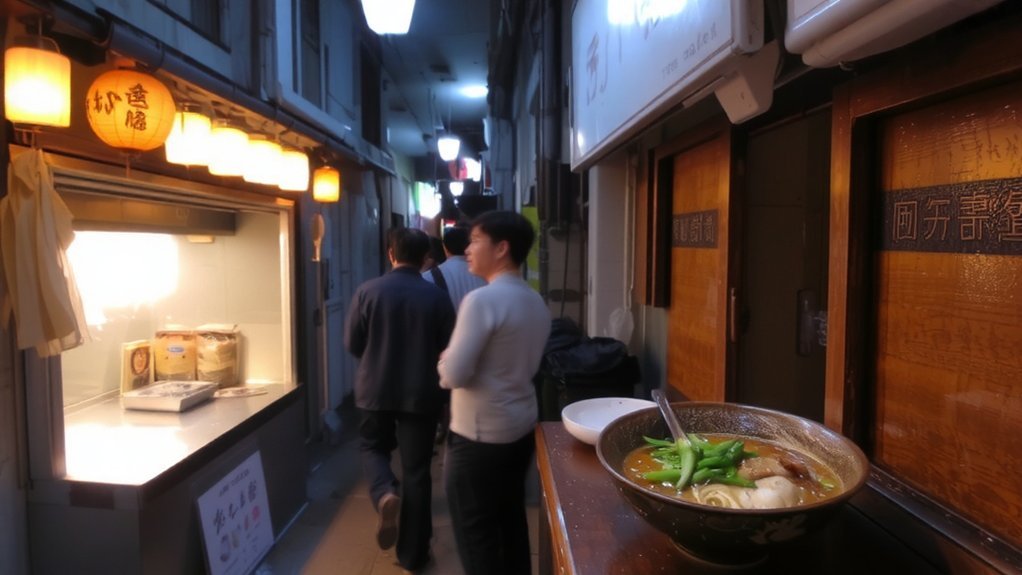
Lanterns glow, steam swirls, and you duck into a yokocho—those narrow back-alley lanes where ramen hides in plain sight. You chase the alley atmosphere, follow your nose, and pick the counter with locals slurping. Order by ticket machine: shoyu if you want balance, tonkotsu for richness, miso when you need warmth. Add ajitama, extra negi, maybe menma. Slide onto a stool, stash your bag under the counter, and watch the cook pull springy noodles, then pour broth into steaming bowls. Sip first, season second—taste before shaking in pepper, chili oil, or garlic. Crave heat? Ask for kara oil. Want lighter? Go kaedama later, not now. Pay, nod thanks, slip back into night. No lines, no rules—just you and freedom in a bowl. Pure joy.
Standing Sushi Bars
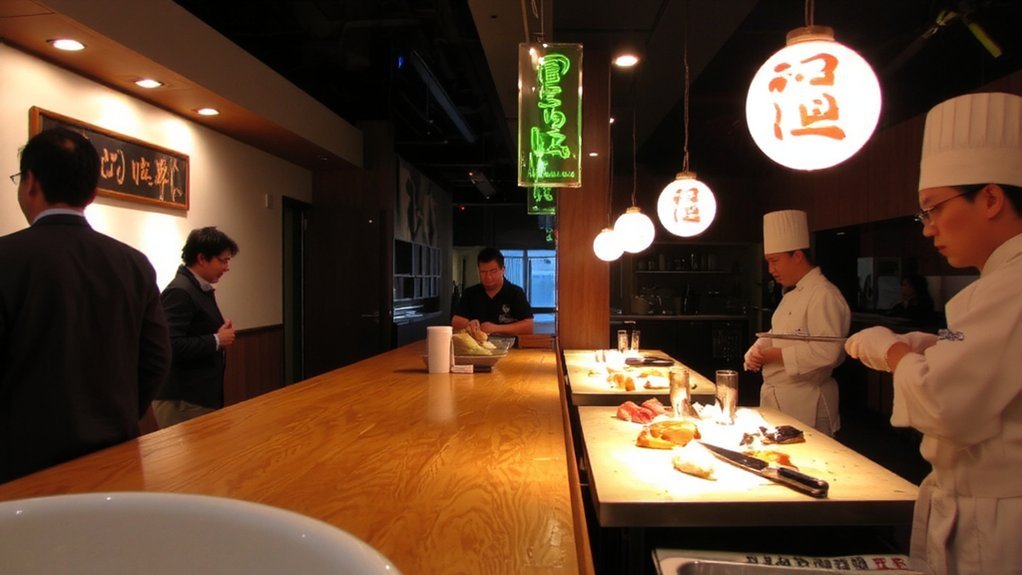
You step up to a no-frills standing sushi bar—no stools, no fuss—and the chef meets your eye like a starter pistol: it’s fast, focused, delicious. Point, order by the piece, and watch fresh nigiri appear in seconds—start with lean tuna, then seasonal kohada, maybe anago—eat as it lands, pay, you’re back on the street in 10–15 minutes. Best part, you get a budget-friendly Edomae experience—think zuke maguro, lightly cured fish, bright vinegared rice—with many pieces around ¥150–¥300, so you can say “omakase, small please,” sample widely, and keep your wallet calm.
Quick, Fresh Nigiri
When time’s tight but cravings are loud, duck into a tachigui (standing) sushi bar for lightning‑fresh nigiri in minutes, no reservation, no fuss. You slide in, claim elbow space, scan the case, then point with purpose. Go simple: tuna, snapper, tamago. Watch the chef shape warm shari, brush soy, set it down—eat now. You’ll taste clean seas, bright vinegar, intention. Ask about rice seasoning, ask about fish sourcing; good bars love those questions. Now, quick moves to keep your pace, and your freedom:
| Move | Why it matters |
|---|---|
| Order omakase | Chef sequences peak cuts |
| Watch rice seasoning | Balance snap, vinegar lift |
| Ask fish sourcing | Dock-to-counter transparency |
| Eat immediately | Gloss holds, warmth lives |
Pay, nod thanks, step out grinning, already lighter, already moving. Onward, hungry friend.
Budget-Friendly Edomae Experience
After that lightning hit of nigiri, keep the momentum—and your budget intact—at tachigui spots that channel true Edomae craft without the premium. You stand, order two at a time, watch the itamae brush nikiri, and bite while it gleams. Quick, intimate, zero fuss. Learn market etiquette: step aside after eating, pay promptly, speak up, smile. Hit late night stalls near Shibuya or Yurakucho, where last trains and soy glaze keep time. Prioritize seasonal neta: kohada, aji, akagai, saba. Ask for shari light, wasabi normal. Cash helps, coins especially. Bring napkins.
- Track queue flow; place your bag under the counter.
- Start with white fish, move to richer cuts.
- Order by the pair; freshness turns fast, pace yourself.
- Thank the chef, tip with words, not cash.
Golden, Crispy Tempura
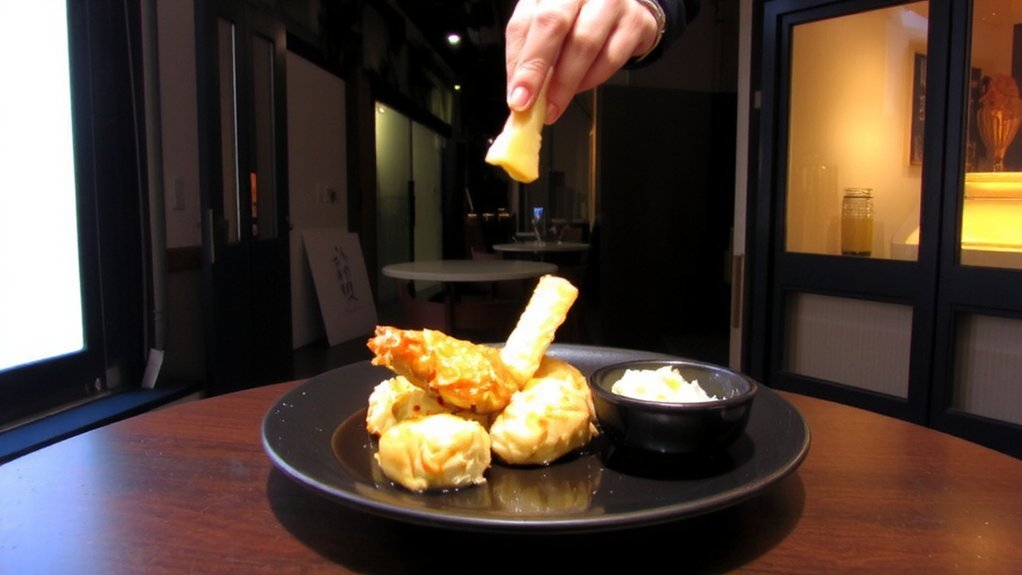
Copper pot, shimmering sesame oil, and a hush before the sizzle—this is Tokyo’s tempura at its best. You watch the chef whisk ice-cold water and flour, barely touching it—that’s the batter technique, airy and quick, no gluten tantrums. Then the oil selection: sesame for aroma, cottonseed for balance, a precise 170–180°C, tuned by ear and bubbles. In go prawns, kabocha, shiso. A brief swim, a snowflake crust, out they come, dripping light.
You claim a counter seat, napkin ready, salt within reach. Dip one piece in tentsuyu with grated daikon, leave the next naked, test both. Hear the pop, smell the toastiness, feel the snap. Order seasonal picks—anago, maitake, asparagus—and pace yourself. Two bites, pause, smile. Freedom tastes like crunch. And another, still hot.
Charcoal-Grilled Yakitori
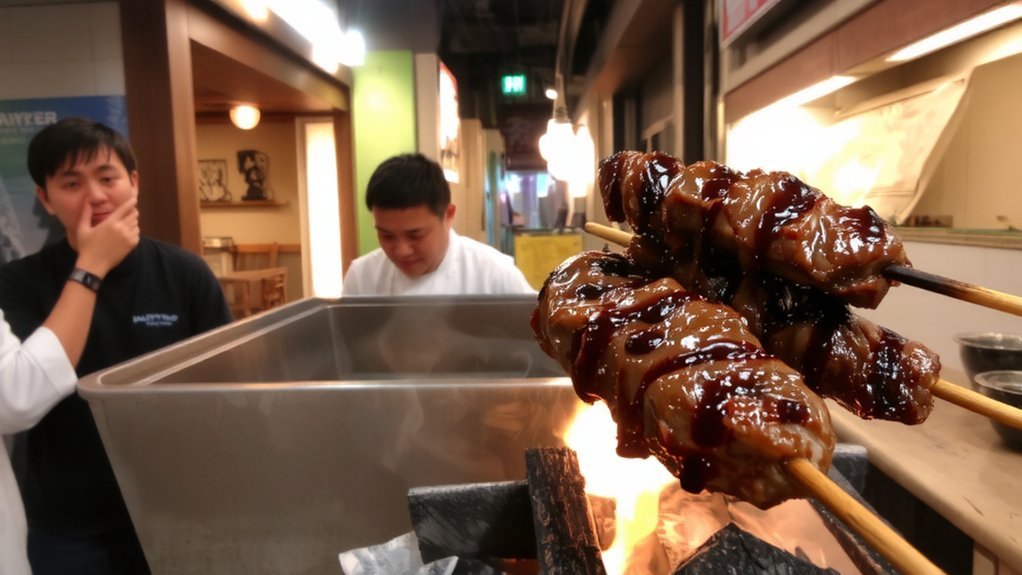
Binchotan pops and whispers under a row of skewers, and you feel the heat hit your face like a friendly slap. You lean in, watch fat bead, flare, then settle, patiently. Order like a local: start salty, end saucy. Ask for negima, tsukune, and—yes—the crisp skin. The chef’s Grilling Techniques matter: one hand salts, one turns, timing by instinct, not timers. You get smoke, not burn. You taste chicken, not charcoal. Keep it simple, but not timid—add yuzu kosho, a brush of tare, a squeeze of sudachi.
- Skewer Varieties: momo, negima, tsukune, kawa, hearts, liver.
- Pro tips: sit counter-side, watch the yakitori-ya’s rhythm, mirror their pace.
- Pairings: highball, dry sake, oolong tea for resets.
- Etiquette: one bite per piece, no dunking, thank the itamae.
Monjayaki From Tsukishima
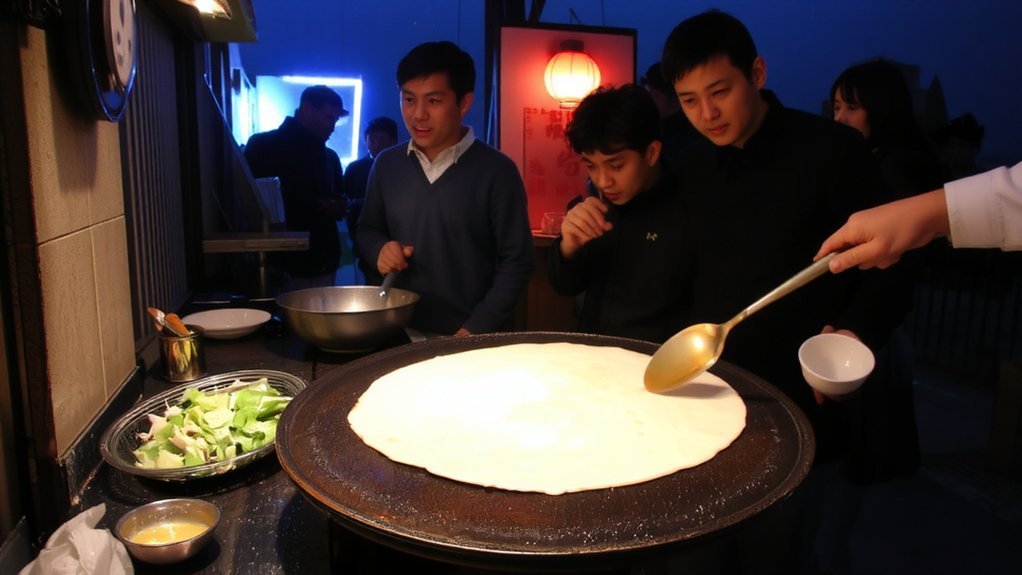
Griddle theater waits for you on Tsukishima’s Monja Street, where noren sway and the tables come with hotplates built in. You order cabbage-heavy monjayaki, then play chef. Pour the shredded pile, sizzle it down, carve a ring, and make a little moat. In the center, add dashi batter, mentaiko, mochi, or corn—your call. Stir until glossy, spread it thin, and scrape bites with tiny spatulas. Freedom on a plate.
Locals love telling Tsukishima history: dockworkers stretched scraps with flour paste, and a neighborhood ritual stuck. You’ll taste that thrift, upgraded. Watch veterans; their pan techniques are crisp, fast, almost musical. Keep heat medium, oil lightly, and don’t rush the crust. Want extra depth? Splash soy, fold in dried shrimp, finish with nori powder sparingly.
Juicy Tonkatsu Cutlets
A golden panko armor shatters under your chopsticks at a proper Tokyo tonkatsu joint, the kind that fries thick-cut pork in fresh lard, twice, for that glassy crunch and juicy middle. You order loin for bite and fat, or tenderloin for clean, buttery chew. Ask about the panko technique, the crumb size matters; larger flakes mean more air, less grease. Note the oil selection, some blend lard with rice bran for high smoke point and a sweet, nutty finish.
- Choose loin (rosu) if you love marbled juiciness.
- Pick fillet (hire) when you want lean, still plush.
- Drag cuts through tangy sauce, then crisp cabbage, reset.
- Add sesame, grind, and breathe in the toasty cloud.
Finish with miso soup and grin.
Hand-Cut Soba Noodles
You’re here for hand-cut soba, so start by clocking the buckwheat mix—juwari (100% buckwheat) for nutty snap, or nihachi (80/20) for a smoother chew, sometimes using grains from Hokkaido or Shinshu. Order zaru or mori, taste one strand plain, then dip lightly into the traditional tsuyu—kaeshi’s sweet-salty base joined with katsuobushi and kombu dashi—tuning heat and aroma with wasabi, scallions, and grated daikon. Want a twist, or a story to tell? ask for inaka soba’s rustic grind or a walnut- or yuzu-kissed sauce, and you’ll feel the craft, simple and exacting, in every slurp.
Buckwheat Flour Varieties
Buckwheat sets the tone. You’ll taste it in the grain’s perfume and feel it in the noodle’s snap. Choose your flour like a traveler picks routes: boldly. Hokkaido seifun runs clean and nutty; Nagano’s inaka soba flour is darker, wild, a little earthy. Mix in a touch of wheat if you want easier handling, or go 100% for that pure, roasty bite. Check Protein content and moisture; they steer elasticity, texture, and cooking properties. Grind size matters, too—fine for silky strands, coarse for rustic chew. Your move: test, adjust, repeat. Freedom tastes better when you measure it.
- Stone-milled: deeper aroma, shorter shelf life.
- Fresh-milled: lively oils, faster oxidation.
- High extraction: robust color, hearty bite.
- Blended flours: softer dough, friendlier cutting.
Traditional Dipping Sauces
While noodles steal the spotlight, the dip decides the performance. In Tokyo soba shops, you’ll meet tsuyu: dark, salty-sweet, powered by katsuobushi, kombu, and soy. You chill your noodles, you dip, you slurp—fast, clean, decisive. Want citrus zip? Try Ponzu variations, from yuzu-bright to smoky sudachi, sometimes sharpened with grated daikon. Crave comfort? Go for Miso dressings, nutty, gently sweet, thick enough to cling to each strand.
Customize the set. Add wasabi, a brush of negi, a pinch of shichimi. Start light, taste, then adjust. Half dip for balance, full dunk for drama. When you finish, ask for soba-yu, the cloudy noodle water, and stretch your sauce into a soothing broth. Simple ritual, big payoff. Freedom in a cup. Bold choices earn louder slurps.
Sweet Taiyaki Fish Cakes
Bite into a taiyaki and you’ll get it: crisp, caramelized tail, tender belly, steam, and a hit of sweet red bean or silky custard. You chase the griddle scent down alleys, then order hot, not shy about seconds. Ask for Custard Fillings if you like pudding-level comfort; try chocolate or matcha when you want mischief. Watch the iron molds close, batter hiss, edges turn bronze. Stall masters move fast, but they’ll chat if you do. Seasonal Designs keep it playful—sakura in spring, maple in fall—so you collect bites like souvenirs. Eat at the curb. Walk if you must, but eat it hot.
- Where: shotengai stalls, festival yatai.
- Order hot; fins extra-crisp, please.
- Pair with milk tea or coffee.
- Price: 200–400 yen, quick lines usually.
Soft, Fresh Mochi
How do you know mochi’s fresh? You feel the give. Warm, tender, slightly sticky, it springs back, then melts. Follow the sound, too: rhythmic thuds from a mortar, the Pounded Tradition alive on a side street. Step in. Ask for plain shio mochi, or kinako-dusted squares, then watch the cut—clean, almost glossy. You’ll eat fast, but breathe; soft rice needs slow bites.
Order a green tea, or go bold with Matcha Pairings: grassy bitterness balances the sweet chew. Try strawberry daifuku, juice escaping, or yomogi mochi, herbal and bright. Want a plan? Arrive before noon, scan for wooden usu and kine, pick the busiest stall, and start with one piece. Then another. Freedom tastes like fresh mochi, fleeting, perfect. Take photos, wipe the grin.
Depachika Food Hall Finds
From that soft mochi glow, head downstairs to Tokyo’s depachika—department-store basements where the city’s best bites line up like a parade you can eat. You drift past bento, sizzling katsu, cases of artisanal chocolates. Grab samples, ask, move fast; lines shift. Start with tempura-to-go, crisp, light. Then a scoop of salad from a deli. Don’t skip the pickle corner—bright pickled vegetables wake you up. Finish bold: yakitori skewers, a fruit tart, sake for later. Pay per counter, eat at a standing table, or picnic by the river. You’re free to mix high, humble. That’s the game.
- Follow the aromas; sample before you buy.
- Ask for reheating tips; store staff are pros.
- Build bento: protein, veg, carb, treat.
- Stash a cold pack for cheesecake transport.
Conclusion
You came hungry; you’ll leave a seasoned pro. March down yokocho, slurp ramen, ask for kaedama like you own the ladle. Park at a standing sushi bar, two nigiri at a time, ginger as reset, not garnish. Dip tempura once, not a baptism. Yakitori? Salt first, tare second. Sizzle monjayaki, share the spatula. Order hand‑cut soba cold, chase with soba‑yu. Pocket taiyaki, split mochi, raid the depachika. Bow, say oishii, plot tomorrow’s bites with gusto.