
You love the idea of zipping through Tokyo in a costume, but here’s the truth: a go-kart tour isn’t Mario Kart. You’ll need a valid license, a safety briefing, mirrors and braking discipline, and strict speed limits—plus insurance and legal pull-offs for photo stops at Shibuya or Rainbow Bridge. No Nintendo-branded suits, either. In the game, you drift-boost and chuck shells; on streets, you judge gaps and survive traffic. Want the real differences that matter?
Real Streets Vs Virtual Tracks
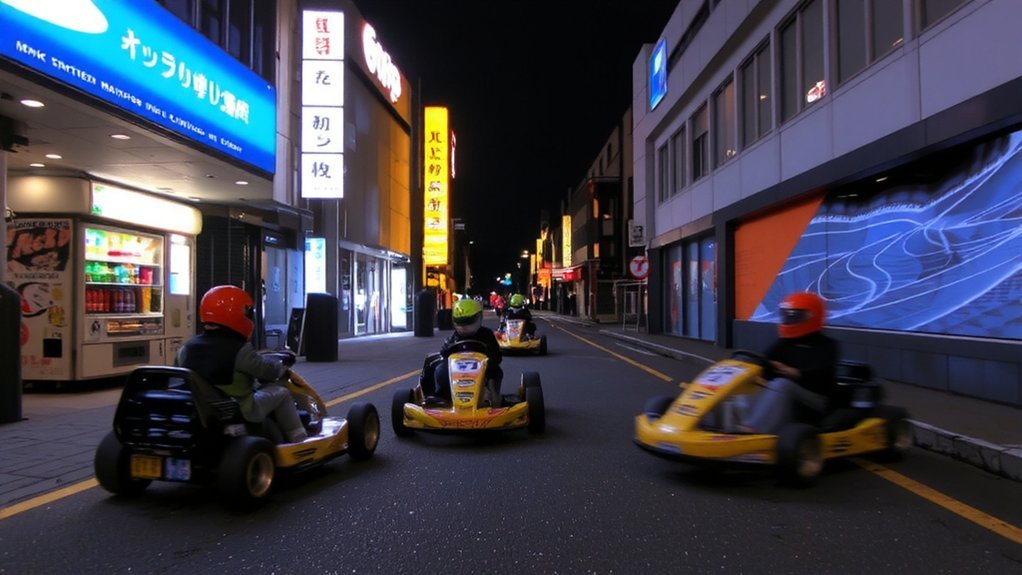
Even if your thumbs itch for a Blue Shell, the biggest split is simple: real Tokyo streets ask for skill and awareness, while virtual tracks reward chaos and split-second gambles. Out there, you read lanes, lights, and locals, feeling speed in your chest. You judge gaps, mirror-check, breathe, then commit. Sensory immersion isn’t optional; it’s the ride. In-game, you surf boosts, slide through hairpins, and weapon-manage, chasing perfect laps.
Crave freedom? Choose your canvas. For concrete thrills, follow flow: anticipate turns by sightlines, set smooth throttle, and look far ahead. For arcade joy, master drift timing, save mushrooms for shortcuts, and study lines. Environmental fidelity differs, too. Streets change with weather, crowds, and soundscapes; tracks reset, predictable, gloriously unruly. You choose the throttle, always.
Licenses, Insurance, and Safety Protocols
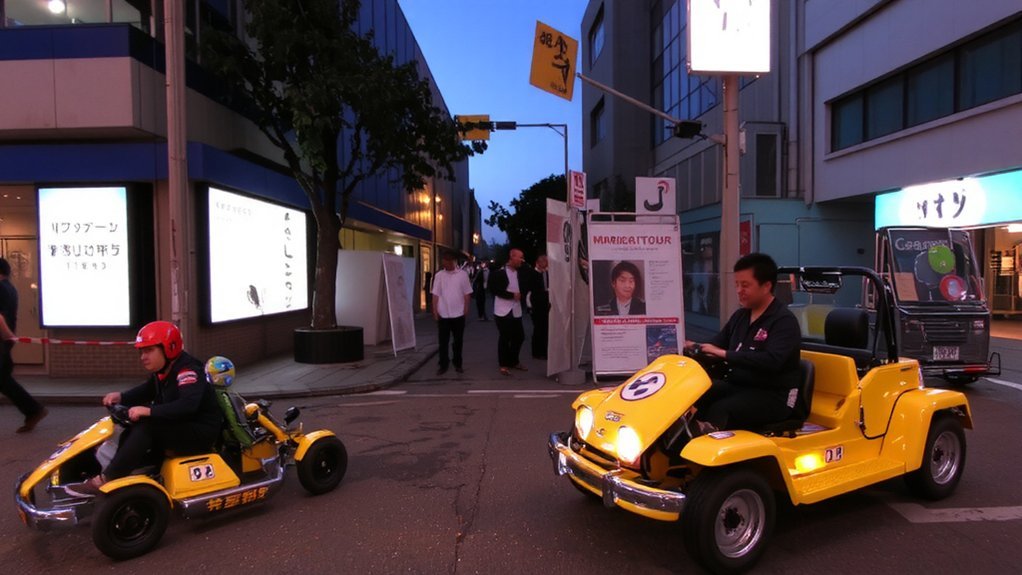
Out on real streets, you don’t just race—you qualify. You need a valid driver’s license, international permit when required, and a quick rules briefing. Freedom, yes, but with paperwork that keeps cops and chaos off your back.
Real streets aren’t a sprint—you qualify. License, permit, briefing. Freedom with paperwork, not chaos.
The tour company should show Operator Certification, proof of commercial insurance, and clear coverage terms for you as a rider. Ask: liability limits? medical? deductibles? If answers wobble, walk.
Gear up. Helmet, gloves, reflective vest, rain layer. Pre-ride checks matter: brakes bite, tires hold, signals blink, horns shout. You’ll review routes, hand signals, speed caps, and spacing. No weaving, no phone juggling.
Expect Emergency Procedures: pull-off points, radio codes, first-aid kit, and a chase van. If something goes sideways, you won’t. Trained leaders keep the ride free.
Costumes, Branding Rules, and What’s Allowed
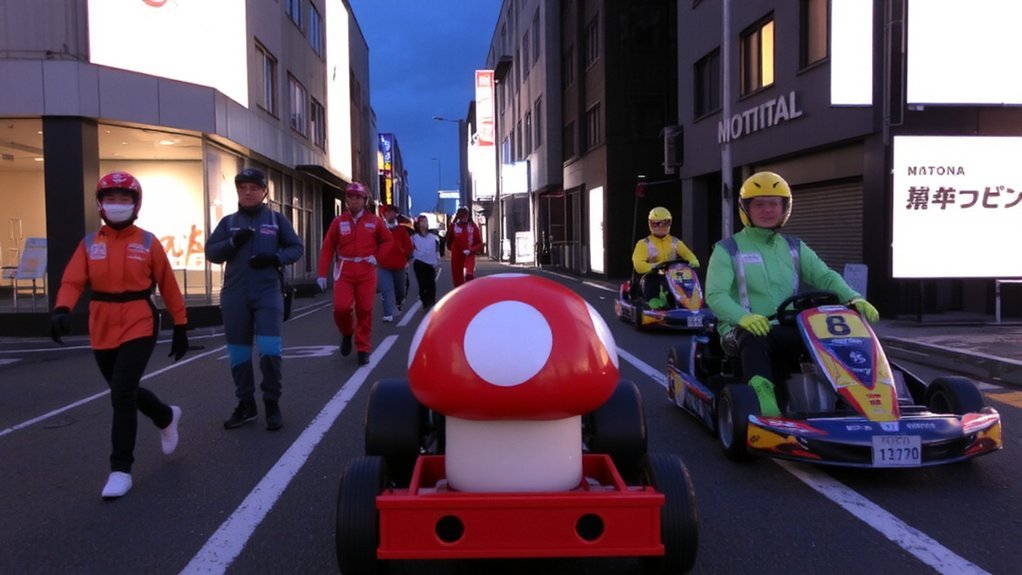
Because Nintendo won its lawsuits in Japan, you can’t dress as Mario anymore—full stop—but you can still have fun with smart, legal cosplay. You’ll rent karts, not trademarks, so you must dodge character impersonation and strict logo restrictions. Think vibes, not replicas: red overalls? Fine. A plumber’s hat with an “M”? Nope. Lean into themes—retro racer, neon street hero, ninja tourist—and you’re golden. Keep it safe, visible, and weather-smart.
- Choose generic gear: solid colors, stripes, stars, but no protected icons or letter badges.
- Hide brands: tape over sneaker swooshes, cover labels, skip famous team jerseys.
- Mask lightly: face coverings are okay if they don’t block vision; helmets win.
- Props, not problems: foam items only; no weapons, no alcohol branding.
Enjoy.
Routes, Landmarks, and Photo Ops
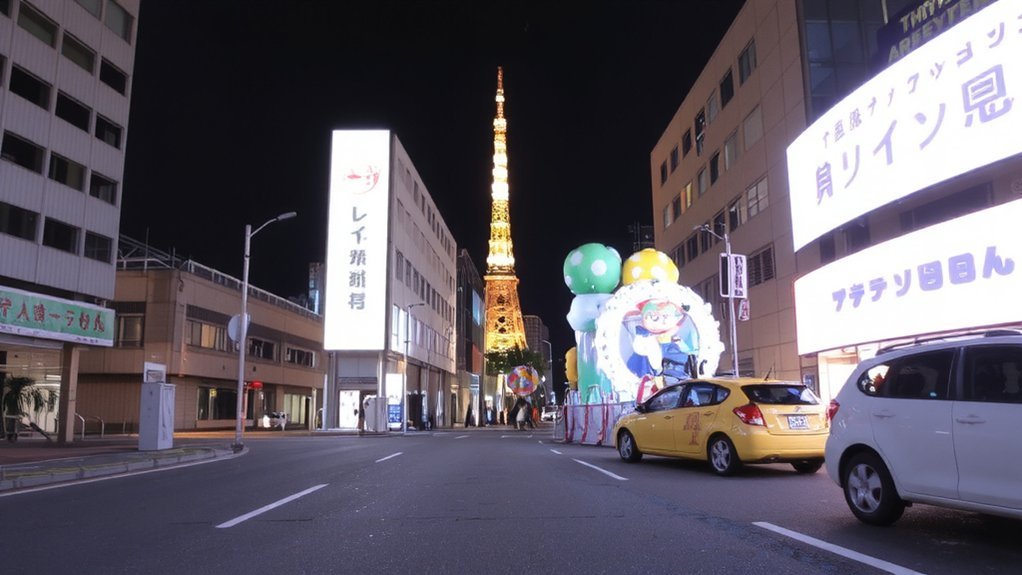
You’ll compare real tour route variety—Shibuya–Harajuku loops, Bay Area runs over Rainbow Bridge, and Asakusa–Skytree circuits—to Mario Kart’s rapid track swaps that stay on a screen. On the street, you can snag iconic shots at Tokyo Tower lay-bys, under Skytree, at Odaiba skyline pull-outs, or near Shibuya Crossing when staff cue safe, legal stops; in-game, you’re just saving screenshots—fun, not the same flex. Pro move: book a route with 2–3 planned photo stops, bring a phone lanyard and a clip-on wide-angle, and ask the lead guide for the quickest angles so you stay safe and keep the pace.
Route Variety Comparison
While both promise scenery, the routes couldn’t be more different.
You ride real streets in Tokyo, obey traffic, adapt on the fly. In Mario Kart, you loop crafted circuits with scripted chaos. You want freedom? Street routes flex with time, weather, and your nerve, while tracks lock you into laps and lines. For map complexity, the city wins; curbs, lanes, and timing lights change the game. Do an analytics comparison: variability, decision points, and pace shifts explode outdoors.
- Tokyo Go-Kart Tour: Multiple itineraries, with optional detours when conditions allow.
- Mario Kart: Fixed tracks, shortcuts, predictable lap flow—mastery through repetition.
- Skill curve: Read traffic, space yourself; versus memorize corners, manage items.
- Payoff: Dynamic scenes, real-time choices, small risks; versus tight design, instant feedback, quick restarts.
Iconic Landmark Photo Ops
Routes shape your photos, so let’s talk what actually lands in your camera. On the Tokyo go‑kart tour, you zip past Shibuya Crossing, Tokyo Tower, and Rainbow Bridge, with quick pull‑offs for snapshots. Mario Kart? Pure fantasy courses, no street stops, no skyline—fun, but zero real‑world photo ops.
Chase Golden hour. Aim east routes for sunrise glow on Skytree, west loops for a warm Tokyo Tower silhouette. Use these Framing tips: lower your chin, tilt the phone slightly up, include your kart nose for depth. Safety first; park where the guide signals, then shoot fast.
| Spot | Quick shot idea |
|---|---|
| Shibuya Crossing | Wide, crowd blur, your kart foreground |
| Senso‑ji | Gate centered, lanterns leading lines |
| Rainbow Bridge | Side profile, bridge arches behind |
Then roll on, grinning.
Speed Limits, Handling, and Difficulty
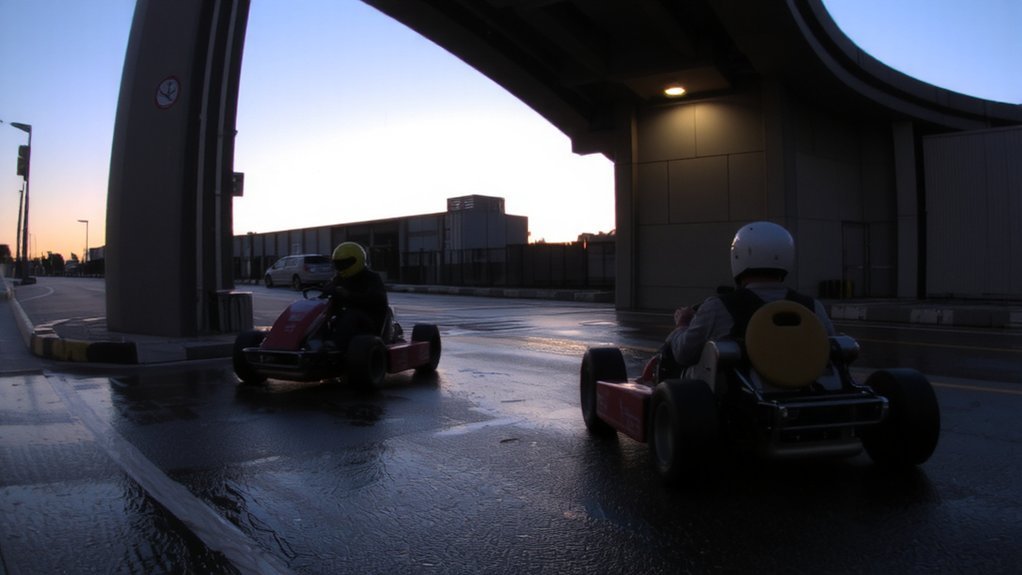
On Tokyo streets, you’re capped by real speed limits—think 30–50 km/h, traffic flow, and police eyes—while Mario Kart lets you mash the throttle with zero tickets, blue shells aside. Steering feels wildly different too: tour karts sit low and react fast, so bumps, rain, and braking distances matter; Mario Kart steering is floaty, drift-happy, and stabilized by game physics. Expect a steeper first 10–15 minutes in the tour with a safety briefing and practice turns, whereas Mario Kart is instant pick-up—so keep both hands on the wheel, use smooth inputs, look far ahead, and let the guide, not a power-up, set your pace.
Street Speed Regulations
Even though Tokyo’s karts look like game sprites come to life, street speed is very real, and tightly capped. You’re sharing roads with taxis and cyclists, so expect posted limits—often 30–50 km/h—and guides who nudge you to keep it chill. Think cruise, not sprint. Acceleration feels punchy at first, but you’ll modulate throttle and brakes to stay smooth, avoid fines, and respect locals. Difficulty? Moderate. You’ll read traffic, manage gaps, and time stops; that’s the real game. Watch enforcement methods, from patrol cars to cameras, and note signage placement at intersections and school zones. Miss a sign, and you’re the headline nobody wants.
- Scan speed signs before merging.
- Hold steady pace; avoid bursts.
- Brake early, predict lights.
- Mirror-check, then commit.
Steering Feel and Stability
While the kart screams arcade, the steering says “real road.” The wheel feels direct and twitchy, with a short wheelbase and low center of gravity that make small inputs matter, especially at 30–50 km/h. You’ll sense every seam, curb, and gust, a steady stream of feedback precision through the rim. Hold the wheel lightly, elbows loose, and let the chassis breathe. Nudge, don’t yank. At posted limits, the kart stays planted, but crosswind or camber will test you. Stability comes from weight balance, tire temps, and humble throttle. Smooth in, smooth out. Brake straight, then turn; add power only when the nose sets. Suspension tuning is simple, yet honest, so bumps speak up. And yes, you’ll grin—because it’s freedom with consequences. Real, fast, deliberate.
Learning Curve Comparison
Though both promise “karting,” the ramp-up couldn’t feel more different. On Tokyo streets, speed limits cap your rush, but real traffic, mirrors, and helmets raise the stakes. You’ll learn fast: smooth throttle, early braking, eyes up. In Mario Kart, assists, items, and rubber-band AI soften mistakes, so you experiment, crash, laugh, and still place.
You want freedom? Mastery buys it. Skill Progression feels earned outside, playful inside; both reward time-in-seat, just in different currencies. Practice simple Control Techniques, then push.
- Speed limits: Tokyo enforces patience; Mario lets you floor it, then boosts you anyway.
- Handling: real grip, weight shift; versus arcade drift and hop-boosts.
- Difficulty: traffic anxiety vs. item chaos.
- Techniques: trail-brake, throttle feather, clean lines.
Keep practicing; confidence snowballs.
Items and Power-Ups Vs Defensive Driving
| Feeling | Game Cue | Road Reality |
|---|---|---|
| Invincible | Star music | High-viz vest, space cushion |
| Aggressive | Red shell ready | Mirror checks, lane positioning |
| Sneaky | Banana trap | Early signals, eye contact |
In tight alleys, treat every blind corner like a blue shell. Flow.
Group Size, Guides, and Tour Etiquette
Usually, the sweet spot is 4–6 karts, with one guide leading and, if you’re over six, another sweeping the rear—think party of four in Mario Kart, not a 12‑player chaos lobby. You ride single-file through tight streets, keep gaps tidy, and honor Pacing Expectations. Guides set tempo; you match it, not the other way around. Watch mirrors, read hand cues, and echo Communication Signals. No weaving, no showboating near pedestrians. Cameras? Quick, safe stops only. Respect intersections; yield, breathe, roll.
- Confirm your license, helmet fit, and kart basics before ignition today.
- Keep two kart lengths, tighten up after turns, relax on straights.
- Mirror check every block, signal lane changes, then move with conviction.
- If you fall back, radio the guide, don’t slingshot blindly forward.
Price, Booking Logistics, and What’s Included
You’ve got the formation and etiquette down; now let’s talk money, seats, and what you actually get for the fee. Tokyo go-kart tours price per driver, usually ¥9,000–¥15,000 for 60–90 minutes, with seasonal discounts after rain or midweek. You book online, choose time, upload license details, pay, then show up 20 minutes early. What’s included: kart, fuel, basic costume, helmet, guide, photos, and a quick safety brief. Insurance varies, ask.
Mario Kart, the game, costs a console, software, maybe a subscription. No license upload, no guide, infinite retries. Different thrill, different bill.
Need flexibility? Check the cancellation policy, often free until 24–48 hours. Rescheduling beats no-shows. Pro tip: bring closed-toe shoes, an international permit, and a bandana. Wind gets real. Charge cameras, carry spares.
Conclusion
Funny coincidence: both thrill you in Tokyo’s neon, yet they ask different skills. If you crave real streets, bring your license, closed-toe shoes, and patience for mirrors, brakes, and traffic law; book a guided tour, expect photo stops and speed limits. If you want pure spectacle, boot up Mario Kart, practice drift boosts, and chase perfect laps. Either way, you steer the story. Choose safety or chaos, insurance or items, landmarks or leaderboards—and go now.