
You want someone who knows the alleys, who reads the trains, who keeps the pace. In Tokyo, the right guide turns vending machines and shrines into a story, handles grandma’s stairs and your kid’s snack stops, and flashes a National Government Licensed Guide Interpreter card without fuss. You’ll want proof, clear pricing, and a sample route—not hype. Here’s how to spot the real pros and avoid the costly detours.
Key Takeaways
- Verify National Government Licensed Guide Interpreter credentials; request license number, card photo, and confirmation they will personally lead.
- Match guide specialties to your interests (food, history, pop culture), and prefer private formats for tailored pacing and kid-friendly flexibility.
- Demand proof over pitch: high ratings with many recent reviews across platforms; watch intro videos and sample itineraries.
- Do a quick video/phone chat to assess language clarity, explanation style, and to finalize route, tickets, and comfort needs.
- Confirm pricing, inclusions, insurance, and cancellation terms; beware vague, ultra-cheap offers, and avoid sharing passports or home address upfront.
What Makes a Great Tokyo Tour Guide
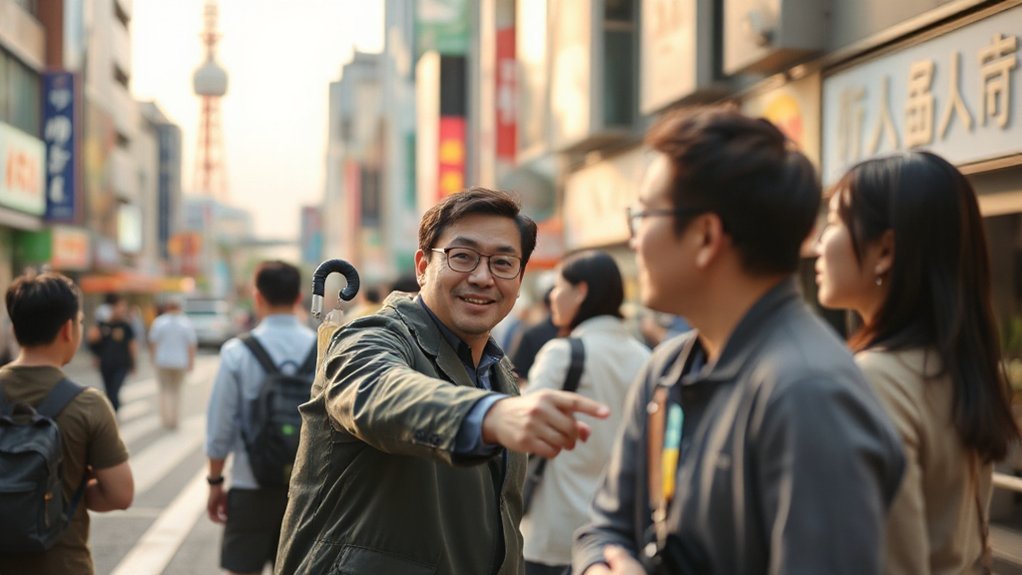
Start with someone who knows Tokyo like a hometown, because the best guides grew up weaving through Asakusa’s back alleys and Harajuku’s side streets and can show you the noodle shop with the steam-stained window you’d walk past on your own. You want a host who sets a pace that fits your shoes, offering 3–8 hour private formats and easy detours when a taiyaki line looks too good to skip. Look for story over script: they explain shrine etiquette, how to rinse with the ladle, bow, and clap twice, and why it matters today. Good ones have photo expertise, pointing you to the angle at Shibuya Crossing or a quiet lantern wall in Yanaka. Child friendliness shows in snack breaks, restroom stops, and patience when sleeves get tugged. Reviews tell the truth, plain—folks like Kahoko K. (4.96/5, 389 reviews) and Akira N. (4.95/5, 390) set the bar high.
Licensed vs. Unlicensed: Credentials That Matter

You want someone who can legally guide and carry the right permits, and in Japan that usually means a National Government Licensed Guide Interpreter, the folks who passed national tests and show up on lists from the Japan Federation of Certified Guides or platforms like GoWithGuide. With a licensed guide you’re more likely to get proper insurance and a clear line of accountability—agencies and platforms often require it—so if a site changes rules or something goes sideways, you’ve got standards and a real contact, not just a shrug. When you book, ask to see the license and proof of coverage and do a quick video call to hear their English, and if you get vague claims or shaky reviews, that’s your cue to walk, no hard feelings.
Legal Compliance and Permits
While Tokyo is full of friendly fixers, the credential that actually matters is the National Government Licensed Guide Interpreter, earned by passing Japan’s national exam that checks history, culture, geography, and real foreign‑language skill. Compliance is simple: follow Local Ordinances, meet Tax Obligations, and book a pro. Ask for a license number, the certifying organization, and written confirmation that a Licensed Guide Interpreter—not a proxy—will guide you.
- License card shown clear
- Email naming your guide and time
- A quick video call proving fluency
- Fair prices, not sweet
- Itinerary with trains and times, not fog
They’re listed with the Japan Federation of Certified Guides, tested in ten languages; unlicensed folks aren’t, so use vetted platforms and skip vague or ultra‑cheap offers.
Insurance and Accountability
Paperwork’s sorted; now comes the part that actually protects your day and your wallet: insurance and accountability. Start by asking for a National Government Licensed Guide Interpreter—people who passed tough national exams and answer to standards. Get their license number, confirm the certifying body, and check listings with the Japan Federation of Certified Guides, Japan Guide Association, or Kansai Interpreter & Guide Association, so you’ve got recourse if something goes sideways. Ask for proof of professional liability or travel insurance, read the Policy Exclusions, and request the Claims Timeline for any incident. Check reviews on GoWithGuide or Jasumo. Unlicensed guides can charm, but complaints pile up—shaky English, thin facts, lost time, no oversight. Nail down cancellation and refund terms; silence is a red flag.
Matching Guide Specialties to Your Interests
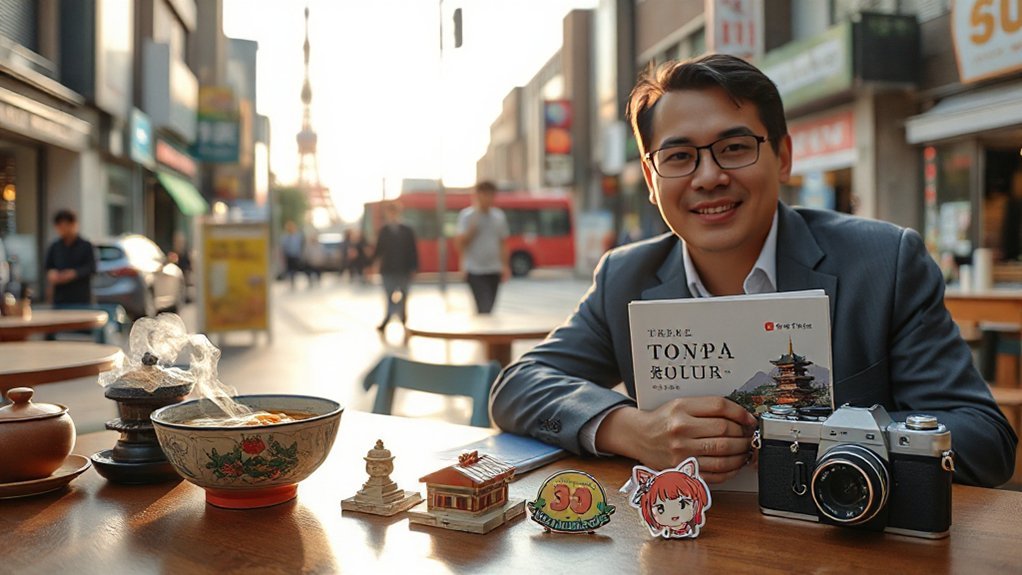
Pick a guide who fits what you care about most—food folks go with sushi, ramen, or izakaya pros, and history lovers lean toward a National Government Licensed Guide Interpreter who can explain shrines and Shoguns in your language without fuss. Check the proof, not the pitch: look for strong ratings with real volume, like a 4.96 over hundreds of tours, and see if they run solid routes like Akihabara pop-culture walks or a clean “Tokyo in a Day.” Before you book, ask for a past plan and make sure they handle trains, tickets, and shrine etiquette, so the language and logistics fit you and you’re not learning the map while your ramen gets cold.
Food or History Focus
How do you choose between a food guide and a history guide in Tokyo without rolling the dice? Start with what you crave: bites or backstories. Food guides run street-food walks, izakaya crawls, and sushi master introductions, and they’ll chat Menu Evolution. History guides layer temples, castles, and imperial sites with Site Layering. Trust proof: 3-hour crawls 5.0/225, or 8-hour “Essential Tokyo” 4.9/174. For rigor, pick a National license. For groups of three, $35–$45 per guide pays well.
- Steam rising from skewers in Shitamachi alleys at night.
- Lantern-lit izakaya doors, soft clatter, quick nods to regulars.
- Temple eaves in rain, incense threads, sutras murmured slowly.
- Stone walls of Edo castles, moss, stories etched in chips.
- Sushi counter whispers, chef’s knife flashing, rice breathing warm.
Language and Logistics Fit
Before you message anyone, check their language and logistics chops so you don’t spend your day lost in translation or stuck in a ticket line. Verify they’re a National Government Licensed Guide Interpreter or similar, tested in languages like English, Chinese, Korean, or French, so cultural context comes through clean. Match their niche to your plans—izakaya crawl, anime, gardens, or kid-friendly—by scanning profiles and reviews on GoWithGuide, Jasumo, or City Unscripted.
| You want | Ask for |
|---|---|
| Smooth trains | Route plans, rush-hour avoidance, ticket buys |
| No wasted time | Timed-entry bookings and backup slots |
| Comfort | Restroom access, quiet breaks, shade stops |
| Group ease | Pricing for 3+, vehicle/transfer options |
Message pros like Akira N. 4.95/5 or Kahoko K. 4.96/5, and confirm $35–$45/day rates and refund rules before booking.
Private Guide or Group Tour: Which Fits Your Trip
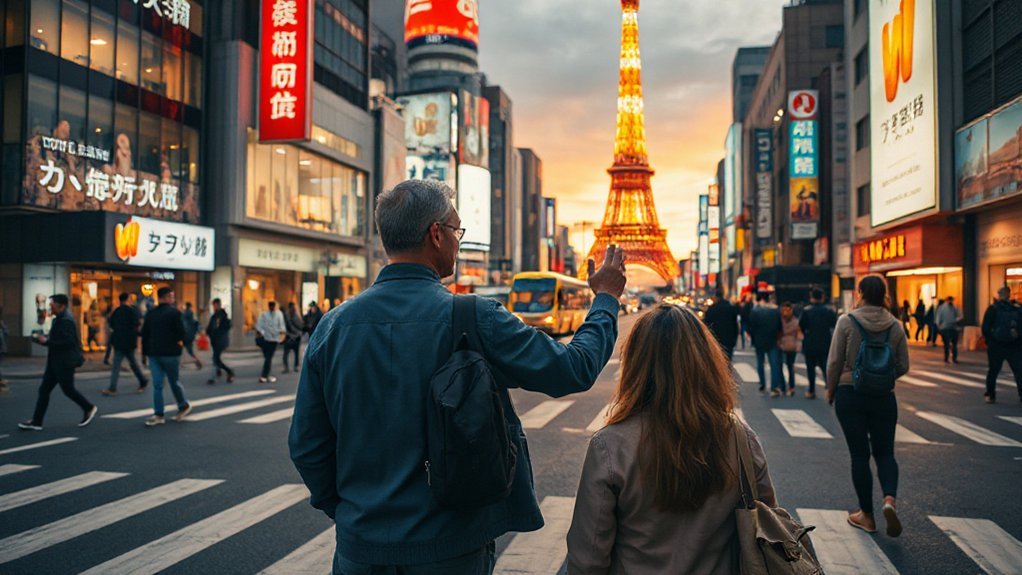
When you’re weighing a private guide against a group tour in Tokyo, think about how you like to travel and what you actually need help with. Private wins when your privacy needs are real and you want the day built around you. At roughly $35–$45 per guide, it’s a deal for three or more. Group tours fit solo travelers and tight budgets, and when the group chemistry clicks, the set plan feels easy and social.
Private for tailored days and small groups; group tours suit solos, budgets—easy, social when chemistry clicks.
- Guide threading Shinjuku Station, you gliding after.
- Quick detour to a quiet shrine on a whim.
- Fixed-route bus, next photo stop, right on time.
- Bento on a bench, swapping tips with new friends.
- Tickets handled while you sip vending tea.
Want insider corners and saved minutes—routing, off-peak timing, ticket handling? Go private, but book through reviewed platforms to dodge duds. Want lowest cost and no-frills structure? Choose a group and keep it simple.
Language Skills and Communication Style
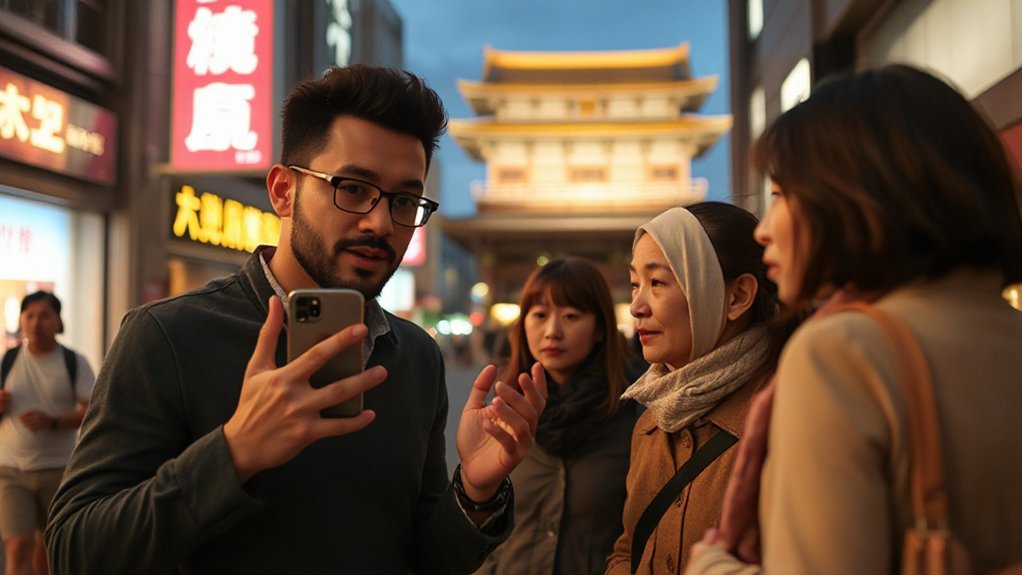
Ever notice a guide can either reveal a city or leave you nodding along, none the wiser? In Tokyo, language makes or breaks that line. Start by seeking National Government Licensed Guide Interpreters; they’re tested in up to ten languages, so you get steady English and careful cultural cues, not guesswork. Ask for a short phone or video chat to check Accent Clarity, pace, and how they explain small things, like shrine etiquette or train manners. If you follow them easily on a call, you’ll follow them on a busy street.
Favor guides who do cultural translation, not just word translation, and listen for plain stories that tie history to what’s in front of you. Scan profiles for sample videos that show tone and timing. Notice Nonverbal Communication too, the eye contact, the pauses, the pointing. That’s how you catch the meaning behind the words, and skip confusion.
Reading Reviews and Verifying Reputation
You want more than shiny stars, so look for lots of high-rated reviews on solid sites like GoWithGuide, where Akira N. sits at 4.95/5 from 390 and Kahoko K. at 4.96/5 from 389, because the count plus the score shows steady work, not a lucky weekend. Read the pattern in the newest reviews for punctuality, clear English, flexible plans, and local know‑how like train and ticket help, and flag repeats about lateness, stiff scripts, vague plans, or oddly cheap prices—those scuff marks tell you how the day will feel. Then vet credentials the simple way, check the profile for a National Government Licensed Guide Interpreter or other license, and if it’s not shown just ask for the details or hop on a quick call or video, you’ll hear the fluency and the tone in two minutes and know if the fit is real.
Vetting Guide Credentials
Though every guide’s profile can blur together after a while, you can sort the real pros from the guesses by leaning on two things: proof and patterns. Start with training portfolios and reference verification, then check for the National Government Licensed Guide Interpreter badge. Use reputable hubs like GoWithGuide, Jasumo, or the Japan Federation of Certified Guides, where profiles, videos, and availability get verified. Favor high ratings with big review counts, like Akira N. 4.95/5 from 390 or Kahoko K. 4.96/5 from 389. Before you book, hop on a quick call to confirm languages, itinerary, and cancellation terms, and walk if answers are vague or prices unreal.
- License photo clearly shown
- Clear intro video
- Rain-day itinerary options
- Train and ticket help
- Fair, local-market price
Analyzing Rating Patterns
How do you spot the real thing in a sea of five-star faces? Start by scanning the Score Distribution, not just the average. A 4.95 with 390 reviews, like Akira N., or a 4.96 with 389, like Kahoko K., shows steady work, not a lucky streak. Read the newest notes for plain talk on English level, on-time starts, and flexibility, because those slip-ups keep popping up. Hunt for proof: train navigation help, ticket buys, custom routes, little side streets, even photo or proposal help. Watch for Platform Bias, so cross-check on GoWithGuide or Jasumo, and look for a National Government Licensed Guide Interpreter badge. When you’re unsure, ask for a quick call or a short video to test real-time rapport before you click book.
Itinerary Customization and Flexibility
Why book a private Tokyo guide in the first place? You get Pace tailoring and Route remixing, not a canned script. Book ahead, share what you love—food stalls, modern towers, anime spots, or cherry blossoms—and your host shapes a day that fits. Half-day 4-hour for a first pass, full-day 8-hour for an in-depth exploration. Licensed pros stitch niches: an izakaya crawl, a sakura sweets tasting, and an architecture walk in one loop. They handle trains, tickets, and crowd timing, so you look up, not down at maps.
- Shrine at dawn, ramen steam in a tiny shop
- Neon Shinjuku, lantern-lit bars in an alley
- Quiet Yanaka lanes, cats sunning on stone
- Anime arcades, a hidden gachapon wall, quick photos
- Blossom riverbank, proposal help done calmly
Services like City Unscripted or GoWithGuide match you to the right fit, trimming the lottery risk from day one.
Budgeting: Typical Rates and Value for Money
So let’s talk real numbers: when you pencil it out, a private Tokyo guide typically runs about $35–$45 USD flat for the guide, not per person, which means a family of four often beats the price of those per-head group tours by a mile. At that rate, you’re buying time, not just talk. A sharp guide trims transfers, dodges peak‑hour surcharges, and points you to ramen that tastes great and doesn’t gut your budget. Add in seasonal pricing, since cherry blossom weeks and New Year’s get busy, and you’ll see why booking early locks fair numbers.
Pay a little more for a licensed or top‑rated pro and you save anyway, because routing and plans prevent taxi splurges and do-overs. Budget a few dollars for vetting—reviews, verification, maybe a call—so you don’t chase bargains that cost more later. Ask what’s included, watch for hidden fees, and enjoy the day.
Red Flags to Avoid When Booking
You’ve set your budget; now guard it by spotting the warning signs before you hand over a day of your trip. If a guide can’t hold a simple chat in English, expect missed trains and thin stories at shrines. No license number, no reviews, no proof of being a National Government Licensed Guide Interpreter—treat that like a stop sign, not a yield. Rates that sit far below the usual $35–$45 per guide often hide add-ons or cut corners. Vague, one-size plans and pushy timetables usually mean you’ll hustle, not enjoy. And if they dodge a call, that’s telling.
- Profiles with blurry photos and copy-paste bios—common in local scams.
- Unclear pricing, “entrance fees extra maybe,” then surprise cash asks.
- Rigid cancellation rules with penalties from day one.
- Refusal to adjust for your interests, or no time cushions between sights.
- Requests for passports or home address upfront—risk of privacy violations.
How to Book and Prepare for Your Day Together
Before you hit pay, book through a trusted platform—GoWithGuide, City Unscripted, or Jasumo—so you get a licensed National Government Licensed Guide Interpreter or a well-reviewed local with real receipts, not promises. Expect about $35–$45 for a day, but confirm extras like trains and tickets. Hop on a call to hear English, swap must-sees—ramen alleys, shrine quiet, anime nooks—and ask for backup plans. Lock the basics: start time, hotel lobby or nearest station, half-day or full-day, group size, and who buys and taps tickets. Share your arrival window, any knee or stroller limits, and food needs. Ask if you should load an IC card or if they’ll wrangle fares and seat reservations. Pack light, think Meeting etiquette, smile and be on time. Make a Packing checklist: cash, water, power bank, rain shell, comfy shoes.
| Feeling | Action | Why |
|---|---|---|
| Calm | Confirm | Clarity |
| Ready | Map | Smooth |
| Seen | Share | Care |
| Grateful | Tip | Trust |
Frequently Asked Questions
Do Guides Accommodate Mobility Needs and Arrange Fully Accessible Routes?
Yes, you’ll find many guides who accommodate mobility needs and arrange fully accessible routes. They confirm wheelchair accessibility, plan step-free timings, secure accessible taxis, make sure service animals are welcomed, and schedule water and restroom breaks.
Can Guides Assist With IC Card Setup and Cashless Payments?
Yes, guides can help you set up IC cards and handle Card Activation. They’ll load credit, link Mobile Wallets like Suica on Apple Pay or Google Pay, and explain cashless transit, vending and convenience stores.
Are Guides Insured, and What Liability Coverage Should Travelers Expect?
Yes, many guides carry professional and public liability insurance, but coverage varies. You’ll request Insurance verification, confirm Liability limits, and check exclusions. Prefer occurrence coverage, not claims-made, and keep travel medical and trip-cancellation policies too.
Do Guides Help With Tax-Free Shopping Procedures and Shipping Purchases Home?
Yes, many guides help with tax-free paperwork, escort you to eligible stores, interpret forms, and handle receipt translation. They’ll also coordinate shipping logistics and customs declarations, advising on ID requirements, spending thresholds, and refund methods.
Will the Guide Take High-Quality Photos and Share Them After Tours?
Yes—many guides shoot high-quality photos and share them afterward. You’ll confirm Photo Consent, preferred Sharing Options, delivery time, file format, and any fees. Ask about editing, RAW availability, privacy settings, access, and backup policies too.