
Tokyo private car tours are exciting right up until you are hauling luggage through Shinjuku Station, changing trains twice, and realizing your quick visit to Asakusa needs another hour. Booking a private car tour in Tokyo fixes that problem by providing a professional driver, door-to-door service, and a schedule built around your group.
The price can be excellent for families, couples, and small groups, but only if you understand what the quote includes. These tours offer a customizable itinerary to fit your specific group needs, ensuring you see exactly what you want. Let’s look at realistic costs, routes that actually fit the clock, and the booking details that can save your day.
Key Takeaways
- Tokyo private car tours typically range from ¥50,000 to ¥150,000, with final pricing determined by the duration, vehicle class, group size, and specific guide requirements.
- While some packages are all-inclusive, costs for highway tolls, parking, admission tickets, meals, and any overtime fees are often billed separately, even when an English-speaking driver is provided.
- A half-day tour should focus on a single district to maximize your time, as attempting to cross the entire city often results in paying for time spent in traffic.
- Always confirm the exact vehicle type, pickup logistics, service inclusions, cancellation policies, and hourly overtime rates before finalizing your booking to avoid unexpected expenses.
- Popular excursions to Hakone, Kamakura, and Nikko are excellent options for private day trips, though it is important to account for travel time and potential road traffic when planning your itinerary.
How Much Do Private Car Tours in Tokyo Cost?
As of July 2026, a useful planning range is ¥50,000 to ¥90,000 for four to six hours in an air-conditioned vehicle with a driver. A full-day booking of eight to ten hours often falls between ¥80,000 and ¥150,000.
These are planning ranges, not guaranteed prices. The final quote changes with the season, vehicle size, pickup location, English-speaking driver availability, airport transfers, and whether your driver is also a professional guide.
A larger van, such as the Toyota Alphard, is a popular luxury vehicle choice that usually costs more than a standard sedan. Families may pay extra for child seats, while groups with large suitcases need to confirm luggage space before booking. That tiny detail can become a huge deal when everyone arrives at the airport with two hard-shell cases.
| Tour type | Typical planning range | What usually affects the quote |
|---|---|---|
| Four-hour city tour | ¥45,000 to ¥70,000 | Sedan or van, pickup area, driver language |
| Six-hour city tour | ¥60,000 to ¥100,000 | Number of stops, guide service, parking |
| Full day tour | ¥80,000 to ¥150,000 | Vehicle class, route length, waiting time |
| Hakone or Kamakura 1-day tour | ¥90,000 to ¥160,000 | Tolls, distance, vehicle size, admissions |
| Nikko 1-day tour | ¥110,000 to ¥180,000 | Longer driving time, tolls, seasonal demand |
A driver-only service is usually cheaper than a driver-guide. With the first option, the driver handles the roads and drop-offs, but you explore attractions on your own. A driver-guide may walk with you, explain history, help with tickets, and adjust the route during the day.
For a group of four, ¥100,000 sounds dramatic at first. Split four ways, it is ¥25,000 per person. That can be reasonable when you compare it with multiple taxis, train fares, airport transfers, and the sheer energy spent moving bags around Tokyo.
Routes That Fit a Real Tokyo Schedule
The best private car route isn’t the one with the most pins on Google Maps. It’s the one that doesn’t leave you staring at traffic while your timed ticket disappears.
Tokyo is enormous, and attractions sit in different parts of the city. Group stops by neighborhood instead of zigzagging across the map to maximize your time.
A four-hour west Tokyo route
Start at Meiji Shrine, then continue through Harajuku and Omotesando. Finish around Shibuya, with time for the crossing, a viewpoint, or a quick coffee.
This route works well for first-time visitors arriving in the morning. Meiji Shrine gives you greenery and quiet, Harajuku adds energy, and Shibuya delivers the big Tokyo moment. It’s a clean half-day without asking your driver to perform miracles.
Another good four-hour option covers Asakusa, Senso-ji, the Sumida River area, and Tokyo Skytree. Check the official Tokyo Skytree ticket information if you want to add an observation-deck visit, since timed entry can shape the whole schedule.
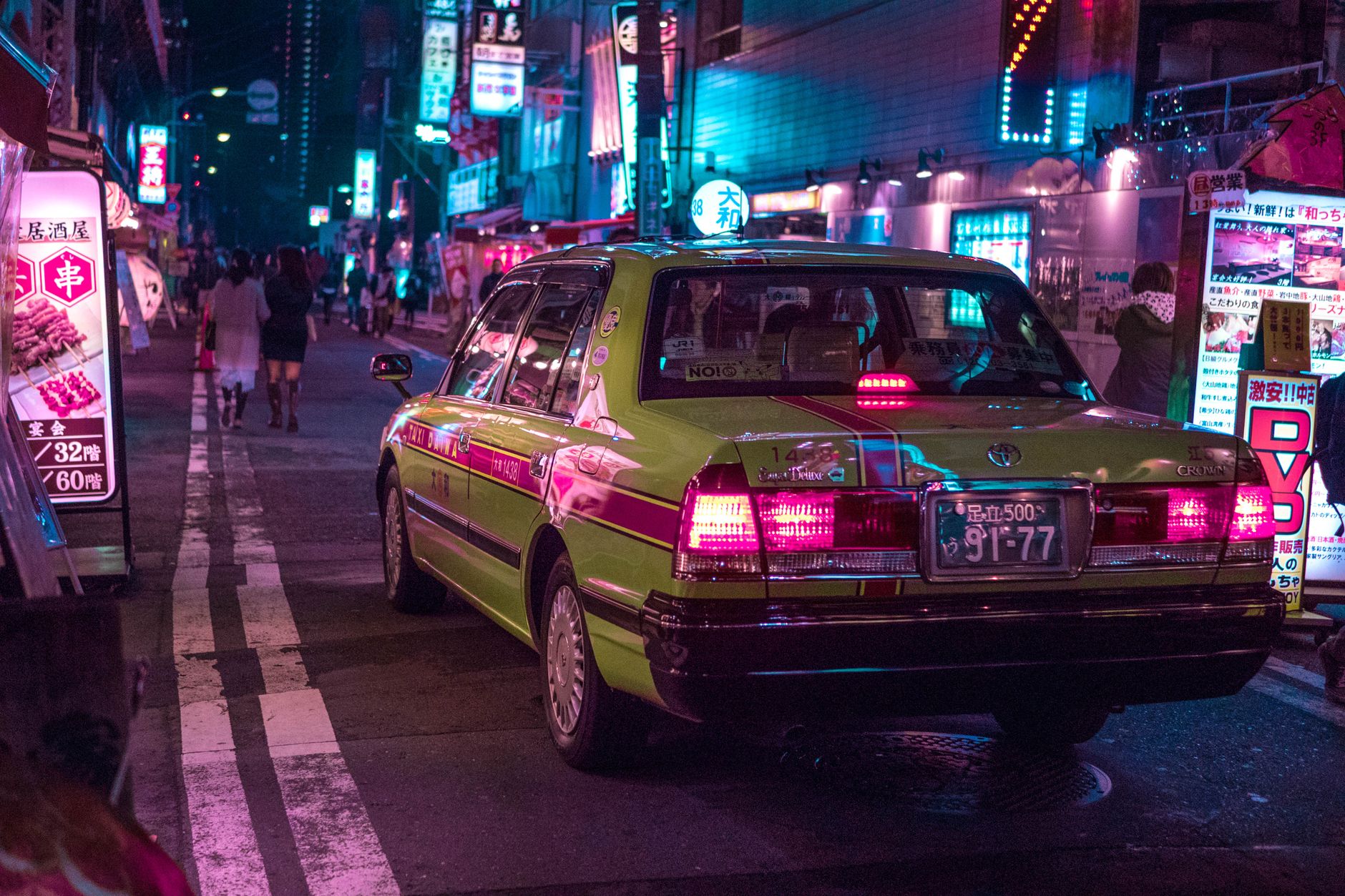
Photo by Alan W
A full-day Tokyo highlights route
A full day tour could begin at the Tsukiji Fish Market, continue to Asakusa to visit Senso-ji Temple, then include the Imperial Palace area, Ginza, Tokyo Tower, Odaiba for beautiful bay views, and finally Shibuya.
That sounds like a lot because it is a lot. Keep some stops short, and decide in advance which places deserve an interior visit. If you want a long market breakfast, a museum, and a tower observation deck, reduce the number of neighborhoods.
A private vehicle is especially useful here because you can leave shopping bags in the car, avoid repeated station transfers, and change the order when rain shows up. Tokyo weather loves a plot twist.
Hakone, Kamakura, or Nikko
For a private full day tour outside the city, Hakone is often the easiest fit, especially if you are hoping to catch a glimpse of Mt. Fuji. A nine to ten hour itinerary might include the Hakone Open-Air Museum, Owakudani, Lake Ashi, and Hakone Shrine. Ropeway operations and weather can affect the route, so leave room for changes. The official Hakone pass information is useful when comparing a car tour with public transport.
Kamakura is more compact. A typical eight to ten hour day can include the Great Buddha, Hase-dera, Tsurugaoka Hachimangu, and Komachi Street. It’s a strong choice for temples, coastal scenery, and a slower pace.
Nikko needs more patience. Toshogu Shrine, Lake Chuzenji, and Kegon Falls make a memorable day, and it remains a popular destination for those hoping to see Mt. Fuji or scenic mountainous landscapes. However, the drive is longer and mountain roads can slow down the plan. Don’t book Nikko as a rushed add-on to Tokyo unless you enjoy speed-running beautiful places.
What Your Tour Price Usually Includes
Most private car tour quotes include the vehicle, a private chauffeur, fuel, and hotel pickup within a stated service area. Some companies include an English-speaking driver as standard, while others charge extra for a separate professional guide. Your air-conditioned vehicle is meticulously maintained to ensure total comfort throughout your journey across the city.
Ask whether the vehicle is a sedan, minivan, or luxury van. Also ask how many passengers and suitcases it can hold. A listing that says “up to six guests” may still have limited room for six large bags.
The following costs are commonly excluded:
- Expressway tolls
- Parking fees
- Attraction admission
- Meals and drinks
- Ropeway, cruise, or cable-car tickets
- Child seats
- Overtime
- Airport surcharges
- Gratuities
Tolls and parking may be billed at cost, included in a package, or estimated in advance. Get that answer in writing. Tokyo parking fees can vary by area and time, especially near major attractions.
Attraction tickets are usually your responsibility. If your itinerary includes teamLab, Tokyo Skytree, a museum, or a seasonal garden, ask whether the operator will purchase tickets for you. A private car does not automatically include admission.
Meals are also separate. Your driver may recommend a restaurant or stop near one, but lunch is rarely part of the tour price unless the package specifically says so.
Overtime is another factor to consider. Common rates range from roughly ¥5,000 to ¥15,000 per extra hour, though some operators charge by half-hour or vehicle class. A late flight, long lunch, or crowded temple can push the day beyond the agreed time.
Japan generally does not expect tipping. You do not need to add a gratuity to make the service acceptable. If the driver or guide was outstanding, a sincere thank you is perfectly appropriate. Some companies have their own policy, so check before handing over cash.
Booking Tips That Prevent Expensive Surprises
Start by choosing the kind of service you actually want. Search for a private vehicle with driver if you mainly need transport. Choose a private guide if you want explanations, help with tickets, and someone to walk through the sights with you during your sightseeing tour.
When comparing operators, don’t compare only the headline price. A cheaper quote may exclude tolls, parking, guide fees, or airport pickup. The final total can change quickly, and nobody wants a surprise bill while standing beside a tired family member and three shopping bags.
Use official attraction websites for opening hours and ticket rules. The Tokyo Metropolitan Government’s official travel guide is useful for checking neighborhoods, seasonal events, and current visitor information. For taxi etiquette and local transport basics, the Tokyo Taxi Association’s English guide is also a handy reference.
Before you confirm, send the operator these details:
- Your date, pickup time, hotel pickup, airport, or exact meeting point.
- Passenger count, ages of children, and number of suitcases.
- Preferred vehicle type and language requirements.
- Every place you want to visit, including must-see and optional stops.
- Whether tolls, parking, admission, meals, and overtime are included.
- The cancellation policy, payment schedule, and refund terms.
- The driver’s contact method for the day of service.
Ask for a written, customizable itinerary with estimated arrival times. It does not need to predict every minute, but it should show a realistic order for your sightseeing tour. Confirm whether the driver waits during visits or leaves and returns later, as those are different services.
For airport pickups, provide your flight number and arrival terminal. Ask how long the driver waits after landing and what happens if immigration takes longer than expected. Tokyo’s airports are busy, and baggage collection has a habit of taking exactly as long as you do not want it to take.
Finally, reconfirm two or three days before the tour. Check the pickup time, vehicle, driver name, phone number, and payment balance. Save the details offline because station Wi-Fi and hotel signals can be unreliable.
How to Choose the Right Tour Length
Choose four to six hours when you want a focused neighborhood tour, have a late arrival, or need a gentle first day. This duration is ideal for two or three major stops with short walks and photo breaks. If you have a half-day to spare, consider a short excursion to Yokohama to explore its waterfront and iconic bay area.
Choose a full day tour when your group includes children, older travelers, or anyone who finds train transfers exhausting. Having a private vehicle provides a comfortable place to rest between attractions, which is a significant advantage once you pass the six-hour mark. This extra time allows you to discover hidden gems that are often tucked away far from the main train stations.
Choose a 1-day tour for day trips when you want to see Hakone, Kamakura, or Nikko without the stress of navigating a complex new rail network. The higher price for these services buys you time, comfort, and a flexible route that can adjust when weather or crowds change.
Don’t pack every famous sight into one booking. Tokyo rewards a little breathing room. A good driver can help you see more, but even the nicest van cannot defeat rush-hour traffic or make a popular temple visit take only five minutes.
Frequently Asked Questions
Do I need to tip my driver in Japan?
No, tipping is not customary in Japan, and you are not expected to add a gratuity for private car services. Exceptional service is best rewarded with a polite thank you, as most professional operators have policies that discourage or decline extra cash tips.
What happens if my flight is delayed during an airport pickup?
Most companies monitor your flight status in real-time, but you should always provide your flight number when booking. Be sure to confirm the company’s specific policy regarding waiting times and any potential surcharges for delays, as extended wait times may trigger additional fees.
Can I change my itinerary on the day of the tour?
Yes, private tours offer significant flexibility, and you can often adjust your stops if time allows. Just keep in mind that major route changes might affect toll fees or parking, and you must ensure the requested stops still fit within your total booked duration to avoid overtime charges.
Are child seats required for children in private cars?
Japanese law requires children under six to use an appropriate child seat. Always inform your operator of your children’s ages during the booking process so they can provide the necessary equipment, as some vehicles may have limited storage or availability for these items.
Conclusion
Tokyo private car tours make the most sense when comfort, luggage, mobility, or limited time matter more than finding the cheapest transport. Whether you are navigating the busy city streets or heading out to see the iconic sights of Mt. Fuji, planning around specific neighborhoods ensures your day goes smoothly. Use realistic pricing and remember to separate the rental cost from extra expenses like tolls, parking, entry tickets, meals, and overtime fees.
The strongest booking is the one with no fuzzy details. Confirm the specific car, the English-speaking driver, the planned route, inclusions, cancellation terms, and the final payment before your arrival. By securing a private chauffeur for your trip, you can enjoy the beauty of Tokyo through the window instead of wrestling with a heavy suitcase on a crowded train platform.