
Seeing the Japanese national sport of sumo in Tokyo can mean two completely different mornings: sitting in total silence inside a training stable, or cheering with thousands of fans at Ryogoku Kokugikan.
Both are incredible, but they aren’t interchangeable. Tokyo sumo tours range from carefully arranged stable visits to tournament packages that include reserved seats, expert guides, and cultural explanations. The tricky part is knowing what you can book, what changes by season, and which rules are non-negotiable.
Stable access is not open to casual visitors, and tournament tickets can disappear quickly. Planning to witness live sumo wrestling requires careful preparation so you do not end up at a stable with a camera, a suitcase, and absolutely no idea what happens next.
Key Takeaways
- Morning practice tours are private, limited, and never guaranteed, as access to sumo stables is strictly controlled and requires advance arrangements through a suitable operator or a Japanese-speaking contact.
- Morning practice usually means silence, stillness, floor seating, and no video. The stable can restrict photography or cancel access at any time.
- Tokyo’s Grand Sumo Tournament takes place in January, May, and September at Ryogoku Kokugikan.
- Official tournament tickets and organized tour packages are easier for international travelers than trying to arrange stable access alone.
- Choose a morning practice tour for intimacy and a behind-the-scenes atmosphere. Choose a tournament for the full sumo experience, including crowd energy and reliable admission.
What Tokyo sumo tours actually include
The phrase “sumo tour” covers several very different experiences. That matters because the booking page may show a wrestler, a dohyo, and a dramatic photo, while the actual day feels much calmer and more structured.
A stable visit usually means watching morning practice tours from a designated area inside or near a training stable. You are not walking through the building, chatting with wrestlers, or exploring wherever you like. Guests sit in a fixed place and observe the training session as quietly as possible.
A tournament tour is more predictable. It generally includes a ticket for Ryogoku Kokugikan, directions or meeting arrangements, and an English-speaking guide. Some packages add a restaurant meal, a sumo explanation, a walk around Ryogoku, or a stop at the nearby Sumo Museum when open, all while aligning with the official tournament schedule.
There are also smaller cultural experiences that use a former wrestler, commentator, or sumo specialist. These may include a talk, demonstrations, or a meal. They can be fun, but they are not the same as visiting an active training stable.
Read the inclusions carefully. “See sumo up close” might mean watching a practice session, meeting retired sumo wrestlers, or sitting in a premium tournament section. Those are three separate products.
The Japan Sumo Association’s official site is the place to check tournament information and official ticket notices. Tour companies can add convenience, but the association controls the official competition schedule and ticket system.
Stable visits are invitation-only, not casual sightseeing
This is the part that catches people out.
You cannot stroll around Ryogoku, spot a building, and ask to watch practice. Most sumo stables do not accept unannounced visitors. Even if a stable has welcomed travelers before, access can change with no public explanation.
In 2026, visits remain stable-specific and conditional. Many sumo stables still limit outside observers, and some do not accept tourists at all. A visit can also be canceled because of a wrestler’s health, a change in the training schedule, internal events, security concerns, or the stable’s own decision.
Current travel guidance often identifies Kasugano Stable and Takadagawa Stable in Ryogoku as possible options for foreign visitors. That does not make entry automatic. Access to morning training is highly conditional and both require advance written contact, commonly around two or three weeks before the requested date, and the arrangements must be confirmed again.
A Japanese-speaking intermediary or an English-speaking guide is usually the most practical route. Authorized tour operators can contact the stable, explain the rules, arrange transportation, and tell you what to expect. This is one of those situations where paying for organization saves you from a very awkward morning outside a closed door.
Most public-facing practice visits happen in the morning, often between roughly 7:00 and 10:00. Arashio-beya, another well-known example, has traditionally allowed visitors to observe through a street-facing window during morning practice. Its availability and viewing conditions can change, so check the current situation before making plans.
The tournament calendar also affects access. During a Grand Sumo Tournament, morning training at the stable might be restricted, or practice may be reduced or unavailable, as well as during regional tour periods. Wrestlers have schedules, injuries, travel, and work that do not revolve around a visitor’s holiday itinerary. Annoying? A little. Completely understandable? Also yes.
What happens during morning sumo practice
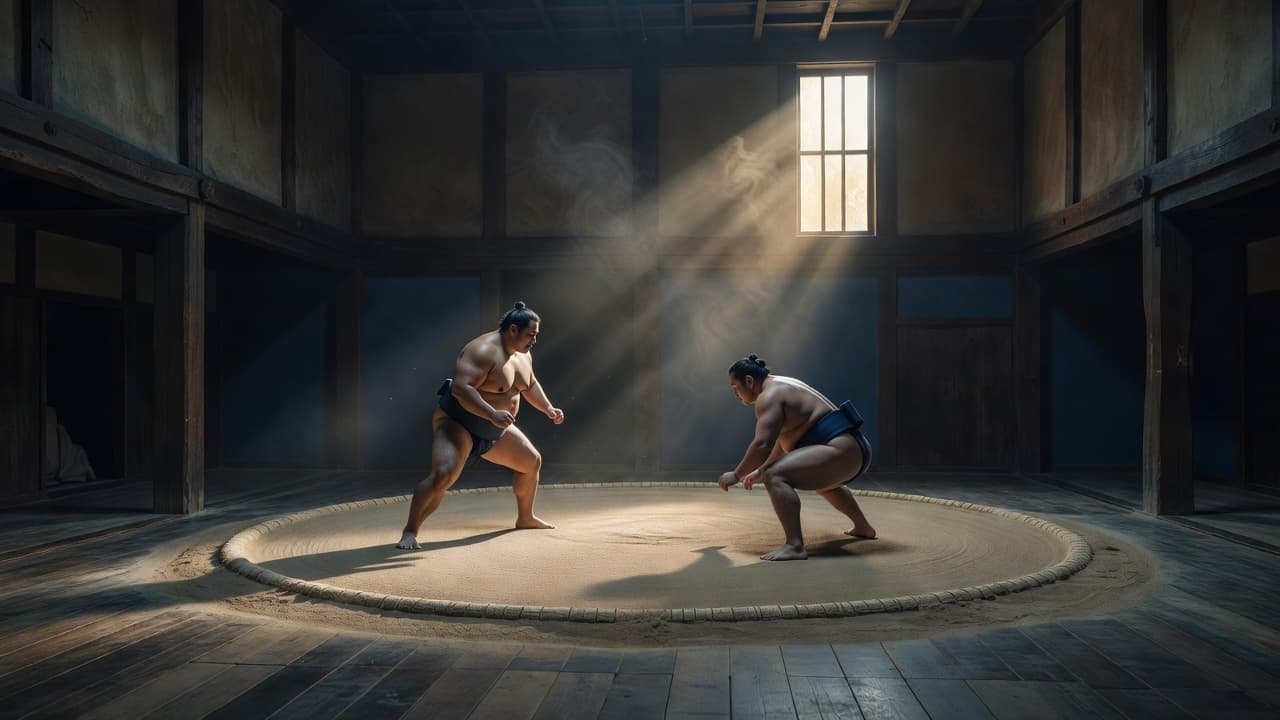
Morning training, or asageiko, does not feel like a performance. There may be no announcements, no explanations, and no dramatic entrance music. You sit and watch sumo wrestlers repeat demanding sumo wrestling drills that focus on repetitive movements and foundational strength.
The session can include stretching, footwork, pushing exercises, bouts, and intense sparring. Younger athletes may handle chores or prepare the space. Senior sumo wrestlers often train later, although the exact order depends on the stable and the day.
The room can be surprisingly quiet between bouts. Then two bodies collide with a heavy slap that seems to vibrate through the floor. That is the moment people remember, but the repetition matters just as much. Sumo training is built on doing the same movement again and again until the body knows what to do, often centered around the dohyo.
Visitors normally sit on the floor, often cross-legged or in seiza, the traditional kneeling position. Don’t assume there will be a chair, a table, or room for a large backpack. Stable interiors are working spaces, not visitor centers.
Arrive early. Late arrivals may be refused, especially once practice has started. Some stable visits require you to remain seated until the session ends, so don’t book one between breakfast and a tightly timed museum reservation. You may not be allowed to leave halfway through.
A guide can translate basic instructions, but don’t expect live commentary during every bout. Talking can disturb the wrestlers, and even a whisper may feel loud in a compact room. You might receive explanations before or after practice instead.
The experience is best for travelers who enjoy observing details. Watch how the athletes warm up, how the floor is prepared, and how everyone moves around the dohyo. Watching the intense focus during these sessions is the whole point of the experience.
Stable etiquette is strict for a reason
A sumo stable is a professional training environment rooted in traditional Japanese culture. You are entering this space on someone else’s terms, so the rules provided by the stable master are not merely suggestions.
The biggest rule is silence. Do not chat, cheer, gasp loudly, answer your phone, or narrate the action to your travel companion. Set your mobile to silent mode before entering. If a guide gives instructions, follow them immediately and keep any questions for the appropriate break.
You also need to stay still. Do not stand up to take a better picture, move around the room, or walk closer to the dohyo. Never step onto the sandy area or into the ring. The dohyo is a sacred space for training, and entering it is strictly prohibited.
Shoes come off at the entrance. Wear clean socks or tights, and do not arrive barefoot in sandals. Hats and sunglasses should be removed inside. Large luggage and oversized bags may not be accepted because space is limited.
Food, drinks, and smoking are generally prohibited. Some stables may make an exception for water during hot weather, but ask first. Do not assume a bottle is fine because you are thirsty.
A photo opportunity depends on the stable. If it is allowed, take photos only from your assigned seat, keep the flash off, and mute the shutter sound. Some locations prohibit photography completely. Video is commonly prohibited, including short phone clips. A quick recording can get you removed, so do not risk it.
Ask before photographing wrestlers, especially after practice. Do not approach, touch, or speak to them unless they initiate contact. You are not guaranteed a meeting, autograph, photograph, or conversation. A stable visit is observation, not a meet-and-greet.
Visible tattoos should be covered. This is another traditional-space rule that can affect access. Wear clothing that lets you sit comfortably on the floor, and choose quiet layers instead of noisy fabrics that rustle every time you move.
Keep these points in mind:
- Complete your advance booking well in advance as many locations have strict capacity limits.
- Arrive on time and follow the guide’s instructions.
- Remain seated and silent during practice.
- Keep your phone away and never record video.
- Do not point the soles of your feet toward the dohyo or wrestlers.
- Do not bring food, drinks, large luggage, or unnecessary equipment.
- Do not expect tipping to be required. It is not customary in Japan.
The stable can change the rules on the day. The stable’s instructions always take priority over a tour description or an older travel blog.
Tournament tickets give you the full sumo spectacle
If a stable visit is a quiet rehearsal, a Grand Sumo Tournament is opening night with the entire theater turned on. Tokyo hosts three of these major events each year in January, May, and September at the Ryogoku Kokugikan in the Ryogoku district, which serves as the heart of all sumo action. This neighborhood is packed with history, chanko restaurants, banners, and fans in traditional attire.
Tournament days begin long before the top-ranked wrestlers appear. Lower-division bouts take place early in the morning, and the afternoon builds toward the high-stakes matches that define each Grand Sumo Tournament. Watching the progression is part of the fun. The arena slowly fills, the energy rises, and suddenly every slap, shove, and foot stamp during a sumo match feels like a headline event.
The atmosphere is much louder than a stable. Fans clap, react to close contests, and support their favorite wrestlers. Ceremonies, banners, colorful kesho-mawashi, and the formal rituals around the dohyo add layers that a morning practice simply does not provide.
Seat type changes the experience significantly. Chair seats are ideal for visitors who prefer not to sit on the floor for several hours. Alternatively, box seats offer a more traditional experience and put you closer to the action, though they provide less personal space and require floor sitting. Premium sections cost more and sell quickly, while more distant seats can still provide a clear view of the full dohyo.
Official ticket availability varies by event. Do not rely on an old sale date from a previous year. Instead, check the JSA current tournament schedule and ticket notices as soon as your travel dates are fixed.
Organized tours can help if you do not speak Japanese or want a professional to explain the complex rituals. A guide may meet you near the arena, walk you through the neighborhood, explain the sumo match structure, and assist with the logistics. Some packages include meals or cultural stops, so compare the inclusions rather than choosing only by the lowest price.
One current 2026 tour listing from Japan Wonder Travel advertises packages with S-class chair seats at ¥34,000 per person and another ticket option at ¥30,000. These are provider-specific package prices, not a universal JSA price for every Grand Sumo Tournament or seat type. Always confirm the date, seat location, inclusions, cancellation policy, and taxes before paying.
Avoid treating resale listings as your first option. Official channels and established operators make it easier to confirm that the ticket is valid and that you fully understand your seating arrangement.
Stable visit or tournament day?
Both experiences are memorable, but they suit different travelers. Use this comparison to help decide which sumo experience is right for you before booking.
| Feature | Stable visit | Grand Sumo Tournament |
|---|---|---|
| Atmosphere | Quiet, focused, intimate | Loud, festive, and crowded |
| Access | Limited and pre-arranged | Ticketed public event |
| Timing | Usually early morning | Often a long morning and afternoon |
| Interaction | No guaranteed contact with sumo wrestlers | No personal contact with sumo wrestlers |
| Photography | Restricted and stable-specific | Rules vary by venue and seat |
| Comfort | Floor seating is common | Chair and box options available |
| Reliability | Can be canceled or restricted | More predictable once ticketed |
| Best for | Behind-the-scenes observation | First-time fans and big event energy |
Choose a stable visit if you want to see the daily work behind professional sumo. It feels personal because you are watching a real practice session, not a staged cultural show.
Choose the tournament if you want clear admission, a complete schedule, crowd energy, and the chance to see top-ranked athletes. Witnessing a live sumo match at the tournament offers a significantly higher level of energy than the quiet, disciplined atmosphere of the stables. For many first-time visitors, this is the safer main plan for their travel itinerary.
Can you do both? Yes, if your dates allow it, but do not make a stable visit the one fixed centerpiece of a short trip. Build your itinerary around the tournament ticket, then treat stable access as a special extra that still needs confirmation.
How to book as an international traveler
Start with the tournament calendar, not the hotel. Tokyo’s Grand Sumo Tournaments run in fixed months, and the exact dates determine whether stable practice is likely to be available. By prioritizing advance booking, you can secure your plans well before the peak tourist seasons arrive.
Once your dates are set, use this order:
- Check the official JSA schedule and ticket information.
- Decide whether you want a tournament ticket, a stable visit, or both.
- Contact a reputable operator providing an English-speaking guide early if you need additional support or stable access.
- Confirm the exact meeting point, start time, seat type, language, inclusions, and cancellation terms.
- Keep the stable visit flexible until the stable confirms it close to the date.
- Save digital and printed copies of your booking details.
For a stable visit, aim to inquire at least two or three weeks ahead. Some arrangements need a written request and a Japanese-speaking contact. Give the operator your hotel area, preferred dates, group size, language needs, and any mobility concerns.
Ask direct questions before booking. Is the visit inside the stable or from an exterior viewing area? Is practice guaranteed? What happens if the stable cancels? Are photos allowed? Do you need to sit on the floor? How long must you remain inside?
These questions sound fussy until you are standing outside at 6:45 a.m. in the rain, wearing a backpack and wondering why the sumo experience has no obvious entrance. Tiny details are a huge deal here.
Schedule extra travel time. Ryogoku is easy to reach by train, but a stable may be on a residential street without a tourist-friendly sign. Keep your group small if possible, and do not combine the visit with bulky shopping or airport luggage.
Tournament bookings need a different strategy. Watch the official release information, prepare your payment details, and book as soon as tickets open. If official tickets are unavailable, compare an organized package with clear seat information rather than buying an unexplained resale ticket. Tokyo sumo tours should be booked as early as possible to ensure a spot with a clear view of the dohyo.
International visitors should also check cancellation policies. A stable can cancel or restrict access at its discretion, and a tour operator’s refund policy may not match the stable’s decision. Read the terms before you assume a replacement activity or refund is automatic.
Planning your day around Ryogoku
A tournament can fill most of your day, so avoid stacking it between three distant Tokyo attractions. Arrive in the Ryogoku district with time to find the arena, collect tickets if needed, and settle into your seat.
The neighborhood works well before or after the matches. You can walk around the Edo-Tokyo Museum area, visit the Sumo Museum when its opening conditions allow, browse local shops, or eat chanko nabe. This traditional hot-pot meal is synonymous with the diet of sumo wrestlers, and it is much more satisfying after you have watched them perform during morning training or witnessed their power during tournament bouts.
For a stable visit, plan the opposite way. The morning starts early, practice may finish before lunch, and the rest of the day can stay flexible. A nearby breakfast or Ryogoku walking route makes sense. A faraway attraction with a fixed entry slot does not.
Wear comfortable clothes that let you sit on the floor. Bring socks, keep your bag small, and leave noisy accessories at the hotel. A quiet phone, a little patience, and the ability to follow instructions matter more than expensive camera equipment.
Remember that the exact schedule can change. Practice times are not a public show schedule, and tournament bouts move throughout the day. Confirm all timing shortly before your visit.
Frequently Asked Questions
Are sumo stables open for visitors to walk in anytime?
No, sumo stables are private training facilities and are not open to the general public for walk-in visits. Access to morning practice is highly conditional, requires advance arrangements, and is often limited to small, guided groups or those with specialized local contacts.
Can I take photos or videos during a morning practice session?
Photography and video policies are determined entirely by the individual stable and are frequently prohibited to ensure the focus of the wrestlers is not disturbed. Always ask for permission before arriving, and never assume you are allowed to record clips or take photos, even if you see others doing so.
What should I wear to a sumo stable visit?
Wear modest, comfortable clothing that allows for sitting on the floor for extended periods, as chairs are rarely provided. You must wear clean socks, as walking barefoot is considered disrespectful, and you should ensure any tattoos are covered if possible.
Is it better to book a tour or try to arrange my own visit?
For most international travelers, booking an organized tour is the most practical choice because it handles the complex logistics, language barriers, and strict stable etiquette requirements. Attempting to arrange a visit alone is difficult due to the strict invitation-only nature of the stables and the high likelihood of last-minute schedule changes.
Conclusion
A Tokyo sumo tour can put you inches from the daily discipline of a stable or inside the roaring crowd at Ryogoku Kokugikan. While stable visits offer an intimate look at the athletes, witnessing a high-ranking Yokozuna compete during a Grand Sumo Tournament remains the undisputed highlight for most visitors. When planning your Tokyo sumo tours, remember that stable visits are quieter and more personal, but access is limited, etiquette is strict, and cancellations are always possible.
For a first trip, secure a tournament ticket as your dependable sumo plan. Add a stable visit only after receiving clear confirmation, then arrive ready to sit still, stay silent, and observe with respect. By balancing the raw energy of the arena with the disciplined quiet of the morning practice, you ensure that your sumo experience becomes a meaningful and deep dive into the traditions of this celebrated Japanese national sport. That is how you get the unforgettable morning instead of the locked-door story.